Telescope Advisor Logo Telescope Advisor
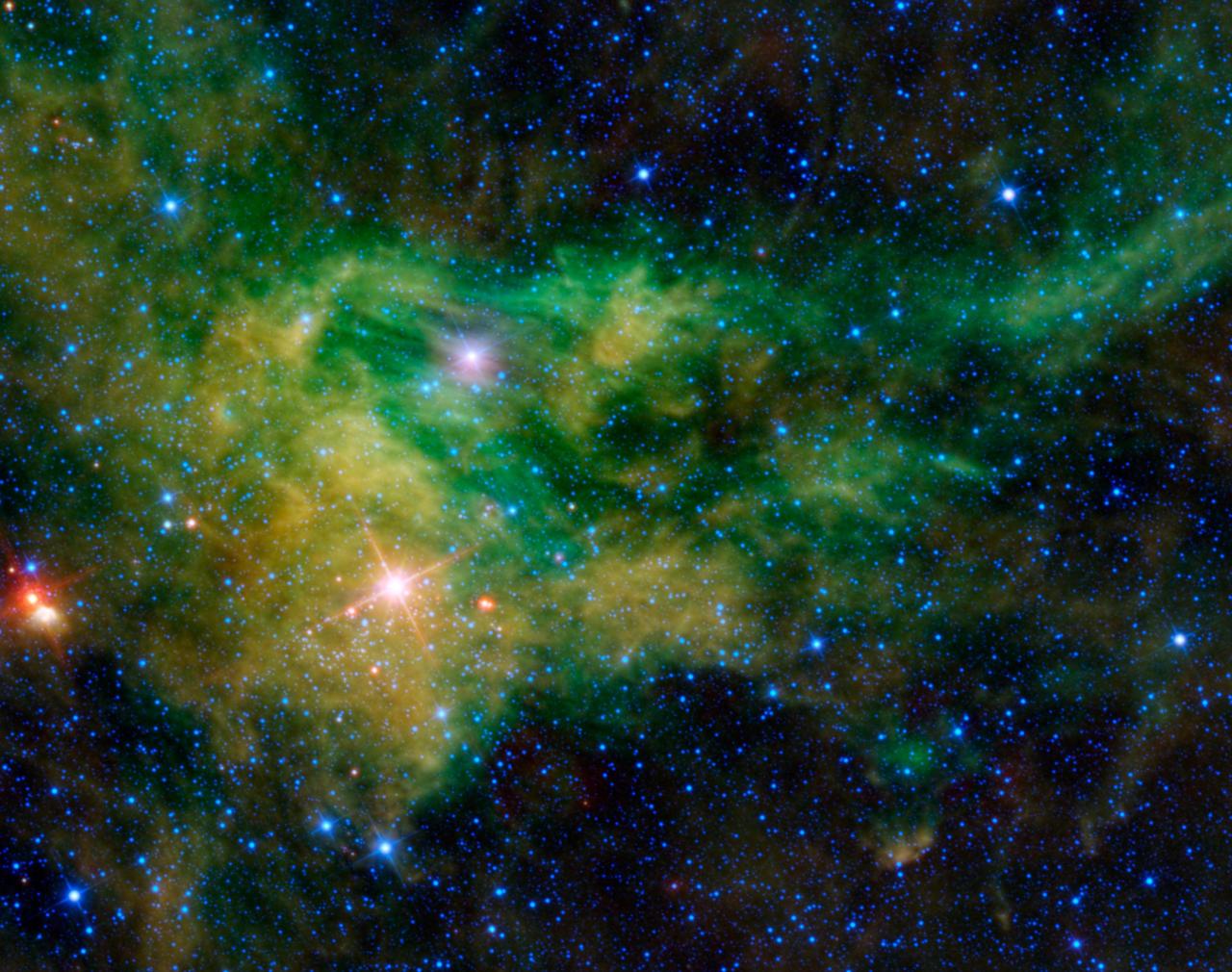
Clear night sky filled with stars  perfect for a first stargazing session
Step-by-Step Guide 2026

How to Start Stargazing:
Your First Night Guide

Eight simple steps from walking outside to seeing your first constellations, planets, and deep-sky objects with zero experience and no equipment required.

8 steps

First night checklist

20 min

Dark adaptation

$0

Required equipment

Tonight

Can start right now

By Telescope Advisor Editorial Team Published Updated 12 min read Editorial standards

Your first stargazing session doesn't require a telescope, a star atlas, or any astronomy knowledge. What it requires is a clear night, 30 minutes, and the willingness to look up and let your eyes adjust to the dark.

This guide walks you through exactly what to do on your first night from picking a spot and checking conditions, to finding your first constellation and planet. We'll cover common beginner mistakes (like using white light and staying out only 10 minutes) and give you a clear checklist you can follow right now.

By the end of your first hour out, you'll have identified at least one constellation, found at least one planet, and started the dark adaptation process that makes every subsequent session better. Let's go.

Quick-Start Checklist

?Check the weather (clear skies + no moon = ideal)
?Install SkySafari or Stellarium on your phone
?Switch phone to night/red-light mode
?Find a spot with low or no artificial light nearby
?Dress warmer than you think you need
?Set a 20-minute timer when you step outside
?Stay outside at least 45 minutes on your first session
?Bring a reclining chair or blanket to lie on (neck saver)
1

Choose the Right Night

Weather, Moon phase, and atmospheric transparency

Not all clear nights are equal. Three factors matter most:

Cloud Cover

Obvious but nuanced thin cirrus cloud (high altitude ice cloud) can dramatically dim stars without looking clearly cloudy. Check a dedicated clear-sky forecast like Clear Outside (UK/Europe) or Clear Dark Sky (North America) rather than just weather apps.

Moon Phase

The Moon is 400,000 brighter than the faintest stars visible to the naked eye. A full Moon turns the sky milky and washes out everything except bright stars and planets. For your first session, a new moon or quarter moon is ideal. For planets and the Moon itself any phase works.

Atmospheric Seeing

Turbulence in the atmosphere makes stars twinkle more and smears planetary detail. Avoid nights immediately after a cold front passes the air is often unstable. The best seeing typically comes with stable high-pressure systems. Your app shows a "seeing" forecast.

Pro tip: For a first session, choose a night when the Moon rises after midnight this gives you a dark window in the evening. Any astronomy app shows tonight's moonrise/moonset time. New moon weeks are your best window for deep sky; any clear night works for planets and the Moon itself.

2

Choose a Good Location

Even small improvements in darkness make a big difference

You don't need to drive to a national park for your first session. But even moving from your front yard to your backyard, or walking to a local park, can dramatically improve your sky by removing direct streetlight glare.

Location Tips

  • ?Block direct light sources. Even standing in the shadow of a building eliminates a nearby streetlight's glare from your field of view. Your eyes respond to local contrast, not just overall sky brightness.
  • ?Higher is better. A hilltop or elevated park eliminates trees and buildings from your horizon and gives more sky. It also tends to place you above local low-altitude haze.
  • ?Avoid damp, foggy locations. Low-lying fields near rivers or lakes develop ground mist quickly on calm nights, cutting off the horizon.
  • ?Face north if possible. Northern skies typically have less light pollution (no big cities toward the pole). Southern and eastward horizons are often brightest from suburban locations due to nearby city glows.

For your first sessions, your own backyard or a local park is completely fine. Save a dedicated dark-sky trip for when you have some equipment and object-finding skills that way you get the maximum value from the drive.

3

Install a Star Chart App and Set It to Night Mode

Your most important first tool costs nothing

Install SkySafari (free tier) or Stellarium Mobile before you go outside. These apps use your phone's GPS and compass to overlay constellation names and planet identifiers on a live sky view. Hold your phone up and the screen matches exactly what you're looking at.

Critical: Enable Night Mode Before Going Outside

Both SkySafari and Stellarium have a red/night mode in their settings. Enable this before you step outside. A red-filtered screen has minimal effect on your dark-adapted eyes, while a full-brightness white screen destroys 20 minutes of adaptation in seconds. This is the single most important setup step for a successful session.

What to Look Up Before You Go Out

  • ?What's the brightest planet visible tonight? (Planets tab or "Tonight's Sky" section)
  • ?Is the ISS passing overhead tonight? (Check ISS Detector or Heavens-Above)
  • ?Which direction does the Moon rise tonight?
  • ?What constellations are highest overhead right now? (These are easiest to identify)
4

Dress Warmer Than You Think You Need

Cold is the #2 reason beginners give up stargazing

Temperatures drop 1015F (68C) on clear nights compared to cloudy nights of the same forecast temperature because there's no cloud cover trapping heat. On a still, cloudless summer evening that started at 70F, you might be observing in 55F (13C) within two hours. In spring or autumn, temperatures under 40F are common by midnight.

Being cold doesn't just cause discomfort it ends sessions prematurely and builds a negative association with stargazing. Bring one more layer than you think you need. A woolly hat matters more than you'd expect: you lose an enormous amount of body heat through your head while looking up.

Observing Comfort Essentials

Folding reclining chair or blanket

Looking straight up for 30+ minutes destroys your neck. Lie back or recline. This is how real astronomers do it.

Warm drinks in a thermos

Hot tea or coffee extends sessions by hours in cold weather. Also gives your hands something to do.

Insect repellent (summer)

The same still, damp conditions that give good seeing also produce mosquitoes. Don't let insects ruin a perfect night.

Red-light flashlight

For reading star charts, adjusting equipment, or navigating in the dark without destroying your adaptation.

5

Give Your Eyes 20 Minutes to Dark-Adapt

The transformation is dramatic and worth the wait

When you first step outside from a lit room, your naked eye can see only the 2030 brightest stars. After 20 minutes in complete darkness, you'll see 1020 more stars. After 3045 minutes, you reach full dark adaptation a 10,000-fold increase in sensitivity over your daylight vision.

This happens because your retina's rod cells slowly produce more rhodopsin (the light-sensitive pigment) the longer they're away from bright light. It's a real, measurable physiological change not just "getting used to it" in a vague sense.

Dark Adaptation Timeline

0 min
~20 stars visible
5 min
~100 stars visible
15 min
~1,000 stars visible
30 min
~9,000 stars visible

What destroys dark adaptation instantly:

  • White flashlight (even briefly) resets to zero
  • Full-brightness phone screen resets to zero
  • Car headlights in your field of view
  • Walking back inside (even for a minute)
6

Start Naked Eye: Find Your First Objects

Four targets for your first night that any beginner can find

Use your app to identify what's up tonight, then find these targets with your naked eye before reaching for any equipment:

??

The Brightest "Star" in the Sky Probably a Planet

If there's an exceptionally bright, steady object in the sky, it's likely Venus, Jupiter, or Saturn. Planets don't twinkle they shine steadily. Open your app and tap on it to confirm. Knowing you're looking at another planet is immediately satisfying.

??

The Moon (If Visible)

Even with the naked eye, you can see the dark maria (volcanic plains) and bright highland regions. A crescent or quarter Moon is beautiful to observe full Moon is actually too bright and lacks shadow texture. If the Moon is up tonight, just look at it for a few minutes before doing anything else.

?

The Pleiades (Seven Sisters)

A compact group of 67 stars forming a tiny dipper shape visible in autumn through spring in the northern hemisphere. Most people can see 6 stars naked eye; extremely sharp-eyed observers see 7 or more. Binoculars reveal 50+. This is your first "deep sky object".

??

The Orion Nebula (Winter evenings)

Below Orion's three belt stars, look for a faint fuzzy patch that's the Orion Nebula, a stellar nursery 1,344 light years away. With the naked eye it's a subtle smudge; in binoculars it's clearly nebulous; in a telescope it shows structure and a tight star cluster (the Trapezium) at its heart.

7

Add Binoculars: Your Best First Equipment Upgrade

Any binocular even cheap ones transforms stargazing

If you own any binoculars at all even old 830 hiking ones bring them. Any binocular immediately reveals Jupiter's four Galilean moons as tiny dots flanking the planet, shows the Moon in stunning crater detail, and resolves star clusters the naked eye sees as smudges.

For dedicated astronomy binoculars, the Celestron Cometron 750 is the standard entry-level recommendation under $35, hand-holdable, and shows everything you need for months of exploration.

Editor's Pick — Best Entry-Level Binocular
Celestron Cometron 7x50 astronomy binoculars

Celestron Cometron 750

7 magnification 50mm aperture Hand-holdable Wide 7 field

The ideal first astronomy binocular. Steady hand-held, wide field of view, shows Jupiter's moons, the Orion Nebula, and dozens of star clusters. Under $35.

Affiliate link — we may earn a small commission at no extra cost to you.

8

Your Next Steps After the First Night

What to do after your first successful session

After your first session, you'll have a feel for whether you want to continue with naked eye and binoculars, or start looking at telescopes. Most beginners find that 24 weeks of casual naked-eye and binocular observing gives them the object-finding confidence they need to get real value from a telescope.

If You Loved the First Night

  • Download SkySafari and make a 20-object observing list
  • Check out the ISS tracker watch it pass tonight
  • Research your nearest dark-sky site for a dedicated trip
  • Consider joining a local astronomy club often has loaner telescopes

When You're Ready for a Telescope

  • Spend 24 weeks with binoculars first
  • Read our Best Beginners Telescopes guide
  • Start with a manual alt-az mount not a GoTo
  • Budget $150$250 for a genuinely good first telescope

Frequently Asked Questions

How long should a stargazing session be? ?
On your first night, aim for at least 4560 minutes to give your eyes time to dark-adapt and for you to find more than just the obvious objects. Experienced observers often go 24 hours on a good night. Quality matters more than duration a cold, rushed 20-minute session will feel unrewarding compared to a relaxed 60-minute session where you actually settle in and look carefully.
What should I look for on my first stargazing night? ?
The Moon (if visible), the brightest planet in the sky (Venus, Jupiter, or Saturn depending on the time of year), the Big Dipper or Orion as your first constellation, and if you have binoculars, the Pleiades star cluster and Jupiter's moons. These are all easy to find, guaranteed to impress, and give you a solid foundation for future sessions.
Why do stars twinkle but planets don't? ?
Stars are so far away that even in the most powerful telescopes they appear as points of light. Their light passes through the turbulent atmosphere as a narrow beam that bends and wavers causing twinkling (scintillation). Planets are much closer, so even with the naked eye they subtend a small but measurable disk. The light from a disk averages out across multiple atmospheric turbulence cells, so the twinkling cancels out and the planet appears steady. This is the easiest way to tell planets from stars at a glance.
What's the best free astronomy app? ?
Stellarium Mobile (free with ads) is the best completely free option photorealistic sky rendering, constellation overlays, and accurate planet positions. SkySafari's free tier is also excellent and has a cleaner interface. For kids, Star Walk 2 is more approachable. All three have night mode and AR sky overlay. See our full astronomy apps guide for a complete comparison.
How do I find north without a compass? ?
In the northern hemisphere, find Polaris (the North Star). Locate the Big Dipper and use the two outer stars of the bowl as pointer stars they point directly to Polaris, which is almost exactly due north. Polaris is not the brightest star in the sky (that's Sirius), but it's conveniently the star that happens to sit almost exactly above Earth's north pole, so it appears stationary while all other stars rotate around it through the night.

Related Guides