Best Green Laser Pointer for Astronomy: Expert Picks & Safety Guide 2026
Telescope Advisor Logo Telescope Advisor
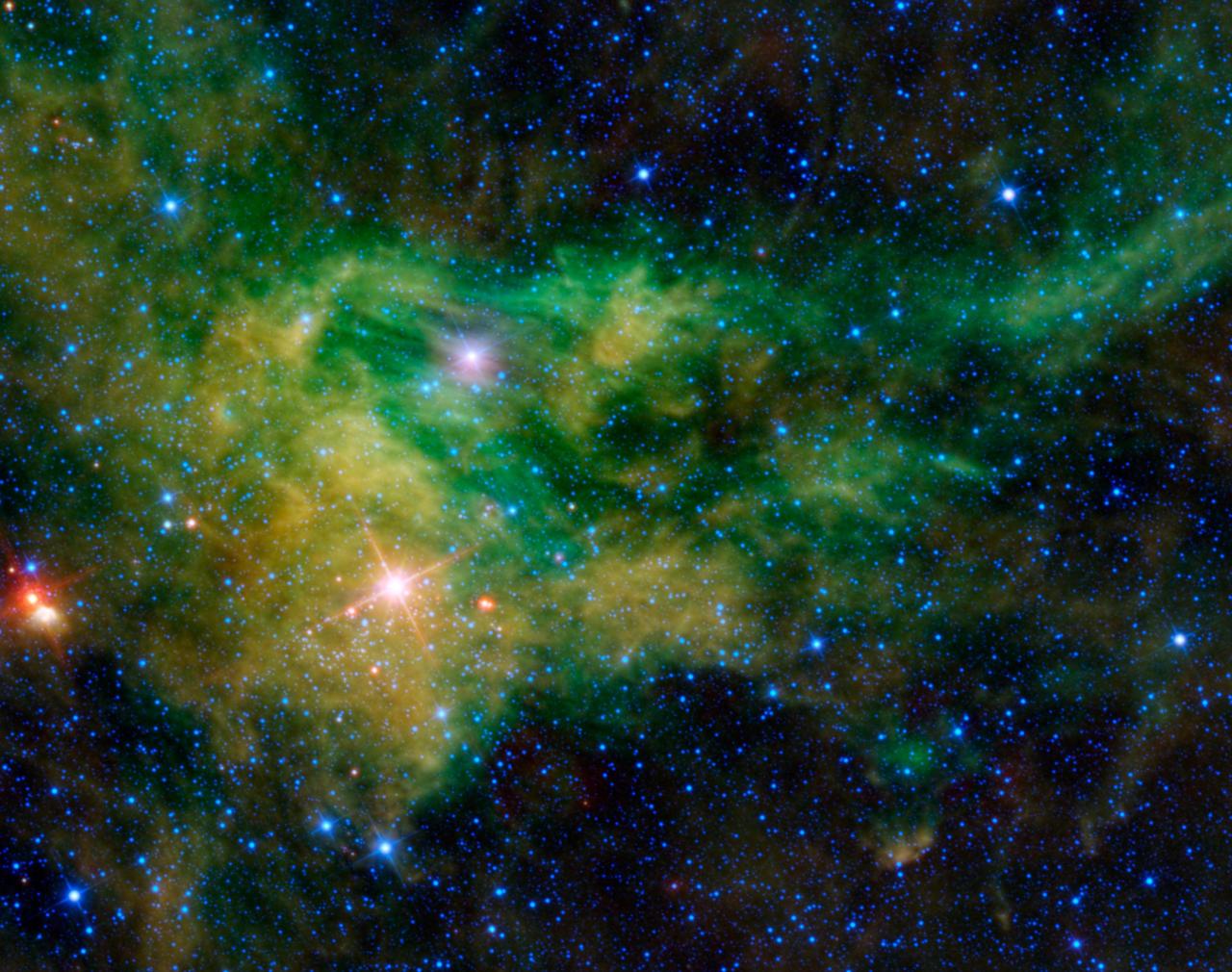
A star-filled night sky — green laser pointers are the astronomer's universal tool for pointing out constellations and stars

Astronomy Accessories Guide · 2026

Green Laser Pointers for Astronomy

The single most useful accessory for astronomy star parties, constellation tours, and public outreach. Here's how to choose the right one — safely and legally.

Best Wavelength532nm green
Safe Power1–5mW (Class IIIa)
Beam VisibleUp to 1–3 km in dark sky
UpdatedApril 2026
By Telescope Advisor Editorial Team Published: Updated: Editorial Standards

Green laser pointers for astronomy are the single most effective accessory for sharing the night sky. At any star party, a 1–5mW green laser creates a brilliant visible beam that appears to reach directly to the star or constellation you're pointing at — making it effortless to guide groups, students, and curious visitors through constellations and deep-sky objects. No other astronomy accessory does this job as well.

Safety and Legal Notice

Green laser pointers are subject to strict legal restrictions in many countries. In the United States, aiming a laser pointer at aircraft is a federal crime — punishable by up to 5 years in prison and $250,000 in fines. Never aim any laser pointer at aircraft, vehicles, or people. Always use a low-power (1–5mW, Class IIIa/Class 3R) laser for astronomy. High-power lasers (>5mW) are dangerous to eyes and illegal to import or purchase in some jurisdictions. Follow your local laws and observatory or star party rules.

Why Green Lasers for Astronomy?

Green light at 532nm sits near the peak of human visual sensitivity. At equal power output, green light appears far brighter to the human eye than red, blue, or violet light. This makes a 5mW green laser beam visible in the night sky at distances of 1–3 kilometers under dark conditions — while a 5mW red laser beam would barely be visible at 100 meters.

The green beam appears as a continuous line extending upward to the stars because it scatters off dust, water vapor, and aerosols in the atmosphere. The effect is most pronounced in humid conditions or at high altitude sites — at a perfectly clear high-altitude desert observatory, the beam is thinner but still easily visible.

Why Not Red?

Red lasers at the same power output are roughly 30–50× less visible to the eye than green. A 5mW red laser appears as a faint dot, barely useful for sky-pointing. Red lasers are preferred for reading star charts (to preserve night vision) — but for pointing at objects in the sky, green is far superior.

Why Not Blue or Violet?

Blue and violet lasers scatter more strongly in the atmosphere, but the human eye is less sensitive to these wavelengths. Green 532nm sits at the practical optimum for sky visibility at safe power levels. Blue laser pointers also tend to be less reliable and more expensive.
Safety & Legality: What You Must Know

Absolutely Never Do

  • ✗ Aim at aircraft (any altitude — illegal in most countries)
  • ✗ Aim at any vehicle, road, or driver
  • ✗ Point at other people's eyes
  • ✗ Use near airports or flight paths
  • ✗ Leave unattended where children can access it

Power Class Guide

  • Class II / Class 2: Up to 1mW — safest, beam visible
  • Class IIIa / Class 3R: 1–5mW — standard astronomy use, safe with normal precautions
  • Class IIIb / Class 3B: 5–500mW — dangerous, generally not appropriate for public use
  • Class IV: >500mW — fire hazard, restricted in most countries

Legal Status by Region (General)

  • USA: 5mW (Class IIIa) legal for consumer purchase. Shining at aircraft is federal crime.
  • UK: Possession generally legal; use restrictions apply. Importation of >1mW restricted.
  • Australia: >1mW classified as prohibited weapons in some states. Check state law.
  • EU: Consumer laser products must not exceed Class 2 (1mW) for general sale in many member states.

Laws change. Always verify current regulations in your specific country and state/province before purchasing.

Recommendation for Most Observers

For astronomy use in the USA, a 1–5mW Class IIIa (Class 3R) green 532nm laser is the appropriate choice — bright enough to be clearly visible in dark sky conditions, legal for consumer purchase, and safe when used responsibly.

What Specs to Look For

Wavelength: 532nm

This is the standard for green laser pointers. Exactly 532nm (produced by a DPSS laser diode) is the brightest green visible to the human eye and creates the clearest beam in the night sky. Avoid cheap lasers that don't specify wavelength — they may output a less-visible shade of green at higher power than claimed.

Power: 1–5mW

A 5mW green laser creates a clearly visible beam in a dark sky out to 1–2 km. For star parties and outreach, 5mW is plenty. 1–3mW is adequate at most sites. Anything over 5mW is unnecessary for astronomy pointing and enters Class 3B territory — eye hazard if misused. More power is not better for this use case.

Build Quality & Safety Lock

Look for a safety lock/key mechanism or safety switch — essential if children are present at the star party. A momentary-contact button (only fires while pressed) is preferred over a toggle switch for safety. Metal body construction is more durable than plastic for field use. Check for a visible output power classification label (FCC/IEC compliance).

Battery Type

Most astronomy green lasers use AAA batteries (2 or 3) or CR2 lithium cells. AAA is preferred — easily available worldwide. Cold temperatures (winter observing sessions) drain batteries quickly; carry spares. Some premium models use rechargeable lithium batteries — convenient for regular users.

Temperature Performance

DPSS green lasers produce less output in cold conditions — at 0°C, output may drop significantly. For winter observing, look for lasers rated to -10°C or lower. Keep the laser in a pocket to warm it before use in cold weather.

Beam Diameter & Divergence

A tighter, more collimated beam (lower divergence — measured in mrad) appears as a thinner, more dramatic line in the sky. Cheaper lasers have high divergence (thick, fuzzy beams). Quality astronomy lasers have divergence under 1.5 mrad for a sharp, precise pointing beam.

Green Laser Pointer Comparison: Quick Guide

Last updated May 2026 — comparing the main categories of astronomy green laser pointers

Pick Power Wavelength Battery Key Lock Best For Price
🥇 JANHER (Best Overall) High Power 532nm USB Rechargeable No (button) Astronomy, outreach ~$8.49
🏆 Key Lock Model 5mW 532nm AAA / CR2 Yes ✓ Star parties, events $20–$45
💰 Budget Pick 5mW 532nm 2×AAA No Casual backyard use $9–$20
⭐ Premium Rechargeable 5mW 532nm USB Rechargeable Some models Club members, educators $25–$60

Top Green Laser Pointers for Astronomy (2026)

Editor-reviewed picks covering all budgets and use cases — from casual backyard observers to astronomy club educators running public star parties.

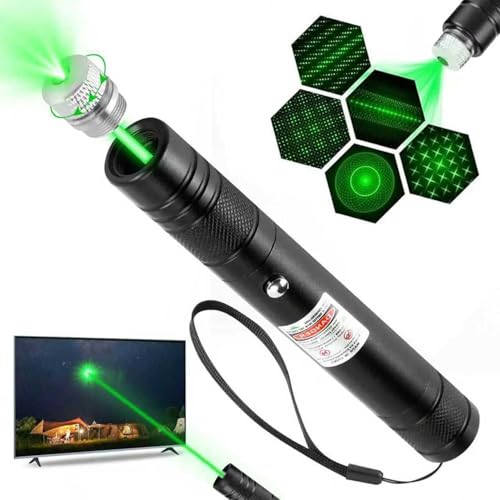
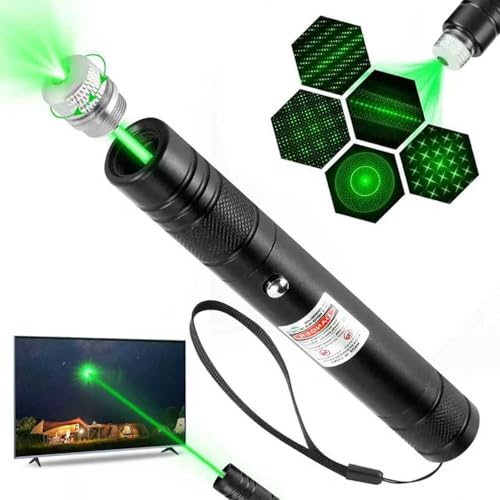
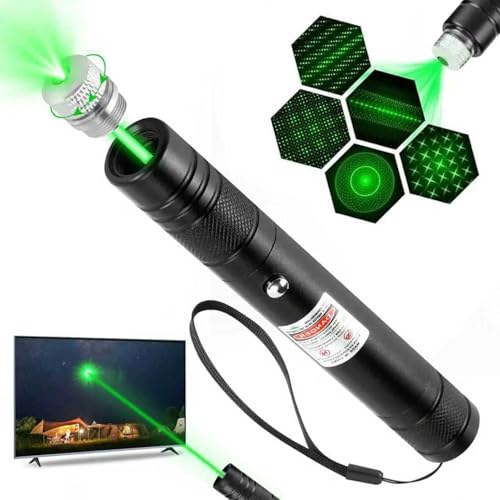
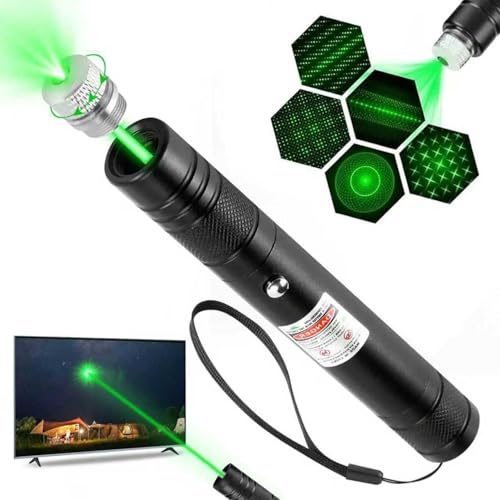
JANHER High Power Green Laser Pointer for Astronomy — USB rechargeable with star cap
#1 Best Overall 2026
~$8.49
Best Green Laser for Astronomy 532nm · USB Rechargeable · Star Cap

JANHER High Power Green Laser Pointer

9.2/10 — Telescope Advisor Rating

Our top pick for 2026 is the JANHER — specifically designed for astronomy use. The built-in USB rechargeable battery means no more dead batteries mid-star party (a common frustration with AAA models). The removable star cap accessory adds engaging visual effects for public outreach, and the long-range single pinpoint mode creates a clean, bright green beam clearly visible in dark sky conditions. The metal housing is durable enough for regular field use at astronomy club events.

USB rechargeable — always ready
Removable star cap included
Long-range pinpoint beam
Astronomy-specific design
No key-lock (button activation)
Durable metal housing
5mW 532nm green laser pointer with safety key lock for astronomy star parties
Star Party Pick
$20–$45
Best for Star Parties & Public Outreach 5mW · 532nm · Key Lock Safety

5mW Green Laser Pointer with Safety Key Lock

For organized star parties, astronomy clubs, and public outreach events — especially where children are present — a key-lock safety mechanism is essential. The key must be inserted to activate the laser, preventing unauthorized use when you set it down. 5mW 532nm output is plenty for pointing at stars and constellations under a dark sky. Look for models with FCC/IEC compliance labeling and a momentary-contact button (fires only while pressed, not a toggle).

Price range: $20–$45 — search for current availability and stock

Budget 532nm green astronomy laser pointer with AAA batteries
Budget Pick
$9–$20
Best Budget Pick — Under $20 5mW · 532nm · 2×AAA Battery

Budget 532nm Green Astronomy Laser (AAA Battery)

Entry-level 532nm green lasers using 2×AAA batteries work well for occasional casual astronomy use. Beam quality and cold-weather performance are typically below premium models, but the visible beam is comparable at 5mW for most conditions. Always buy from reputable sellers — verify the power classification label (Class IIIa / Class 3R) and avoid unlabeled imports with no power rating stated. Adequate for backyard stargazing on a budget.

Price range: $9–$20 — verify Class IIIa compliance label before purchasing

Premium rechargeable green astronomy laser pointer with USB charging and star cap
Premium Pick
$25–$60
Best Premium Rechargeable 5mW · 532nm · USB Rechargeable

Premium Rechargeable Green Astronomy Laser (Star Cap)

For astronomy club members and educators who use their laser frequently, a USB rechargeable model with star cap accessory is the best investment. Premium rechargeable models feature tighter beam divergence, more consistent power output across temperatures, metal construction for field durability, and rechargeable lithium batteries that last through long observing sessions. Look for at least 5mW rated output and a star cap pattern accessory for public outreach.

Price range: $25–$60 — best value for regular astronomy club use

Affiliate Disclosure: Links on this page are Amazon affiliate links. Telescope Advisor earns a commission on qualifying purchases at no extra cost to you. Product availability in this category changes frequently — always verify the power rating and compliance labeling before purchasing, and check current regulations in your jurisdiction.

Star Party Laser Etiquette

Even a safe, low-power laser requires social awareness at star parties and observatories. Follow these guidelines to be a welcome participant at any astronomy event:

Best Practices

  • Ask permission before using at a formal star party — some events or observatories ban lasers
  • Use briefly and purposefully — a quick beam to point at a star, then off. Don't wave continuously.
  • Scan the horizon and sky for aircraft before using, every single time
  • Keep it pointed at the sky — never at eye level, at people, or at equipment
  • Be mindful of observers at eyepieces — a bright beam sweeping nearby can ruin night adaptation

When Lasers Are Most Useful

  • Public outreach and educational events — pointing out constellations for groups
  • Informal "what's that?" moments with family or visitors
  • Guiding telescope students to the right area of sky before they search with the finder
  • Astronomy club constellation tours on new-moon evenings
  • Meteor shower watches — pointing out incoming streaks and radiant points

How to Use a Green Laser for Constellation Tours

1
Orient your group. Before starting, point out cardinal directions and any prominent landmarks. Establish a common reference: "the bright star above the treeline to the south — that's Saturn."
2
Start with bright, recognizable patterns. Begin with Orion (winter) or the Big Dipper (year-round) — patterns everyone can see. Trace the outline slowly with the laser, naming each star.
3
Use the "hop" technique. From a known bright star, point to the laser and say "follow the laser from Polaris, keeping going in this direction — that's Ursa Minor..." Chain the constellations together.
4
Mark telescope targets. Point the laser at an object — "see that faint smudge near the laser tip? That's the Andromeda Galaxy — 2.5 million light-years away" — then guide them to the telescope eyepiece.
5
Always scan for aircraft before each use. This takes 5 seconds and is non-negotiable. Develop the habit — every time, every use, no exceptions.

Frequently Asked Questions: Green Laser Pointers for Astronomy

What mW power should I buy for astronomy?

For most astronomy use, 1–5mW is ideal. 5mW (the maximum for Class IIIa/Class 3R in the USA) is clearly visible in dark sky conditions and appropriate for star parties and outreach. 1–3mW works well and provides more margin for safe use. Don't buy anything above 5mW for astronomy pointing — it's unnecessary and potentially dangerous. Always verify the actual power output from a reputable seller, as many cheap lasers are mislabeled.

Why is the beam only visible in certain conditions?

The green laser beam is visible because it scatters off particles in the air — dust, pollen, water vapor, and aerosols. Under very dry, clean conditions (high altitude desert observatories, for example), the beam is thinner and less dramatic. Under humid coastal conditions, the beam can be brilliant and impressive. From sea level in typical conditions, a 5mW beam is clearly visible. Fog or light clouds dramatically enhance the visual effect but also mean poorer viewing conditions overall.

Are green laser pointers legal in my country?

Laws vary significantly by country and even by state/province. In the USA, 5mW Class IIIa green laser pointers are legal for consumer purchase, but pointing at aircraft is a federal crime. In Australia, some states classify lasers above 1mW as prohibited weapons. In the UK, restrictions on importation apply for lasers above 1mW. In the EU, consumer products over Class 2 (1mW) have restrictions in many member states. Always check the current laws in your specific jurisdiction before purchasing. This guide does not constitute legal advice.

Can a green laser pointer damage my telescope?

A low-power 1–5mW laser will not damage a telescope's optics if accidentally pointed at the objective. However, looking through a telescope eyepiece while the laser is pointed through the tube at your eye would be dangerous — don't do this. Keep the laser pointed outward, at the sky. The concern is eye safety, not optic damage.

How should I store my astronomy laser pointer?

Store the laser with the safety lock engaged or batteries removed to prevent accidental activation. Keep it in a protective case or padded pouch to protect the beam aperture and housing. In cold weather, keep it in an inside jacket pocket before use — cold temperatures can significantly reduce output. Replace batteries before a star party if you've had them in for more than a few sessions.

Related Guides

Official Resources & Safety Information