Where exactly can I see the total solar eclipse on August 12, 2026?
The path of totality crosses northern Russia, Greenland, Iceland, and northern Spain. Key observation cities listed by NASA include Reykjavík (Iceland) and León, Zaragoza, and Valencia (Spain). The partial eclipse is visible across Europe, North Africa, and the northeastern United States. If you are outside the narrow path of totality (approximately 185km wide), you will only see a partial eclipse — still impressive, but without the corona.
Can I use my regular telescope for the solar eclipse without a filter?
Never use a telescope to observe the Sun without an appropriate full-aperture solar filter, except during the seconds of complete totality. A telescope concentrates sunlight to an intense focus — looking through one without a proper solar filter causes immediate, permanent retinal damage with zero warning or pain (the retina has no pain receptors). A full-aperture solar filter (like the Celestron EclipSmart series) attaches to the front of the telescope and is the only safe method. Eyepiece-end solar filters sold as accessories are considered dangerous by astronomers and should not be used.
How long does totality last in Spain on August 12, 2026?
Totality duration in Spain varies by location. Per NASA's published times: León sees about 2 minutes (8:28–8:30 PM), while Zaragoza (8:29–8:30 PM) and Valencia (8:32–8:33 PM) each see about 1 minute. The longest totality anywhere on the path is 2 minutes 18 seconds, in the North Atlantic between Iceland and Greenland. By comparison, the April 8, 2024 eclipse had a maximum of 4 minutes 28 seconds — the 2026 event is shorter, but still fully features the corona, prominences, and chromospheric effects.
What will I see through a telescope during totality?
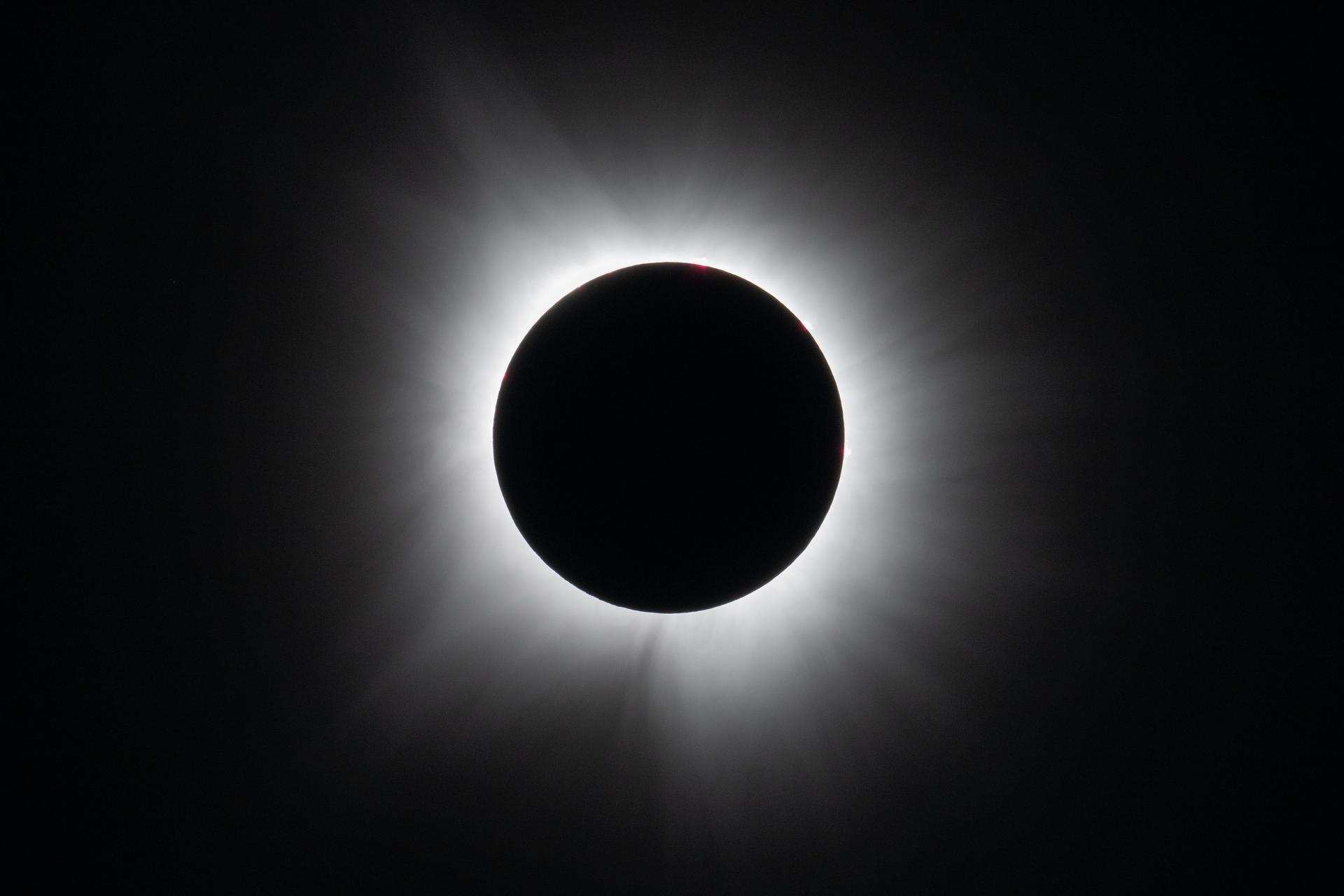
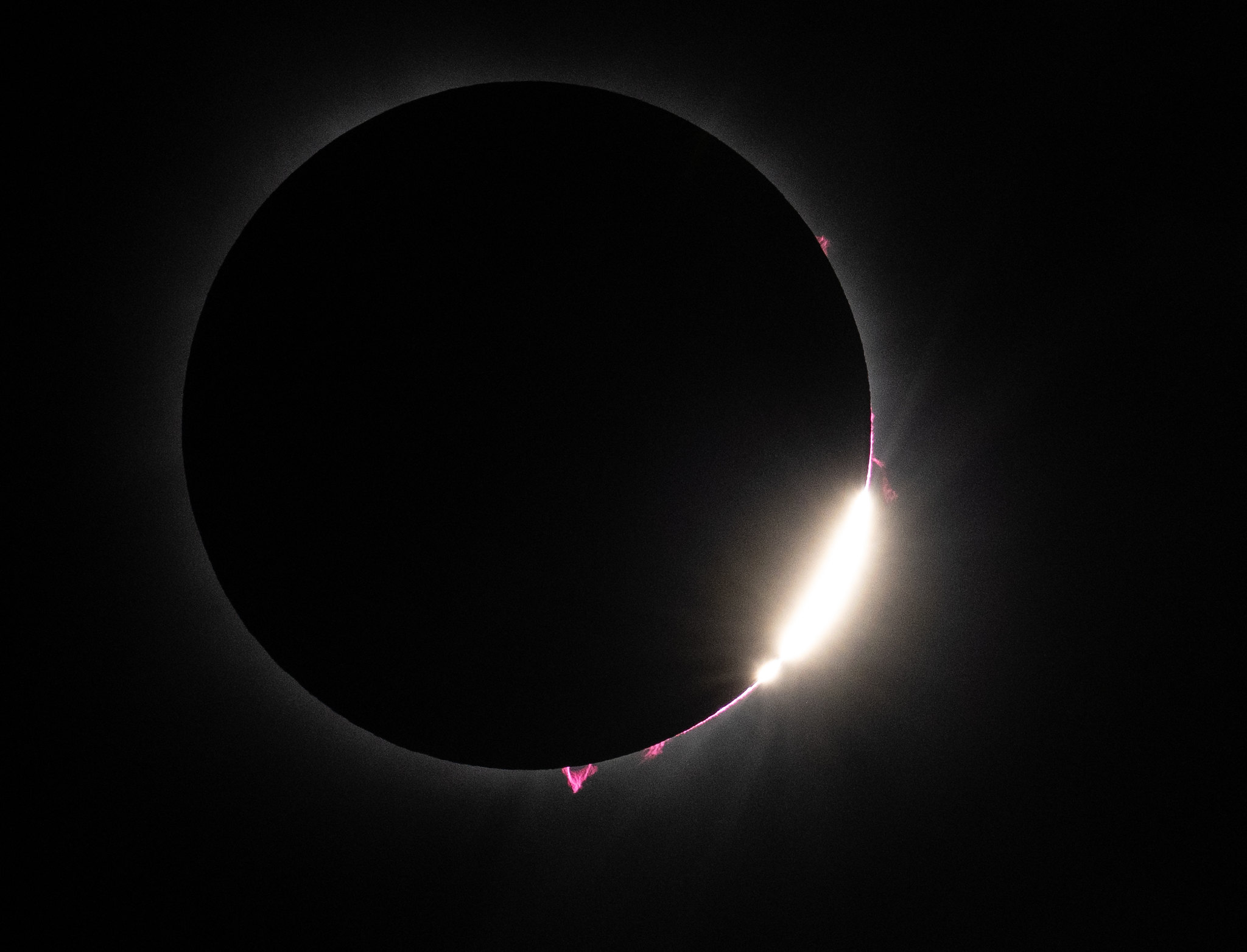
During totality, with the solar filter removed, a telescope shows: (1) The solar corona — the Sun's wispy white outer atmosphere extending several solar diameters from the limb; (2) Pink solar prominences — huge arcs of plasma extending off the solar limb, visible even in a 50mm telescope; (3) The chromosphere — a thin red arc visible for a second or two at second and third contact; (4) Baily's Beads — points of sunlight shining through valleys on the lunar limb, just before and after totality. Lower power (25mm eyepiece at ×20–40) is usually better for totality because it widens the field to capture more corona extent.
Are eclipse glasses from the last solar eclipse still safe to use?
Eclipse glasses from previous eclipses are safe to reuse if they are in perfect condition — no scratches, punctures, cracks, tears, or wrinkles in the filter material. Hold them up to a bright light (not the Sun) and inspect closely. If the filter material is damaged in any way, discard them and buy new ones. ISO 12312-2-certified glasses don't have an inherent expiration date, but physical damage to the filter material is the key concern. When in doubt, replace them — the price of a new pair is negligible compared to the risk.
Do I need special equipment for the partial eclipse if I'm not in the totality path?
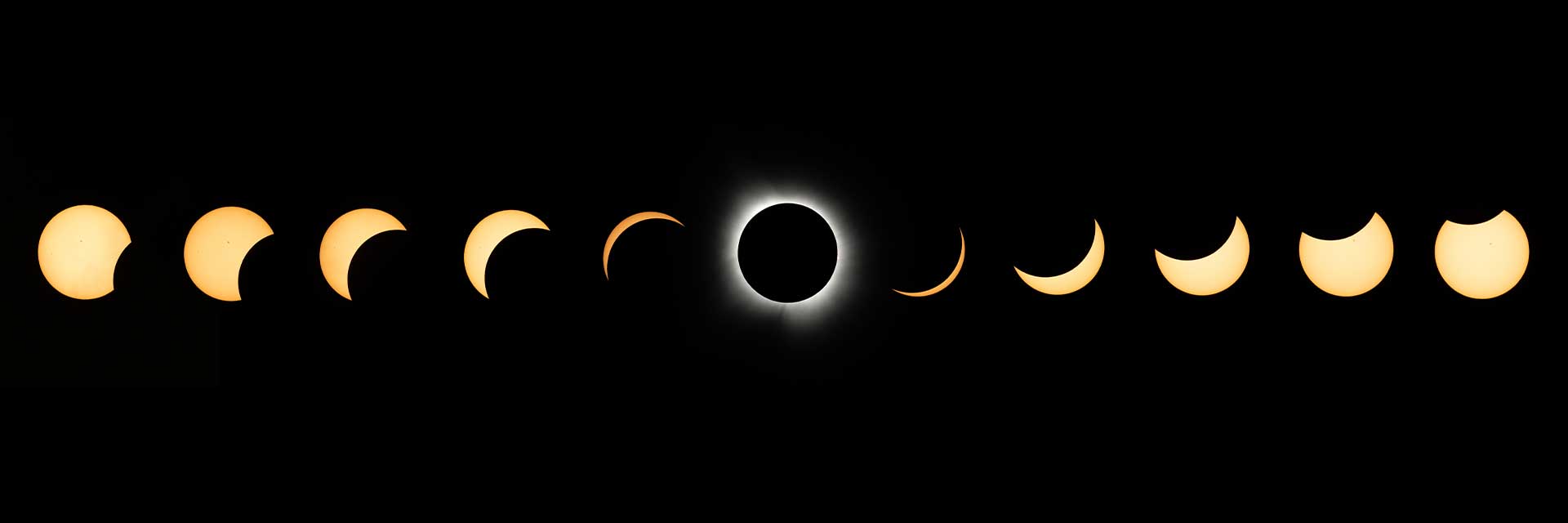
Yes. During the partial eclipse, looking at the Sun without ISO-certified eclipse glasses causes eye damage regardless of how much is covered. Even at 99% coverage, the remaining 1% of direct sunlight is enough to cause harm. ISO 12312-2 eclipse glasses are essential for everyone watching, anywhere in Europe. If you have a telescope, add a proper full-aperture solar filter. The partial eclipse is still spectacular — at 90% coverage in the UK and France, the sky noticeably dims and the temperature drops. A filtered telescope reveals the Moon's limb advancing across the solar disc in remarkable detail.
Is the August 12, 2026 solar eclipse visible from the United States?
Yes — as a partial solar eclipse only. Totality is not visible from any US location. The partial eclipse is visible from Alaska and the northeastern United States. Per NASA, the best US coverage is Fairbanks, Alaska at 37%, followed by Anchorage at 28%; the best lower-48 coverage is Bangor, Maine at 24%, with Portland, Maine at 19% and Boston at 16%. Most of the western and southern US (California, Texas, Florida) will not see the eclipse at all. ISO 12312-2 certified eclipse glasses are required at all times for US observers — there is no moment of totality when glasses can safely be removed.
What states can see the 2026 solar eclipse?
The partial eclipse is visible from Alaska and the northeastern United States. NASA publishes exact times for ten US cities: Fairbanks (AK), Anchorage (AK), Juneau (AK), Bangor (ME), Portland (ME), Boston (MA), New York (NY), Philadelphia (PA), Washington, D.C., and Detroit (MI). Coverage ranges from 37% in Fairbanks down to 3% in Detroit. Times run from morning in Alaska (7:36–9:18 am AKDT) to afternoon in the Northeast (12:54–2:49 pm EDT). See the full NASA city table in the US visibility section above.
What eclipse glasses are safe? What does ISO 12312-2 mean?
Safe eclipse glasses must be certified to ISO 12312-2:2015(E) international standard. This means the glasses reduce sunlight intensity by a factor of at least 100,000× and block harmful infrared and ultraviolet radiation. Look for the ISO 12312-2 marking printed on the frame. The American Astronomical Society (AAS) maintains a list of approved vendors at eclipse.aas.org. CE-certified glasses meeting EN ISO 12312-2 are equally safe. Avoid any glasses not explicitly marked with these certifications — regular sunglasses, even very dark ones, provide zero protection against solar UV and IR.