
Also popular on Telescope Advisor
Saturn Viewing Guide · 2026
How to See Saturn With a Telescope in 2026
Saturn's rings return to an excellent viewing tilt in 2026 — here's exactly what you need to see the rings, Cassini Division, and Titan tonight.
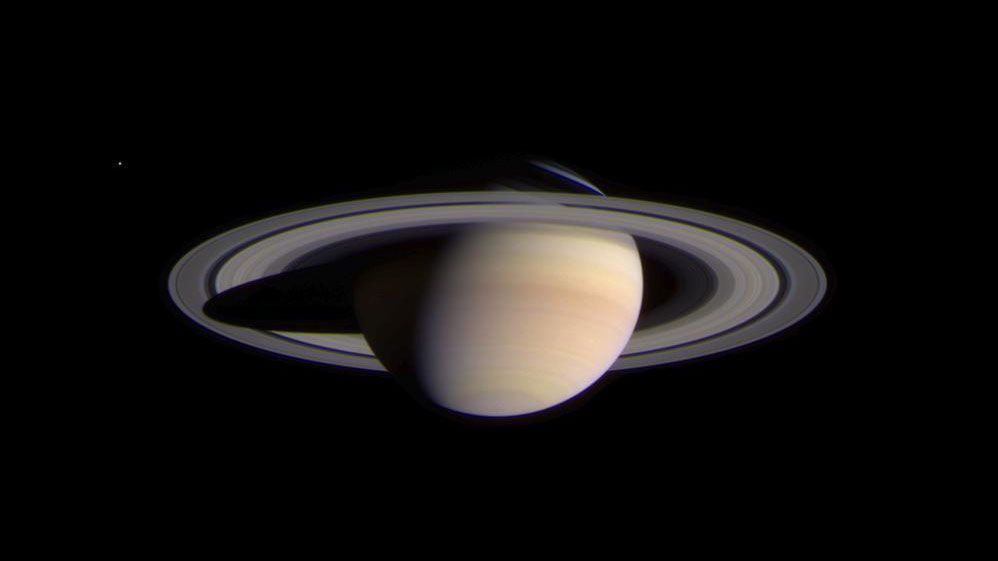
Saturn's rings are the most spectacular sight in amateur astronomy. No photograph fully captures the first moment you see them through an eyepiece — genuinely 3D, unmistakably real, impossibly beautiful. The good news: you can see them with almost any telescope. The great news: Saturn's rings are tilting back toward their most favorable angle in 2026, heading toward maximum tilt by 2032. This is the decade to see Saturn.
Need a telescope that is actually good for planets?
Answer a few quick questions and the Finder Tool will point you toward scopes that make Saturn, Jupiter, and lunar detail worth the money.
When Is Saturn Visible in 2026?
Saturn Opposition 2026: October 4
Saturn reaches opposition (closest approach to Earth, highest in the sky at midnight) on October 4, 2026. During opposition, Saturn is visible all night — rising at sunset, highest around midnight, setting at dawn. This is the best time to observe Saturn each year.
Saturn is well-placed for evening viewing from June through November 2026. From July onward it rises before midnight, making it accessible for most observers without a very late night.
The ring tilt in 2026 is approximately 11–13° from edge-on, returning to the favorable angles last seen before the 2025 ring plane crossing. By 2032, the rings will be tilted 27° — near maximum — giving their most spectacular appearance.
Saturn Visibility Calendar 2026
What Telescope Do You Need to See Saturn's Rings?
Saturn's rings are visible in remarkably small telescopes. Here's the honest minimum requirement:
Minimum: 60mm refractor at 50×
Any 60mm telescope at 50× magnification shows the rings clearly — they appear as a distinctive elongated "hat" shape extending from the planet's disc. You can tell they're rings, not part of the planet. This is genuinely breathtaking on first sight.
Better: 80–100mm at 100–150×
Clearly separated ring system with gap visible between rings and planet. Saturn's disc shows a faint equatorial belt. Titan (the largest moon) is visible as a point of light nearby. On good nights, the Cassini Division (dark gap in the rings) is visible.
Best: 150mm+ at 150–250×
Cassini Division clearly visible as a distinct dark gap. Multiple ring divisions visible. Saturn's cloud belts and the shadow of the rings on the planet's disc. 4–6 moons visible: Titan, Rhea, Dione, Tethys, Enceladus, Mimas.
What magnification is best for Saturn?
Start at 75–100× to locate and center Saturn. Then push to 150–200× for best detail on a night of good atmospheric steadiness (good "seeing"). On exceptional nights, 250–300× on a 6-inch or larger scope will show extraordinary ring detail. Never push magnification past the point where the image becomes soft — steadiness of the atmosphere limits effective magnification more than aperture does.
Next Best Step
Use your planet interest to make the right gear decision
The fastest next step is usually to compare the right planetary scope, confirm what detail is realistic, or tighten the accessory plan.
How to Find Saturn Tonight
What You'll See at Each Aperture
| Aperture | Power | What You'll See |
|---|---|---|
| 60mm refractor | 50× | Rings clearly visible, "hat" shape. Disc visible. Titan as a star nearby. |
| 80mm refractor | 100× | Rings distinct, gap between rings and planet visible. First hint of Cassini Division on good nights. |
| 100mm (4-inch) | 150× | Cassini Division clearly visible. Equatorial belt on planet. 3–4 moons. Ring shadow on globe. |
| 150–200mm (6–8") | 200× | Multiple ring divisions. Cloud belts. 4–6 moons. Shadow of rings on globe detailed. Stunning views. |
| 250mm (10-inch) | 250× | Encke Division hint. Polar hexagon (on best nights). 6+ moons. Individual ring color differences. |
Saturn's Ring System: What Are You Looking At?
Saturn's rings are made of countless particles of ice and rock, ranging from tiny dust grains to chunks the size of a house. Despite appearing solid, the rings are almost impossibly thin — the main ring system spans 282,000 km (175,000 miles) in diameter, yet is only 10–100 meters thick in most places.
Ring Layers (Visible in Amateur Telescopes)
- A Ring (outer): Bright, wide. Visible in 60mm scopes.
- Cassini Division: Dark gap separating A and B rings. Visible clearly in 100mm+ scopes at 150×.
- B Ring (brightest): The widest, brightest ring. Dominates the view.
- C Ring (Crepe Ring): Dark, translucent inner ring. Requires 150mm+ to detect.
- Encke Division: Narrow gap in the A ring. Requires 200mm+ and excellent seeing.
The 2025–2026 Ring Tilt Event
In March 2025, Saturn's rings passed through edge-on orientation — appearing as a thin line through even large telescopes. This happens every 15 years due to Saturn's axial tilt. Now in 2026, the rings are opening up again — tilting further from edge-on each month. By 2032, the rings will be at maximum tilt of 27°, providing the most spectacular views possible. This means every year from 2026 to 2032 shows progressively better ring views.
Best Telescopes for Viewing Saturn
Best Budget Saturn Scope
Celestron AstroMaster 70AZ
70mm f/13 refractor · 910mm focal length
At 91× (using included eyepieces), the rings are clear and distinct. The f/13 focal ratio minimizes color fringing on bright Saturn. An excellent first scope for planetary viewing. If you're choosing your first scope, see our full guide to the best telescopes for beginners.
View on Amazon →Best Mid-Range for Saturn
Celestron NexStar 8SE
8-inch f/10 Schmidt-Cassegrain · GoTo computerized mount
The NexStar 8SE is widely considered the best all-around telescope for planetary viewing. The long f/10 focal ratio of the SCT provides superb contrast on planetary details. GoTo alignment means Saturn is found automatically. Cassini Division, multiple moons, and ring details are all accessible.
View NexStar 8SE on Amazon →Best Value for Saturn Detail
Celestron Omni XLT 102
102mm f/9.8 achromatic refractor · Equatorial mount
102mm aperture at f/9.8 is the sweet spot for visual planetary observing without SCT pricing. At 150×, the Cassini Division is clearly visible, and Saturn's equatorial belt stands out. The equatorial mount allows slow-motion tracking so Saturn stays centered.
View Omni XLT 102 on Amazon →Best Deep Sky + Saturn Combo
Sky-Watcher Dobsonian 8
200mm (8-inch) f/5.9 Newtonian · Dobsonian rocker box mount
An 8-inch Dobsonian provides outstanding Saturn views at 200× and also excels at deep-sky objects. The Cassini Division, ring colors, multiple cloud belts, and 4–6 moons are all visible. Best choice if you want one telescope for both planets and galaxies.
View Sky-Watcher Dobsonian 8 on Amazon →→ See our full guide: Best Telescopes for Viewing Planets in 2026
Frequently Asked Questions
Can I see Saturn's rings with a cheap telescope?
Yes. Saturn's rings are visible in any telescope with a 60mm objective or larger at 50× magnification. Even a basic 70mm refractor or a 114mm reflector will show the rings clearly. The ring "tilt" matters — in 2026, the rings are increasingly tilted back toward us (away from the 2025 edge-on position), making them more visible than they were in 2024–2025.
Why does Saturn look flat or the rings disappear sometimes?
Saturn's axis is tilted at 26.7° relative to its orbit. As Saturn travels around the Sun over 29 years, we see the rings from different angles. When the rings are tilted edge-on toward Earth (as in March 2025), they nearly disappear — becoming an almost impossibly thin line. At maximum tilt (in 2032), they're tilted 27° and appear as a spectacular oval disc. In 2026, the rings have opened back to about 11–13° of tilt and will improve each year through 2032.
What is the Cassini Division?
The Cassini Division is a dark gap approximately 4,800 km wide that separates the A ring (outer) from the B ring (inner). It was discovered by Italian-French astronomer Giovanni Cassini in 1675. It appears as a dark line or gap within the rings, most visible when the rings are well-tilted toward Earth. With a 100mm telescope at 150×, the Cassini Division is clearly visible on nights with good atmospheric steadiness. It appears fully dark but actually contains thinner, less reflective ring material.
How many of Saturn's moons can I see?
Titan (magnitude 8.9) is visible in any telescope that shows the rings. With a 100mm+ telescope at moderate power, you can also see Rhea (mag 9.7), Dione (mag 10.4), and Tethys (mag 10.3). From a 150mm+ scope, Enceladus (mag 11.7) and occasionally Mimas are reachable. Six moons in a single view from a 200mm telescope is achievable on the best nights. Their positions change noticeably over days as they orbit Saturn.
What is the best time of night to observe Saturn?
The best time to observe Saturn (or any planet) is when it's highest in the sky — near its meridian transit, the moment it crosses due south (in the northern hemisphere). At this point, you're looking through the minimum amount of Earth's atmosphere. Check your planetarium app for Saturn's transit time. Around opposition in October 2026, Saturn transits close to midnight. Avoid observing when Saturn is lower than 30° above the horizon — atmospheric distortion becomes severe below this altitude.
Continue Exploring
Stay in the planetary path instead of restarting your research
If planets are the reason you are here, the most useful next click is another planetary answer or a direct route to the right telescope.
Next Buying Steps for Better Saturn Views
- Pick a stronger planet setup from our best telescope for viewing planets guide.
- If rings still look small, use this Saturn magnification benchmark.
- For first-scope buyers, shortlist options in best beginner telescopes.
- Run sharpness troubleshooting with how to focus a telescope properly.
Related Guides
What Do Planets Look Like Through a Telescope?
Honest planet-by-planet guide: Saturn, Jupiter, Mars, the Moon — real eyepiece views vs NASA photos.
Best Telescopes for Planets
Full guide to choosing the right telescope for planetary observing in 2026.
Celestron NexStar 8SE Review
The most popular planetary telescope — full hands-on review.
Best Telescopes for Beginners
Find the best first telescope for seeing Saturn's rings this summer.
Stargazing for Beginners
Complete beginner's guide — naked eye to binoculars to your first telescope view of Saturn.
How to Start Stargazing Tonight
Step-by-step first night guide — dark adaptation, location, and first targets.
What Magnification to See Saturn’s Rings?
Per-aperture magnification table — from the minimum 50× to Cassini Division territory at 150×+.
How to See Jupiter Through a Telescope
Cloud bands, the Great Red Spot, and four Galilean moons — what each aperture reveals.
How to Collimate a Dobsonian Telescope
If Saturn looks soft at high power, check reflector alignment with this step-by-step guide.