TelescopeAdvisor Logo TelescopeAdvisor
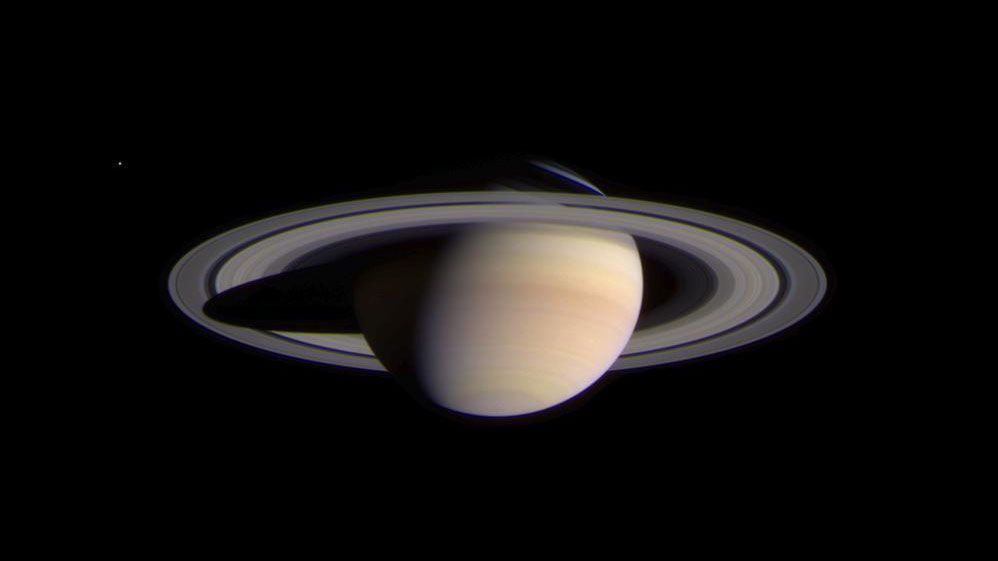
NASA Cassini image of Saturn and its rings, showing the kind of ring detail a capable planetary telescope can reveal.

Planetary Observing Guide · 2026

Best Telescope for Viewing Planets in 2026

What actually works for seeing planets at every budget, from first scope to serious planetary setup.

Top TargetSaturn Rings
Useful Power120x-250x
Sweet Spot100-203mm Aperture
UpdatedApril 2026
By Telescope Advisor Editorial Team Published: Updated: Editorial Standards

If your goal is crisp views of Saturn's rings, Jupiter's cloud bands, Mars at opposition, and lunar crater detail, this is the guide to use. We tested this around a practical question: which telescope for viewing planets gives the best real-world results for your budget, not just the highest advertised magnification.

Quick Answer: Best Telescope for Viewing Planets in 2026

For most people, the best telescope to see planets is an 8-inch Schmidt-Cassegrain or an excellent 4-inch to 5-inch long-focal-length refractor/Mak-Cass on a stable mount. You do not need extreme magnification claims. You need stable optics, enough aperture, and usable eyepieces.

  • Best entry planetary starter: Celestron AstroMaster 70AZ
  • Best value tier with guided finding: Celestron StarSense Explorer LT 114AZ
  • Best enthusiast refractor tier: Celestron Omni XLT 102
  • Best overall for most serious hobbyists: Celestron NexStar 8SE
  • Best premium planetary package: Celestron Advanced VX 8" EdgeHD

Planetary Telescope Comparison Table (2026)

Entry Tier

Celestron AstroMaster 70AZ

Refractor (Alt-Az) | 70mm

900mm (f/13)

First-time buyers focused on Moon, Jupiter, Saturn

View on Amazon

Value Tier

Celestron StarSense Explorer LT 114AZ

Newtonian (Alt-Az) | 114mm

1000mm (f/8.8)

Beginners who want easier target finding with solid optics

View on Amazon

Enthusiast Tier

Celestron Omni XLT 102

Achromatic Refractor | 102mm

1000mm (f/9.8)

Sharper visual planetary contrast in suburban skies

View on Amazon

Advanced Tier

Celestron NexStar 8SE

Schmidt-Cassegrain (GoTo) | 203mm (8 inch)

2032mm (f/10)

Best all-around planetary and lunar performance for most users

View on Amazon

Premium Tier

Celestron Advanced VX 8\" EdgeHD

EdgeHD SCT on EQ mount | 203mm (8 inch)

2032mm (f/10)

Advanced users who also want premium tracking and imaging growth

View on Amazon

Affiliate links — we may earn a small commission at no extra cost to you.

5 Specific Planetary Telescope Picks by Tier

Entry Tier

Celestron AstroMaster 70AZ

Refractor (Alt-Az) | Aperture: 70mm | Focal Length: 900mm (f/13)

Best for: First-time buyers focused on Moon, Jupiter, Saturn

Why it works for planets: Long focal ratio helps control chromatic aberration and gives cleaner planetary contrast than many short, fast budget scopes.

View on Amazon

Affiliate link — we may earn a small commission at no extra cost to you.

Value Tier

Celestron StarSense Explorer LT 114AZ

Newtonian (Alt-Az) | Aperture: 114mm | Focal Length: 1000mm (f/8.8)

Best for: Beginners who want easier target finding with solid optics

Why it works for planets: More light than entry refractors plus StarSense guidance for faster setup and more observing time.

View on Amazon

Affiliate link — we may earn a small commission at no extra cost to you.

Enthusiast Tier

Celestron Omni XLT 102

Achromatic Refractor | Aperture: 102mm | Focal Length: 1000mm (f/9.8)

Best for: Sharper visual planetary contrast in suburban skies

Why it works for planets: A proven 4-inch class planetary refractor size with enough focal length for practical high-power viewing.

View on Amazon

Affiliate link — we may earn a small commission at no extra cost to you.

Advanced Tier

Celestron NexStar 8SE

Schmidt-Cassegrain (GoTo) | Aperture: 203mm (8 inch) | Focal Length: 2032mm (f/10)

Best for: Best all-around planetary and lunar performance for most users

Why it works for planets: 8 inches of aperture with long focal length produces excellent planetary detail and comfortable high magnification ranges.

View on Amazon

Affiliate link — we may earn a small commission at no extra cost to you.

Premium Tier

Celestron Advanced VX 8\" EdgeHD

EdgeHD SCT on EQ mount | Aperture: 203mm (8 inch) | Focal Length: 2032mm (f/10)

Best for: Advanced users who also want premium tracking and imaging growth

Why it works for planets: Edge-corrected optics plus a capable equatorial mount creates a high-end planetary visual and imaging platform.

View on Amazon

Affiliate link — we may earn a small commission at no extra cost to you.

Minimum Aperture and Useful Magnification for Planets

  • 70mm-90mm: Moon, Jupiter bands, Saturn rings, and Venus phases in good seeing.
  • 100mm-127mm: Better contrast and more consistent detail on Jupiter and Mars.
  • 150mm-203mm: Serious planetary detail, better color and structure at moderate-to-high power.

Practical power range for most nights is 120x to 250x. Chasing 400x+ usually gives softer results unless seeing is exceptional.

Refractor vs SCT vs Mak-Cass for Planet Viewing

  • Refractor: Fast setup, strong contrast, low maintenance, excellent for quick planetary sessions.
  • SCT (Schmidt-Cassegrain): Big aperture in compact form, strong all-around performer for planets and Moon.
  • Mak-Cass: High contrast and long focal length in a compact tube, very effective for planetary specialists.

If you are unsure, start with a stable refractor in the enthusiast tier or an 8-inch SCT in the advanced tier.

What You’ll See on Each Planet Through a Telescope

Jupiter

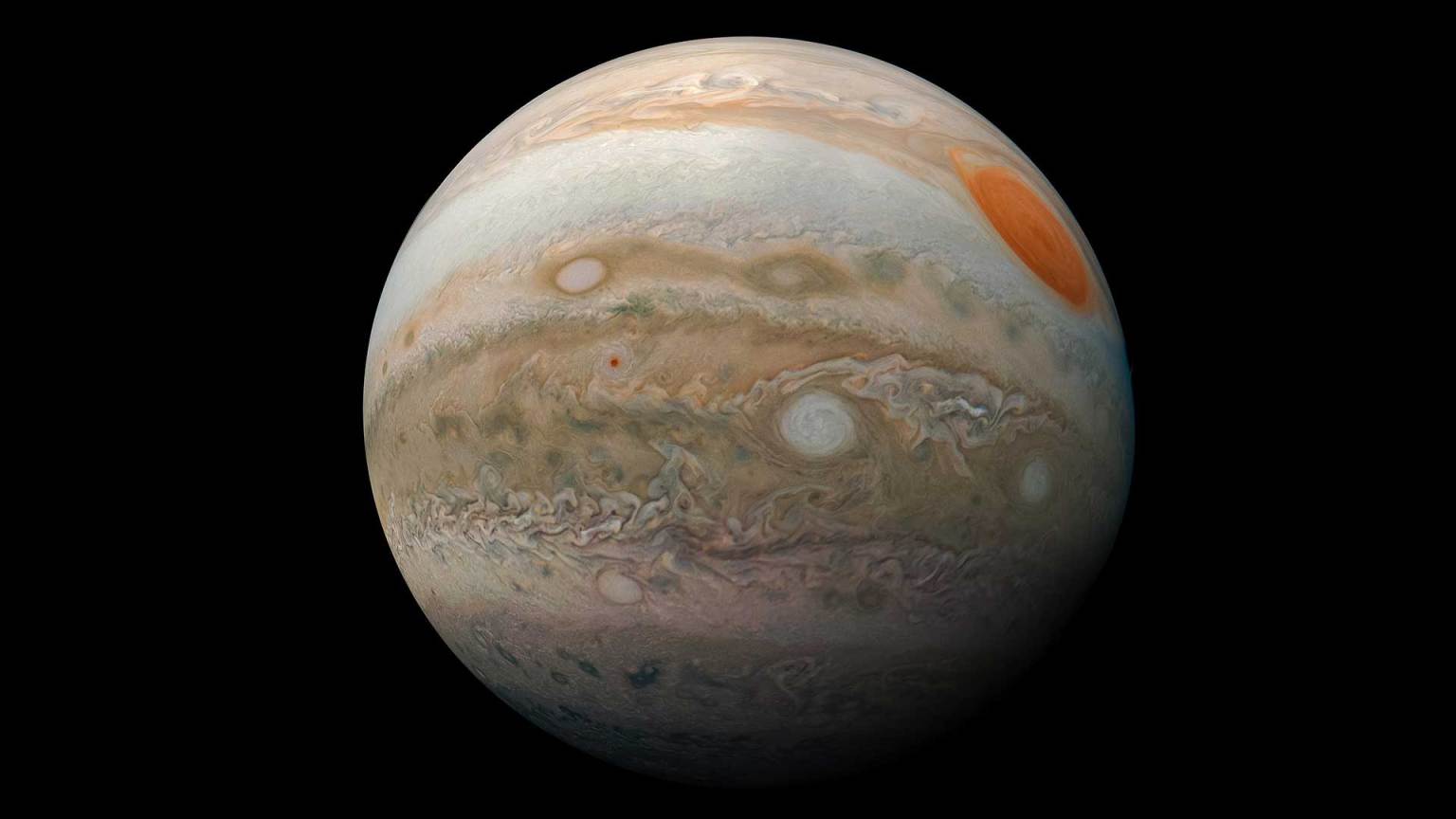
Jupiter is the most rewarding planet for frequent viewing because it changes week to week. At 100x, two dark equatorial cloud bands are clearly visible. With 127mm or more, you can see finer belts, zones, and oval features. The Great Red Spot — a storm twice the size of Earth — rotates into view every ~10 hours. The four Galilean moons (Io, Europa, Ganymede, Callisto) are visible even in binoculars and shift position nightly.

Minimum: 60mm  |  Sweet spot: 100mm+

Saturn

Saturn is the planet that converts beginners into lifelong observers. Even at 50x the rings are unmistakable. At 150x in steady seeing, you can split the Cassini Division (the dark gap between the A and B rings). The ring tilt is especially favorable in 2026 after the near-edge-on period. Saturn’s largest moon Titan is visible as a faint point just outside the rings.

Minimum: 60mm  |  Sweet spot: 100mm+

Best Telescope to View Mars

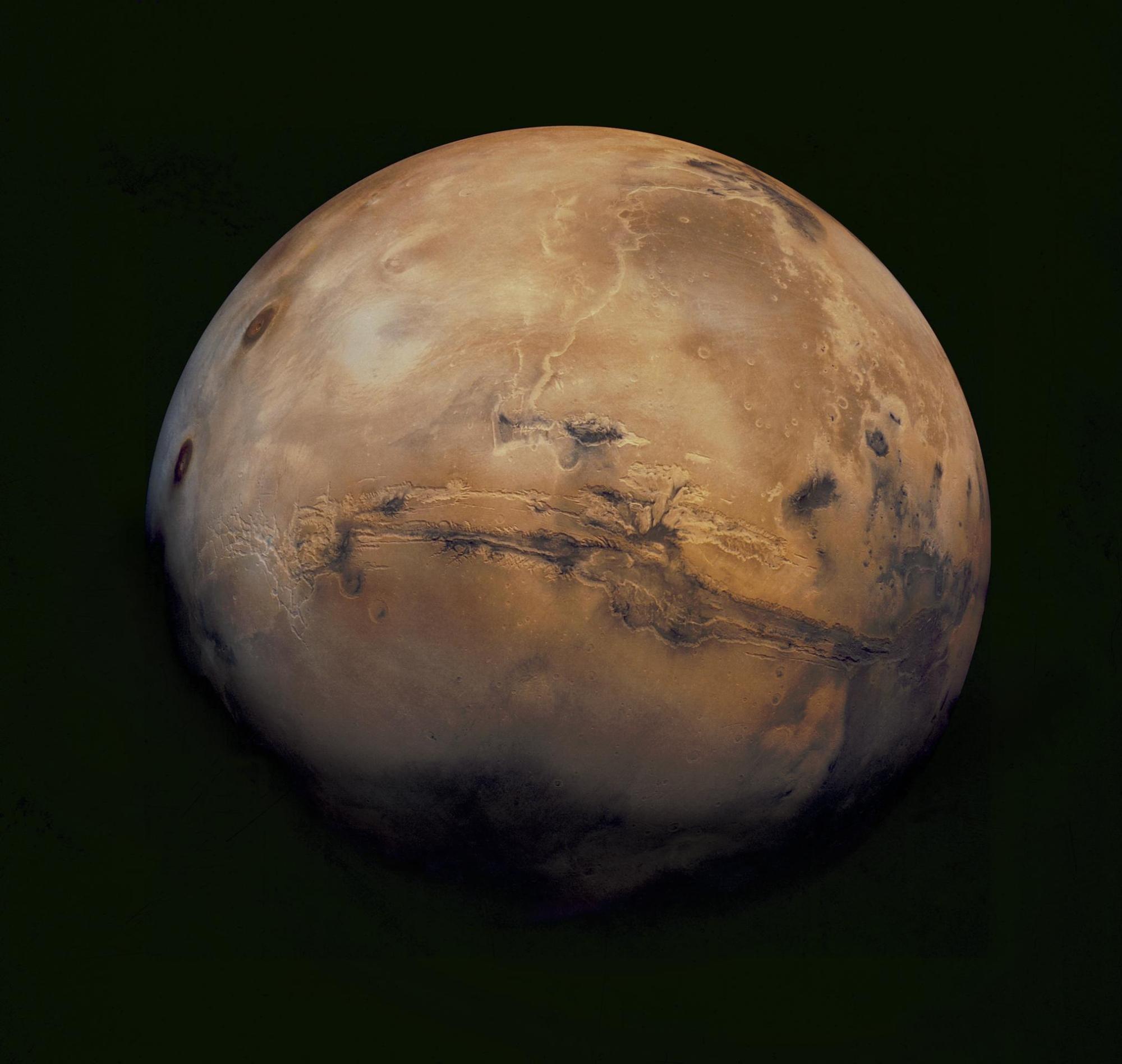
The best telescope to view Mars rewards patience: Mars only shows real detail near opposition (every 26 months). At its best, the polar ice cap and dark surface markings like Syrtis Major are visible at 150x+ in a 100mm or larger scope. Away from opposition it appears as a small reddish disc with little to resolve. Aperture above 150mm and high-magnification eyepieces matter most for Mars.

Minimum: 100mm near opposition  |  Sweet spot: 150mm+

Venus from a Telescope: Phases and What You’ll See

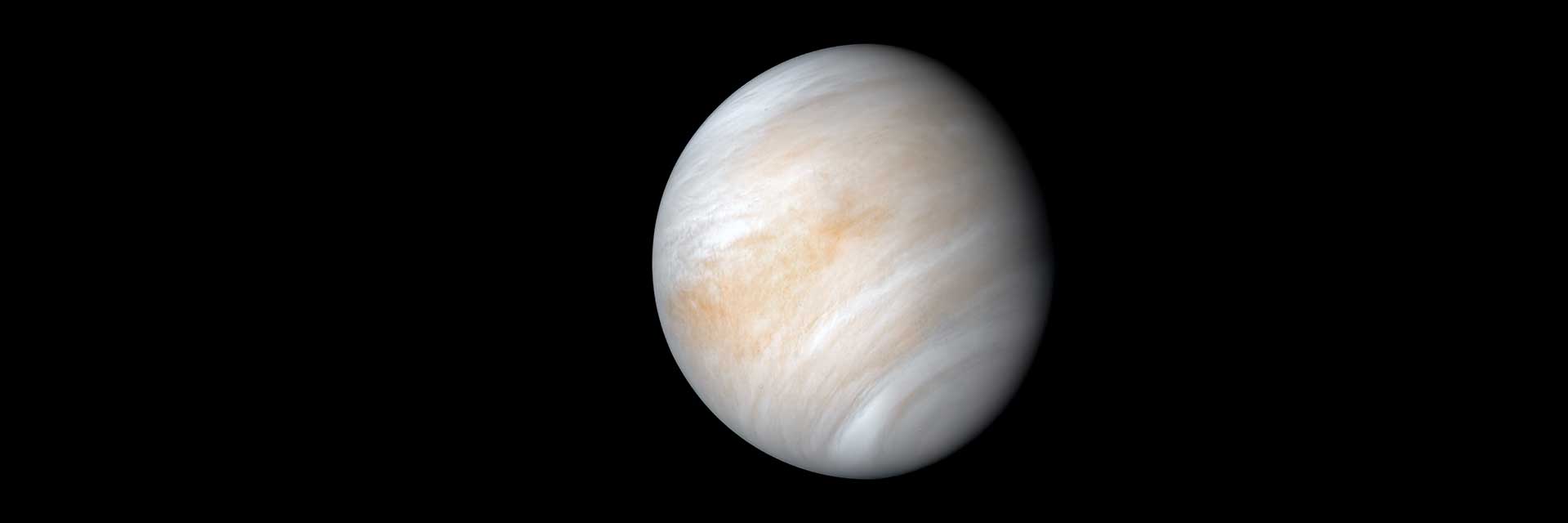
Venus from a telescope is one of the most surprising revelations for new observers: it shows dramatic phases like the Moon — crescent, half-phase, gibbous — as it orbits inside Earth’s orbit. No surface detail is visible (permanently clouded), but the phase shapes are striking and change noticeably over weeks. Best viewed at twilight to reduce glare. Crescents can grow very large and bright near inferior conjunction.

Minimum: any scope  |  Sweet spot: 60mm–100mm

Uranus & Neptune

Both ice giants appear as small blue-green discs in a 100mm or larger telescope — distinctly non-stellar compared to background stars. No atmospheric details are visible to amateur observers. These are primarily solar-system checklist or tour targets. A GoTo mount is strongly recommended since neither is naked-eye visible without dark skies and a chart.

Minimum: 100mm  |  GoTo mount recommended

The Moon (Bonus Target)

While not a planet, the Moon is the most detailed object any telescope can show. Thousands of craters, mountain ranges, and lava plains snap into clarity even at low power. The terminator — the shadow line between lit and dark lunar surface — creates the sharpest contrast views. Any scope in this guide delivers extraordinary lunar detail and is the best way to assess optics quality when planets are not in season.

Works with any telescope at any magnification

Best Eyepieces for Planets

Your telescope provides the aperture. The eyepiece determines magnification and view quality. A poor eyepiece wastes a great telescope on planets. Here are the three eyepieces every planetary observer should own:

Celestron X-Cel LX 25mm — Wide Survey

Your lowest-power, widest-field eyepiece. Start every session here to find and center the planet before switching to higher power. Excellent eye relief and field of view.

View on Amazon

Celestron X-Cel LX 9mm — Medium Power

The sweet-spot eyepiece for most evenings. Ideal for Jupiter and Saturn when atmospheric turbulence limits pushing to maximum magnification. Most-used eyepiece in any planetary kit.

View on Amazon

Celestron X-Cel LX 6mm — High Power

Use only on nights with stable seeing. Pushes to high magnification for Jupiter cloud band detail, Saturn ring structure and Cassini Division, and lunar crater walls.

View on Amazon

2x Barlow Lens

A quality 2x Barlow doubles any eyepiece’s magnification, effectively doubling your collection. Invest in a glass-lens Barlow rather than a cheap plastic version — optical quality directly impacts planetary sharpness.

Planetary Color Filters

#80A blue filter improves Jupiter cloud band contrast. #21 orange filter enhances Mars surface markings. #38A deep blue sharpens Venus phase contrast. Filters thread directly onto standard 1.25-inch eyepieces.

For eyepiece quality, orthoscopic and Plossl designs deliver excellent planetary contrast at a modest per-eyepiece cost. These are the formats experienced planetary observers have trusted for decades.

Saturn Rings 2026 Context: Why This Year Matters

Planetary interest spikes in 2026 because Saturn's rings are returning to a more favorable viewing geometry after the edge-on period. If Saturn is your top target, read our dedicated seasonal guide: Saturn's Rings Returning in 2026 Telescope Guide.

What You Are Aiming to See: NASA Planet Reference Views

Reference images are from NASA mission archives. Visual telescope views are less saturated than photos, but these help set realistic detail expectations for cloud bands, rings, and phases.

NASA Juno image of Jupiter's cloud bands and Great Red Spot used as a planetary observation reference.
Jupiter reference view from NASA Juno mission imagery. Source: NASA Jupiter page.
NASA Cassini image of Saturn with ring structure.
Saturn ring structure captured by NASA Cassini. Source: NASA Saturn page.
NASA global view of Mars used as a visual expectation reference for telescope users.
Mars reference view from NASA resources. Source: NASA Mars page.
NASA Mariner 10 image of Venus showing cloud cover as a phase and contrast reference for observers.
Venus reference view from NASA Mariner mission imagery. Source: NASA Venus page.

FAQ: Best Telescope for Seeing and Viewing Planets

What is the best telescope for viewing planets in 2026?

For most users, the best telescope for viewing planets is an 8-inch Schmidt-Cassegrain like the Celestron NexStar 8SE. It combines large aperture with a long focal length optimized for planetary detail, GoTo tracking to hold planets in the eyepiece, and a proven optics platform. For users who want simpler setup and strong contrast, a quality 4-inch to 5-inch refractor like the Omni XLT 102 is an excellent planetary telescope that requires very little maintenance.

What do planets actually look like through a telescope?

Through a properly collimated telescope in good seeing conditions: Jupiter shows distinct equatorial cloud bands and four Galilean moons as tiny points around it. Saturn reveals its rings clearly and the Cassini Division gap at medium power. Mars shows its polar ice cap and surface markings near opposition. Venus displays crescent and gibbous phases but no surface features. The Moon — while not a planet — shows thousands of craters and mountain ranges in extraordinary detail. Expectation management matters: telescope views are less saturated than the NASA photos you find online, but the live experience is unforgettable.

What is the minimum aperture to see planets clearly?

A 60mm to 70mm telescope is the practical minimum for seeing Saturn’s rings and Jupiter’s two main cloud bands. For consistently satisfying views with more detail — Cassini Division in Saturn’s rings, multiple Jupiter belts, and Mars surface markings near opposition — you want at least 100mm aperture. At 150mm to 200mm, planetary viewing becomes genuinely impressive on most nights. Aperture is the single most important hardware factor for planetary detail after optical quality.

How much magnification do I need to see Saturn’s rings and Jupiter’s cloud bands?

In typical seeing conditions, 120x to 200x is the practical range for clear planetary detail. Saturn’s rings are visible at as little as 50x; the Cassini Division opens up around 150x in stable air. Jupiter’s main cloud bands show clearly at 100x. Chasing 400x or higher usually produces softer, shimmering images unless the atmosphere is exceptionally steady. Match magnification to the seeing conditions each night rather than pushing for maximum power.

Is a refractor, SCT, or Mak-Cass best for viewing planets?

All three types work well for planetary viewing, with different trade-offs. Refractors offer crisp contrast, fast setup, and no collimation issues — ideal for quick sessions or travel. Schmidt-Cassegrains (SCTs) pack the most aperture into a compact tube and are the best all-around choice if you want both planetary and some deep-sky capability. Mak-Cassegrains offer the highest native contrast per inch of aperture and long focal lengths in a small tube, making them popular planetary specialist instruments. For a pure planetary telescope, many experienced observers prefer a long-focal-length refractor or a Mak-Cass, while SCTs offer the best value if you want versatility.

Are telescopes for watching planets different from deep-sky telescopes?

Yes, though some scopes handle both reasonably well. A planetary telescope benefits from long focal length (f/8 to f/15 range), high magnification stability, and a sturdy mount. Deep-sky telescopes typically use fast focal ratios (f/4 to f/6) and wider fields to gather faint light across large areas. A short fast Newtonian that excels at nebulae and galaxies is often not the ideal planetary telescope. If planets are your primary interest, prioritize focal length and mount stability over wide-field capability.

What is the best telescope for viewing both planets and stars?

An 8-inch SCT like the Celestron NexStar 8SE is the most popular answer for users who want to observe both planets and stars or open clusters. For deep-sky objects beyond clusters — nebulae and galaxies — an 8-inch or 10-inch Dobsonian Newtonian covers both planetary and deep-sky work well, though tracking requires manual pushing. If portability matters, a 5-inch Mak-Cass on a GoTo mount is a compact solution that handles planets excellently and shows brighter deep-sky objects acceptably.

What is the best telescope to see Saturn’s rings clearly?

The rings of Saturn are visible in even a 60mm refractor, but for detail — including the Cassini Division between rings and the ring shadow on the planet — you need 100mm of aperture and at least 150x magnification on a stable night. The Celestron Omni XLT 102 (4-inch refractor) and NexStar 8SE are both outstanding Saturn scopes. In 2026, Saturn’s rings are tilting back to a favorable angle, making this one of the best windows for ring observation in recent years. Read our dedicated Saturn 2026 guide for timing and setup tips.

Can a beginner get good views of planets with an inexpensive telescope?

Yes, if the telescope is optically sound and sits on a stable mount. Saturn’s rings and Jupiter’s cloud bands are among the easiest planetary details to see — they do not require expensive equipment. Entry-level picks like the AstroMaster 70AZ or StarSense Explorer LT 114AZ deliver genuine planetary views. The most important thing a beginner can do is avoid wobbly, department-store scopes with cheap plastic mounts, regardless of how large the magnification claims on the box appear. Optical quality and mount stability matter more than raw aperture at the entry level.

What is a good telescope to see planets for under $300?

The Celestron StarSense Explorer LT 114AZ is the top pick in the under-$300 range for planet viewing. It pairs 114mm of aperture with a 1000mm focal length and includes the StarSense dock for smartphone-assisted alignment, which significantly shortens setup time for new observers. The AstroMaster 70AZ is a reliable option at an even lower price point. For more budget context, see our Best Telescopes Under $300 guide.

How does atmospheric seeing affect planetary telescope performance?

Atmospheric seeing — turbulence in the air column between you and the planet — is often the limiting factor, not your telescope. Even the best planetary telescope will produce blurry, shimmering images on a night with poor seeing. Good seeing nights produce dramatically sharper views than average nights at the same location. To improve odds: observe when planets are high in the sky (less atmosphere to look through), avoid nights after cold fronts pass through, and let your telescope thermally equilibrate for 20–30 minutes before expecting sharp views. Checking a site like Astrospheric or Clear Outside for seeing forecasts helps schedule high-power sessions.

What is the best telescope for viewing planets and galaxies?

The best telescope for viewing planets and galaxies is the Celestron NexStar 8SE. Its 8-inch aperture and 2032mm focal length deliver sharp planetary detail — Saturn’s rings, Jupiter’s cloud bands, Mars surface markings — while also gathering enough light to show brighter deep-sky objects: the Orion Nebula, globular clusters like M13, and larger galaxies like M31 and M81. If your budget allows, the Celestron Advanced VX 8" EdgeHD takes both planetary and galaxy imaging further on an equatorial mount. For users who want maximum galaxy performance alongside planets, a 10-inch Dobsonian Newtonian offers the most aperture per dollar for visual observing, though without GoTo tracking. The key trade-off is focal ratio: a long focal ratio (f/10) favors planetary detail, while a faster ratio (f/4–f/5) favors faint extended galaxies. An 8-inch SCT at f/10 is the best compromise for observers who want both in one instrument.

What telescope for planets should I use if I also want to do astrophotography?

For planetary imaging specifically, the same optical principles apply — long focal length and good aperture are key. The Celestron NexStar 8SE and Advanced VX 8” EdgeHD both support planetary imaging. For serious planetary astrophotography, you will also need a high-frame-rate camera (planetary imagers like the ZWO ASI series work well) and a steady equatorial mount to compensate for Earth’s rotation during stacking sessions. The Advanced VX EdgeHD is the better platform if imaging is a long-term goal. See our best telescopes for astrophotography guide for more detail.