TelescopeAdvisor Logo TelescopeAdvisor
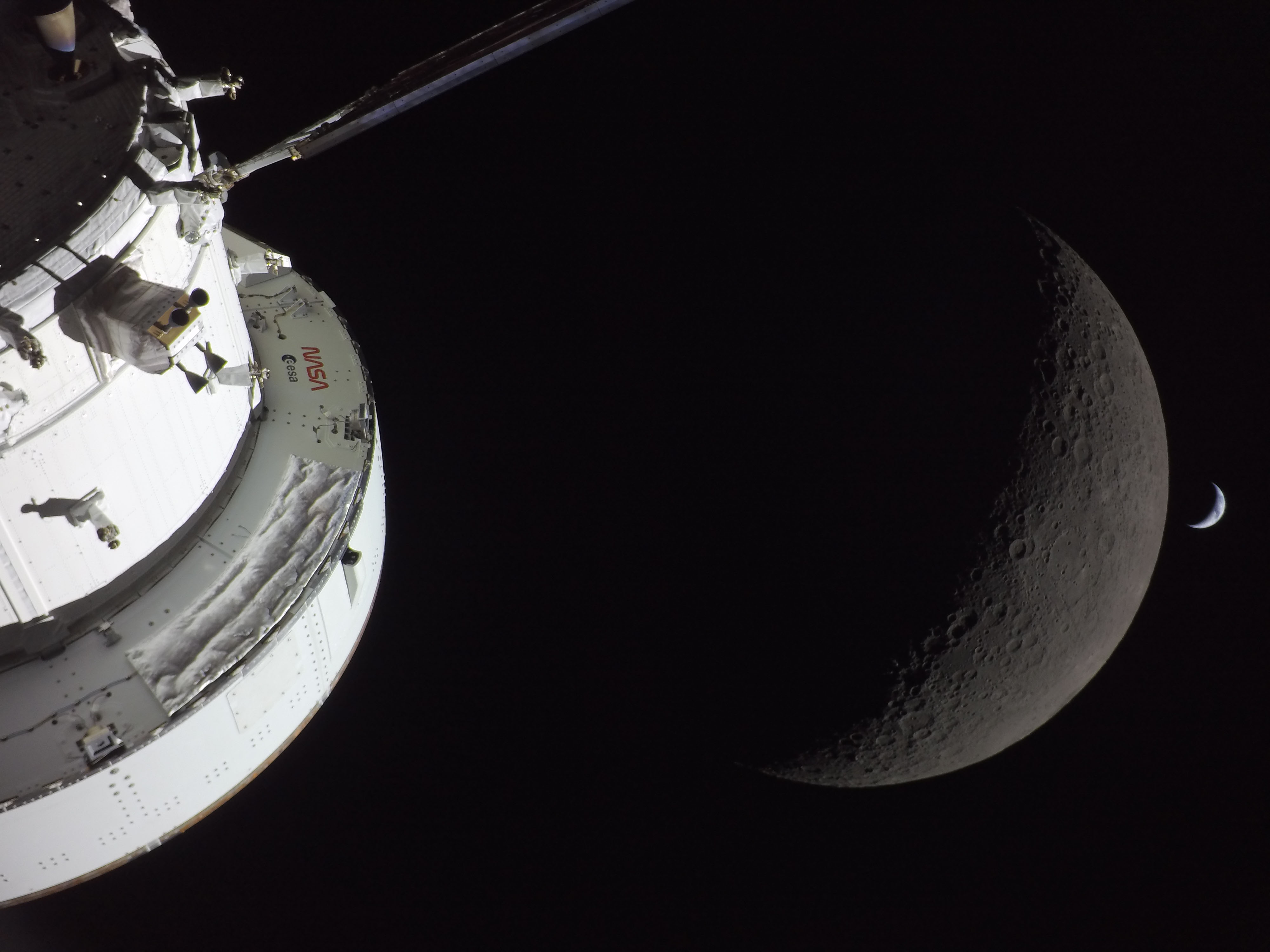
Crescent Earth and Moon captured from space — April 2026 night sky guide

Monthly Sky Guide · April 2026

What to See With a Telescope in April 2026

Jupiter, Venus, the Lyrid meteor shower, spring galaxies, and a comet — April 2026 is one of the best months of the year to stargaze. Here’s exactly what to point at, when to look, and what you’ll actually see.

PlanetsJupiter & Venus all month
Meteor ShowerLyrids peak Apr 21–22
Galaxy SeasonNew Moon Apr 17
BonusComet C/2024 E1
By Telescope Advisor Editorial Team Published: Updated: Editorial Standards

April 2026 is shaping up to be one of the best months of the year for backyard astronomers. Two of the brightest planets in the solar system dominate the evening sky. A major meteor shower peaks with nearly no Moon interference. A comet lingers in the evening sky for dedicated observers. And for deep-sky fans, the dark skies of mid-April usher in galaxy season — the annual window when the universe’s most spectacular structures climb high overhead.

Whether you already own a telescope or you’re thinking about buying your first one, this guide tells you exactly what to point at, when to look, and what you’ll actually see.

What Is in the Sky This Month? April 2026 at a Glance

Target Type Best Dates Naked Eye? Telescope Needed?
Jupiter Planet All month Yes Optional (enhances detail)
Venus Planet All month Yes Optional (reveals crescent)
The Moon Natural satellite Apr 1–7, 22–30 Yes Optional (craters)
Lyrid Meteor Shower Meteor shower Apr 21–22 peak Yes No — wider view is better
Uranus Ice giant Apr 22–24 No Yes — binoculars minimum
Leo Triplet Galaxies Galaxy group Apr 14–20 (new Moon) No Yes — 4"+ aperture
Virgo Galaxy Cluster Galaxy cluster Mid–late April No Yes — 6"+ aperture
Comet C/2024 E1 Wierzchos Comet Mid–late April (in Taurus) No Yes — 6"+ aperture (mag ~12.5)

Quick Answer: Best April 2026 Targets Tonight

If you only have a short session tonight, start with the Moon or Venus for immediate impact, then jump to Jupiter for planetary detail. On moonless nights (April 14–20), switch to deep-sky: M44 (easy), M3 and M13 (medium), and M57 (advanced). The month also includes the Lyrid meteor shower peak near April 21–22.

City skies

Moon, Venus crescent, Jupiter’s moons, M44, and double stars.

Suburban skies

Add M3, M13, Leo Triplet galaxies on moonless nights.

Dark skies

Add Virgo Cluster, Markarian’s Chain, Sombrero Galaxy, Comet C/2024 E1 (6"+ scope only).

Week-by-Week April 2026 Plan

Week 1 (Apr 1–7): Full Pink Moon & planetary viewing

The full “Pink Moon” rises April 1–2. Use low magnification to trace lunar rays around Tycho and Copernicus. Jupiter and Venus dominate the western sky every evening — start your planetary sessions here.

Week 2 (Apr 8–14): Bright clusters & galaxy prep

Target M44 (Beehive) and bright open clusters from suburban skies. As the Moon wanes, begin scouting the Leo Triplet. Mercury reaches greatest elongation April 3 for dawn observers.

Week 3 (Apr 15–21): New Moon & galaxy season peak

New Moon April 17 — the darkest skies of the month. This is your window for the Leo Triplet, Markarian’s Chain, the Sombrero Galaxy, and faint deep-sky targets. April 18: crescent Moon beside Venus at dusk and a pre-dawn 4-planet alignment.

Week 4 (Apr 22–30): Lyrids, conjunctions & comet

Lyrid meteor shower peaks April 21–22 (naked eyes). Jupiter & crescent Moon pair on April 22. Venus glides near the Pleiades April 23–24. Venus–Uranus conjunction April 24. Comet C/2024 E1 fading through Taurus (6"+ scope).

Jupiter: The King of April’s Evening Sky

Best time1 hour after sunset, facing west
Min. telescope60 mm refractor
Magnification100×–200×

Jupiter is the undisputed highlight of April 2026’s evening sky. After reaching opposition in January, the gas giant is still enormous in the eyepiece and visible for hours after sunset. Look for a bright, cream-colored “star” high in the west — if it doesn’t twinkle, it’s Jupiter.

What You’ll See Through a Telescope

60 mm–80 mm refractor (any beginner scope)

Jupiter’s disk is clearly non-circular. The two dark equatorial belts — the North and South Equatorial Belts — are immediately visible. All four Galilean moons (Io, Europa, Ganymede, and Callisto) appear as star-like points strung in a line beside the planet. They change position noticeably night to night.

4"–6" telescope (100 mm–150 mm)

More cloud bands become visible. Polar shading darkens. On nights of steady air, hints of the Great Red Spot become visible — the ancient oval storm larger than Earth itself. In April 2026, Jupiter measures about 37–39 arcseconds across, still large enough for impressive views.

8"+ telescope

The Great Red Spot becomes unmistakable on a good night. Festoons, ovals, and subtle texture in the cloud belts emerge. Shadow transits of the Galilean moons — where a moon’s black shadow creeps across Jupiter’s face — are dramatic and deeply satisfying to watch in real time.

Can’t-Miss Event: Moon Meets Jupiter, April 22

On the night of April 22 — exactly when the Lyrid meteor shower peaks — the waxing crescent Moon sits right beside Jupiter in Gemini. Both fit in the same low-power eyepiece field. It is one of the most photogenic pairings of the year, and with even a phone camera through an eyepiece, the image is shareable.

Telescope tip: If you are considering an upgrade for planetary viewing, our best telescopes by aperture guide breaks down exactly what each aperture size reveals on Jupiter.

Venus: The Blazing Evening Star — With a Secret

Best time45–60 min after sunset, west-NW
Min. telescopeAny telescope will do
Magnification50×–100×

Venus is impossible to miss this April. Shining at magnitude –3.9, it is the brightest object in the sky after the Moon and blazes like a searchlight in the western twilight. You cannot mistake it for a star. But what makes Venus special this month is what a telescope reveals.

Venus Shows a Crescent Phase Through a Telescope

This is one of the most surprising revelations for first-time telescope users: Venus goes through phases, just like the Moon. In April 2026, Venus is positioned so that through a telescope it appears as a distinct crescent — a glowing arc, not a full disk. This is the same phenomenon that convinced Galileo that Venus orbited the Sun, not Earth.

At 50×–100× magnification, the crescent shape is obvious, even in a small telescope. The disk also appears noticeably larger than it does in a photo — because Venus is relatively close to Earth right now.

The Pleiades Connection: April 23–24

Around April 23–24, Venus passes closest to the Pleiades star cluster, gliding roughly 3½° south of its center. Although Venus does not travel directly through the cluster, the view through binoculars or a low-power telescope is striking — the blazing planet framed below the delicate blue-white stars of the Seven Sisters. This pairing is well worth watching over several consecutive evenings as Venus approaches, then passes, the cluster.

Venus and the Crescent Moon: April 18–19

Two evenings earlier, the paper-thin crescent Moon hangs just above Venus in a twilight pairing that is tailor-made for photography. The dark side of the Moon glows softly with Earthshine — sunlight reflected from Earth’s oceans — making the entire lunar disk faintly visible. Through a wide-field eyepiece, this scene is breathtaking.

Want to see Venus’s crescent clearly? Any telescope on our best telescopes under $300 list will show it easily.

The Moon: Craters, Rays, and the Pink Moon

Best timeAny clear night — varies by phase
Min. telescopeAny telescope or binoculars
Best forBeginners — very first observation

The full “Pink Moon” rose on April 1–2, 2026. Despite the charming name, the Moon does not actually turn pink — the name comes from early spring wildflowers blooming across North America.

What to Look For on the Moon This April

Tycho Crater is one of the easiest and most dramatic features for a beginner. Located in the southern highlands, it sports a system of bright rays — streaks of ejected material — that radiate outward for hundreds of miles. These rays are most dramatic around full Moon when the low-angle sunlight makes them glow brilliantly. Any telescope at 50× will show them clearly.

Copernicus Crater measures nearly 62 miles (100 kilometers) across, with a terraced inner wall and central mountain peaks. It sits in the western area of the visible Moon. Through a 4-inch telescope at 100×, the detail is staggering — it looks like an impact site, because that is exactly what it is.

The crescent phase (April 18–23) is actually the best time for general lunar exploration through a telescope. The low angle of sunlight near the terminator (the line between light and shadow) throws craters, mountains, and valleys into sharp, dramatic relief. This is when the Moon rewards detailed study most.

New to lunar observing? Our guide on how to set up a telescope for beginners walks through finding and focusing on the Moon for the very first time — the perfect starting point.

The Lyrid Meteor Shower: April 21–22 Peak

Peak nightApr 21 into early morning Apr 22
Expected rate15–20 meteors/hour (dark skies)
Best viewingAfter midnight, facing northeast

The Lyrid meteor shower is one of the oldest recorded in human history, caused by debris shed by Comet C/1861 G1 (Thatcher) entering Earth’s atmosphere at roughly 110,000 mph. In 2026, conditions are exceptional: the Moon is only a 27% waxing crescent and sets in the early evening, leaving genuinely dark skies for the predawn hours.

Telescopes Actually Hurt Your Meteor Shower View

This is important: do not use a telescope for meteor showers. Meteors streak across large swaths of sky in under a second. A telescope narrows your field of view to a tiny patch, meaning you will miss almost everything. The optimal setup for the Lyrids is simply to lie on a reclining chair or blanket, let your eyes fully adapt to the dark for 20 minutes, and scan the whole sky. Binoculars are similarly counterproductive for the same reason.

What a Telescope IS Good For on Lyrid Night

While waiting between meteors, April 22 gives you an outstanding target: Jupiter sitting beside the crescent Moon in the west. Point your telescope there between meteor bursts for a completely different kind of sky highlight.

Planning to buy a telescope because of the Lyrids? Our Telescope Finder Tool will match you to the right model for everything you want to see — not just meteor showers. Also see our complete Lyrid meteor shower guide.

Uranus: The Hidden Ice Giant — April 22–24

Best timeApr 22–24, 45 min after sunset
Min. equipment7×50 binoculars (barely); 60 mm+ scope
Magnification100×–150×

Most people go their whole lives without seeing Uranus. This April offers one of the best opportunities in years, because Venus — the second-brightest object in the sky — acts as a literal pointer to it.

On the evening of April 23–24, Uranus sits within roughly 1° of Venus as the two planets reach conjunction on April 24. Put Venus in your binoculars or your telescope’s finder scope, and Uranus will be nearby — a faint, flat “star” at magnitude 5.8 with a distinctly blue-green color that distinguishes it from the surrounding background stars.

What Uranus Looks Like Through a Telescope

Through a 60 mm–80 mm refractor at 100×, Uranus appears as a tiny but distinctly non-stellar disk — noticeably blue-green, slightly fuzzy compared to a true star point. It resolves as a disk rather than a point at even modest magnification.

Through a 6" or 8" telescope at 150×–200×, the pale blue-green color deepens and the disk becomes more obvious. You will not see cloud bands or moons without a large aperture and good conditions, but confirming the disk shape of a planet 1.8 billion miles away with your own eyes is genuinely thrilling.

Interested in seeing the outer planets? Our guide to best telescopes for deep-sky observation covers the apertures needed for each of the solar system’s distant worlds.

Spring Galaxy Season: Mid-April Is Your Window

Best datesApr 14–20 (new Moon Apr 17)
Min. telescope4" suburban; 6"+ recommended
Best targetsLeo Triplet, Markarian’s Chain, Sombrero

Spring is galaxy season in the Northern Hemisphere, and the two-week window around April’s new Moon is when serious deep-sky observers live outside. With the Moon absent from the sky, even moderately light-polluted locations can reach galaxies tens of millions of light-years away.

The Leo Triplet (M65, M66, NGC 3628)

The Leo Triplet is the crown jewel of April’s deep-sky targets. Three galaxies — M65, M66, and NGC 3628 — fit within the same low-power telescopic field of view. Look for them in the constellation Leo, below the hindquarters of the Lion.

Through a 4" telescope at 50×–80×, all three appear as soft, elongated smudges. M65 and M66 show brighter, more concentrated cores. NGC 3628 — nicknamed the Hamburger Galaxy for its edge-on disk and dark dust lane — is fainter but unmistakable in shape.

Through a 6"–8" telescope under dark skies, dust lanes and the distinct spiraling structure of M66 start to emerge.

Markarian’s Chain and the Virgo Cluster

If you have a wide-field eyepiece and a dark sky, sweep slowly through the border of Virgo and Coma Berenices. You are flying through the heart of the Virgo Galaxy Cluster — a gravitationally bound city of thousands of galaxies, approximately 54 million light-years away. Markarian’s Chain — a curved arc of eight galaxies including M84, M86, and several fainter members — is one of the most spectacular sights in the spring sky with an 8" telescope.

The Sombrero Galaxy (M104)

The Sombrero Galaxy in Virgo is one of the most recognizable galaxies visible in a backyard telescope. Its bright, bulging nucleus and prominent dark dust lane across the disk’s edge give it an instantly recognizable silhouette. A 6" telescope at 100× makes the dust lane obvious. It is one of the most photographically satisfying objects in the spring sky.

Ready to chase galaxies? Our best telescopes for deep-sky observation guide covers the exact apertures and eyepieces needed for spring galaxy season.
Comet C/2024 E1 Wierzchos: A Fading but Findable Challenge

Best datesMid–late April (moonless nights)
LocationEvening sky in Taurus, west after sunset
BrightnessMag ~12.5 (6"+ telescope required)

Comet C/2024 E1 Wierzchos made its closest approach to Earth back on February 17, 2026, passing at approximately 94 million miles (151 million km). It peaked near magnitude 7–8 around perihelion in January, but by April the comet has faded considerably — it currently sits around magnitude 12.5, well below naked-eye or binocular range.

In mid-April, the comet is located in the constellation Taurus in the western evening sky. You will need a telescope with at least 6 inches (150 mm) of aperture and dark skies to pick it up. Through a 6"–8" scope at low magnification, expect a faint, diffuse smudge — a far cry from its brighter appearance earlier this year, but still a satisfying find for experienced observers who enjoy comet hunting.

Comets fade unpredictably, so check real-time brightness data on TheSkyLive or the JPL Small-Body Database before planning a session around this target.

Want to photograph the comet? Our best telescopes for astrophotography guide covers the setups that work best for capturing comets and other extended objects.

A Pre-Dawn Treat: The 4-Planet Alignment — April 18

Before sunrise on April 18, early risers are rewarded with a rare pre-dawn gathering low on the eastern horizon: Mercury, Mars, Saturn, and Neptune all cluster together in a tight grouping visible roughly 30–45 minutes before sunrise.

Mercury is the brightest and easiest of the four — look for a steady, cream-colored point low in the eastern glow.

Mars glows with its characteristic yellowish-orange tint nearby.

Saturn is harder — it is currently emerging from behind the Sun and sits very close to the horizon in bright twilight. Binoculars help. Saturn’s rings are returning after going edge-on in March 2025 — read our full Saturn rings 2026 guide for what you’ll see and which telescope to buy.

Neptune requires a telescope to see as anything more than a faint smudge. Even then, at magnitude 8, it demands a dark horizon and good optics.

This alignment is a challenge rather than a casual observation — the planets are all bunched low in bright pre-dawn sky, making precise seeing difficult. But for the dedicated observer with a clear, unobstructed eastern horizon, it is a worthwhile hunt.

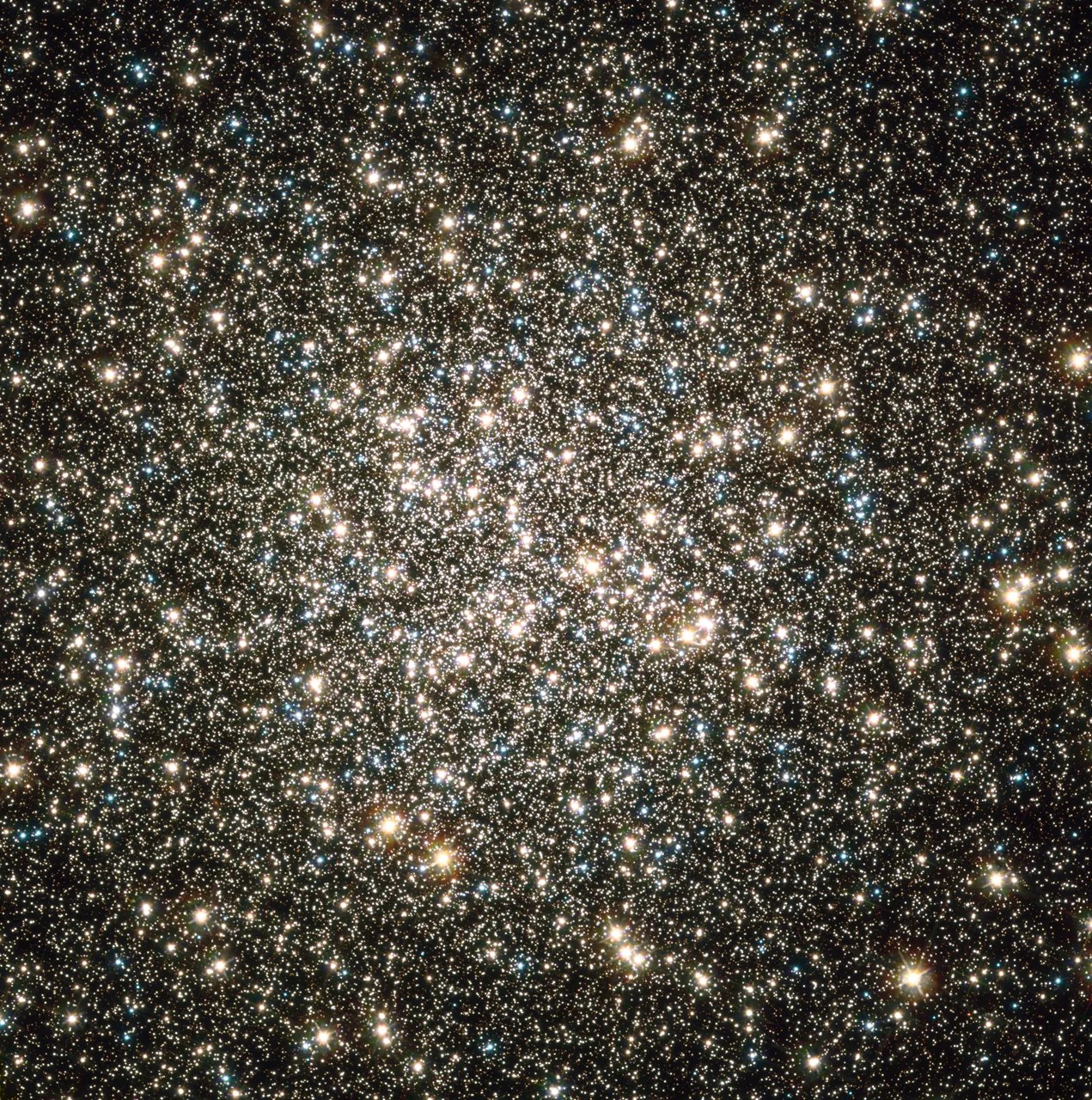
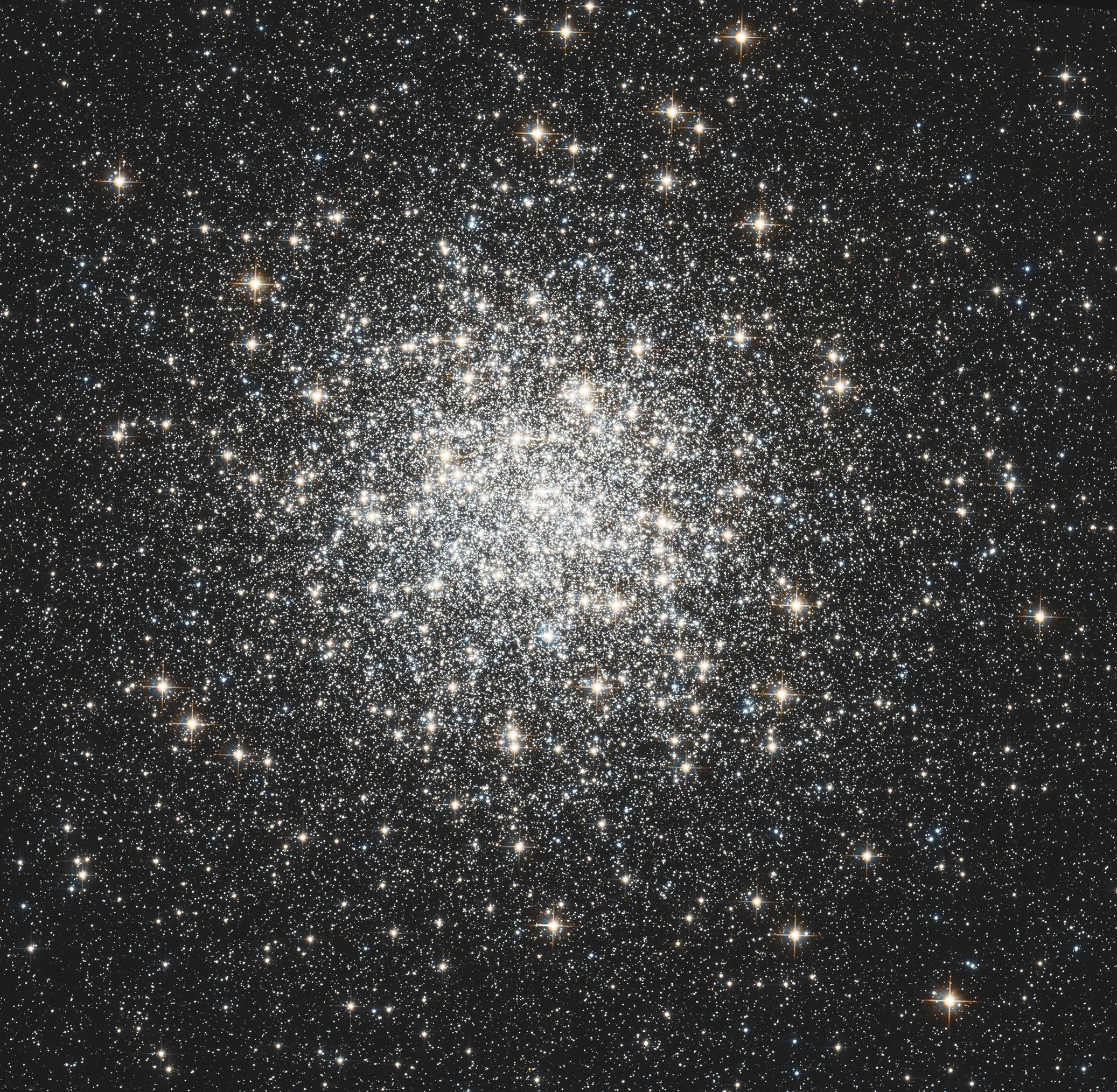
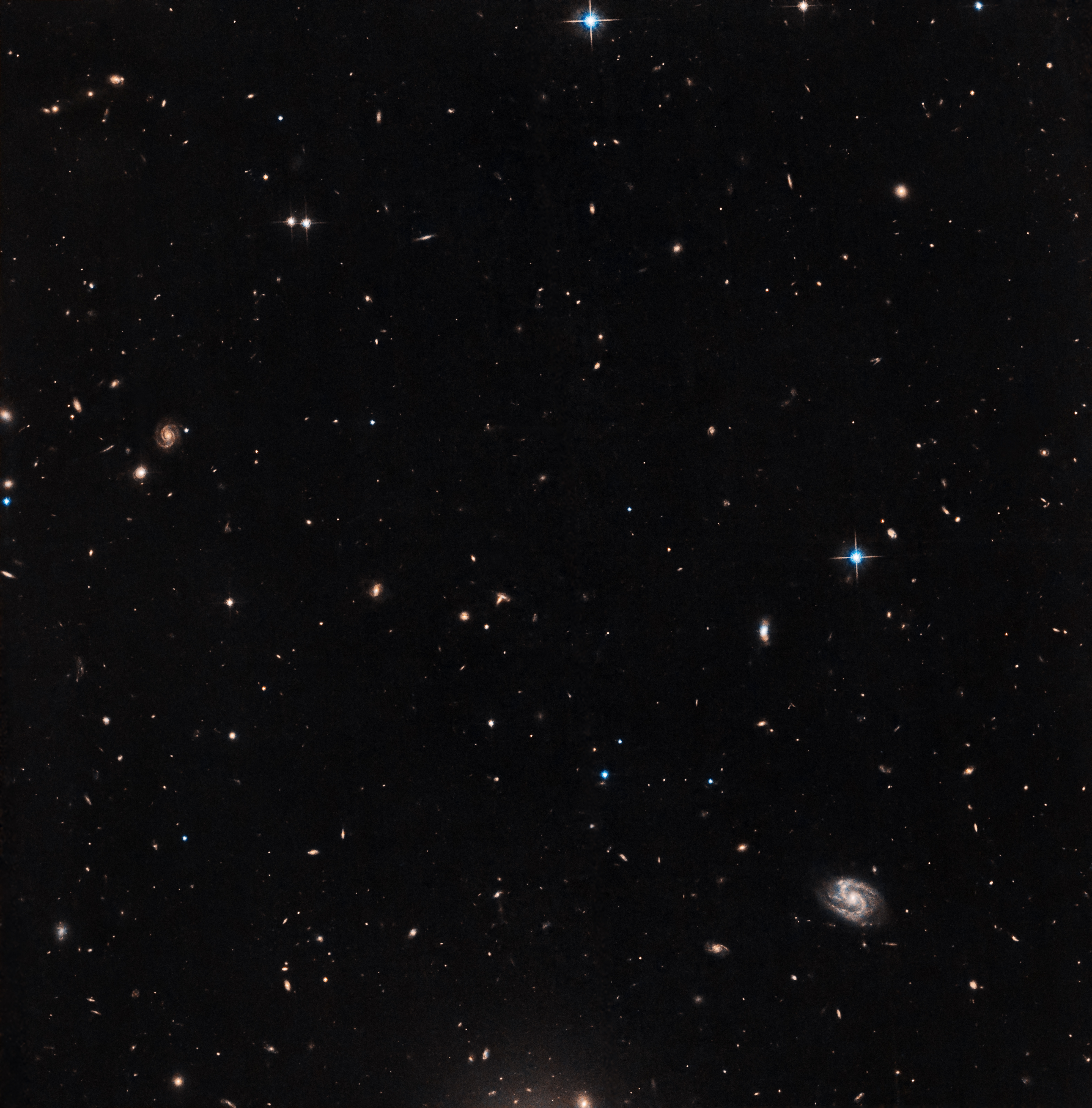
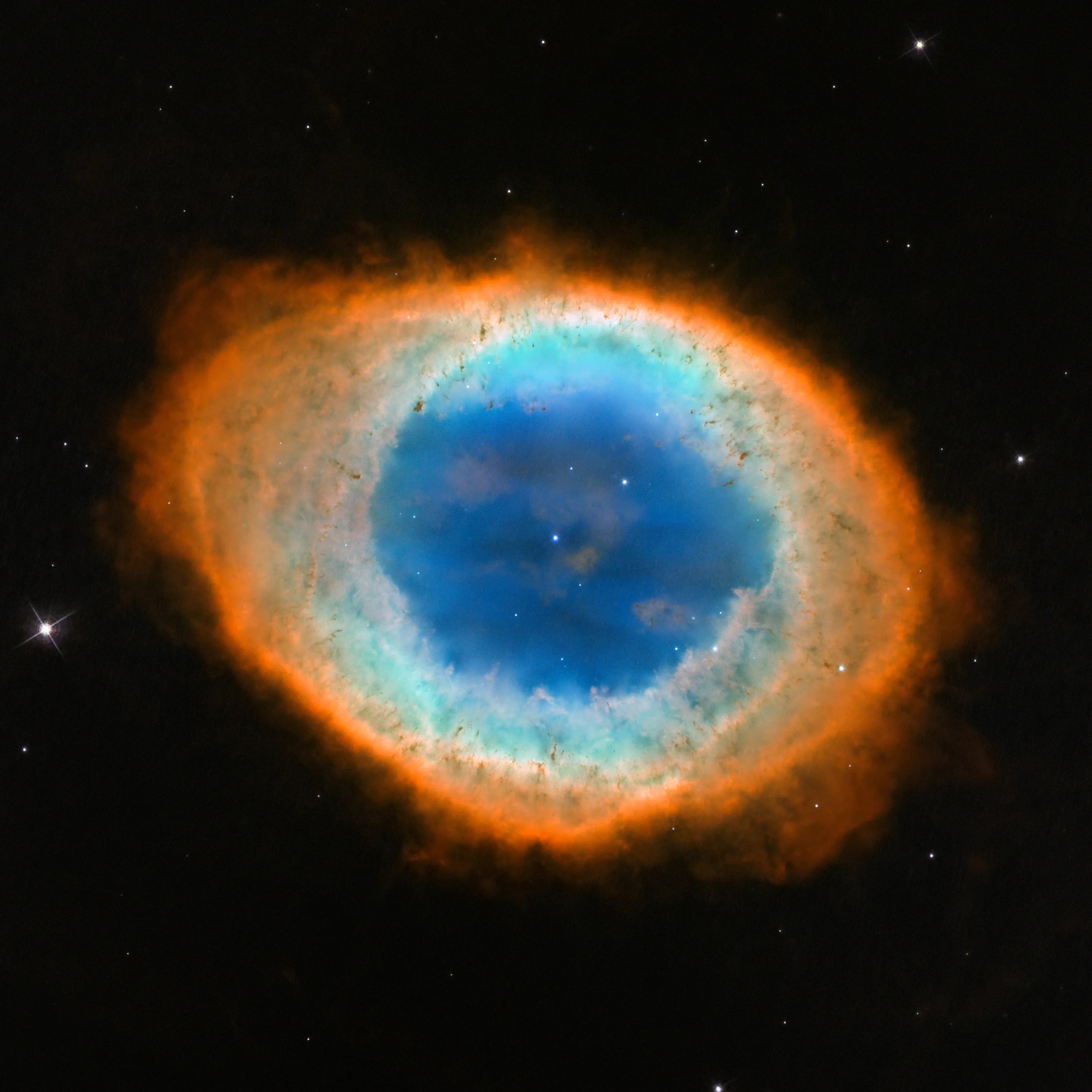
April Object Gallery (NASA Images)

High-resolution references for targets that are practical in April sessions.

Messier 13 globular cluster from Hubble
M13 (Hercules Cluster) — NASA/ESA Hubble.
Messier 3 globular cluster from Hubble
M3 globular cluster — NASA/ESA Hubble.
Messier 44 Beehive Cluster from Hubble
M44 (Beehive Cluster) — NASA/ESA Hubble.
Messier 57 Ring Nebula from Hubble
M57 (Ring Nebula) — NASA/ESA Hubble.

Best Telescope for April 2026: What to Buy Right Now

April’s sky is extraordinarily diverse — you might want to see Jupiter’s moons one evening, hunt galaxies during the new Moon window, and stargaze during the Lyrids the next week. The right telescope depends on your primary interest.

For Beginners: Jupiter, Venus, and the Moon

A 4" (100 mm) refractor or 5"–6" Dobsonian reflector in the $200–$400 range gives you everything you need. Jupiter’s belts and Great Red Spot, Venus’s crescent, and lunar craters are all well within reach.

See our best telescopes for beginners →

For Deep-Sky Galaxy Hunting

You need aperture. A 6"–8" Dobsonian is the most cost-effective way to gather enough light for the Leo Triplet, Markarian’s Chain, and the Sombrero Galaxy. Dobsonians offer more mirror for less money than any other design.

See our best telescopes for deep-sky →

For Astrophotography of Venus, Jupiter, and the Comet

An equatorially mounted refractor or a smart telescope (like the ZWO Seestar S50) tracks objects automatically and allows long exposures. For planetary video capture and comet imaging, these are the go-to choices.

See our best telescopes for astrophotography →

Not sure what you need? Use our free Telescope Finder Tool — answer four questions about your goals, budget, and experience level, and get matched to the right model immediately.

April 2026 Stargazing Calendar: Dates at a Glance

Date Event Equipment
Apr 1–2 Full Pink Moon Naked eye / any telescope
Apr 3 Mercury at greatest elongation (morning) Binoculars
Apr 14–20 Best galaxy-hunting window (new Moon) 4"+ telescope
Apr 17 New Moon — darkest skies of the month
Apr 18–19 Crescent Moon beside Venus after sunset Naked eye / binoculars
Apr 18 Pre-dawn 4-planet alignment (Mercury, Mars, Saturn, Neptune) Binoculars / telescope
Apr 21–22 Lyrid meteor shower peak Naked eye only
Apr 22 Jupiter and crescent Moon together in Gemini Naked eye / binoculars
Apr 23–24 Venus passes near the Pleiades Binoculars / wide-field scope
Apr 24 Venus–Uranus conjunction (within ~1°) Telescope
Mid–late Apr Comet C/2024 E1 Wierzchos in Taurus (fading, mag ~12.5) 6"+ telescope

5 Practical Tips for April Stargazing

  1. Give your eyes 20 minutes to adapt.

    The light-sensitive cells in your eyes (rods) take 20 minutes in darkness to reach full sensitivity. Checking your phone — even briefly — resets this. Use a red-light flashlight for any ground-level tasks.

  2. Start with the Moon or Venus.

    If you are new to a telescope, these are the most rewarding first targets. Both are easy to find, tolerate poor seeing conditions, and always impress.

  3. Jupiter rewards patience.

    Earth’s atmosphere shimmers constantly, blurring planetary detail. Watch Jupiter for 10–15 minutes and wait for the moments of “good seeing” — brief intervals where the atmosphere steadies and detail snaps into focus.

  4. Plan your galaxy session around the new Moon.

    April 14–20 is your dark-sky window. Galaxy hunting on a night within three days of the full Moon is largely futile — bright skyglow washes out faint detail. Mark April 17 (new Moon) on your calendar now.

  5. Dress warmer than you expect.

    April nights cool rapidly, especially after midnight. Experienced observers consistently underestimate how cold they get standing still in the dark for an hour. Bring an extra layer.

What’s Coming Next Month?

May brings the Eta Aquarid meteor shower (peak May 5) — debris from Halley’s Comet — and globular cluster season begins in earnest. Jupiter continues to be well-placed into May before edging toward the sunset horizon in June, when it will collide spectacularly with Venus in one of 2026’s most anticipated conjunctions (June 9).

Bookmark this page and check back at the end of the month for our May sky guide.

Frequently Asked Questions

What planets can I see with a telescope in April 2026?

Jupiter and Venus are both spectacular in April 2026 and visible from shortly after sunset. Jupiter shows cloud bands and four moons even in a basic beginner telescope. Venus displays a distinct crescent phase. Uranus is also visible near Venus on April 23–24 with binoculars or a small telescope. Saturn, Mars, and Mercury are visible briefly before dawn in late April.

Is April a good month for stargazing in the USA?

Yes — April is one of the best months of the year for Northern Hemisphere stargazers. The weather is improving, nights are still reasonably long, and the sky offers a rare combination of bright planets in the evening, the Lyrid meteor shower, and the peak of spring galaxy season during the new Moon window.

Do I need a telescope to watch the Lyrid meteor shower?

No. Telescopes are the wrong tool for meteor showers — they are too narrow. Your naked eyes, dark skies, and a comfortable reclining position are all you need. However, a telescope is excellent for viewing Jupiter and the Moon on the same night as the Lyrid peak.

What is the best telescope for a beginner in April 2026?

For seeing Jupiter, Venus, the Moon, and bright star clusters, a 4"–5" telescope in the $200–$400 range is ideal. See our full best telescopes for beginners guide for specific models tested and recommended by our team.

Can I see galaxies with a basic telescope in April?

Yes, with some caveats. The Leo Triplet, Andromeda Galaxy, and several Messier galaxies are visible in a 4" telescope under moderately dark skies. The key is timing: observe during the new Moon window (April 14–20) and from a location with minimal light pollution. Our deep-sky telescope guide covers which models work best.

Updated April 17, 2026, by the TelescopeAdvisor Editorial Team. All planetary positions and event dates verified against the US Naval Observatory ephemeris and NASA JPL Horizons system.

Some links in this article are affiliate links. If you purchase through them, we earn a small commission at no additional cost to you. This never influences our recommendations — we only link to products our team has evaluated. See our affiliate disclosure for full details.