TelescopeAdvisor Logo TelescopeAdvisor
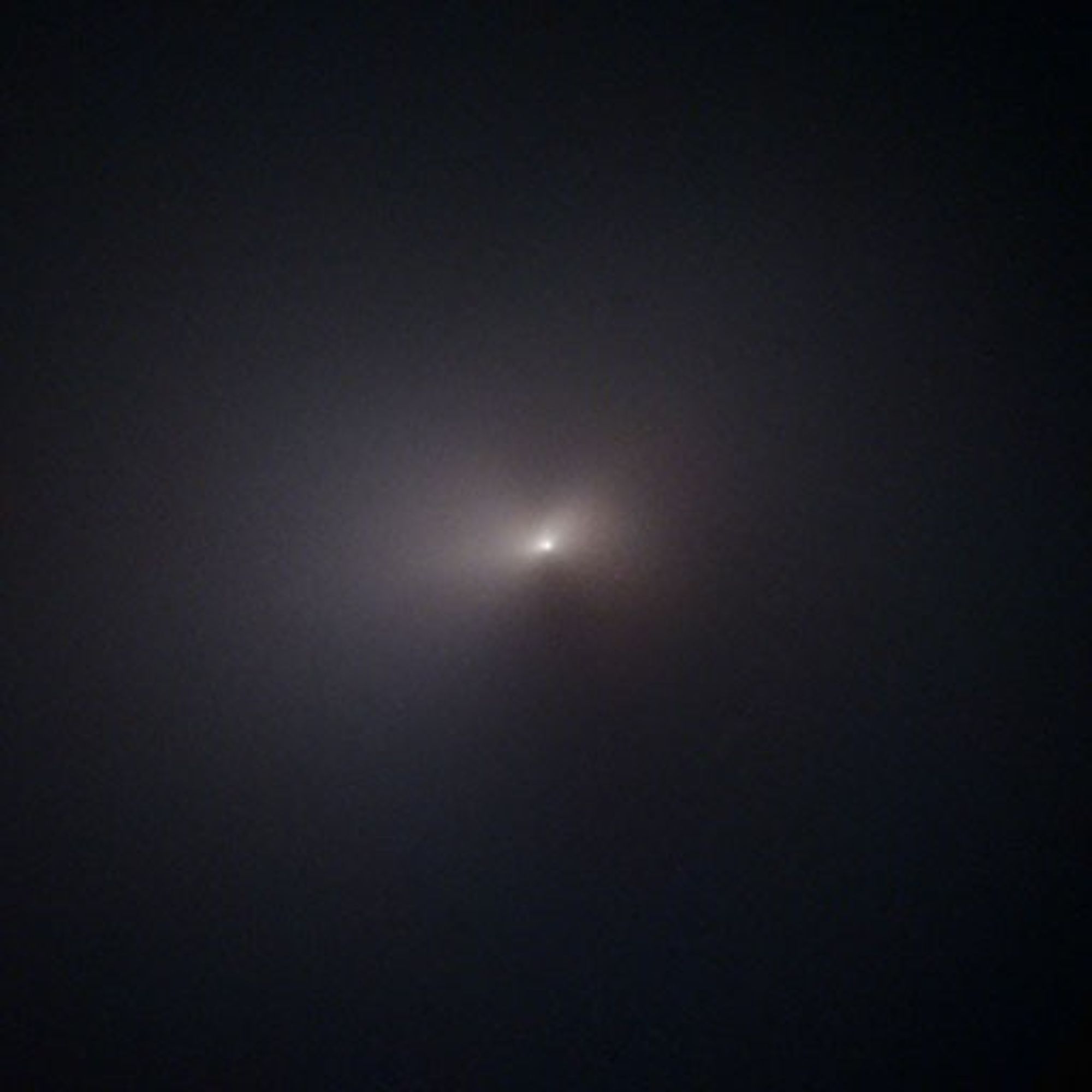
Comet NEOWISE photographed from the International Space Station — the kind of spectacular comet visible with quality binoculars

Comet & Astronomy Binoculars Guide · 2026

Best Binoculars for Comet Viewing in 2026

Why binoculars outperform a telescope for most comets — and the exact specs to look for to see a comet's full tail in one view.

Best Magnification7× – 10×
Best Aperture50mm
Field of ViewWide is critical
UpdatedApril 2026
By Telescope Advisor Editorial Team Published: Updated: Editorial Standards

Telescopes are great for planets, but for comets — a wide-field view beats high magnification every time. A comet's ion tail can stretch 2° to 10° across the sky. The best binoculars for comet viewing show the whole picture: nucleus, coma, and as much tail as possible in a single eyeful. Here's how to choose the right pair and which models deliver.

Quick Picks: Best Comet-Viewing Binoculars

  • 🏆 Best overall for comets: Celestron Nature DX ED 10×50
  • 🌟 Best wide-field value: Celestron SkyMaster 15×70 (tripod recommended)
  • 💰 Best budget binoculars: Bushnell PowerView 10×50
  • 🎯 Best entry-level comet bino: Celestron Cometron 7×50
  • 🔭 Best for serious observers: Celestron SkyMaster 20×80 (tripod required)

Best Overall

Celestron Nature DX ED 10×50

View on Amazon

Wide-Field Value

Celestron SkyMaster 15×70

View on Amazon

Budget Pick

Bushnell PowerView 10×50

View on Amazon

Entry Comet Bino

Celestron Cometron 7×50

View on Amazon

Serious Upgrade

Celestron SkyMaster 20×80

View on Amazon

Affiliate links — we may earn a small commission at no extra cost to you.

Why Binoculars Beat Telescopes for Comet Viewing

The most common mistake comet observers make is reaching for a telescope. Here's why binoculars win for most comets:

Wide Field of View

A typical comet tail spans 2°–10° of sky. A 10×50 binocular shows 6°–7°. A telescope at 100× shows only 0.3°–0.5°. You'd need to pan constantly to trace the full tail.

Both Eyes = 40% More Sensitivity

Using both eyes simultaneously makes faint ion tails and coma structure more visible — especially at lower sky contrasts near dawn or dusk when comets are often best placed.

Instant Context

You can see the comet and its surrounding star field simultaneously, making it easier to track movement from night to night and confirm the object.

Setup in Seconds

No alignment, no cool-down time, no collimation. Pick up the binoculars and you're observing. Comets fade — fast setup means you catch the show.

For bright comets (magnitude <4), binoculars are the definitive instrument. For the nucleus at high magnification, once you've found the comet with binoculars, a telescope is then useful to zoom in on the coma structure and disconnection events.

Key Specs: What Actually Matters for Comet Binoculars

Spec Ideal for Comets Why It Matters
Magnification 7× – 10× Keeps the field of view wide enough to show the full tail
Objective Diameter 50mm More light = brighter coma and better tail contrast on dark sky
Field of View 6°+ (real) Wider FOV captures more of the tail in a single view
Exit Pupil 5mm+ Larger exit pupil = brighter image in dark-adapted eyes
Prism Type Porro or roof prism Porro prisms offer better light throughput at lower cost; roof prisms are more compact
Tripod Adapter Essential for 15×70+ Hand-held shake at 15× makes observing impossible; tripod mount is critical

The 10×50 Sweet Spot

For most observers, 10×50 is the gold standard for comet viewing. It delivers 5mm exit pupil (matched to a dark-adapted eye), a 6° true field of view, and enough magnification to resolve the coma structure. It's also light enough to hand-hold for extended sessions. This is why virtually every experienced comet observer keeps a 10×50 in their kit.

Top 5 Binoculars for Comet Viewing (2026)

#1 Best Overall

Celestron Nature DX ED 10×50

10× magnification, 50mm ED objective, 6.5° FOV, 5mm exit pupil, fully multi-coated

The Nature DX ED series is a step above the standard SkyMaster line. Extra-low dispersion (ED) glass eliminates chromatic aberration on bright comet nuclei, delivering sharper, more color-accurate views. Fully multi-coated optics maximize light transmission for excellent contrast on faint ion tails. The rubber-armored body and twist-up eyecups make this an all-weather premium instrument — the best 10×50 you can take to a comet.

Pros

  • ✓ ED glass eliminates false color on bright nuclei
  • ✓ Fully multi-coated for maximum light throughput
  • ✓ Rubber-armored all-weather body
  • ✓ Twist-up eyecups for eyeglass wearers
  • ✓ Built-in tripod adapter thread

Cons

  • ✗ Pricier than entry-level 10×50s
  • ✗ Slightly heavier than compact designs
View on Amazon →
#2 Wide-Field Value

Celestron SkyMaster 15×70

15× magnification, 70mm objective, 4.4° FOV, 4.7mm exit pupil

Serious light-grasp at an accessible price. The 70mm aperture gathers significantly more light than any 50mm pair, making it outstanding for faint comets approaching or below magnitude 7. At 15×, you'll need a tripod or monopod — but the reward is spectacular, steady views that reveal inner coma structure and faint tail detail invisible in smaller binoculars. One of the best astronomy binoculars value propositions on the market.

Pros

  • ✓ Massive 70mm light-gathering aperture
  • ✓ Excellent for faint comets and extended tails
  • ✓ Includes tripod adapter
  • ✓ Sharp optics center-field

Cons

  • ✗ Requires tripod at 15×
  • ✗ Heavier — not for casual hand-holding
View on Amazon →
#3 Budget Pick

Bushnell PowerView 10×50

10× magnification, 50mm objective, Instafocus center wheel, porro prism

The most accessible entry point for comet observing. The PowerView 10×50 delivers the essential specs — 10× magnification, 50mm aperture — in a package that costs less than most individual eyepiece upgrades. Optics are adequate for comets brighter than magnitude 7. The Instafocus center-focus wheel is fast for tracking a comet across the sky.

Pros

  • ✓ Very affordable entry price
  • ✓ Correct 10×50 spec for comets
  • ✓ Fast Instafocus center wheel
  • ✓ Lightweight for hand-holding

Cons

  • ✗ Multi-coated only — less contrast than fully multi-coated
  • ✗ No weatherproofing
View on Amazon →
#4 Entry Comet Bino

Celestron Cometron 7×50

7× magnification, 50mm objective, 6.6° FOV, 7.1mm exit pupil, multi-coated optics

Designed specifically for comet and wide-field astronomy, the Cometron 7×50 is the purpose-built answer to the classic comet-hunting binocular format. The 7.1mm exit pupil is perfectly matched to fully dark-adapted eyes, making faint ion tails pop under dark skies. The 6.6° true field of view is one of the widest in this aperture class — wide enough to encompass even spectacularly long tails in a single view. Lightweight and easy to hand-hold for extended sessions.

Pros

  • ✓ Purpose-designed for comet and astronomy use
  • ✓ Massive 7.1mm exit pupil for dark-adapted eyes
  • ✓ Wide 6.6° true field of view
  • ✓ Lightweight — easily hand-holdable
  • ✓ Affordable entry price

Cons

  • ✗ Lower detail at nucleus vs 10×
  • ✗ Not ideal for daytime use due to large exit pupil
View on Amazon →
#5 Serious Upgrade

Celestron SkyMaster 20×80

20× magnification, 80mm objective, 3.6° FOV, 4mm exit pupil, BaK-4 prisms

For comet observers who want maximum aperture without the cost of a large refractor, the SkyMaster 20×80 is a compelling choice. The 80mm objectives gather more light than any 50mm or 70mm binocular — critical for comets fainter than magnitude 7 or 8. At 20×, you can resolve fine structure in the inner coma and trace the nuclear condensation in detail. BaK-4 prisms ensure full field illumination edge-to-edge. A solid tripod is mandatory.

Pros

  • ✓ Huge 80mm light-gathering aperture
  • ✓ Best for faint comets (mag 7–9)
  • ✓ 20× reveals fine coma and tail structure
  • ✓ BaK-4 prisms for full-field illumination
  • ✓ Includes tripod adapter

Cons

  • ✗ Requires sturdy tripod — not hand-holdable at 20×
  • ✗ Larger and heavier than smaller models
View on Amazon →

How to Find and Track a Comet With Binoculars

1
Get current coordinates. Use a source like Heavens-Above.com or Stellarium to get the comet's current RA/Dec and an ephemeris showing its path over the next week. Print a finder chart or load it on your phone.
2
Go to a dark site. Even a moderately light-polluted sky washes out the ion tail. A parking lot or suburban backyard will show the nucleus and bright coma. A dark-sky site reveals the full tail and color.
3
Dark-adapt for 20 minutes. The eye's rod cells take up to 20 minutes to reach full sensitivity. No white lights after arriving at your site. A red flashlight preserves dark adaptation.
4
Star-hop to the position. Starting from a bright anchor star, use your finder chart to hop to the comet's position. Look for a fuzzy "star" — the nucleus — with a soft, diffuse glow around it (the coma). With experience, you'll recognize the asymmetric, "dirty" appearance immediately.
5
Sweep for the tail. Once you've found the nucleus, lower your binoculars slightly and scan in the anti-solar direction (tail points away from the Sun). The ion tail is blue-white and straight; the dust tail is curved and yellowish. Use averted vision — look slightly to the side of the feature you're trying to see.

2026 Comet Events to Watch

Comet C/2025 R3 (PanSTARRS)

The current bright comet visible in April 2026. Peak brightness was around April 18–22, with a long ion tail extending several degrees. Best viewed before dawn in the northeast. Binoculars are the ideal instrument — the tail exceeds 5° in extent at peak.

Periodic Comets to Watch in 2026

2P/Encke reaches perihelion around October 2026 — one of the most reliable periodic comets with a 3.3-year orbit. Typically reaches magnitude 7–8 and is well-placed in autumn skies. Also keep an eye on 29P/Schwassmann-Wachmann, which undergoes unpredictable outbursts that can briefly push it into binocular range year-round. Bookmark the IAU's Central Bureau for Astronomical Telegrams (cbat.eps.harvard.edu) for new discovery and brightening alerts.

Frequently Asked Questions

Are 10×50 binoculars the best for comet viewing?

Yes, 10×50 is considered the sweet spot by most experienced comet observers. The 10× magnification provides enough detail to resolve the coma structure while maintaining a 6°+ true field of view — wide enough to trace most comet tails. The 50mm aperture delivers a 5mm exit pupil, ideal for dark-adapted eyes. If you only buy one pair of astronomy binoculars, make it a quality 10×50.

Can I use a telescope to see comet tails?

A telescope can show the nucleus and inner coma in more detail than binoculars, but at most telescope magnifications (50× and above), the field of view is too narrow to see the tail. For comet tails, binoculars are the better tool. Use a telescope at low power (25–40×) if you want a compromise — you'll see more detail in the coma than binoculars, while still showing a useful field of view.

What magnification is best for viewing comets?

7× to 10× is the standard recommendation for binoculars. For telescopes, use the lowest-power, widest-field eyepiece you own. A 32mm or 40mm Plössl in most reflectors gives magnifications between 20× and 50× with a 1.5°–2.5° true field — adequate for both the nucleus and surrounding coma while showing some context.

Do I need a tripod for comet binoculars?

For 10×50 and smaller: no, most observers can hand-hold steadily for extended sessions. For 15×70 and above: yes, a tripod is essentially mandatory. At 15×, hand-held shake makes it nearly impossible to study the coma structure or trace the tail. A good tripod with a fluid head transforms 15×70s into an exceptional observing experience.

Can I see a comet from a city?

Bright comets (magnitude 1–4) are visible even from city centers with binoculars. The nucleus appears star-like; the inner coma is visible as a diffuse glow. Light pollution suppresses the tail dramatically. To see the full tail extent and color differentiation between the ion and dust tail, you need Bortle Class 4 skies or darker. Even a drive 30–40 minutes from city center makes a significant difference.

What's the difference between binoculars for astronomy vs general use?

Astronomy binoculars are optimized for light transmission rather than daytime color contrast. They tend to have larger objectives (50mm+), multi-coated or fully multi-coated optics to maximize light throughput, and center-focus wheels rather than individual-barrel focus for faster field adjustments. The larger exit pupil (5–7mm) is also important — daytime binoculars often have small exit pupils (2–3mm) that dim the image significantly for a dark-adapted eye.

Related Guides