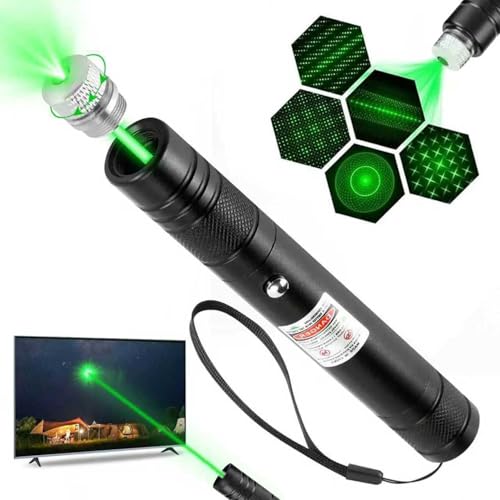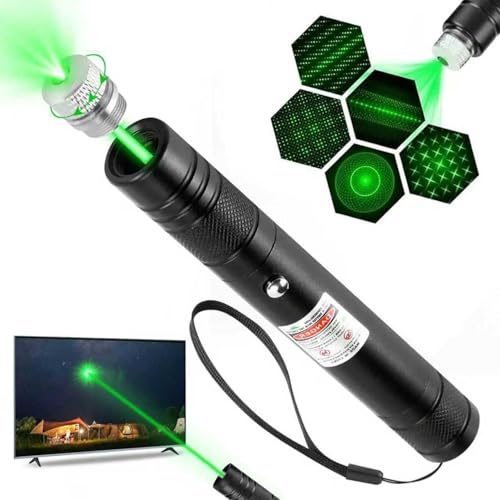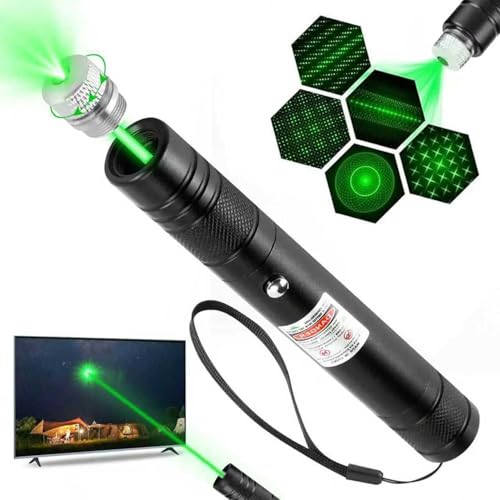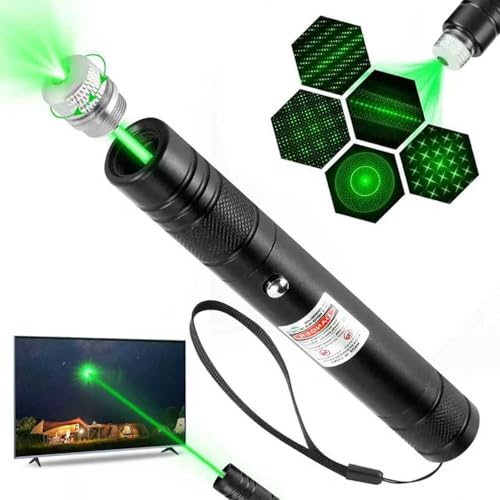
Why Green Lasers for Astronomy?
Green light at 532nm sits near the peak of human visual sensitivity. At equal power output, green light appears far brighter to the human eye than red, blue, or violet light. This makes a 5mW green laser beam visible in the night sky at distances of 1–3 kilometers under dark conditions — while a 5mW red laser beam would barely be visible at 100 meters.
The green beam appears as a continuous line extending upward to the stars because it scatters off dust, water vapor, and aerosols in the atmosphere. The effect is most pronounced in humid conditions or at high altitude sites — at a perfectly clear high-altitude desert observatory, the beam is thinner but still easily visible.
Why Not Red?
Red lasers at the same power output are roughly 30–50× less visible to the eye than green. A 5mW red laser appears as a faint dot, barely useful for sky-pointing. Red lasers are preferred for reading star charts (to preserve night vision) — but for pointing at objects in the sky, green is far superior.
Why Not Blue or Violet?
Blue and violet lasers scatter more strongly in the atmosphere, but the human eye is less sensitive to these wavelengths. Green 532nm sits at the practical optimum for sky visibility at safe power levels. Blue laser pointers also tend to be less reliable and more expensive.