Priority 2026 Event Guides (Fast Start)
If you only follow three event pages this year, start with these. They are the highest-impact observing nights for most backyard astronomers and include exact timing plus gear recommendations.

Sky Events · Updated August 2026
From meteor showers you can watch with your eyes to Saturn's rings returning after vanishing in 2025 — 2026 is an outstanding year for amateur astronomy. Here is every major event, what you need to see it, and a link to a full guide for each.
| Event | Date | What You Need | Full Guide |
|---|---|---|---|
| Lyrid Meteor Shower | Apr 22 peak | Naked eye | Guide → |
| Eta Aquarid Meteor Shower | May 5–6 peak | Naked eye | Guide → |
| Blue Moon | May 31 | Naked eye / binoculars | Guide → |
| Venus–Jupiter Conjunction | June 9 | Naked eye / binoculars | Guide → |
| Total Solar Eclipse | Aug 12 | Eclipse glasses / solar filter | Guide → |
| Perseid Meteor Shower | Aug 11–12 peak | Naked eye | Guide → |
| Asteroid Vesta Opposition | ~May 2026 | Binoculars / telescope | Guide → |
| Partial Lunar Eclipse | Aug 28 | Naked eye / binoculars | Guide → |
| International Observe the Moon Night | Sep 19 | Naked eye / binoculars / telescope | Guide → |
| Neptune Opposition | Sep 26 | 100mm+ telescope | Guide → |
| Saturn Opposition + Rings | Oct 4, 2026 | Telescope (any) | Guide → |
| Orionid Meteor Shower | Oct 21 peak | Naked eye | Full guide → |
| Leonid Meteor Shower | Nov 17 peak | Naked eye | Details below → |
| Geminid Meteor Shower | Dec 13–14 peak | Naked eye | Details below → |
| Ursid Meteor Shower | Dec 22 peak | Naked eye | Details below → |
Safety and setup note: if you plan daytime prep before eclipse season, see Can You Use a Telescope During the Day?. If you observe from an apartment, read Can I Use a Telescope Through a Window? before your first session. For fast-moving satellite sessions, use How to See the ISS Through a Telescope and Starlink Satellites Tonight Guide.
Looking for "June 2026 astrology events"?
This page is the astronomy calendar: exact sky-event dates and observing windows you can actually see in the sky. For June, start with the Venus-Jupiter conjunction guide and compare with the full month in our June 2026 section.
If you only follow three event pages this year, start with these. They are the highest-impact observing nights for most backyard astronomers and include exact timing plus gear recommendations.
May 2026
Debris from Halley's Comet enters Earth's atmosphere at 66 km/s, producing fast meteors with persistent trains. At peak, up to 50 meteors per hour are possible from the Southern Hemisphere; Northern Hemisphere observers see 10–30/hour. The radiant rises just before dawn in the constellation Aquarius.
Peak
May 5–6, 2026
Best viewing
Pre-dawn, 3–5 AM
Equipment
Naked eye only
Rate (N. Hemisphere)
10–30/hour
The second full Moon in a single calendar month — a calendar rarity, not a colour change. May 2026 has two full Moons: May 1 and May 31. The Moon will appear its normal white-gold, but a full Moon at any phase is a spectacular telescope target. Crater detail is best on the terminator days before full, but a full Moon in binoculars is striking.
Date
May 31, 2026
Type
Second full Moon in May
Equipment
Naked eye / telescope
Colour?
Normal — name is calendar-based
June 2026
Venus and Jupiter will pass within 0.4° of each other on the evening of June 9, 2026 — close enough that both planets fit inside a single binocular field of view. Venus will be the brighter of the two (magnitude −4.5) and Jupiter a close second (magnitude −2.1). The pair will be visible low in the western sky just after sunset.
Through a telescope at low magnification (30–50×) both planets fit in the same eyepiece. You will see the crescent phase of Venus and the disc of Jupiter with its equatorial bands — simultaneously.
Date
June 9, 2026 (evening)
Separation
<0.4° at closest
Equipment
Naked eye / binoculars / telescope
Viewing window
Sunset to ~10 PM local
Expanded June Coverage
August 2026
The Moon's shadow crosses Greenland, Iceland, and Spain on August 12, 2026 — the first total solar eclipse visible from mainland Europe since 1999. Maximum totality near the Faroe Islands lasts 2 minutes 18 seconds. A partial eclipse is visible across all of Europe, North Africa, and parts of the eastern US. If you are outside the path of totality, watch the event via free eclipse livestreams from NASA, ESA, and Time and Date.
Date
August 12, 2026
Path of totality
Greenland → Iceland → Spain
Max duration
2 min 18 s
Required gear
ISO 12312-2 eclipse glasses
The Perseids are the most reliably spectacular meteor shower of the year — consistently producing 100+ meteors per hour at peak under a dark sky. Debris from Comet Swift-Tuttle burns up at 59 km/s, leaving long persistent glowing trails. The radiant is in Perseus, and meteors can appear anywhere in the sky.
In 2026, the Perseid peak coincidentally falls on the same date as the solar eclipse (August 12) — plan to observe the eclipse from a dark-sky site, then stay out for the meteor shower after dark.
Peak
Aug 11–12, 2026
Peak rate
100+ per hour (dark sky)
Best time
After midnight local time
Equipment
Naked eye — lie flat and look up
Also in August — Partial Lunar Eclipse
A partial lunar eclipse occurs on August 28, 2026, just two weeks after the total solar eclipse. The Moon will pass through Earth's outer shadow (penumbra) with a noticeable darkening, and a portion of the Moon will enter the darker umbral shadow — visible from the Americas, Europe, and Africa. Unlike the solar eclipse, no eye protection is needed to watch a lunar eclipse.
Full Lunar Eclipse Guide →October 2026
Saturn's rings were edge-on in March 2025 — appearing as a thin line through a telescope. Throughout 2026 the rings tilt progressively back toward Earth. By the October 4, 2026 opposition, the ring tilt has reached 7.5°, making the rings clearly visible as a separated ring system for the first time since 2023.
Opposition is when Saturn is directly opposite the Sun from Earth — it rises at sunset, is visible all night, and appears at its largest and brightest. A 70mm or larger telescope will show the ring gap (Cassini Division) in good seeing conditions.
Saturn Opposition 2026 — Complete Guide →Opposition date
October 4, 2026
Ring tilt
7.5° (and growing)
Minimum scope
60mm refractor (rings visible)
Best magnification
100–200× for ring detail
The #1 reason to buy a telescope in 2026
Saturn's rings are arguably the most jaw-dropping sight in amateur astronomy. After being edge-on in 2025, their return in 2026 gives first-time telescope owners an event comparable to the 2017 total solar eclipse in terms of wow factor.
Orionids peak around October 21 at 10–20 meteors per hour, also from Halley's Comet debris. Fast meteors with occasional fireballs. Naked eye, no telescope needed.
November & December 2026
The Leonids peak around November 17 at 10–15 meteors per hour in most years. They are famous for rare outbursts (1,000+ per hour) but 2026 is not forecast to be a storm year. The meteors are the fastest of any shower at 71 km/s, producing bright, short streaks. Radiant in Leo, best after midnight.
Peak: November 17, 2026
Rate: 10–15/hr typical
Equipment: Naked eye
The best meteor shower of the year by raw numbers. The Geminids peak December 13–14 at up to 120 meteors per hour under ideal conditions, and unlike most showers, the Geminids begin as soon as it gets dark (not just pre-dawn). Debris from asteroid 3200 Phaethon rather than a comet. Bright, colourful, slow-moving — great for photography.
Peak: Dec 13–14, 2026
Rate: Up to 120/hr at peak
Equipment: Naked eye — lie flat
Note: Visible all night, not just pre-dawn
The Ursids close out the meteor year around December 22, near the winter solstice. A modest shower at 5–10 meteors per hour, from comet 8P/Tuttle. The radiant is near Polaris — circumpolar from the Northern Hemisphere, so the shower is visible all night. Rarely discussed but worth a look if you are already outside for the solstice.
Peak: December 22, 2026
Rate: 5–10/hr
Equipment: Naked eye
May–June 2026
Asteroid 4 Vesta reaches opposition in May 2026, becoming bright enough to spot with binoculars at around magnitude 5.5 — near the naked-eye limit from a dark site. This is one of the rare opportunities to observe an asteroid without a telescope. Through a small telescope Vesta appears as a bright point of light that visibly shifts position night-to-night against background stars.
Full Asteroid Vesta 2026 Guide →Most 2026 events are visible to the naked eye — but a telescope transforms Saturn's rings, planetary conjunctions, the Moon, and the solar eclipse into unforgettable experiences. Here are three reviewed picks at different budgets.

70mm Refractor · Alt-Az Mount
Great for: Blue Moon, Saturn, Venus–Jupiter conjunction
Check Price on Amazon →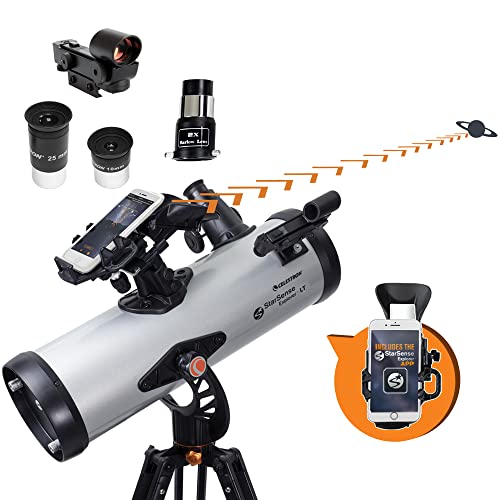
114mm Reflector · Smartphone Star-Finder
Great for: All 2026 events — especially Saturn & Perseids
Check Price on Amazon →
150mm SCT · Computerised GoTo
Great for: Eclipse (with filter), Saturn, Jupiter, deep sky
Check Price on Amazon →Region intent note: Europe-labeled cards are regional playbooks, USA-labeled cards are US timing pages, and unlabeled cards are global guides.
Blue Moon Tonight: Exact Time (USA)
Quick timezone answer page for May 31 viewing.
SpaceX Launch Schedule 2026
Mission windows, cadence, and how to watch updates.
UTC Time Converter for Astronomy
Convert event times to ET, CT, MT, and PT quickly.
Equinox 2026 Stargazing Guide
Season-shift planning for March and September skies.
What to See With a Telescope in September 2026
Saturn, Neptune at opposition, Venus, and autumn deep-sky targets.
Harvest Moon 2026
September 26 full Moon: date, moonrise effect, and observing guide.
Night Sky This Month
Monthly observing plan: tonight's top targets, timing, and easy wins.
Saturn's Rings Returning 2026
How and when to see them at their best
Total Solar Eclipse Aug 12, 2026
Filters, safety & telescope guide
Perseid Meteor Shower 2026
Peak Aug 11–12 — 100+ meteors/hr
Venus–Jupiter Conjunction June 2026
Both planets in one eyepiece — June 9
Blue Moon May 31, 2026
What it is and how to observe it
Planetary Alignment 2026
Planet parade dates and viewing tips
Strawberry Moon June 2026
Exact US time-zone peak times and full-Moon viewing plan.
Moon Occults Venus June 17, 2026
Rare daytime occultation guide with US time conversions and safety workflow.
Meteor Shower Tonight 2026
Live yes/no viewing plan, best peak hours, and moonlight-adjusted strategy.
Lunar Eclipse 2026 — Blood Moon Guide
Deep partial Aug 28 — 93% umbral, near blood-moon colour
Roman Space Telescope Launch Live Tracker 2026
Launch timeline, mission milestones, and live-watch planning.
Roman Launch Success: Recap (Aug. 30)
Launch recap, how it unfolded, and what happens next toward L2.
Saturn Rings Visibility Calendar 2026-2027
Month-by-month ring viewing windows and magnification planning.
Best Eyepiece to See Saturn Rings
Focal-length strategy for clean ring detail in real seeing conditions.
Dew Heater vs Dew Shield Telescope
Which dew-control setup keeps sessions alive in humid conditions.
Neptune vs Uranus Through a Telescope
Side-by-side outer-planet visual comparison and finder workflow.
What Time Is the Lunar Eclipse Tonight? (USA)
Exact ET, CT, MT, PT timing table for the next major US lunar eclipse night.
Chandra Finds Supernova Near Black Hole
Possible supernova remnant near Sgr A*.
Europe Eclipse Travel Guide 2026
Spain and Iceland strategy for August 12 totality.
Perseids Europe Country Guide 2026
Country-by-country observing plan for peak nights.
Saturn Opposition Europe Guide 2026
Ring-season strategy and magnification ladder by conditions.
Noctilucent Clouds Europe 2026
June-July NLC timing and horizon workflow.
Milky Way Season Europe 2026
Dark-sky month planning and country routes.
When Is the Next Solar Eclipse? (USA)
One-page answer with next date, USA visibility, and prep checklist.
How Many Earths Can Fit Inside the Sun?
Quick size-scale explainer with visual comparisons and NASA imagery.
Global Sky Events Buying Guide 2026
Event-by-event buying guide for broad global coverage.
Taurus Constellation Guide
Aldebaran, Hyades, Pleiades, and Crab Nebula observing walkthrough.
Eta Aquarid Meteor Shower 2026
Halley's Comet debris — May 5–6 peak
Lyrid Meteor Shower 2026
April 22 peak — Comet Thatcher debris
Asteroid Vesta 2026
Spot it with binoculars at opposition
Interstellar Comet 3I ATLAS Guide
How to track and observe the latest interstellar comet target in 2026.
Best Telescopes for Beginners 2026
13 reviewed picks — all budgets
Roman Space Telescope Launch Success — Aug 30, 2026
NASA’s biggest observatory since Hubble launched Aug. 30 — plain English guide for amateur astronomers.
Sagittarius Constellation Guide
Use the Teapot and summer Milky Way fields for dense deep-sky observing nights.
Lyra Constellation Guide
Find Vega, observe M57, and plan precision Summer Triangle sessions.
Scorpius Constellation Guide
Use Antares, M4, M6, and M7 to build high-success summer southern sessions.
Gemini Constellation Guide
Find Castor and Pollux, then target M35 and the Eskimo Nebula in winter skies.