
TelescopeAdvisor Logo TelescopeAdvisor
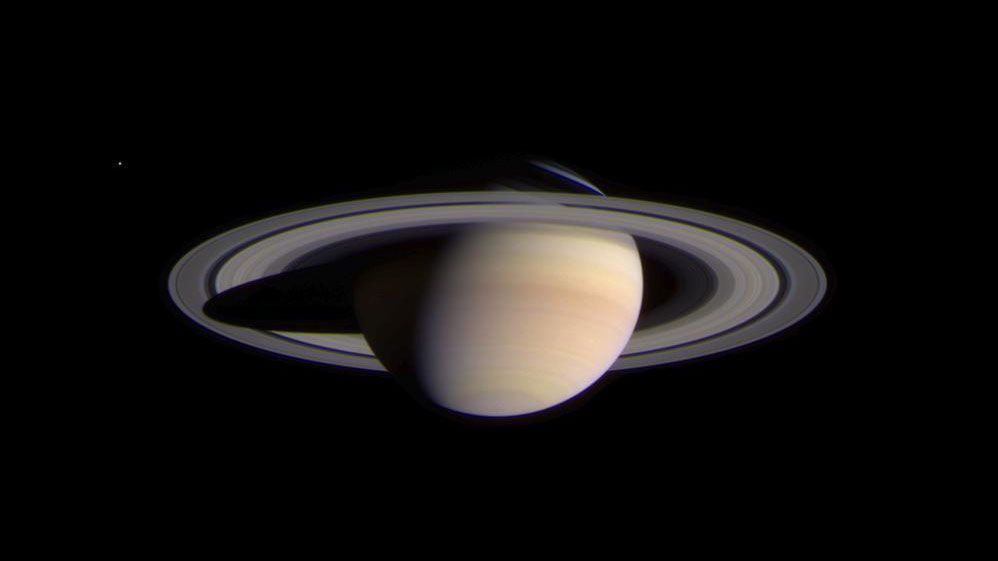
Saturn and its ring system — the NexStar 8SE delivers crisp planetary views including ring detail

Telescope Review · 2026

Celestron NexStar 8SE Review 2026

The 8SE has been the most recommended computerized telescope for over a decade. We examine whether it still justifies the premium price — and who should buy it in 2026.

Our Score9.1 / 10
Aperture8" / 203mm SCT
MountSingle-arm GoTo alt-az
Best ForPlanets + deep sky
By Telescope Advisor Editorial Team Published: Updated: Editorial Standards

Quick Verdict

The Celestron NexStar 8SE is the best telescope for observers who want serious aperture with computerized object-finding in a portable, single-scope package. The 8-inch Schmidt-Cassegrain optical system delivers outstanding planetary views and is capable enough for most deep-sky objects — all with push-button GoTo alignment. It's expensive, and the single-arm mount requires care during balance, but there's nothing that competes at this aperture in a GoTo alt-azimuth form factor.

Celestron NexStar 8SE: Full Specifications

SpecValue
Optical DesignSchmidt-Cassegrain (SCT)
Aperture203mm (8 inches)
Focal Length2,032mm
Focal Ratiof/10
Mount TypeSingle-arm alt-azimuth GoTo
Tracking2-axis motorized, alt-az
Hand ControllerNexStar+ (40,000+ objects)
FinderscopeStarPointer red dot
Eyepiece23mm (1.25"), 88× magnification
Diagonal1.25" star diagonal
Optical tube weight5.4 kg (12 lbs)
Total system weight~18 kg (40 lbs) with tripod
Power8×AA batteries or 12V DC
USB / WiFiUSB serial (WiFi adapter optional)

Limiting Stellar Magnitude: 14.0 — shows objects down to mag 14 under good skies.

Resolution (Dawes limit): 0.57 arc-seconds — exceptional planetary resolution.

Highest Useful Magnification: ~400× (though atmospheric seeing limits this to ~250× on most nights).

Tube Length: 432mm (17 inches) — compact for 8-inch aperture; the SCT folded optical path makes it much shorter than an equivalent Newtonian.

Accessories included: 23mm eyepiece (88×), 1.25" star diagonal, NexStar+ hand controller, StarPointer red dot finder, steel tripod with accessory tray.

Optical Performance

The Schmidt-Cassegrain design is one of the most optically sophisticated commonly available telescope types. The 8SE uses a spherical primary mirror corrected by a Schmidt corrector plate at the front, which eliminates spherical aberration. The light path folds twice — allowing 2,032mm of focal length in a tube just 432mm long.

Planetary Performance

On Saturn at 200–250×: Cassini Division clearly defined, ring shadow on globe, equatorial belt, and 4–6 moons in a single view. The long f/10 focal ratio provides excellent contrast on faint planetary detail — a known advantage of SCTs over faster Newtonians for this type of observing. Jupiter shows multiple equatorial belts, festoons, ovals, and the Great Red Spot. Mars near opposition shows polar caps and Syrtis Major.

Deep-Sky Performance

At 8 inches of aperture, the 8SE reaches magnitude 14 and resolves all 110 Messier objects with detail. The f/10 ratio makes deep-sky objects slightly dimmer at low power than a shorter focal-ratio scope, but upgrading to a 40mm 2-inch eyepiece (sold separately) opens up wide-field capability. The 8SE genuinely competes as a deep-sky telescope — M13 is stunning, M42 is three-dimensional, and M81/M82 show clear structural differences.

SCT Collimation Note: The 8SE should be collimated periodically (every few months of use or after transport). The process is simple — three screws on the corrector plate adjust the secondary mirror. A Cheshire eyepiece makes this a 10-minute task. Most new 8SEs arrive well-collimated from the factory.

GoTo Mount & NexStar+ Hand Controller

How GoTo Alignment Works

The NexStar 8SE uses a 2-star alignment process: after setting your date, time, and location, point the scope at two bright stars and center them as prompted. The mount calculates your precise pointing position and can then find any of 40,000+ objects automatically. On a first attempt it takes about 10 minutes. With practice, the whole process takes 5–7 minutes. Celestron's SkyAlign (3-star alignment on any three bright objects) is an even easier option available in the NexStar+ controller.

NexStar+ Controller Features

  • ✓ 40,000+ object database (NGC, IC, Messier, planets, double stars)
  • ✓ Tour mode — auto-cycles through best visible objects for your location
  • ✓ Multi-star alignment for improved accuracy
  • ✓ Backlash compensation settings
  • ✓ Variable slewing speed (1×–9×)
  • ✓ PC/Mac connection via USB-to-serial adapter for planetarium software (Stellarium, SkySafari, etc.)
  • ✓ Optional Celestron WiFi adapter for wireless control
Single-Arm Mount Note: The NexStar 8SE uses a single-arm fork mount (unlike the heavier dual-arm NexStar 11 GPS). This keeps the system compact and portable, but means that pointing near the zenith is mechanically constrained. Objects within ~15° of the zenith are difficult to reach. For most observers this is rarely an issue — simply wait for an object to move away from directly overhead before observing.

Setup & Ease of Use

Assembly Time

20–30 minutes on first use; 10–15 minutes once familiar. The optical tube mounts on the single arm with a quick-release system. Tripod assembly takes 5 minutes.

Portability

The 8SE disassembles into 3 main components: tripod, mount arm, and optical tube. The OTA fits in a backpack-style carry bag. Most observers transport it fully assembled in an SUV or hatchback.

Cool-Down Time

The 8SE's closed tube keeps optics dust-free but requires 30–45 minutes of cool-down after bringing outside from indoors. The corrector plate is prone to dew in humid conditions — a dew heater (sold separately) is recommended.

Is it beginner-friendly? With patience, yes. The GoTo system removes the challenge of star-hopping and star maps — you just type a catalog number and the scope moves to it. The alignment procedure has a modest learning curve, but Celestron's setup guides are thorough, and the astronomy community (YouTube tutorials, Cloudy Nights forum) has extensive 8SE resources. For an adult with technical patience, the 8SE is manageable from night one.

Pros & Cons

Pros

  • 8-inch aperture delivers outstanding views of planets, double stars, and deep-sky objects
  • GoTo with 40,000+ objects — beginners can explore without knowing star names
  • Compact SCT tube — 8-inch aperture in a 17-inch tube (half the size of equivalent Newtonian)
  • Motorized tracking keeps objects centered at high power
  • Astrophotography-capable with additional accessories (equatorial wedge)
  • Excellent long-term upgrade path (T-ring, focal reducer, equatorial wedge, star diagonal)
  • Massive community support, accessories, and tutorials

Cons

  • Premium price — significantly more than manual scopes of similar aperture
  • Needs 30–45 min cool-down before optics stabilize (closed tube design)
  • Corrector plate prone to dew — dew heater strongly recommended
  • Single-arm fork mount limits very high-altitude pointing (zenith blind spot)
  • GoTo alignment takes 10–15 min per session
  • Included 23mm eyepiece is acceptable but not premium — an upgrade eyepiece is worthwhile
  • Heavier than tabletop Dobs — not ideal for spontaneous quick views
View NexStar 8SE on Amazon →

Affiliate link — we may earn a commission at no extra cost to you.

NexStar 8SE vs Competitors

Telescope Aperture Design GoTo Best For
NexStar 8SE ⭐203mmSCT f/10YesBest all-rounder
NexStar 6SE150mmSCT f/10YesLighter, budget-conscious
NexStar 5SE127mmSCT f/10YesEntry-level GoTo
Sky-Watcher Dobsonian 8200mmNewtonian f/5.9NoDeep sky, visual only
Sky-Watcher Explorer 200P200mmNewtonian f/6NoManual EQ, astro-capable

NexStar 8SE vs 6SE: Which to Choose?

The 8SE delivers 82% more light-gathering area than the 6SE (203mm vs 150mm). For planetary detail and faint deep-sky objects, this matters significantly. The 6SE is lighter (12 kg total vs 18 kg), easier to transport, and notably less expensive. If portability and budget are the priority, the 6SE is excellent. If optical performance is paramount, the 8SE is the clear choice. There's little reason to buy the 5SE or 4SE when the 6SE exists at a comparable price point.

NexStar 8SE vs 8" Dobsonian: Which to Choose?

An 8-inch Dobsonian (like the Sky-Watcher Dobsonian 8) costs significantly less than the 8SE and provides equivalent or slightly better deep-sky performance due to the faster focal ratio. The Dobsonian won't track objects. The 8SE tracks and finds objects automatically, is more compact, and opens the door to limited astrophotography. Choose the Dobsonian for deep-sky visual use on a budget. Choose the 8SE if you want tracking, GoTo, and a future path into imaging.

Who Should Buy the NexStar 8SE?

Ideal Buyer ✓

  • ✓ Adults upgrading from a beginner telescope
  • ✓ Observers who value object-finding assistance
  • ✓ Those wanting both planetary AND deep-sky capability
  • ✓ Future astrophotographers (with wedge upgrade)
  • ✓ Those who value compact storage and transport

Consider Alternatives ⚠

  • ⚠ Tight budget — a Dobsonian gives more aperture per dollar
  • ⚠ Purely visual deep sky — an 8" Dob is better value
  • ⚠ Children (complex setup, expensive if damaged)
  • ⚠ Long deep-sky imaging sessions (equatorial mount needed)

Not Recommended For ✗

  • ✗ Absolute beginners with no astronomy background (steep GoTo learning curve)
  • ✗ Serious long-exposure deep sky photography (need EQ mount)
  • ✗ Very budget-limited buyers

Ready to Buy the NexStar 8SE?

Check current prices on Amazon — availability and pricing can change.

Affiliate links — we may earn a small commission at no extra cost to you.

Frequently Asked Questions

How difficult is the NexStar 8SE to set up?

Assembly takes 20–30 minutes on first use, dropping to 10–15 minutes with practice. The GoTo alignment requires entering date, time, and location, then centering two alignment stars in the eyepiece as prompted. The process is well-documented, and Celestron's setup videos are clear and thorough. Most observers feel comfortable with the 8SE within 3–4 sessions.

Can the NexStar 8SE be used for astrophotography?

The 8SE on its standard alt-azimuth GoTo mount can do planetary imaging (short-exposure video stacking for Jupiter, Saturn, Mars, Moon) very effectively. For long-exposure deep-sky astrophotography, you need an equatorial wedge — which lets the mount track in polar alignment mode, eliminating field rotation. The NexStar 8SE is compatible with Celestron's equatorial wedge (sold separately), transforming it into a capable deep-sky imaging platform.

How does the NexStar 8SE perform on galaxies?

Very well for visual use. The 8SE shows all 110 Messier objects with clear detail. M31 (Andromeda) with its satellite galaxies M32 and M110, M81/M82, M51 (Whirlpool), and M104 (Sombrero) are all excellent targets. The f/10 focal ratio means wide-field views require a 2-inch wide-angle eyepiece (sold separately), but the image quality at higher power for smaller galaxies is superb. Under moderately dark skies, the 8SE reaches magnitude 13–14 objects.

What accessories should I buy with the NexStar 8SE?

The most impactful accessories: (1) A dew heater band for the corrector plate — essential in humid conditions. (2) A quality 2-inch star diagonal with an adapter for wider-field views. (3) A 30–40mm wide-angle 2-inch eyepiece for low-power galaxy and nebula hunting. (4) A 12V DC power supply — 8×AA batteries drain quickly. (5) For astrophotography: a T-ring and camera adapter to attach a DSLR or mirrorless camera at prime focus.

Is the NexStar 8SE good for seeing Saturn?

Outstanding. The 8SE at 200–250× is one of the best visual Saturn setups available. The long f/10 focal ratio delivers high image contrast, the Cassini Division is clearly defined, and multiple cloud belts and 4–6 moons are visible. The motorized tracking keeps Saturn centered at high magnification without needing to manually nudge the scope every few seconds. See our full guide: How to See Saturn With a Telescope in 2026.

Related Guides