Best Telescopes for Sky Events 2026: Solar Eclipse, Perseids, Saturn & Lunar Eclipse Buying Guide
Telescope Advisor Logo Telescope Advisor
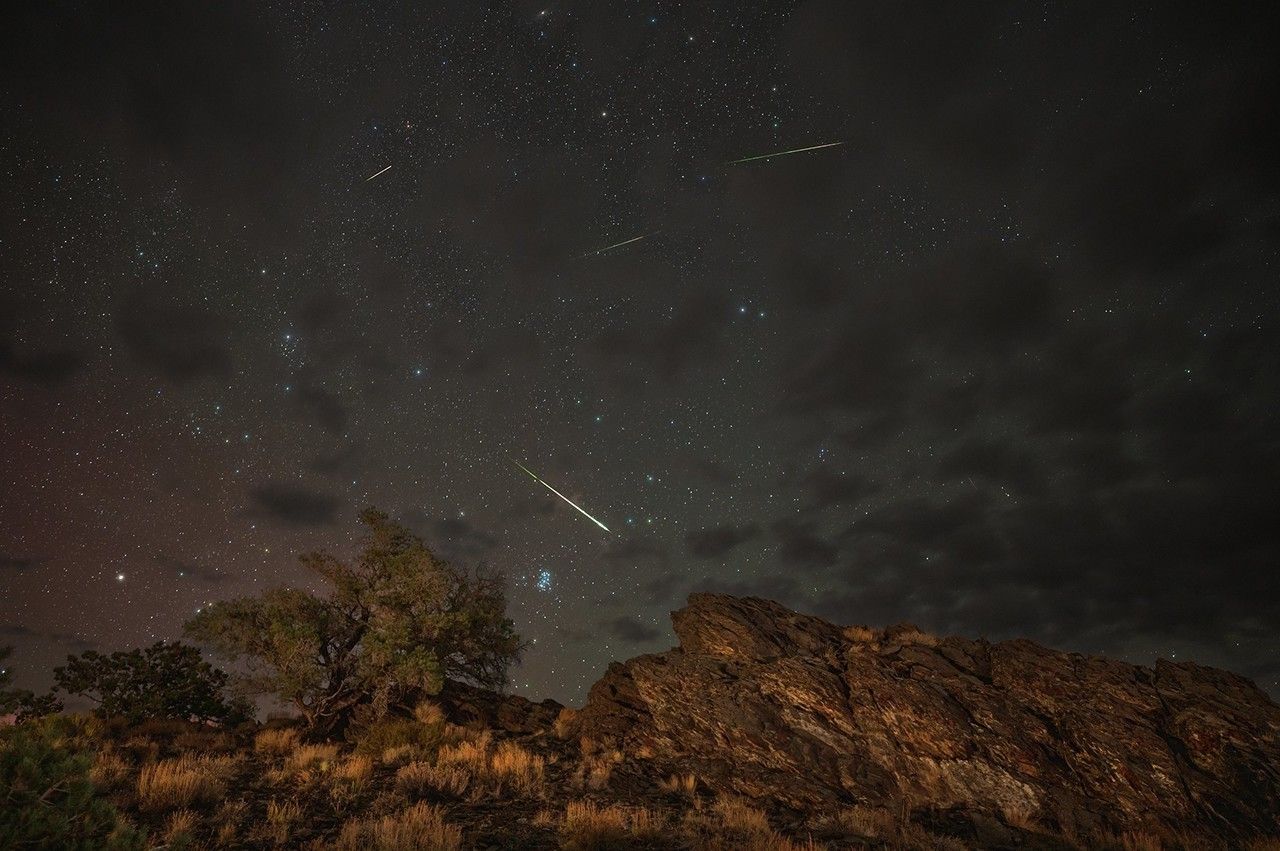
Perseid meteor shower over Bishop, California — 2024 — wide-field night sky photography

Telescope Buying Guide · 2026 Sky Events

Best Telescopes for Watching Sky Events in 2026: What to Buy Before Each Event

Solar eclipse. Perseids. Saturn at opposition. Lunar eclipse. Each 2026 event needs different gear — and if you order late, it won't arrive in time. Here's exactly what to buy and when to order for every major event this year.

Aug 12

Solar Eclipse

Aug 11–12

Perseids Peak

Oct 4

Saturn Opposition

Aug 28

Lunar Eclipse

By Telescope Advisor Editorial Team Published: Updated: Editorial Standards

Quick Answer: Which Gear for Which Event?

Different sky events reward different gear. A telescope that's perfect for Saturn rings is the wrong tool for the Perseids. This table tells you exactly what to use — and what to skip — for every major 2026 event.

Sky Event Date Best Tool Our Top Pick Skip
Total Solar Eclipse Aug 12, 2026 ISO solar filter + any scope or binoculars StarSense LT 114AZ + solar filter Unfiltered naked eye during partial phases
Perseid Meteor Shower Aug 11–12, 2026 Naked eye + reclining chair SkyMaster 15×70 binoculars (optional) Telescope (too narrow a view)
Partial Lunar Eclipse Aug 28, 2026 Any telescope or binoculars — no filter needed Heritage 130P or SkyMaster 15×70 High magnification (use low power)
Saturn at Opposition Oct 4, 2026 80mm+ refractor or 114–130mm reflector StarSense LT 114AZ or Heritage 130P Binoculars (rings need 40×+)
Venus–Jupiter Conjunction June 9, 2026 10×50 or 15×70 binoculars SkyMaster 15×70 binoculars Long-focal-length scope (too narrow)
Blue Moon May 31, 2026 Any telescope or binoculars Heritage 130P — craters at 65× Nothing — just look up
Geminid Meteor Shower Dec 13–14, 2026 Naked eye from dark site No gear needed — just dark sky Telescope (too narrow a view)

One telescope covers five of the seven events above

The Celestron StarSense Explorer LT 114AZ works well for the solar eclipse (with a solar filter), the lunar eclipse, Saturn at opposition, the Blue Moon, and Venus–Jupiter (low-power eyepiece for wide field). The only events it can't help with are meteor showers — which need no gear at all — and conjunctions, where binoculars are better. It's the single most versatile buy for 2026.
☀️

August 12, 2026

Best Telescope for the 2026 Solar Eclipse

The total solar eclipse of August 12, 2026 passes through Greenland, Iceland, and Spain. A partial eclipse is visible across all of Europe, North Africa, and parts of eastern North America. ISO-certified solar filters are mandatory during partial phases — only remove them during totality itself (path of totality only).

Best telescope approach: Almost any telescope works for a solar eclipse — the filter is what matters, not the optics. A 70mm–114mm refractor or reflector with a properly fitting solar filter gives you large, comfortable views of the partial phases, sunspot detail, and the stunning diamond ring / Baily's beads during totality. Avoid high magnification: at 150×+ the Sun's disk barely fits in the eyepiece and tracking becomes exhausting.

  • Recommended scope: Celestron StarSense LT 114AZ (114mm aperture, 1000mm focal length — gives 40× at 25mm eyepiece, full Sun disk with detail)
  • Filter required: A solar filter sheet cut to fit the front aperture — never the eyepiece filter. Full safety guide →
  • Binoculars work too: SkyMaster 15×70 with matching solar binocular filters gives a spectacular full-Sun view during partial phases
  • Order by August 1 to guarantee Prime delivery for August 12
⚠️ Eye safety: Never look at the Sun through any telescope or binoculars without a certified ISO 12312-2 solar filter mounted on the front aperture. Cheap eyepiece solar filters can crack from heat and cause instant, permanent blindness. Use only front-aperture filter sheets or certified glass filters.
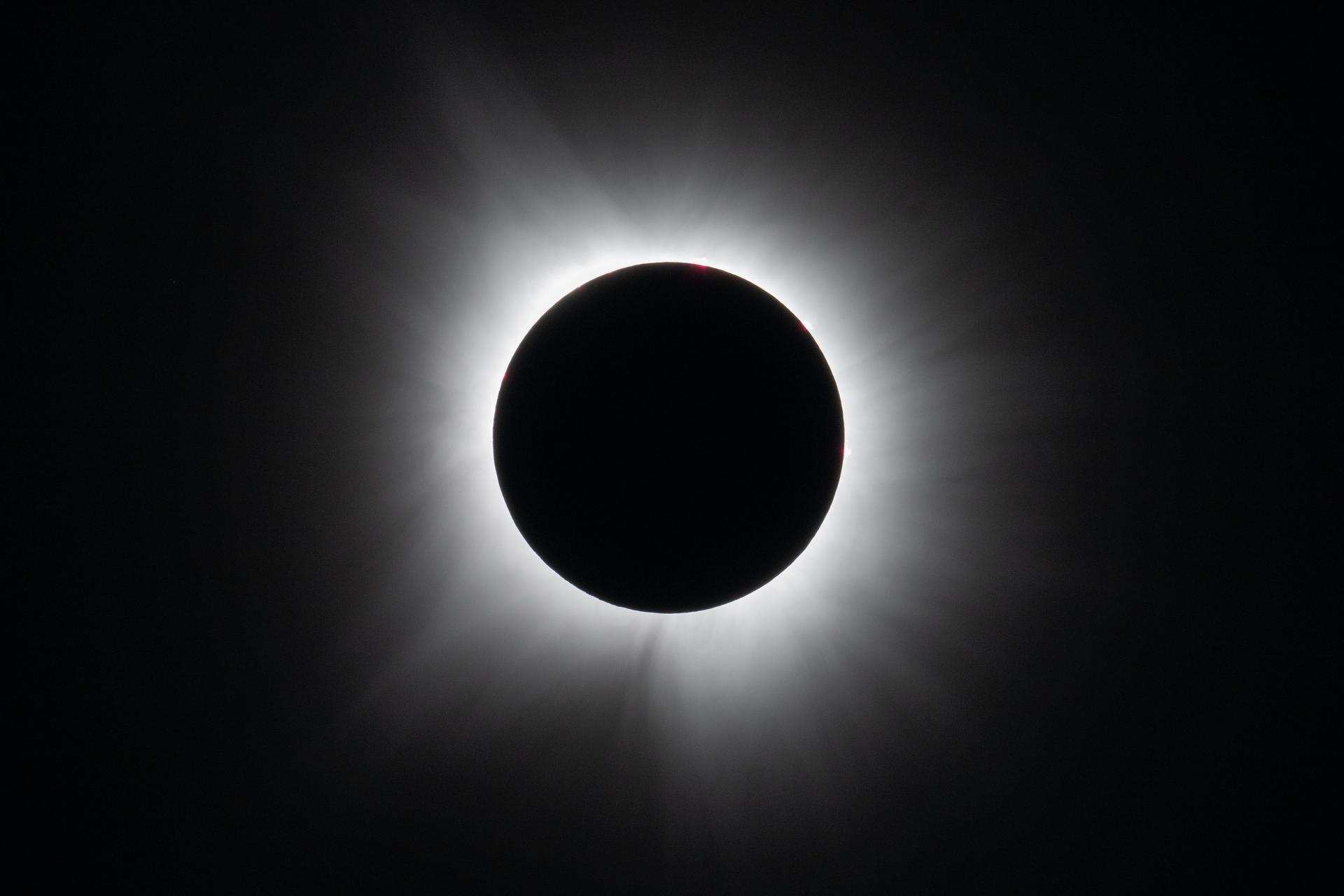
Total solar eclipse corona — white streamers visible around the dark Moon disk

Solar Corona During Totality — 2024 Eclipse

During the brief window of totality, no filters are needed. The corona, prominences, and chromosphere are visible to the naked eye — and spectacular in binoculars. Credit: NASA.

Eclipse 2026 Fast Facts

DateAugust 12, 2026
Path of totalityGreenland → Iceland → Spain
Max duration2 min 18 sec
Partial eclipseEurope, N. Africa, E. N. America
Filter neededISO 12312-2 during partial phases
Best magnification20×–60× for partial phases
🌠

August 11–12, 2026

Best Gear for the 2026 Perseid Meteor Shower

Here's the most important piece of advice on this page: do not use a telescope for the Perseids. Meteor showers are wide-area events — individual meteors can streak across 30°–90° of sky in under a second. A telescope's narrow field of view (typically 1°–2°) means you'll spend the entire shower looking at a small patch of dark sky, seeing almost nothing.

What actually works for meteor showers:

  • Naked eye, lying flat, looking up — this is genuinely the best method. No gear beats it for field of view and comfort.
  • Reclining chair or camping mat — neck comfort for 2–3 hour sessions outdoors matters enormously.
  • Binoculars (optional enhancement) — after a bright fireball, binoculars let you scan the glowing train (smoke trail) the meteor leaves. The SkyMaster 15×70 on a tripod is good for this. Don't stare at the radiant through them — just use them for fireballs.
  • Dark location — light pollution is the #1 meteor shower killer. Get 30+ minutes from a city if possible.
2026 Perseid conditions: The 2026 Perseids peak August 11–12 with a near-new Moon (August 12 is New Moon), giving exceptionally dark skies. This is one of the best Perseid years in the cycle — expect 90–120 meteors/hour under ideal conditions from a dark site.
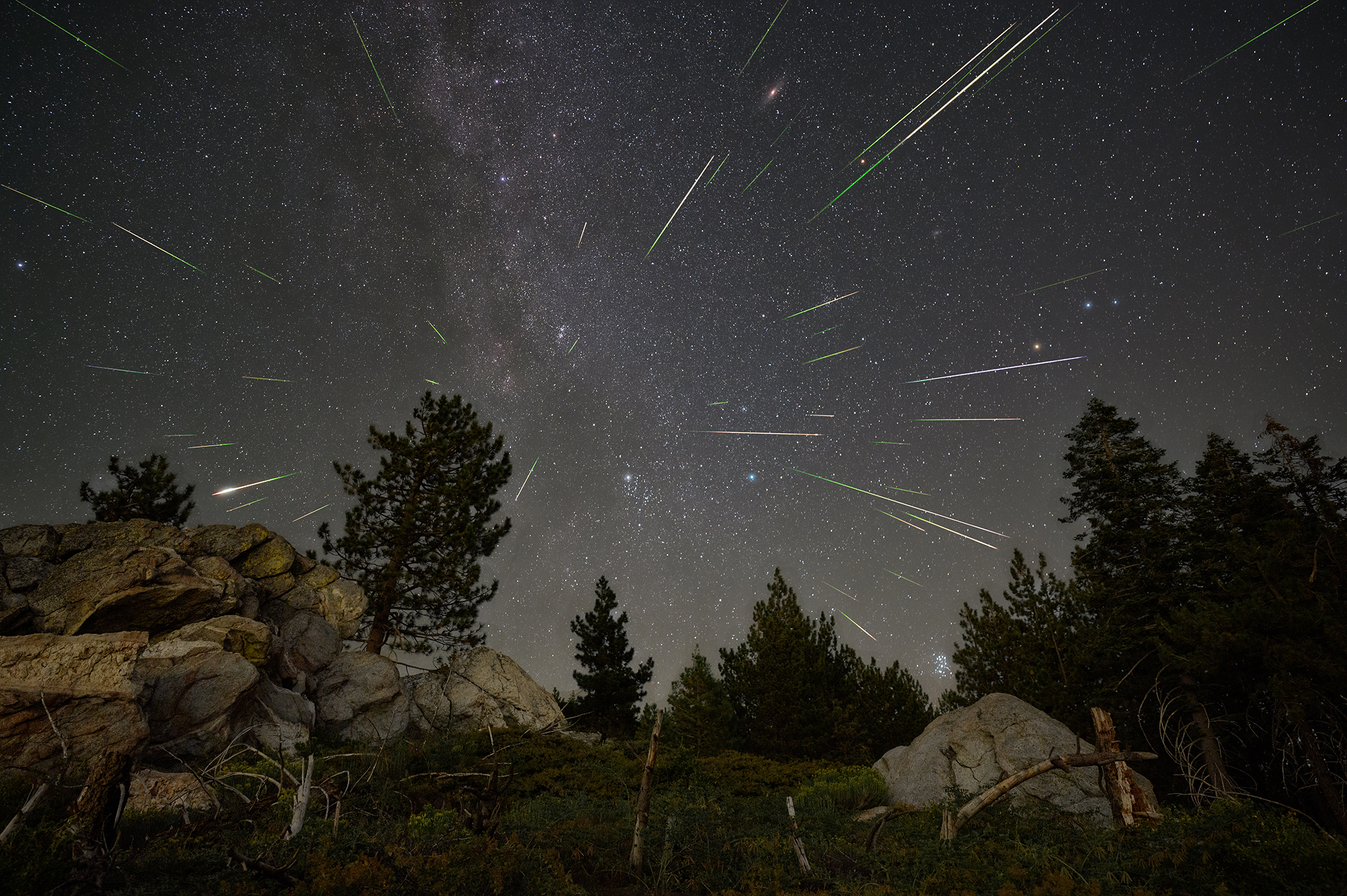
Perseid meteors streaking across the sky over Sequoia National Park — 2023

Perseids over Sequoia National Park — 2023

Multiple meteors in a single composite exposure. This wide-field view is exactly what your naked eye sees. A telescope would show a tiny fraction of one corner. Credit: NASA / Preston Dyches.

2026 Perseid Shower Details

PeakNight of Aug 11–12
RadiantPerseus constellation, NE
Moon phaseNew Moon — dark skies!
ZHR (peak)~90–120 meteors/hr (dark sky)
Best timeAfter midnight, before dawn
Gear neededNone — just dark sky
🌕

August 28, 2026

Best Telescope for the 2026 Partial Lunar Eclipse

The partial lunar eclipse of August 28, 2026 reaches a magnitude of 0.930 — meaning 93% of the Moon's disk enters Earth's shadow. The visible dark bite will be obvious to the naked eye and stunning in any telescope or binoculars. No filters are ever needed for a lunar eclipse — the Moon is in shadow, not shining its own light.

Best approach for a lunar eclipse: Use low magnification to frame the whole Moon (the phase contrast across the disk is the spectacle), then switch to higher power to watch the shadow's curved edge cutting across crater rims. The Sky-Watcher Heritage 130P's 25mm eyepiece (26×) frames the full Moon beautifully; its 10mm eyepiece (65×) resolves craters in the shadow boundary.

  • Any telescope works — 60mm refractors, 114mm reflectors, 130mm Dobsonians — all show compelling partial eclipse views
  • Binoculars are especially immersive — 15×70 binoculars show the whole Moon in context with the surrounding star field emerging as the Moon darkens
  • No filters, no special equipment — just point and look

Eclipse Fast Facts

DateAugust 28, 2026
TypePartial (magnitude 0.930)
Visible fromAmericas, Europe, Africa, W. Asia
Filter neededNone — ever
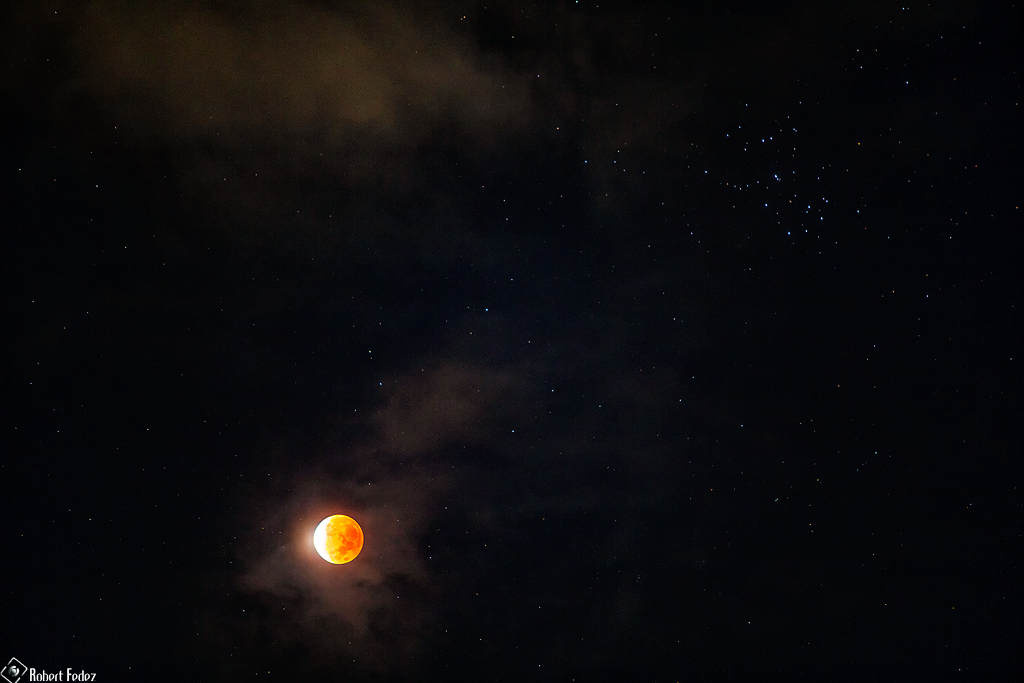
Partial lunar eclipse — Earth's dark umbral shadow covering 97% of the Moon disk, November 19, 2021

Partial Lunar Eclipse — Nov 19, 2021

Earth's dark umbral shadow covers 97% of the Moon. The August 28, 2026 eclipse will look similar at 93% magnitude. Credit: NASA APOD 2021-11-20.

🪐

October 4, 2026

Best Telescope for Saturn at Opposition 2026

Saturn reaches opposition on October 4, 2026 — its closest approach to Earth for the year, appearing largest and brightest in the night sky. This is also the first year since 2025 that Saturn's rings are re-tilting toward Earth after edge-on in March 2025. By October 4, 2026, the rings are tilted ~7.5° from our line of sight — narrow but clearly visible in any 40×+ view.

What aperture do you need to see Saturn's rings? A minimum of 60mm at 40× separates the rings from the disk. A 114mm or 130mm aperture at 75×–120× shows the ring gap (Cassini Division) between the A and B rings as a thin dark line — one of the most rewarding sights in amateur astronomy. The Heritage 130P at 65× is the minimum to see the Cassini Division.

  • 60mm refractor at 40×: Rings clearly separated from disk; Saturn's oval shape unmistakable
  • 114mm reflector at 75×: Rings show structure; Cassini Division hints visible on good nights
  • 130mm Dobsonian at 65–130×: Cassini Division visible as dark gap; Titan (moon) as bright dot
  • The rings tilt increases each year through 2032 — 2026 is still narrow but worth the effort
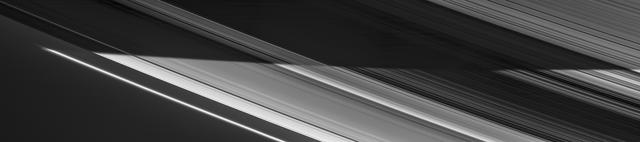
Saturn with rings and Titan — photographed by the Cassini spacecraft. The rings are tilted and the Cassini Division is visible.

Saturn — Cassini Spacecraft Image

The dark gap between the A and B rings (Cassini Division) is visible in any 130mm scope at 65×+ on a steady night. At the October 4, 2026 opposition, Saturn's rings are tilted ~7.5° from our line of sight. Credit: NASA / JPL-Caltech / Space Science Institute.

Saturn 2026 Viewing Details

OppositionOctober 4, 2026
Ring tilt~7.5° at opposition
Min. aperture for rings60mm at 40×
Cassini Division130mm+ at 65×+

Our Top 3 Picks for 2026 Sky Event Observers

These three products cover every major 2026 event. Buy just the first if you want a single telescope that does everything. Add the binoculars for conjunctions and meteor shower fireball trains. The Heritage 130P is the aperture upgrade for serious planetary detail and Saturn rings.

Editor's Pick — Best All-Rounder for 2026 Events
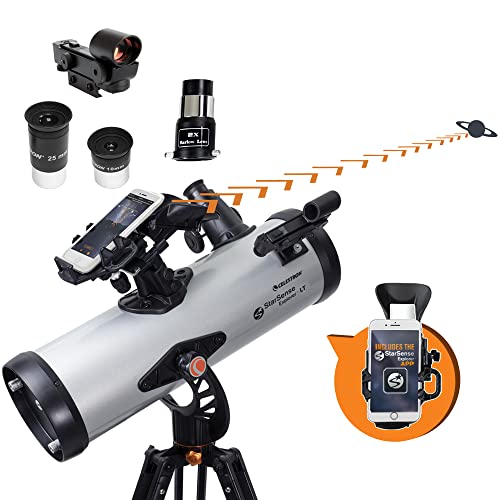
Celestron StarSense Explorer LT 114AZ smartphone-assisted reflector — best telescope for 2026 sky events

Celestron StarSense Explorer LT 114AZ

Best for: Solar eclipse, lunar eclipse, Saturn rings, Blue Moon, Jupiter moons

114mm aperture 1000mm focal length StarSense app included AZ mount

The best single telescope for someone who wants to observe everything in 2026 without spending hours figuring out how to find targets. The included StarSense app uses your smartphone's camera to analyse the star field and provide real-time pointing instructions: open the app, tap "Saturn," follow the directional arrows. In 30 seconds you're on target — even during a busy eclipse night when you want to be watching, not struggling with star-hopping.

At 40× (25mm eyepiece), the solar eclipse partial phases show clear sunspot groups. The 10mm eyepiece gives 100× for Saturn ring detail and Jupiter's cloud bands. The 114mm aperture is enough for the Cassini Division on a steady night. For the lunar eclipse, the 25mm gives a beautiful full-Moon view; the 10mm lets you watch the shadow edge crawl across crater rims in real time.

Current price:

$229.99

View on Amazon →

Affiliate link — we may earn a small commission at no extra cost to you.

Sky-Watcher Heritage 130P tabletop Dobsonian telescope

Sky-Watcher Heritage 130P Tabletop Dobsonian — Best aperture per dollar

Best for: Saturn rings (Cassini Division), lunar eclipse craters, deep-sky targets, Blue Moon detail

130mm aperture 650mm focal length Tabletop Dobsonian Setup: under 1 min

The Heritage 130P delivers more aperture than any other telescope under $200 — 130mm (5.1 inch) parabolic mirror with an f/5 focal ratio. The short 650mm focal length means it reaches Saturn at 65× with the stock 10mm eyepiece — enough to see the Cassini Division clearly on a good night. The tabletop Dobsonian design makes setup trivial: unfold, place on a table or car roof, look in. No tripod required. The Moon, planets, bright deep-sky objects like the Orion Nebula — all spectacular. The trade-off vs. the StarSense is manual star-hopping (no app guidance) and no built-in clock drive for tracking.

Current price:

$305.00

View on Amazon →

Affiliate link.

Celestron SkyMaster 15x70 astronomy binoculars

Celestron SkyMaster 15×70 Binoculars — Best wide-field companion

Best for: Venus–Jupiter conjunction, lunar eclipse context view, Perseid fireball trains, Blue Moon

15× magnification 70mm objective lenses ~4.4° true FOV Tripod adapter included

The perfect complement to a telescope. The SkyMaster 15×70 is one of the world's most popular astronomy binoculars — and for good reason. At 4.4° true field of view, they frame the Venus–Jupiter conjunction with both planets visible plus breathing room. They show Jupiter's four Galilean moons as distinct pinpricks. For the lunar eclipse, they give you the whole Moon plus surrounding stars, letting you see the dark sky filling with stars as the Moon dims — uniquely immersive. The 70mm aperture gathers substantially more light than 50mm or 42mm binoculars, making bright objects like the Moon and planets dazzlingly sharp in twilight or after dark.

Current price:

$89.00

View on Amazon →

Affiliate link.

Order Deadlines: When to Buy Before Each Event

Amazon Prime standard delivery is typically 2–3 days for in-stock items. Allow extra time for learning the telescope before the event — practicing in daylight on a tree or rooftop is essential before attempting a fast-moving eclipse event for the first time.

Event Event Date Last Order Date (Prime) Notes
Venus–Jupiter Conjunction June 9, 2026 June 5, 2026 Binoculars only — no setup required
Total Solar Eclipse Aug 12, 2026 August 1, 2026 Allow time for practice + solar filter confirmation. Do not cut this close.
Perseid Meteor Shower Aug 11–12, 2026 Aug 8, 2026 Binoculars only — no setup needed. Naked eye is best.
Partial Lunar Eclipse Aug 28, 2026 Aug 24, 2026 Forgiving event — any scope works, easy to set up same night
Saturn at Opposition Oct 4, 2026 Late Sep 2026 Saturn is visible for months — plenty of ordering time

Pro tip: order now and practice before the event

The single biggest mistake first-time eclipse observers make is trying to set up and use a new telescope on the night of the eclipse itself. Order your telescope at least 2 weeks before the event. Spend 2–3 clear evenings before the event practicing: collimating the optics, learning the focuser, finding the Moon, and working out eyepiece magnifications. The solar eclipse partial phases last ~2 hours — if you're fumbling with setup for the first 45 minutes, you've missed the best of it.

Frequently Asked Questions

Do I need a telescope to enjoy the 2026 solar eclipse?

No — the solar eclipse is a spectacular naked-eye event during totality. However, a telescope with a solar filter dramatically enhances the partial phases: sunspots, the Moon's limb advancing, and the chromosphere and prominences during the brief moments of totality. If you're not in the path of totality and are only seeing a partial eclipse, eclipse glasses are sufficient — a telescope adds sunspot detail but isn't required.

Can I see Saturn's rings in 2026?

Yes — but they're narrow. Saturn's rings were edge-on in March 2025 and are now slowly tilting back toward Earth. By October 4, 2026 (opposition), they're tilted ~7.5° from our line of sight — clearly separated from the disk in a 60mm telescope at 40×+. A 130mm scope at 65× will show the Cassini Division. The rings improve each year through 2032. This year is a "narrow rings" year — still worth seeing, just not the classic wide-open ring view. Full Saturn rings guide for 2026 →

Is the StarSense LT 114AZ good for all sky events?

It's the best single telescope for the 2026 event calendar. It works well for the solar eclipse (with solar filter), lunar eclipse, Saturn at opposition, the Blue Moon, and Venus–Jupiter at low power. The smartphone app removes the biggest beginner barrier — not knowing where to point. The only events it doesn't help with are meteor showers (use naked eye) and Venus–Jupiter (binoculars are better for wide-field conjunctions).

Should I buy binoculars or a telescope first?

If your priority is the Venus–Jupiter conjunction (June 9) or the Perseid meteor shower (Aug 11–12), start with binoculars — specifically the SkyMaster 15×70. They're more versatile for wide-field events and are ready in seconds. If your priority is the solar eclipse, Saturn's rings, or the lunar eclipse with crater detail, start with the StarSense LT 114AZ telescope. The ideal combo for 2026 is both — the telescope for magnified planetary events, the binoculars for wide-field conjunction and lunar eclipse context.

Is a solar filter included with these telescopes?

No — solar filters are sold separately for all consumer telescopes. Never use a telescope to observe the Sun without a proper front-aperture solar filter (ISO 12312-2 certified). Avoid cheap eyepiece solar filters — they can crack from heat buildup and cause permanent eye damage. Baader solar filter film cut to fit your telescope's aperture is the reliable budget solution. Always verify the filter is securely attached before pointing at the Sun.

Related Guides