Do I need a solar filter for a lunar eclipse?
No. A lunar eclipse is completely safe to observe with the naked eye, binoculars, or any telescope — no filters of any kind are required. During a lunar eclipse, the Moon is in Earth's shadow and you are looking at the Moon illuminated by refracted sunlight, not the Sun itself. Unlike a solar eclipse, where looking at the Sun without ISO-certified solar filters can permanently damage your eyes, a lunar eclipse poses zero eye hazard. You can observe it with any telescope or binoculars as long as you want, at any magnification.
Is the August 28, 2026 eclipse a "blood moon"?
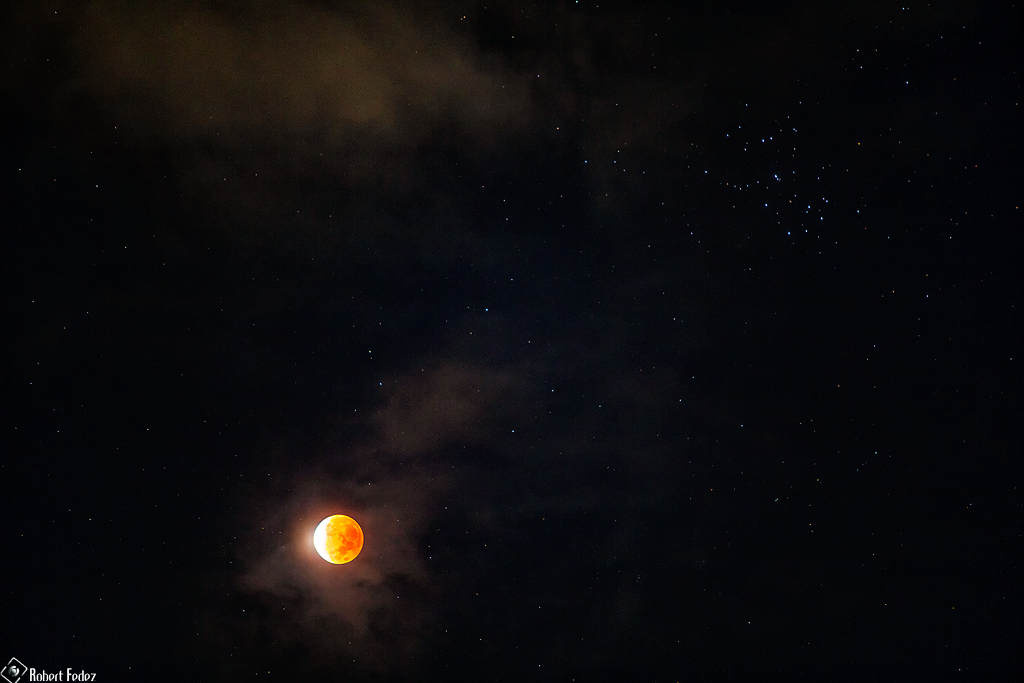
Technically, the term "blood moon" refers to a total lunar eclipse, when the entire Moon enters Earth's umbra and turns uniformly red. The August 28 eclipse is a partial eclipse — the Moon enters the umbra to 93% of its diameter. However, this is so deep that the submerged portion will display the classic blood-moon red colouring. The visual effect at greatest eclipse will be nearly indistinguishable from totality to most casual observers: a dramatically reddened Moon with only a thin bright sliver on one limb. Viral photographs will likely call it a blood moon regardless of technical classification. If you want a true blood moon where the entire disc is red, the March 3, 2026 total eclipse (now past) was the event of the year.
Can I see the August 28, 2026 eclipse from Europe?
Yes — Europe and Africa will see the partial eclipse, but at pre-dawn hours on August 28. For Western Europe (BST), the partial phase begins around 3:35 AM and greatest eclipse falls around 5:14 AM. The eclipse will be in progress at sunrise for much of Western Europe, meaning observers may only see the early phases before the Moon sets in the west or the sky brightens too much. Central and Eastern Europe see slightly earlier local times. Eastern Africa and the Middle East have the best European-zone conditions. The Americas have by far the best viewing geometry for this eclipse.
What is the difference between the March 3 total eclipse and the August 28 partial eclipse?
The March 3 total eclipse had the entire Moon inside Earth's umbra for 58 minutes, during which the whole disc glowed uniformly red-orange. It was best seen from eastern Asia, Australia, and the Pacific. The August 28 partial eclipse has 93% of the Moon's diameter inside the umbra — close to total but not quite. The key visual difference: during the partial, one side of the Moon remains noticeably brighter than the other, creating a striking gradient effect rather than a fully red disc. The August eclipse is better placed for American and European observers (evening/night viewing) versus the March total (which was late night / early morning for the Americas).
What magnification should I use during the eclipse?
Use low magnification (25–50×) for the broad view — this keeps the entire Moon in your eyepiece so you can watch the shadow progress and see the colour gradient across the disc. As greatest eclipse approaches and the dimming makes higher power more comfortable, switch to 75–120× to see individual craters inside the reddened zone, the sharp curved edge of Earth's shadow crossing the lunar surface, and subtle colour variations between different terrain types. Avoid very high magnification (>200×) — the already-dimmed Moon will appear muddy at those powers, and atmospheric turbulence on a summer night will degrade the image.
Will the eclipse be visible if it's partly cloudy?
Possibly. The eclipse lasts 3 hours 18 minutes, so even a partly cloudy sky with gaps every 20–30 minutes gives you multiple opportunities to catch the eclipse at different stages. The most important window to be watching is the 30 minutes around greatest eclipse (04:14 UTC = 9:14 PM PDT). If you only get one clear window that night, time it for greatest eclipse. Unlike a total solar eclipse where the key view lasts only 2–4 minutes with no second chance, a lunar eclipse is forgiving — you can nip inside, have a cup of tea, and come back to a Moon that's still dramatically eclipsed 20 minutes later.
Do I need a dark sky site to see the lunar eclipse?
No. The eclipsed Moon, even at deepest partial, is visible from any urban area — the Moon is simply too large and bright to be washed out by city lights, even at its most dimmed eclipse state. However, there is one bonus of a darker sky: near greatest eclipse, when the Moon dims from magnitude −12.7 (full Moon) to around +4 to +5, nearby stars become visible that are normally overwhelmed by moonlight. From a suburban or rural location, you'll see the reddened Moon surrounded by faint stars — a view that's impossible at any other time and genuinely beautiful.
Why is the lunar eclipse on August 28 and not a different date?
Lunar eclipses can only occur at full Moon — when the Moon is on the opposite side of Earth from the Sun. Full Moon in August 2026 falls on August 28. But not every full Moon produces an eclipse, because the Moon's orbit is tilted ~5° from Earth's orbital plane. An eclipse only occurs when the full Moon aligns closely enough with the Sun–Earth line to pass through Earth's shadow. In 2026, the August full Moon falls just inside one of the two annual "eclipse seasons" — windows about 38 days long when the geometry is right — which is why we get an eclipse this month.
What are the next major lunar eclipses after 2026?
According to NASA's eclipse catalog, the next total lunar eclipses after 2026 are: December 31, 2028 (total, 1h 11m, best from Europe, Africa, Asia, Australia), June 26, 2029 (total, 1h 42m — the deepest total eclipse of the century, visible from Americas and Europe), and December 20, 2029 (total, 54 min, Americas, Europe, Africa). Partial and penumbral eclipses occur in between. If you miss the August 28, 2026 partial, the next big chance for the Americas is June 26, 2029 — a spectacular 1h 42m totality.
What telescope is best for someone buying their first scope specifically for this eclipse?
For a first telescope chosen with the August 28 eclipse in mind, we recommend the Celestron StarSense Explorer LT 114AZ. It solves the #1 beginner problem (finding the object in the eyepiece) with smartphone-guided pointing, its 114mm aperture is ideal for the Moon at both wide-field and high magnification, and the alt-azimuth mount is intuitive to move — you can track the Moon's slow drift across the sky manually in seconds. The telescope arrives with two eyepieces that cover both the "full Moon in frame" view at 50× and the "crater detail" view at 100×, so there's nothing extra to buy for eclipse night. It will also serve well for planets, double stars, and bright clusters for years after the eclipse.
What is the difference between a lunar eclipse and a solar eclipse?
During a lunar eclipse, Earth moves between the Sun and the Moon, and the Moon passes through Earth's shadow. You are looking at the Moon — completely safe without any filters. During a solar eclipse, the Moon moves between Earth and the Sun, and you are looking toward the Sun — ISO-certified solar filters are required at all times except during the brief minutes of totality. A lunar eclipse is visible to the entire night side of Earth simultaneously and lasts 3–4 hours. A total solar eclipse is visible only along a narrow path and totality lasts just 2–7 minutes. In 2026, both events occur in August: the partial lunar eclipse on August 28, and the total solar eclipse on August 12 (path through Spain, Morocco, and Russia).
When is the next total lunar eclipse visible from the United States?
The next total lunar eclipse visible from the United States is June 26, 2029 — with 1 hour 42 minutes of totality and an umbral magnitude of 1.84, this is the deepest total lunar eclipse of the 21st century. It will be well-placed for the Americas, Europe, and Africa. Before that, the August 28, 2026 deep partial eclipse (93% magnitude) provides a near-blood-moon experience in prime evening hours for US viewers. Between now and June 2029, there is also a total eclipse on December 31, 2028 — best from Europe, Africa, and Asia (a New Year's Eve blood moon, but not well-placed for the US).