
Complete Telescope Buying Guide · 2026
The Ultimate Telescope Buying Guide 2026
Every category, budget tier, and use case — with expert picks, comparison tables, and straight answers. Start here if you're unsure which direction to go.
Buying a telescope in 2026 means navigating hundreds of models, conflicting reviews, and marketing that overpromises. This guide cuts through all of it. We've evaluated 60+ telescopes across every budget and use case and distilled the best into clear, direct recommendations — organized by what you actually want to see, how much you want to spend, and how much setup complexity you're willing to accept. Use the quick-path below to go straight to your category, or read through for the full picture.
Still not sure which direction to go?
Answer 4 questions about your budget, goals, and experience — our Telescope Finder Tool gives you a specific recommendation in under 60 seconds.
Quick-Path: What Do You Want to See?
The fastest way to find the right telescope is to start with your primary observing target. Each card links to a dedicated in-depth guide with specific model recommendations.
I'm a complete beginner
First scope, easy setup, shows Moon and planets clearly on night one.
Best Telescopes for Beginners →
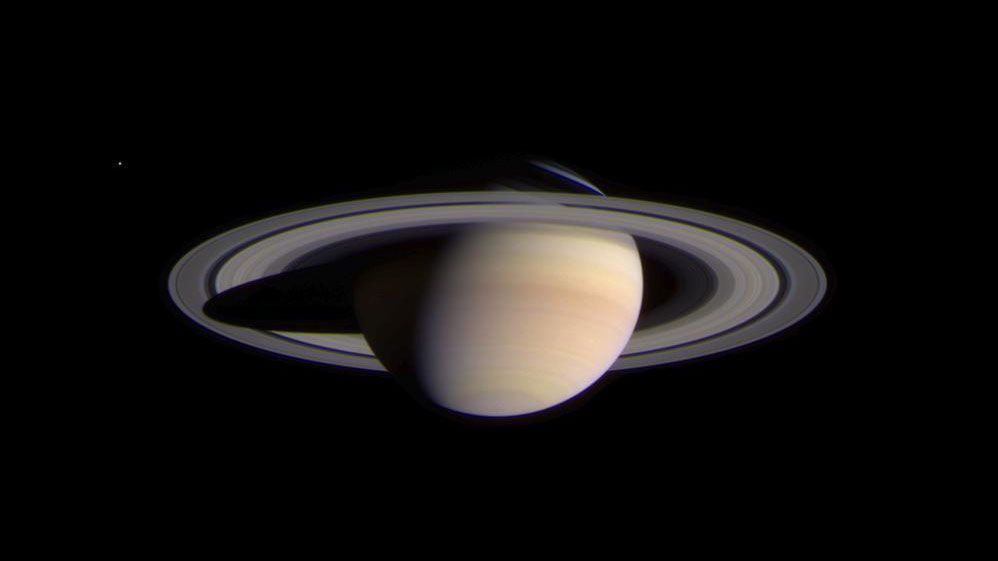
I want to see Saturn's rings & Jupiter
Planetary observing — rings, cloud bands, polar caps, moons.
Best Telescopes for Viewing Planets →
I want to photograph space
Astrophotography — long exposures, nebulae, galaxies, imaging mounts.
Best Telescopes for Astrophotography →
I want to explore galaxies & nebulae
Deep-sky visual observing — aperture priority, dark skies, Messier objects.
Best Telescopes for Deep Sky →
It's for a child
Durable, lightweight, genuinely usable by young astronomers.
Best Telescopes for Kids →
I want app-controlled & automatic
Smart telescopes — phone-controlled, no star charts, light-pollution compensation.
Top 10 Smart Telescopes →
I have a tight budget
Best telescopes under $300 — maximum optics per dollar without compromise picks.
Best Telescopes Under $300 →
I want the best value overall
Budget telescope roundup across all price bands — best bang for the buck.
Best Budget Telescopes →
I want maximum aperture for the money
Dobsonian telescopes — large mirrors, simple design, unbeatable aperture per dollar.
Best Dobsonian Telescopes →
Budget Tiers: What Each Price Range Actually Buys You
Budget determines your options more than anything else. Here's what you realistically get at each level — and the tradeoffs that come with each tier.
Under $100 — Entry / Gift Tier
StarterVery limited. At this price you're choosing between toylike refractors that show fuzzy Moon craters and almost nothing else, or small tabletop reflectors like the Celestron FirstScope that deliver genuine views of the Moon and bright planets if expectations are managed. Avoid anything claiming 400x or 500x magnification at this price — those numbers are meaningless at small aperture.
Best pick: Celestron FirstScope — Moon, bright planets, double stars in a durable package.
$100–$250 — Genuine First Telescope Tier
Best Value ZoneThis is where real telescopes begin. A 70mm refractor or 130mm tabletop reflector delivers genuinely satisfying Saturn rings, Jupiter cloud bands, lunar craters, and bright open clusters. The Celestron AstroMaster 70AZ (~$150) and Sky-Watcher Heritage 130P (~$200) are the two best picks in this range — both tested and consistently recommended.
In-depth guide: Best Telescopes Under $300 →
$250–$600 — Serious Beginner / Enthusiast Tier
Significant UpgradeAperture jumps to 150mm–200mm and you gain access to equatorial mounts, GoTo systems, and significantly better eyepiece quality. A Celestron NexStar 130SLT or Sky-Watcher Classic 150P Dobsonian shows globular clusters, planetary nebulae, and galaxy cores under reasonably dark skies. At the top of this range, the Celestron StarSense Explorer line adds smartphone-assisted finding without a GoTo price tag.
Award winners: Telescope Advisor Awards 2026 →
$600–$1,200 — Advanced Enthusiast Tier
GoTo & ImagingFull GoTo computerized mounts, 150mm–200mm aperture, and entry-level astrophotography capability. The Celestron NexStar 6SE (~$850) and Celestron NexStar 8SE (~$1,100) dominate this tier — reliable, factory-proven GoTo systems with high-quality optics. Serious planetary work and tracked deep-sky viewing become accessible. This tier also covers smart telescopes like the ZWO Seestar S50 (~$600) for no-setup imaging.
Model reviews: Celestron NexStar 8SE Full Review →
$1,200+ — High-Performance Tier
AstrophotographyDedicated imaging telescopes, premium equatorial mounts with guiding capability, and premium optics. The Celestron Advanced VX 8 EdgeHD (~$2,300) is the gold standard for astrophotography at this price — ultra-flat field, premium glass, stable mount. Above $2,000 you're in the domain of astrographs like the Sky-Watcher Esprit series and dedicated imaging platforms. Most visual observers get more value from aperture than mount sophistication in this tier.
Imaging guide: Best Telescopes for Astrophotography →
Telescope Types Compared: Which Design Is Right for You?
Five distinct designs dominate the 2026 market. Each has a different optical formula, maintenance requirement, and ideal use case. Understanding the differences prevents costly mismatches.
| Type | Best For | Weakness | Maintenance | Price Range |
|---|---|---|---|---|
| Refractor | Planets, Moon, crisp contrast, grab-and-go | Small aperture per dollar; chromatic aberration in cheap models | None — sealed optics | $80–$3,000+ |
| Newtonian Reflector | Deep-sky, beginners, aperture per dollar | Requires periodic collimation; open tube collects dust | Collimate ~monthly | $120–$800 |
| Dobsonian | Maximum aperture per dollar, deep-sky | Large and heavy; no GoTo (manual push-to); thermal equilibration needed | Collimate as needed | $150–$2,000 |
| Schmidt-Cassegrain (SCT) | All-round: planets, deep-sky, astrophotography, GoTo | Expensive; thermal equilibration (closed tube); slower focal ratio for imaging | Occasional collimation | $500–$3,000+ |
| Smart Telescope | Plug-and-play imaging, beginners, light pollution | Small aperture; images not live views; subscription costs | App updates only | $450–$4,000 |
Refractors vs Reflectors — in depth:
The optical trade-offs between lens and mirror designs explained with real-world performance comparisons.
Read: Reflector vs Refractor →All telescope types — full guide:
Complete breakdown of refractor, reflector, Dobsonian, compound, and specialist designs with pros, cons, and top picks.
Read: Types of Telescopes →Aperture Guide: How Size Directly Affects What You See
Aperture — the diameter of the main mirror or lens — is the single biggest factor in what you can observe. More aperture means fainter objects, finer detail, and more color. Here's what each size tier delivers in real backyard conditions.
| Aperture | Moon & Planets | Deep-Sky Objects | Recommended For |
|---|---|---|---|
| 60–70mm | Saturn rings, Jupiter bands & moons, Venus phases, lunar craters | Pleiades, Orion Nebula (fuzzy patch), brightest open clusters | Kids, travel, quick sessions |
| 80–100mm | Cassini Division in Saturn rings, GRS on Jupiter, Mars polar cap | M42 structure, Andromeda oval glow, globular clusters (hazy) | Suburban observers, casual all-round use |
| 114–130mm | Jupiter festoons, Saturn moon Titan, Uranus disc | Ring Nebula smoke ring, Hercules Cluster edge resolution, galaxy cores | First "serious" scope, all-round performance |
| 150–200mm | Saturn Encke Gap, Jupiter storm detail, Neptune blue disc | Andromeda dust lanes, Whirlpool Galaxy spiral arm, many faint nebulae | Dark-sky sessions, serious hobbyists |
| 200mm+ | High-power planetary detail, shadow transits of Jupiter moons | Globular star resolution, faint galaxy clusters, planetary nebula structure | Experienced observers, dark site regulars |
* Results depend on sky darkness (Bortle class), atmospheric seeing, and eyepiece quality. Urban skies reduce deep-sky reach by 1–2 effective aperture rows.
All Telescope Guides by Use Case
Every major buying guide on the site, organized by what you want to do. Each links to a full in-depth page with tested recommendations, comparison tables, and FAQs.
By Experience Level
Best Telescopes for Beginners 2026
12 models tested · Award winner: Celestron AstroMaster 70AZ · Includes aperture guide & setup tips
Best Telescopes for Kids 2026
Durability, ease-of-use, and age-appropriate optics evaluated · Best starter scopes for young astronomers
Best Telescopes 2026 — Overall Rankings
The master list of top-ranked telescopes across all categories for 2026
Telescope Advisor Awards 2026
9 category winners · 100-point scoring system · Best Overall, Best Beginner, Best Budget, and more
By Observing Target
Best Telescope for Viewing Planets
Saturn rings, Jupiter bands, Mars detail · 5 picks from starter to advanced · Planet-by-planet visibility guide
Best Telescopes for Deep-Sky Objects
Galaxies, nebulae, globular clusters · Aperture-focused recommendations · Dark site guidance
Best Telescopes for Astrophotography
Imaging-optimized optics, flat-field designs, mount compatibility · From beginner to advanced setups
What Can You See from Your Backyard?
Realistic expectation guide by aperture and sky darkness · Dozens of objects covered with descriptions
By Budget
Best Telescopes Under $300
5 tested picks · Best value picks for beginners and gifters · Honest performance expectations
Best Budget Telescopes
Maximum optics per dollar at every sub-$500 tier — no waste picks
Best Telescopes by Aperture Size
Find the best scope at each aperture tier: 60mm, 80mm, 100mm, 130mm, 150mm, 200mm+
Expert Telescope Recommendations
Curated shortlist across price tiers for buyers who want a quick expert opinion without long research
By Telescope Type
Best Dobsonian Telescopes
Maximum aperture per dollar · Tabletop and full-size Dobs · Best for deep-sky visual observing
Best Refractor Telescopes
Low-maintenance, sharp-contrast optics · Best for planets, Moon, and daytime use
Best Computerized (GoTo) Telescopes
Automated finding systems · Best for beginners who want to skip star-hopping · NexStar and SkyWatcher EQ6 compared
Top 10 Smart Telescopes 2026
App-controlled · AI-guided · Image stacking for light pollution · ZWO Seestar S50 reviewed
Types of Telescopes Explained
Full educational guide: refractor, reflector, Dobsonian, SCT, Mak-Cass, specialized · When each is best
Reflector vs Refractor: Full Comparison
Side-by-side performance, maintenance, and value comparison of the two most popular designs
Reviews & Specific Models
Mount Types: The Most Overlooked Telescope Decision
The mount holds and moves the telescope. A great optic on a wobbly mount is frustrating; a modest optic on a solid stable mount is a joy. Beginners routinely underestimate this. Here are the three main types:
Alt-Azimuth (Alt-Az)
Moves up-down and left-right. The simplest design — intuitive for beginners, no alignment needed. Sufficient for casual lunar and planetary work. Cannot track stars precisely for long-exposure photography. Found on most beginner scopes.
Best for: Beginners, quick sessions, kids
Equatorial (EQ)
Aligned with Earth's rotational axis. Allows single-axis tracking of stars — essential for long-exposure astrophotography. Requires polar alignment each session. Heavier and more complex than alt-az, but dramatically more capable for imaging and sustained viewing.
Best for: Astrophotography, serious visual observers
GoTo (Computerized)
Motor-driven alt-az or equatorial mount with a built-in database of 10,000+ objects. After a brief alignment, the mount automatically slews to and tracks any object you select. Eliminates the need to learn star charts. Required for consistent deep-sky viewing under suburban skies. Costs more — worth it for most buyers above the beginner tier.
Best for: Suburban observers, deep-sky, hassle-free sessions
For setup guidance, see our step-by-step guide: How to Set Up a Telescope for Beginners →
What to Avoid: The 5 Biggest Telescope Buying Mistakes
Buying based on maximum magnification claims
Any scope claiming "600x" or "900x" is marketing noise. Useful magnification is capped by aperture — typically 50x per inch of aperture in good conditions. A 70mm scope has a practical max of ~140x. The 400x eyepiece in the box produces a blurry, unusable image.
Underestimating mount stability
Cheap tripods on $80 telescopes vibrate for 30 seconds every time you touch the tube. At 150x, that's 30 seconds of unusable jelly-view. A telescope on a poor mount is the fastest path to abandoning the hobby. If the mount wobbles in the store, it wobbles under the stars.
Buying the most aperture in budget without considering portability
An 8-inch Dobsonian gives spectacular views but needs 30 minutes to cool, a car to transport, and floor space to store. The best telescope is the one you use regularly. A 130mm tabletop scope that's set up in 2 minutes will get used far more than a 200mm floor-standing Dob you leave in the closet.
Ignoring light pollution when planning observations
Aperture can't overcome bad skies for faint objects. A 200mm reflector under Bortle 8 city skies will show far less than a 130mm under Bortle 4 rural skies. If you live in a city and won't drive to dark sites, prioritize planets and Moon over galaxy chasing — or consider a smart telescope.
Skipping accessories entirely
Most telescopes ship with 1–2 eyepieces that leave the scope underequipped. A $30–50 quality Plossl or X-Cel eyepiece at a useful magnification unlocks dramatically better views. A 2x Barlow doubles your eyepiece range. A red light headlamp preserves dark adaptation. Budget ~10–15% of scope cost for basic accessories.
Essential Accessories for Any Telescope
Quality Eyepiece Set (Priority 1)
Most scopes include mediocre eyepieces. A 25mm for low-power wide-field finding and a 9mm for medium-power detail cover 90% of your sessions. The Celestron X-Cel LX series is the best value for most budgets. Budget $30–$80 per eyepiece.
2x Barlow Lens (Priority 2)
Doubles the magnification of any eyepiece you already own, effectively doubling your collection for $20–$40. Use a glass-element Barlow; plastic lens Barlows degrade image quality noticeably.
Red Light Headlamp
Essential for preserving your night vision (dark adaptation). White light resets your eyes' sensitivity in seconds. Red light at low intensity preserves adapted vision. Any $10–$20 astronomy headlamp works.
Star Atlas or Planisphere
For non-GoTo scopes, a basic planisphere or phone app (SkySafari, Stellarium) teaches you the sky while helping you find targets. GoTo users benefit from a printed atlas as backup when batteries die mid-session.
Moon Filter
A neutral density moon filter threads onto standard eyepieces and reduces lunar glare to a comfortable level when the Moon is near full. The Moon at full phase is bright enough to hurt — this $10–$15 accessory makes full-Moon sessions comfortable.
Collimation Tool (Reflectors Only)
Newtonian reflectors and Dobsonians need periodic collimation (mirror alignment). A laser collimator ($25–$40) or a simple cheshire eyepiece makes this a 2-minute process rather than a frustrating hour-long ordeal. Skip this with refractors and SCTs.
For seasonal sky targets — what to look at once your scope is ready — see: Easy Objects to See with a Telescope →
Learning Center: Go Deeper
How to Set Up a Telescope
Step-by-step first-night setup guide for beginners
Tonight's Sky (USA)
State-by-state ranked targets for tonight
Understanding Optical Aberrations
Coma, chromatic aberration, astigmatism — what they look like and how to avoid them
How to See Saturn's Rings
Magnification, conditions, and what to expect
Saturn's Rings Returning in 2026
Why 2026 is an excellent year for Saturn observing
All Guides: Learning Center
Full index of every how-to, setup, and observing guide on the site
FAQ: Telescope Buying Guide
What is the best telescope for a beginner in 2026?
The Celestron AstroMaster 70AZ is our top-tested pick for most beginners in 2026 — it shows Saturn's rings clearly, is genuinely easy to set up in under 10 minutes, and costs around $150. For someone willing to spend a bit more and get significantly more aperture, the Sky-Watcher Heritage 130P (~$200) is the better all-round performer. Both are covered in full in our Best Telescopes for Beginners guide.
How much should I spend on a first telescope?
$150–$250 is the real starting point for a telescope that delivers genuinely satisfying views. Below $100 you're mostly buying frustration. Above $500 the improvements are real but require more investment of learning time to exploit. Most adults buying their first scope land in the $150–$350 range and are well served by it for years. If budget is a hard constraint, the Heritage 130P Dobsonian (~$200) gives more optical capability per dollar than anything else in that range.
What can you actually see through a telescope from a backyard?
From a typical suburban backyard: Saturn's rings clearly, Jupiter's two main cloud bands and four moons, the Moon in extraordinary crater detail, Venus phases, bright open clusters (Pleiades, Beehive), and the Orion Nebula as a glowing cloud. With 130mm or more aperture you add globular clusters and bright galaxy cores. Faint spiral galaxies and dim nebulae require dark rural skies. The Saturn page's aperture guide on our beginner's guide breaks this down by aperture tier.
Is a refractor or reflector better for a beginner?
For most beginners, a 70–80mm refractor is the easiest starting point — no collimation, sealed optics, instant setup. If aperture and deep-sky potential matter more than convenience, a 130mm tabletop Dobsonian (reflector) gives significantly more capability for a similar price, with the trade-off of needing occasional collimation. Full side-by-side comparison: Reflector vs Refractor.
Do I need a GoTo computerized telescope?
Not as a beginner — but it helps enormously from the intermediate stage onward. A GoTo mount finds any object automatically, which means less frustration and more time actually observing. From suburban skies where there are few visible naked-eye stars to use for star-hopping, GoTo is especially valuable. Budget entry: the Celestron StarSense Explorer line uses your phone to identify targets without a full GoTo motor, for around $200–$300 more than a manual alt-az scope.
What is a smart telescope and should I buy one?
Smart telescopes (like the ZWO Seestar S50, ~$600) are app-controlled instruments that automatically find, track, and stack images of astronomical targets on your phone. They're not traditional eyepiece telescopes — you look at your phone, not through an eyepiece. They're ideal for light-polluted skies (the stacking algorithm partially overcomes sky glow), beginners who want no learning curve, and anyone who wants astrophotography without a complex equipment chain. Not ideal for planetary detail or traditional visual observing. Full guide: Top 10 Smart Telescopes.