Meteor Shower Guide · August 2026
Perseid Meteor Shower 2026
Peak Aug 12–13 — New Moon, Zero Light Pollution
The Perseids peak under a perfect New Moon in 2026 — the darkest possible skies, up to 100 meteors per hour, and a total solar eclipse the same day. Here's exactly when, where, and what gear will make this the best meteor night of your life.
Quick Answer: Do I Need a Telescope for the Perseid Meteor Shower?
| Your Goal | Best Tool | Why |
|---|---|---|
| Watch meteors | Naked eye only | Meteors cross a huge sky area — a telescope's narrow FOV will miss them |
| Count & enjoy more meteors | Naked eye + reclining chair | Comfort = more sky coverage; lie back and scan the whole sky |
| See deep-sky objects between meteors | Binoculars or telescope | The New Moon makes Aug 12–13 perfect for Andromeda, nebulae, star clusters |
| Photograph meteors | DSLR/mirrorless + wide lens | Wide-angle (14–24mm) + intervalometer captures meteor trails across the frame |
| Earthgrazer meteors (pre-midnight) | Naked eye facing north/NE | Long, slow Earthgrazers before midnight are visible to the naked eye only |
Bottom line: watch the Perseids naked-eye, then swing a telescope to the Milky Way, Andromeda, or Pleiades while you wait for the next fireball.
Perseid Meteor Shower Facts: Peak, ZHR & Parent Comet
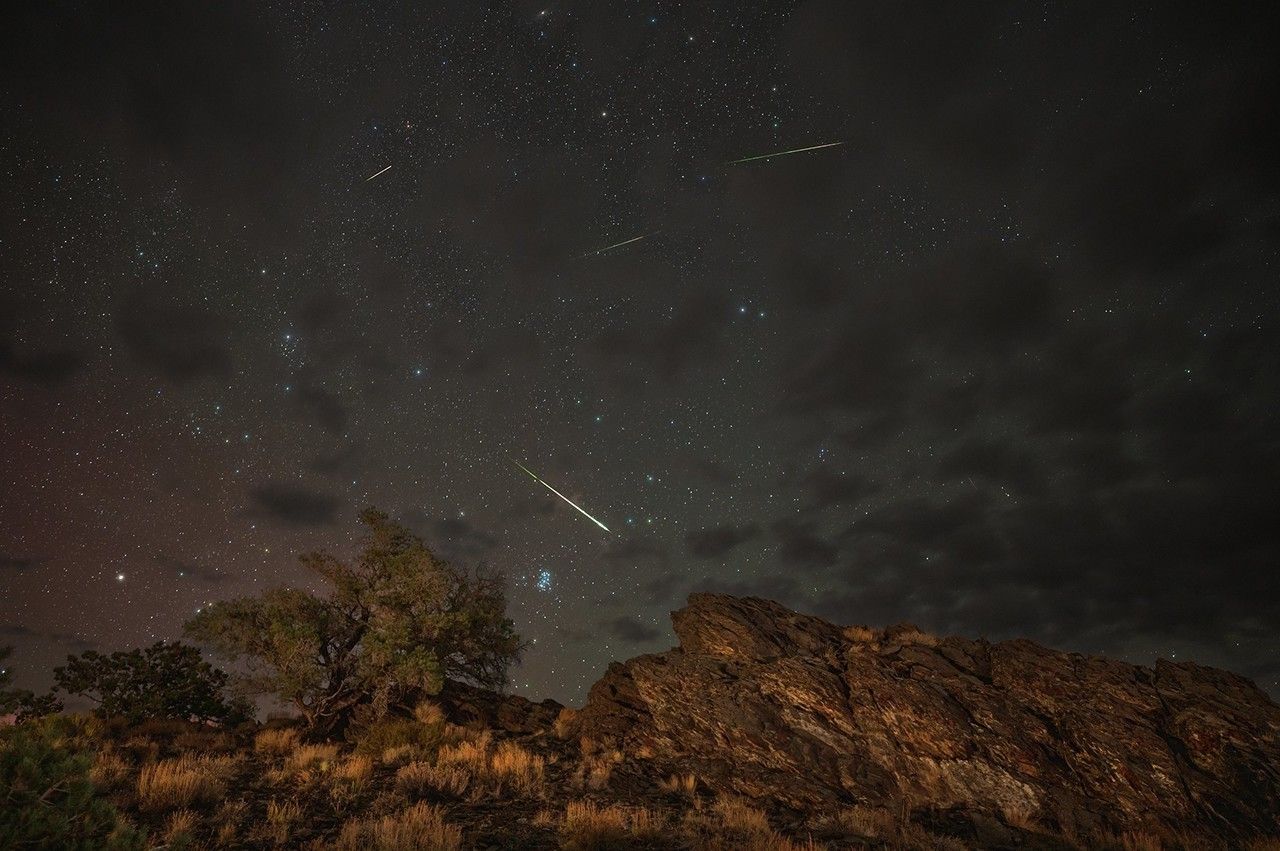
Four Perseid meteors streak over Inyo National Forest, Bishop, California during the 2024 shower peak. The Andromeda Galaxy is visible near the top. A pink aurora glow lights the left horizon. Credit: NASA/Preston Dyches
At a Glance
| Active Period | July 17 – August 24, 2026 |
| Peak Night | August 12–13, 2026 |
| ZHR (peak rate) | ~100 meteors/hour (ZHR) |
| Typical observed rate | 50–80/hr from dark skies (2026: higher, due to New Moon) |
| Meteor speed | 37 miles/second (59 km/s) — very fast |
| Parent comet | 109P/Swift-Tuttle |
| Radiant constellation | Perseus (NE sky at 10 PM, near overhead by 3 AM) |
| Best hemisphere | Northern Hemisphere (radiant rises high) |
| Moon phase (peak) | New Moon — 0% illuminated ✓ |
What Makes the Perseids Special?
The Perseids are widely considered the best meteor shower of the year — not just for the rate, but for the experience. They peak in warm mid-August weather, the radiant rises to a comfortable altitude by midnight, and they're famous for producing spectacular fireballs: long-lasting, multi-coloured streaks with apparent magnitudes brighter than –3 (brighter than the planet Jupiter).
Unlike the Geminids (which peak in December cold) or the Leonids (unpredictable storms), the Perseids are a reliable ~100/hr shower every year. You can plan around them months in advance. And in 2026, with the Moon completely out of the picture, rates could approach the full ZHR of 100 — something rare in most years when the Moon washes out fainter meteors.
What is ZHR?
Zenithal Hourly Rate (ZHR) is the theoretical maximum count from a single observer under perfect dark-sky conditions with the radiant directly overhead. Real observed rates are typically 50–70% of ZHR. But in 2026, the New Moon means nearly zero skyglow, so observed rates will be the closest to ZHR possible from a suburban-to-rural site.
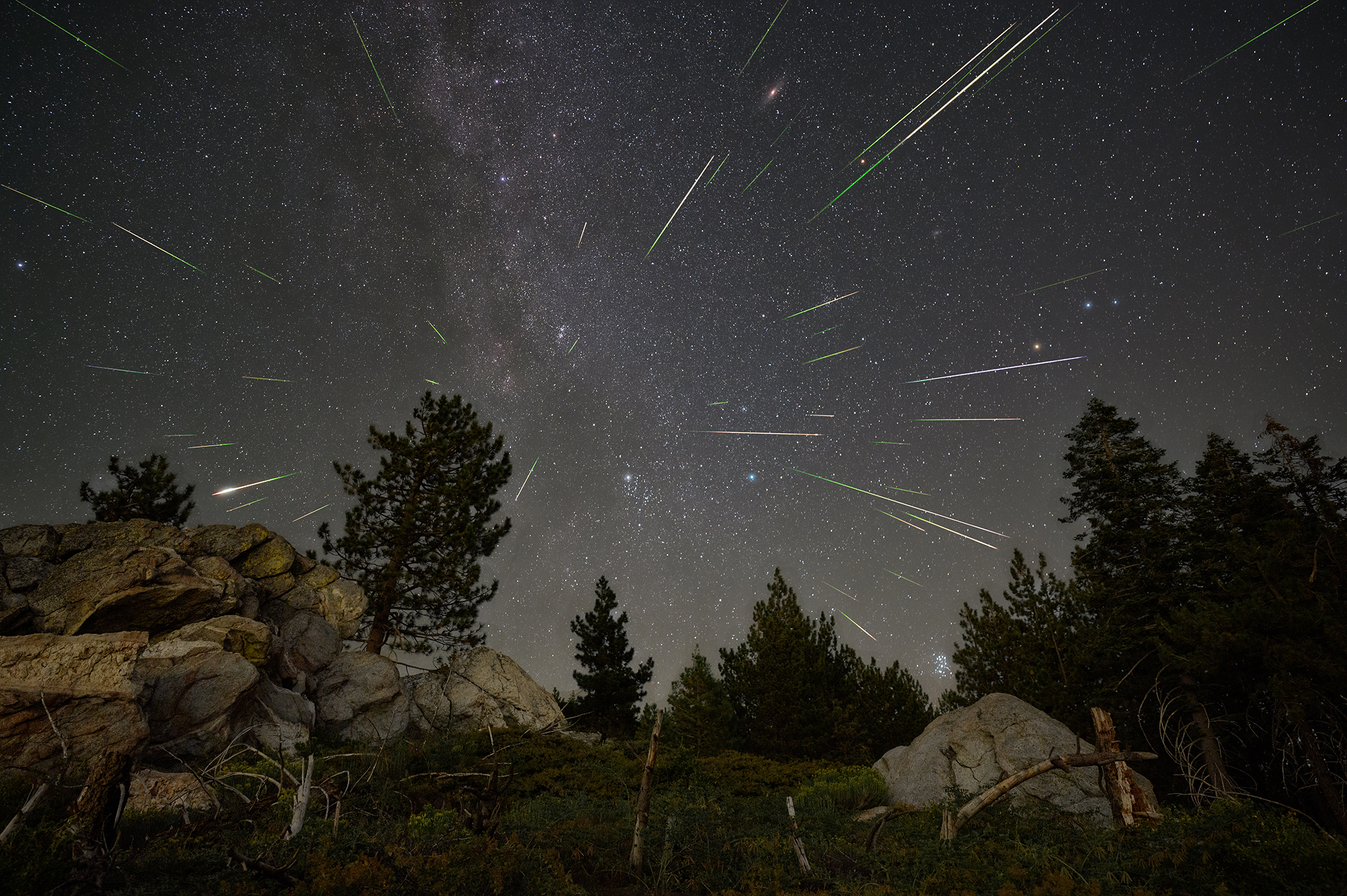
The 2023 Perseid meteor shower photographed from Sequoia National Forest near Piute Peak, California. The Perseids leave bright streaks at 37 miles per second — some with persistent glowing trains lasting several seconds. Credit: NASA/Preston Dyches
Perseid Fireballs — the Show-Stopper Moment
The Perseids are famous for producing more fireballs — extremely bright meteors magnitude –3 or brighter — than almost any other annual shower. A fireball can light up the entire sky, cast visible shadows, and leave a glowing "train" (ionised gas trail) that persists and drifts for 10–30 seconds after the meteor itself has vanished. In 2026 with no Moon interference, these trains will be visible in all their glory. When a fireball fires, stop tracking it with your eyes — instead, fix your gaze on the glowing train and watch it distort and fade over the next 30 seconds.
The Parent Comet: 109P/Swift-Tuttle
Every Perseid meteor you see is a tiny fragment of Comet 109P/Swift-Tuttle — a comet with a nucleus 16 miles (26 km) across, more than twice the size of the object thought to have caused the dinosaur extinction. Each August, Earth ploughs through the dusty debris trail Swift-Tuttle leaves behind as it orbits the Sun every 133 years.
Swift-Tuttle last passed near the Sun in 1992 and won't return until 2125. But its debris stream is dense enough that it delivers a reliable ~100 meteors/hour every single year. The fragments entering our atmosphere are mostly pea-to-marble-sized — they disintegrate completely at altitudes of 60–80 km, never reaching the ground.
Learn more about Comet Swift-Tuttle — NASA →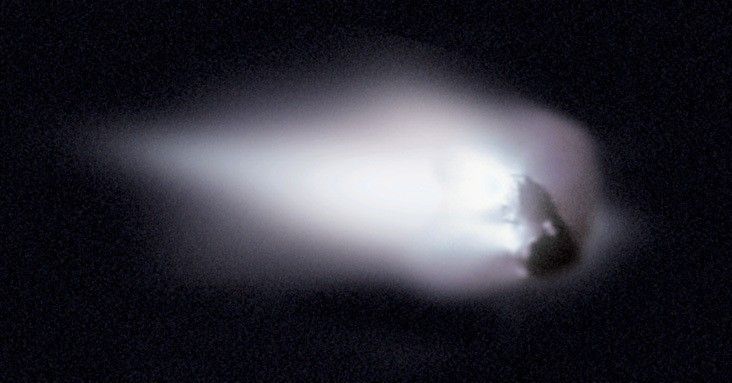
Halley's Comet (1986) — a similar periodic comet to Swift-Tuttle, parent of the Perseids. Credit: NASA/W. Liller
2026 Moon Conditions — Why This Year Is the Best in a Decade
The single biggest variable for any meteor shower is the Moon. Even a 50%-lit Moon rising before midnight can wash out all but the brightest meteors, cutting effective rates in half. A full Moon at peak can reduce what should be a 100/hr shower down to a disappointing 20–30 visible meteors per hour.
In 2026, the Perseids hit a once-in-a-decade jackpot: the New Moon falls on August 12 at 1:36 PM EDT — the exact same day as peak. This means:
- ✓0% Moon illumination — the thinnest possible crescent, completely invisible
- ✓Moon sets before 9 PM — long before astronomical dark (twilight ends ~10 PM)
- ✓Zero skyglow from the Moon for the entire 10 PM – 5 AM viewing window
- ✓Milky Way core visible — the arch overhead adds a stunning backdrop
- ✓Faint meteors (mag +5 and +6) visible that would normally be washed out
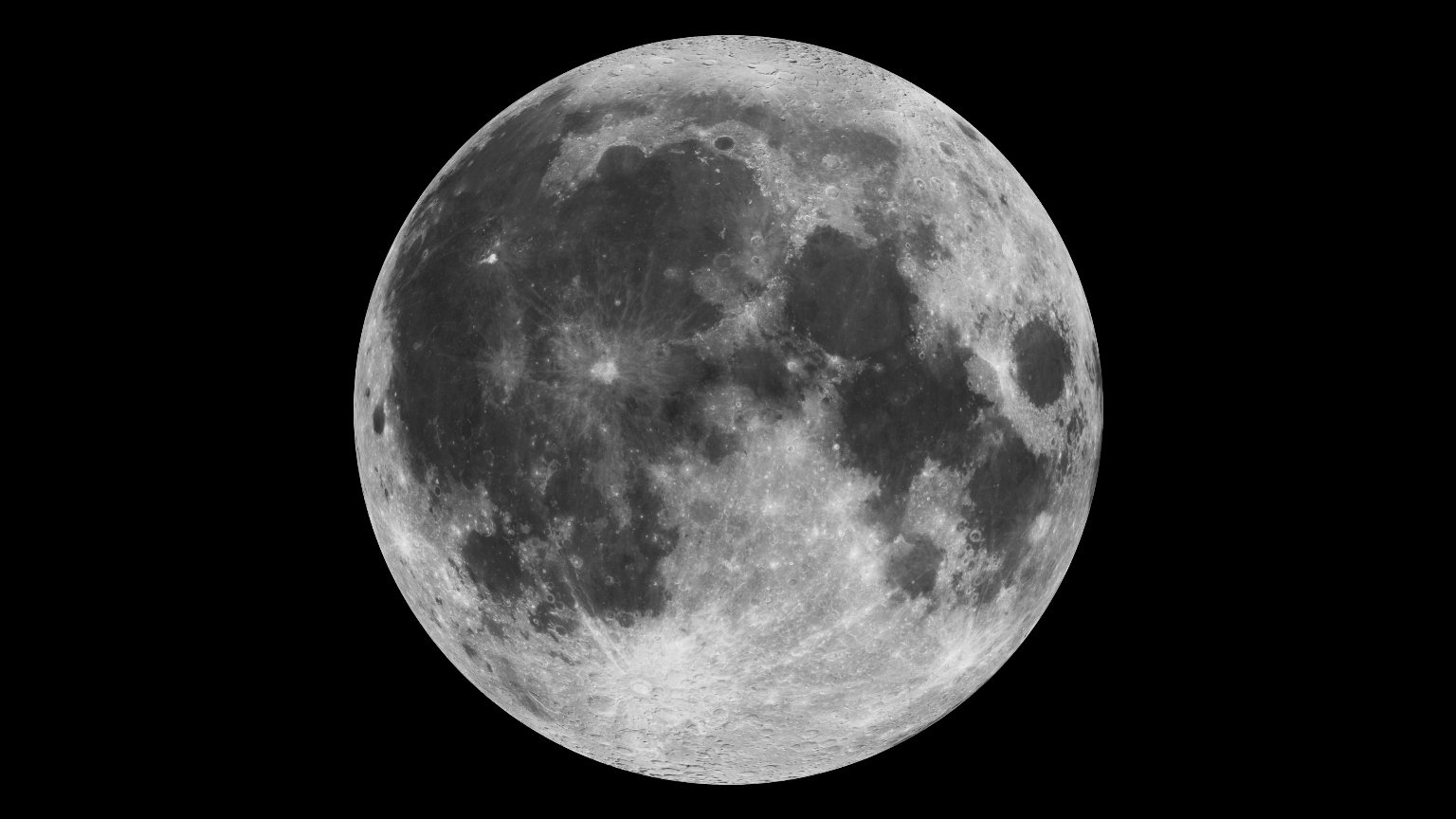
New Moon — August 12, 2026
1:36 PM EDT · 0% illuminated
BEST POSSIBLE CONDITIONS FOR METEORS
How rare is a New Moon on Perseid peak?
The Moon cycles through phases every ~29.5 days. The chance of the New Moon falling within 1 day of the Perseid peak in any given year is roughly 1-in-15. The last time conditions were this good was 2018. The next comparable year after 2026 is 2029. Don't miss this.
Perseid Moon Phase Comparison — Recent & Upcoming Years
| Year | Moon Phase at Peak | Illumination | Impact on Viewing |
|---|---|---|---|
| 2023 | Full Moon | 100% | Severely washed out — only brightest meteors visible |
| 2024 | Waning Gibbous | ~44% | Moderate interference — Moon rose ~1 AM, damaged pre-dawn window |
| 2025 | Waxing Crescent | ~22% | Good early evening but Moon sets ~11 PM — late window excellent |
| 2026 ★ | New Moon | 0% | PERFECT — zero interference all night, best conditions possible |
| 2027 | Waxing Crescent | ~18% | Good but not as ideal as 2026 |
| 2028 | Waning Gibbous | ~80% | Poor — return in 2026 or 2029 |
The Milky Way bonus
With zero Moon on August 12–13, the Milky Way will arch directly overhead for most of North America during the prime 11 PM – 3 AM window. This is the Milky Way galactic core — the densest, most spectacular part of the band, rising through Scorpius, Sagittarius, and Aquila. The Perseids will streak across it. Even a 10-minute exposure with a wide-angle lens will capture both in the same frame. It's the astrophotography shot of the decade.
US Viewing Times by Time Zone — August 12–13, 2026
The Perseids are best viewed in the hours around 3–4 AM local time when the radiant (in Perseus) is highest in the sky — but you'll see excellent activity from 10 PM right through dawn. The table below gives the key windows for each US time zone.
| Time Zone | Astronomical Dark Begins | Good Viewing Starts | Peak Window | Dawn Ends Viewing |
|---|---|---|---|---|
| Eastern (EDT, UTC−4) | ~10:10 PM Aug 12 | 10:30 PM Aug 12 | 1:00 AM – 4:30 AM Aug 13 | ~5:00 AM Aug 13 |
| Central (CDT, UTC−5) | ~10:20 PM Aug 12 | 10:40 PM Aug 12 | 1:00 AM – 4:45 AM Aug 13 | ~5:10 AM Aug 13 |
| Mountain (MDT, UTC−6) | ~10:30 PM Aug 12 | 11:00 PM Aug 12 | 1:00 AM – 4:50 AM Aug 13 | ~5:15 AM Aug 13 |
| Pacific (PDT, UTC−7) | ~10:45 PM Aug 12 | 11:15 PM Aug 12 | 1:30 AM – 5:00 AM Aug 13 | ~5:30 AM Aug 13 |
| Alaska (AKDT, UTC−8) | ~11:30 PM Aug 12 | 11:50 PM Aug 12 | 2:00 AM – 5:00 AM Aug 13 | ~5:45 AM Aug 13 |
| Hawaii (HST, UTC−10) | ~9:15 PM Aug 12 | 9:45 PM Aug 12 | 12:00 AM – 4:30 AM Aug 13 | ~5:15 AM Aug 13 |
Times are approximate for mid-latitude locations. Radiant direction: northeast sky at 10 PM; rises to ~50° altitude by 3 AM. Source: IMO / Stellarium calculations for August 12–13, 2026.
Pre-midnight (Earthgrazers)
From 10 PM until midnight, the radiant is low on the NE horizon. This produces slow, long-trailed Earthgrazer meteors that skim the upper atmosphere at a shallow angle. They're rarer — but breathtaking. Some last 5–10 seconds.
Midnight – 2 AM (Building)
Rates climb steadily as Perseus rises higher. You'll see 30–60 meteors per hour from a dark location. A mix of fast overhead streaks and slow Earthgrazers from the NE. This is the "warm-up" period — worth being out for.
2 AM – Dawn (Peak)
Rates peak at 80–100/hr. Perseus is 40–55° above the NE horizon. Meteors radiate outward in all directions — no need to look at Perseus directly. Lie back and watch the whole sky. This is the window to stay awake for.
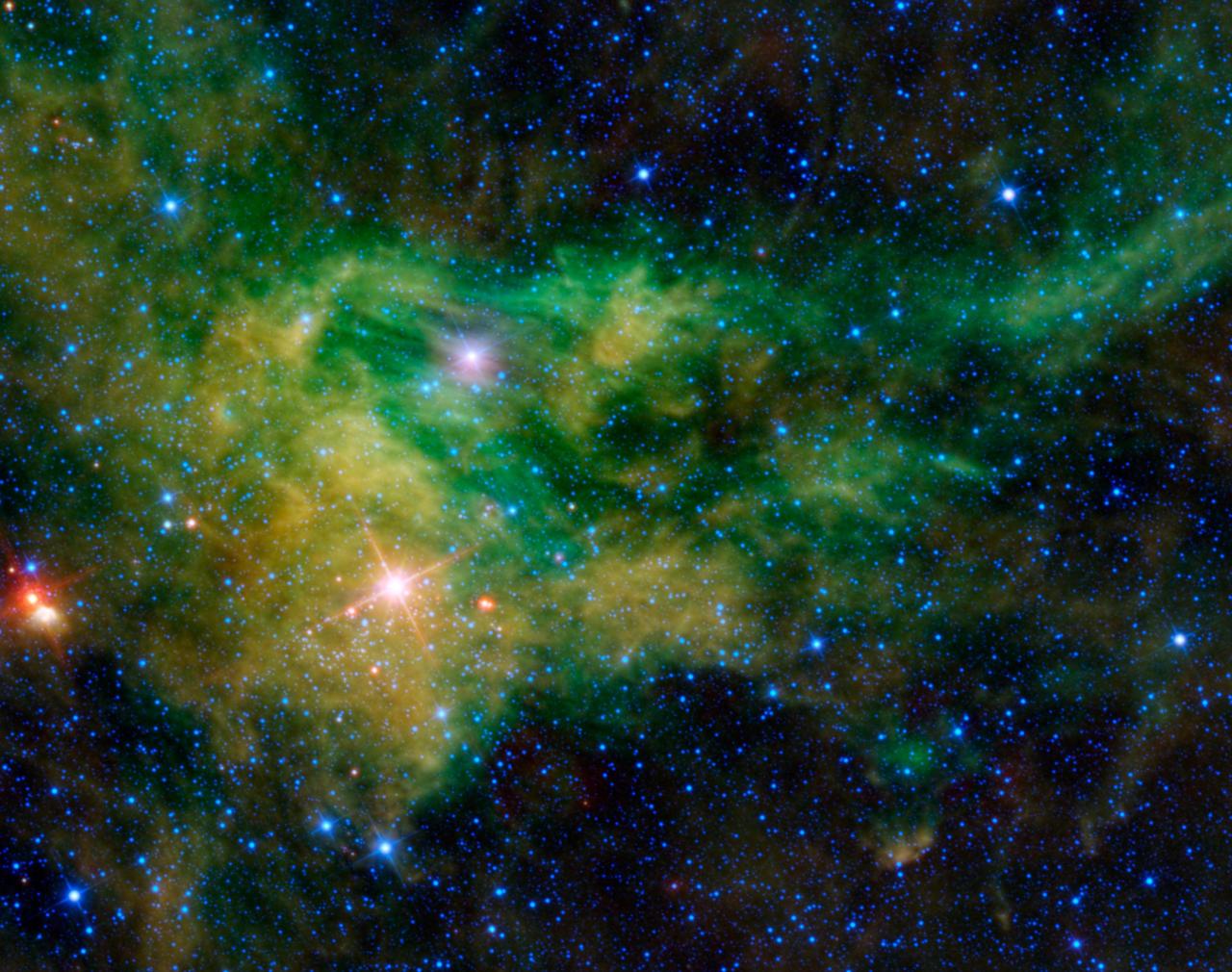
Under a New Moon on August 12–13, 2026, northern hemisphere observers will enjoy skies this dark — the ideal backdrop for 100 meteors per hour. Credit: NASA
Where to Look & How to Watch the Perseids
Unlike a lunar eclipse or conjunction, the Perseids require no equipment whatsoever — just dark skies, a comfortable reclining position, and at least 20 minutes of patience for your eyes to dark-adapt. Here's how to get the most out of the night.
The 7-Step Perseid Viewing Checklist
- 1Get away from city lights. Drive at least 20–30 miles from a major city. The Bortle scale matters — a Bortle 4 or lower sky (limiting magnitude ~6.3) is ideal. Use the Light Pollution Map to find nearby dark sky sites.
- 2Arrive at or before 10 PM. Set up while there's still faint twilight so you can arrange seating and equipment without a torch. Avoid using white light after setup — it resets your dark adaptation.
- 3Lie flat on your back. A reclining camp chair, sleeping bag, or blanket on the ground lets you scan 180° of sky. This is the single most effective technique improvement — a standing observer misses most meteors.
- 4Face northeast, but scan the whole sky. Perseus rises in the northeast. Meteors radiate outward from that point in all directions — looking 40–90° away from the radiant gives longer, more dramatic trails.
- 5Dark-adapt for 20 minutes. Your eyes need 20 minutes to fully adapt to the dark. Use only a red-light torch if you need to check anything. Red light preserves night vision; white light destroys it instantly.
- 6Stay until at least 3 AM. Rates more than double between midnight and 3 AM as Perseus climbs higher. If you leave at midnight you'll miss the best 60% of the shower.
- 7Dress warmer than you think. August nights cool quickly away from the city. A sleeping bag or blanket keeps you comfortable for a 4-hour session and means you'll actually stay for the peak.
Where to Find Perseus in the Sky
At 10 PM the radiant is about 20° above the NE horizon — low, but already producing Earthgrazers. By 1 AM it climbs to ~35°. By 3 AM it reaches ~50° — high enough that meteors fire in every direction overhead. To find Perseus:
- → Face northeast. Find the distinctive W shape of Cassiopeia (it's unmissable — very bright).
- → Perseus is the constellation directly below Cassiopeia, between it and the Pleiades star cluster.
- → The radiant point is near the star η (eta) Persei, but you don't need to find it exactly — just know meteors originate from that direction.
- → Don't stare at the radiant — look 60–90° away for the longest, most dramatic meteor trails.
Sky landmarks on Perseid night (Aug 12–13)
- • Milky Way — arching from SSW to NE overhead
- • Jupiter — bright, in Gemini / Cancer region, WSW sky
- • Andromeda Galaxy (M31) — naked-eye smudge near Perseus
- • Pleiades — tight star cluster, E horizon, rises ~11:30 PM
- • Cassiopeia W — directly above the radiant, your guide star
- • Summer Triangle (Vega, Altair, Deneb) — near zenith at midnight
Telescope + Meteor Shower = Wrong tool for meteors
A telescope's field of view is typically less than 1°. Meteors streak across 30–90° of sky in under a second. You will not catch a single meteor through a telescope eyepiece. Use binoculars or a telescope for the gorgeous deep-sky objects that are out the same night — then go naked-eye for the meteors.
The Eclipse + Perseid Double Event — August 12, 2026
One Day, Two Historic Events
August 12, 2026 is arguably the most extraordinary single day for astronomy in this decade. On the same calendar date:
Daytime (morning)
Total Solar Eclipse — path of totality crosses Greenland, Iceland, and Spain. Partial eclipse visible from 27 US states.
Greatest eclipse: ~08:12 UTC
Night (10 PM – dawn Aug 13)
Perseid Peak — up to 100 meteors/hour under a perfect New Moon. The darkest possible Perseid skies.
Best window: 2–4 AM local time
Why the Same Day?
A solar eclipse only happens at New Moon (when the Moon is between Earth and the Sun). The Perseids peak around August 12 every year. In 2026, the New Moon and the Perseid peak coincide almost perfectly — producing both events on the same calendar day. The last time a total solar eclipse fell on or within one day of the Perseid peak was decades ago.
For eclipse chasers travelling to Spain or Iceland, the plan is straightforward: watch totality in the morning, find a dark observing site inland, sleep for a few hours in the afternoon, then spend the entire night watching Perseids under the inkiest dark skies you'll find in western Europe.
For US Observers Who Can't Get to Spain
Most of the US won't see totality — only 27 states see a partial eclipse. But every single person in North America with clear skies can watch the Perseid peak the same night, for free, with no equipment. The Perseids don't care where you are. Pick a dark spot, lie back, and enjoy your half of the double event.
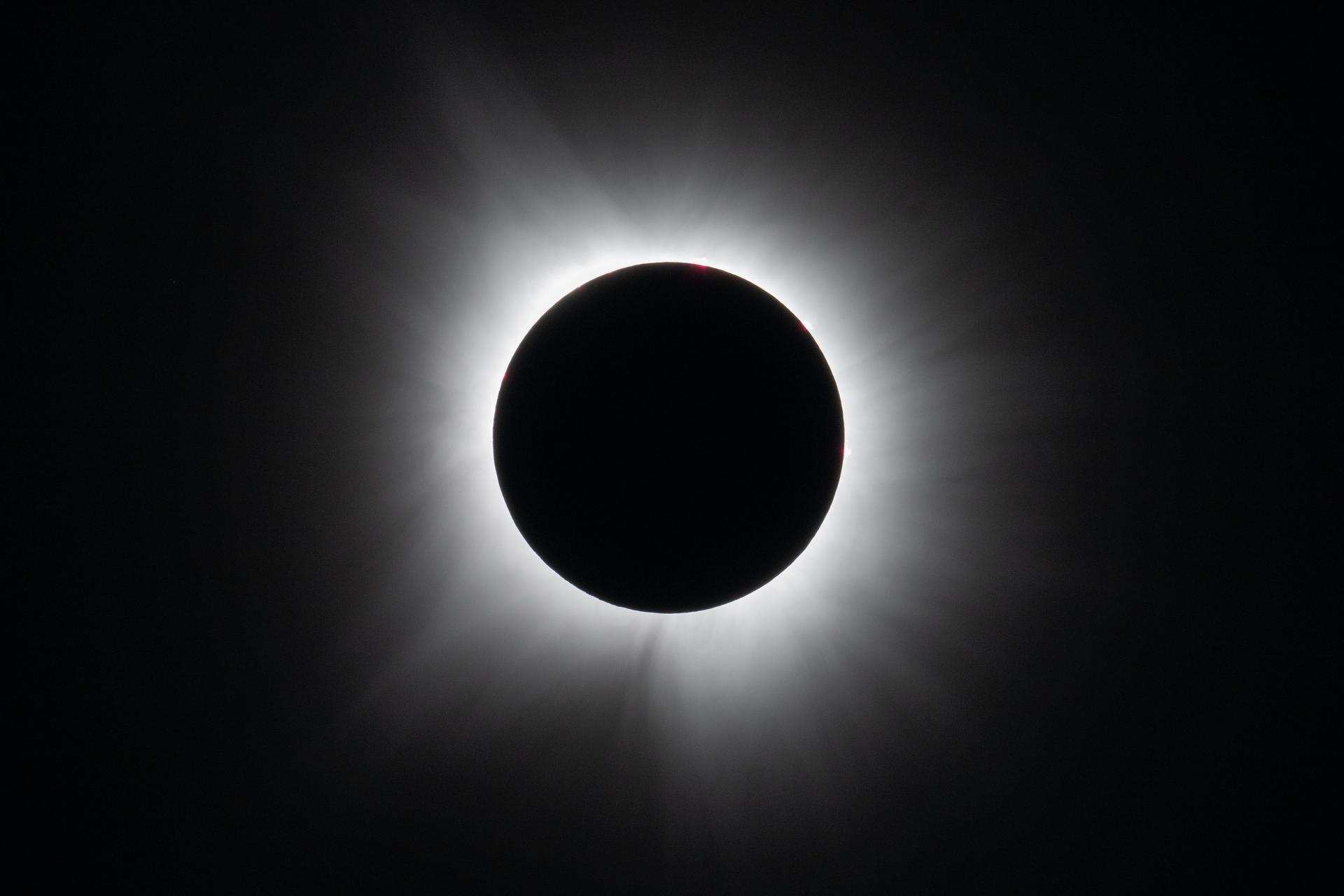
The solar corona — visible for 1–2 minutes during totality on August 12, 2026, over Spain & Iceland. Hours later, 100 Perseid meteors per hour. Credit: NASA/Keegan Barber
Planning the Eclipse half of the day?
Our complete solar eclipse guide covers the path of totality, best viewing locations in Spain and Iceland, solar filter picks for every telescope, and US partial eclipse times by state.
Best Telescopes for the Perseid Night — Deep-Sky Viewing Between Meteors
You don't use a telescope for the meteors — but the Perseid peak night under a New Moon is one of the finest deep-sky nights of the year. Between meteor bursts, swing any telescope at the Andromeda Galaxy (naked-eye close to Perseus), the Double Cluster (χ and h Persei — stunning even at 30×), the Pleiades, or the Orion Nebula rising in the east before dawn. A telescope turns a great meteor night into an extraordinary all-sky event.
Top deep-sky targets visible on Perseid night (Aug 12–13):
Budget Pick — Best for Casual Stargazers
Celestron 70mm Travel Scope
$84.99
Live price from Amazon · Updated 6:38 AM
The Celestron 70mm Travel Scope is purpose-built for exactly this kind of night: grab it, throw it in your car, drive to a dark site, and have it set up in five minutes while the Perseids begin. It weighs just 3.3 lbs with its tripod. The 70mm aperture is plenty for the Andromeda Galaxy (a stunning core + dust lane view), the Double Cluster in Perseus, the Pleiades, and the Orion Nebula. Between meteors, it's a perfect grab-and-go grab. A Perseid fireball streaks overhead while you're looking at M31 through the eyepiece — that's a memory for life.
Affiliate link — we may earn a small commission at no extra cost to you.
Mid-Range Pick — Best All-Rounder for the Night
Celestron StarSense Explorer LT 114AZ
$229.99
Live price from Amazon · Updated 6:23 AM
The StarSense Explorer's phone dock uses your smartphone camera to identify exactly where the telescope is pointing and shows you an arrow to any object you want to find — no star charts, no manual alignment. On a Perseid night this is transformative: between fireballs, tap "Andromeda Galaxy" → follow the arrow → look through the eyepiece → stunning. Tap "Double Cluster" → arrow → eyepiece → jaw drop. The 114mm Newtonian aperture delivers noticeably brighter views than a 70mm scope — globular clusters resolve into individual stars, galaxies show structure. A genuine upgrade for anyone who's felt frustrated by finding objects manually.
Affiliate link — we may earn a small commission at no extra cost to you.
Advanced Pick — Maximum Light for Faint Objects
Sky-Watcher Classic 200 Dobsonian 8-inch (S11610)
$725.00
Live price from Amazon · Updated 6:06 AM
On a moonless Perseid night, an 8" Dobsonian is transformative. The 200mm mirror collects 8× more light than a 70mm refractor — suddenly faint galaxies, globular clusters, and planetary nebulae pop out of the darkness with detail that smaller scopes can't touch. The Andromeda Galaxy fills the low-power field with subtle dust lane structure. The Double Cluster in Perseus is a jaw-dropping binocular-style rich-field view at 50×. Between fireballs, you can work through a dozen Messier objects in an hour. The alt-az rocker box is simple to use — just push the tube where you want to look. This is the telescope serious stargazers bring to meteor nights.
Affiliate link — we may earn a small commission at no extra cost to you.
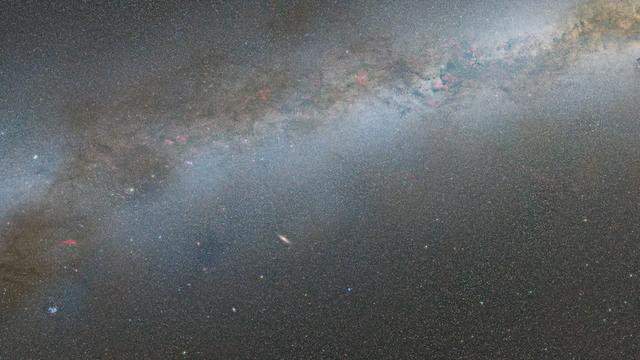
The Andromeda Galaxy (M31) — just 3° from the Perseid radiant, naked-eye on a moonless night. In binoculars or a telescope, you're seeing 2.5 million light-years away. Credit: NASA
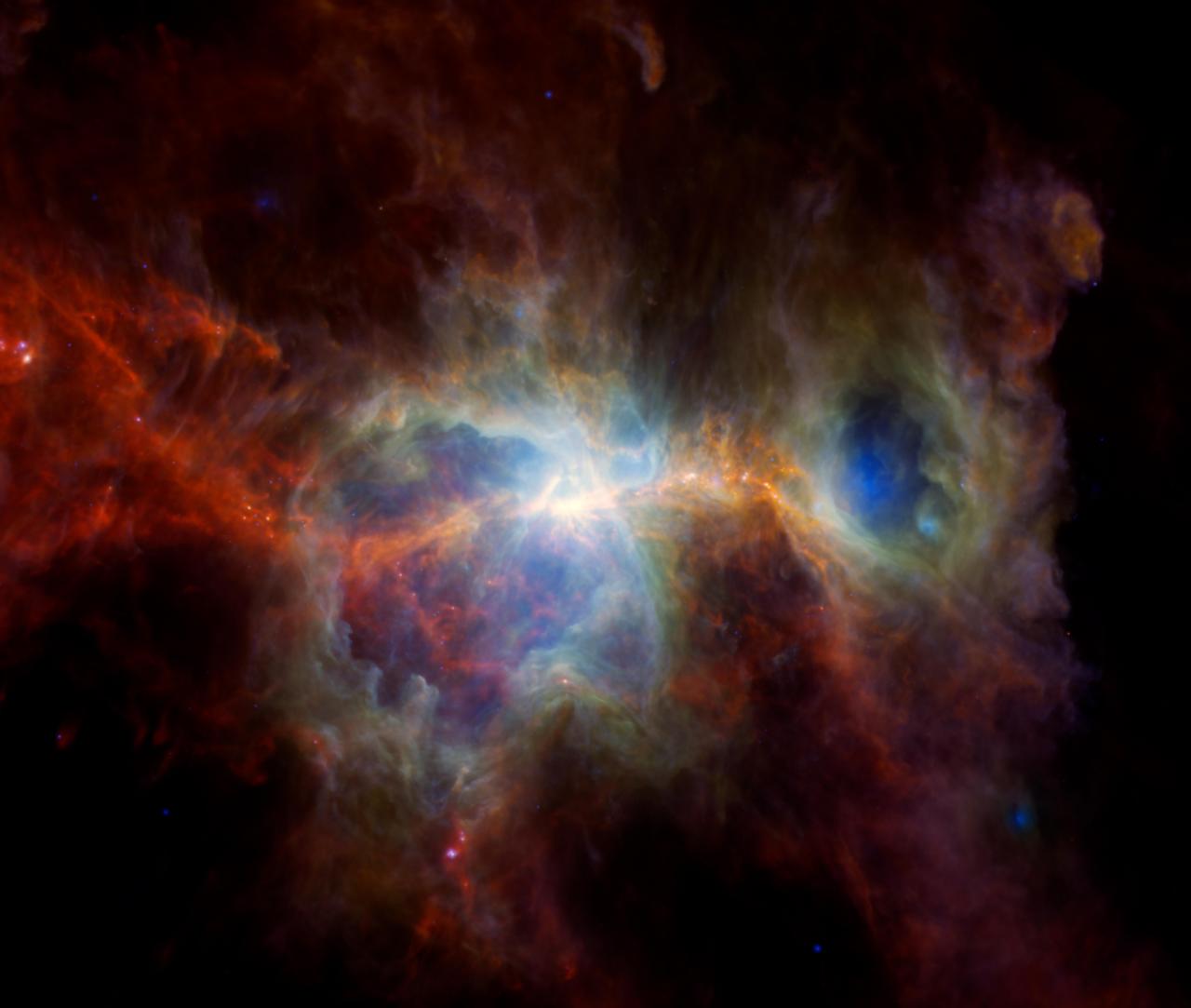
The Orion Nebula (M42) rises in the east around 2 AM on Perseid night — a stunning target through any telescope while you wait for the next fireball. Credit: NASA/ESA/Hubble
Best Binoculars for Stargazing the Perseid Night
Binoculars occupy the sweet spot between naked-eye meteor watching and telescope deep-sky viewing. They give you a wide, bright field perfect for sweeping the Milky Way star fields and giant objects like the Andromeda Galaxy, Pleiades, and the Double Cluster — all within a degree or two of Perseus. After a fireball lights up the sky, pick up the binoculars and explore the glowing train drift and distort. Binoculars are also faster to point than a telescope, which suits the stop-start rhythm of a meteor night perfectly.
Celestron SkyMaster 15×70 Binoculars
$89.00
Live price from Amazon · Updated 11:08 AM
The SkyMaster 15×70 is the classic deep-sky binocular that astrophotographers and observers reach for on dark nights. The 70mm objectives collect 4× more light than a typical 35mm binocular — on a moonless Perseid night you'll see the Andromeda Galaxy's dust lanes, resolve the Double Cluster into dozens of individual stars, and sweep rich Milky Way star fields in Cygnus and Perseus with genuine "wow" moments. At 15×, hand-holding becomes difficult for extended periods — use a tripod (included adapter) or rest them on a reclining chair armrest for comfortable extended viewing. Every serious meteor-watching kit should include a pair of these.
Affiliate link — we may earn a small commission at no extra cost to you.
Compact pick — Celestron Nature DX ED 10×50 Binoculars
$203.99The Nature DX ED uses extra-low dispersion (ED) glass — the same premium optical element found in dedicated astronomy refractors — to deliver pinpoint stars with no colour fringing. At 10× and 50mm, they're comfortable to hand-hold all night without a tripod, making them the ideal "always-in-hand" binocular during meteor watching. ED glass means star images stay sharp edge-to-edge, which matters when you're scanning the Perseus region looking at tight star clusters. Substantially better optics than standard binoculars in the same price range. View on Amazon →
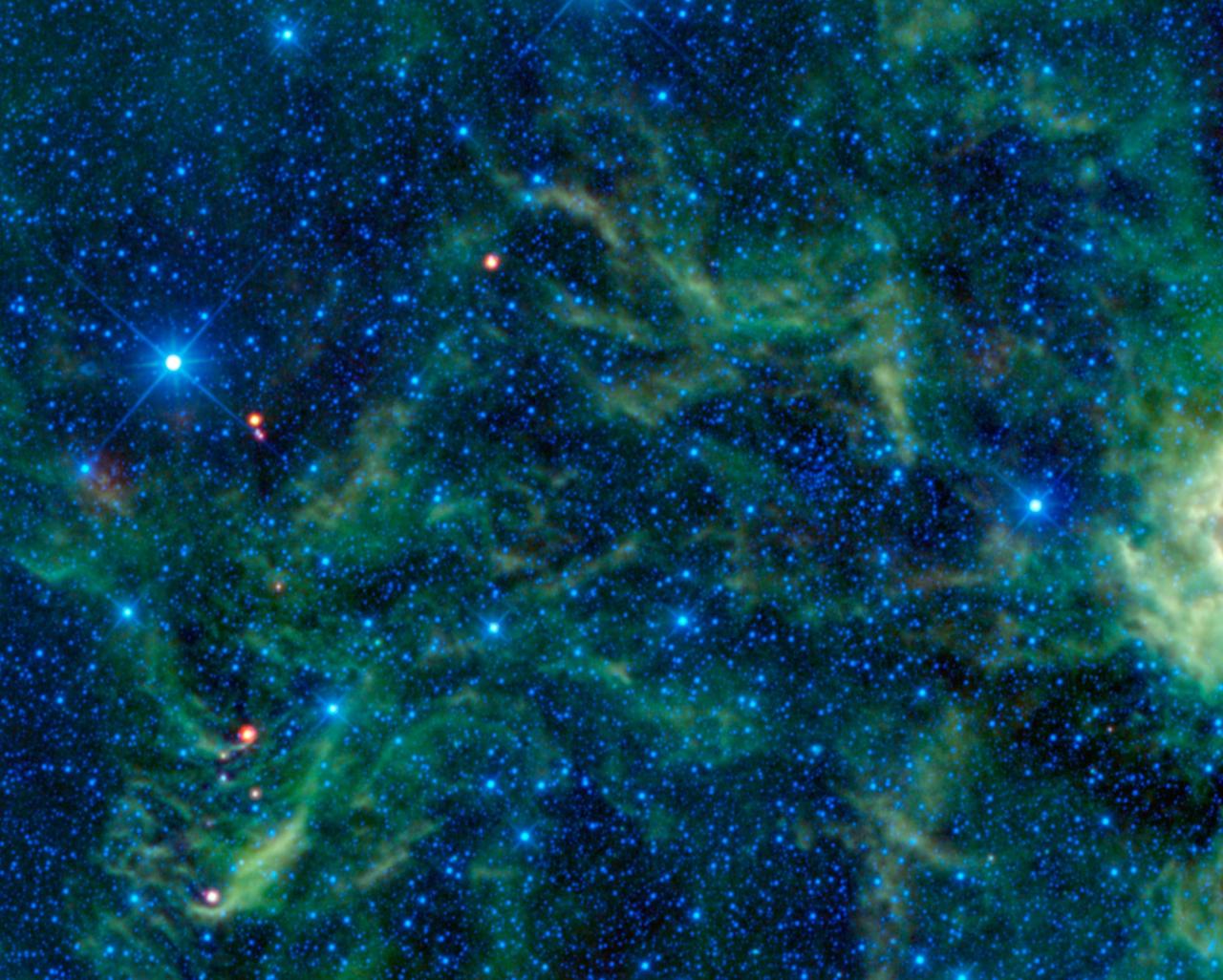
The Pleiades (M45) — just below Perseus in the sky on Perseid night. In binoculars the nebulosity around the stars becomes visible on a dark moonless night like August 12–13, 2026. Credit: NASA/ESA/Hubble
Astrophotography: Capturing Perseid Meteors on Camera
The Perseid peak under a New Moon is one of the best astrophotography opportunities of the decade. A DSLR or mirrorless camera on a simple tripod — no tracking mount needed — can capture stunning shots of meteors streaking across the Milky Way. You don't need expensive gear. Here's exactly how to do it.
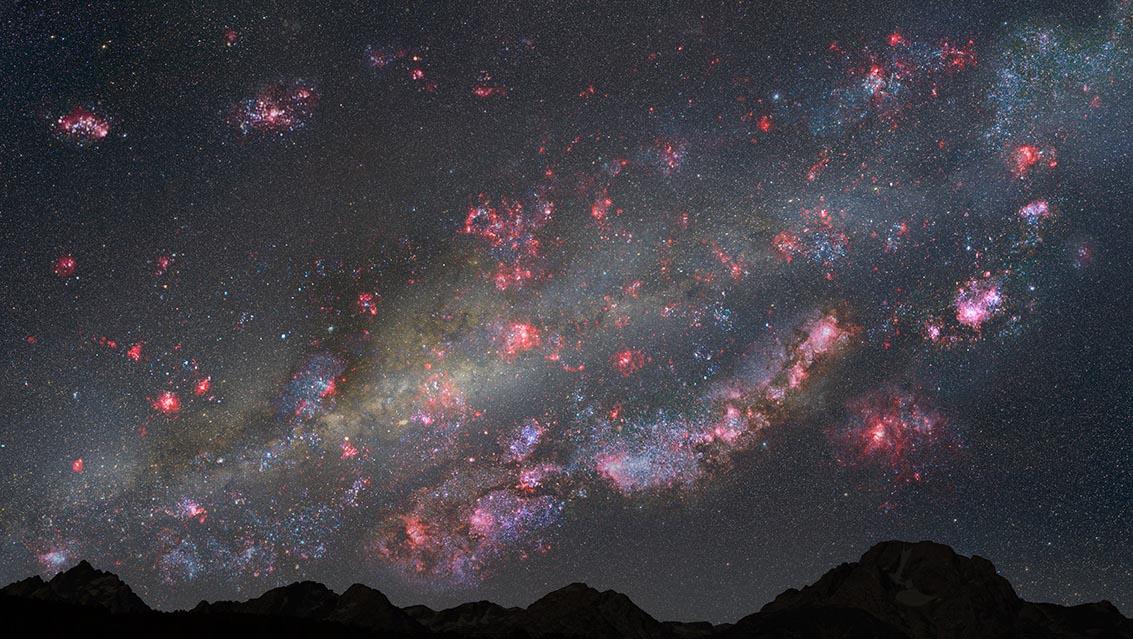
On August 12–13, 2026, Perseid meteors will streak across this exact Milky Way backdrop — with zero Moon interference. A 20-second exposure on any DSLR can capture this, plus meteor trails. Credit: NASA
Camera Settings for Meteor Photography
Where to Point the Camera
Don't aim directly at Perseus. Instead:
- →Aim 40–90° away from the radiant (slightly to the left or right, or overhead). Meteors radiating from Perseus will cross your frame at their longest, most dramatic angles.
- →Include the Milky Way in frame — orient the camera so the galactic band crosses diagonally through the image. Meteors crossing the Milky Way produce stunning compositional shots.
- →Landscape foreground — if possible, include trees, a mountain silhouette, or a lone road. An all-sky shot with a compelling foreground is worth far more than a featureless sky frame.
The 2026 golden composition
On August 12–13, aim your camera northeast, tilted up at ~45°, with the Milky Way entering the bottom-left and Cassiopeia (W shape) in the upper-right. Perseus and the radiant will be in the lower-right corner. Meteors will streak outward across the Milky Way from right to left — exactly the classic Perseid compositional shot. With 0% Moon in 2026, the Milky Way core will be clearly recorded by any camera at ISO 1600.
You don't need a tracking mount
A static tripod is fine for 15–25 second exposures with a wide-angle lens. Star trailing becomes visible at longer exposures, but for meteor capture you want short, repeated exposures anyway — not 10-minute guided subs. Simple is better for a meteor night. Set it, let the intervalometer run, go lie back and watch naked-eye, check the camera every hour.
Frequently Asked Questions
When exactly is the Perseid meteor shower peak in 2026?
The Perseid meteor shower peaks the night of August 12–13, 2026. The maximum activity is expected around 1:00–4:00 AM local time on August 13, when the radiant (in Perseus) is highest in the sky. The shower is active from July 17 to August 24, so you can see increasing numbers of Perseids in the days leading up to the peak. The night of August 11–12 also produces good rates — roughly 50–70% of peak — making two consecutive nights excellent for observing.
What is the moon phase during the 2026 Perseid peak?
The Moon is a New Moon on August 12, 2026 at 1:36 PM EDT — 0% illuminated. The Moon will set before 9 PM local time and will not rise again until after sunrise on August 13. This means the entire Perseid peak window (approximately 10 PM through 5 AM) has zero lunar interference. This is the best Moon condition possible for any meteor shower and makes 2026 the finest Perseid year since 2018. Dark-sky observers should see rates approaching the full ZHR of 100 meteors per hour.
How many Perseid meteors per hour can I expect to see in 2026?
The theoretical Zenithal Hourly Rate (ZHR) is ~100 meteors per hour under perfect conditions. In practice, observers typically see 50–80% of ZHR — meaning 50–80 meteors per hour from a truly dark site (Bortle 3–4 skies) in 2026. From suburban skies (Bortle 6–7), expect 20–40/hr. From a city centre, perhaps 5–10 of the brightest meteors and fireballs per hour. To maximise your count: drive to a dark location, let your eyes adapt for 20 minutes, and lie flat on your back to maximise your sky coverage. In 2026, with the New Moon, your actual count from a dark site should be noticeably higher than previous years.
Do I need a telescope to watch the Perseid meteor shower?
No — a telescope is the wrong tool for watching meteors. Meteors streak across 30–90° of sky in under a second. A telescope has a field of view of less than 1°. You will not see a single meteor through a telescope eyepiece. The Perseids are best watched with the naked eye, lying flat on your back to cover as much sky as possible. However, a telescope (or binoculars) is excellent for exploring the deep-sky objects visible the same night — the Andromeda Galaxy, Orion Nebula, Double Cluster in Perseus, and others — while you wait for the next fireball.
Where should I look in the sky for the Perseid meteor shower?
The radiant — the point from which meteors appear to originate — is in the constellation Perseus, in the northeastern sky. However, don't stare at the radiant. Instead, look 40–90° away from Perseus (overhead or toward the east). Meteors radiating from that direction will cross your field of view at longer angles and appear more dramatic. The best technique is to lie flat on your back and let your eyes rove the whole sky — meteors will appear in all directions. To find Perseus: face northeast, locate the distinctive W-shape of Cassiopeia, then Perseus is directly below it. The radiant is near the star η (eta) Persei.
What time should I go outside to watch the Perseids in 2026?
You can start seeing Perseids from about 10 PM local time on August 12 — these early ones will be slow, long-trailed "Earthgrazers" with the radiant still low on the NE horizon. Rates build steadily after midnight. The best window is 1 AM – 4 AM local time on August 13 when Perseus is 40–55° above the horizon and rates approach their peak. If you can only go out once, aim for 2 AM – 4 AM. If you want the full experience, start at 10 PM and stay until dawn — you'll witness the complete progression from Earthgrazers to peak activity.
What causes the Perseid meteor shower?
The Perseids are caused by Earth passing through the debris trail left by Comet 109P/Swift-Tuttle. Swift-Tuttle is a large periodic comet with a nucleus 16 miles (26 km) across that orbits the Sun every 133 years. As it nears the Sun, it sheds dust and rock fragments that spread along its orbital path. Every August, Earth passes through this debris stream. The tiny fragments — most are pea-to-marble-sized — enter our atmosphere at 37 miles per second (59 km/s) and disintegrate completely at altitudes of 60–80 km, creating the bright streaks we see as meteors. Swift-Tuttle last visited the inner solar system in 1992 and won't return until 2125 — but its debris trail delivers a reliable ~100/hr shower every year.
Is the Perseid meteor shower visible from the Southern Hemisphere?
Yes, but with significantly reduced rates. The radiant in Perseus never rises very high for Southern Hemisphere observers — from Australia or South America, Perseus barely clears the northern horizon in mid-August, keeping it below ~20° altitude for most of the night. Observers in the southern US, southern Europe, and subtropical latitudes will see reduced but still worthwhile rates (perhaps 30–50/hr at peak). The further north you are, the better — from Canada or northern Europe, the radiant climbs to 50°+ overhead, maximising rates. Observers in Antarctica or far southern latitudes will see very few Perseids.
Can I photograph Perseid meteors with a smartphone?
Modern flagship smartphones (iPhone 15 Pro/16, Samsung Galaxy S24/S25, Google Pixel 8/9) have dedicated astrophotography/night modes that can capture brighter meteors with exposures of 15–30 seconds. Use a tripod (essential — no handheld), enable your phone's astrophotography or pro night mode, set ISO to maximum, and let it fire continuously. Results will be less detailed than a DSLR but can yield shareable fireball shots. The 2026 New Moon maximises smartphone capture chances since there's no competing moonlight. The key limitation: smartphone sensors are smaller, so they capture fewer stars and fainter meteors than dedicated cameras.
Is August 12, 2026 really both a solar eclipse AND the Perseid peak?
Yes — August 12, 2026 is genuinely both events on the same calendar day. The total solar eclipse occurs in the morning (approximately 07:00–10:30 UTC), crossing Greenland, Iceland, and Spain. That evening and overnight into August 13, the Perseid meteor shower reaches its annual peak. Both events share a cause: the New Moon. A solar eclipse requires New Moon, and in 2026 the New Moon aligns almost exactly with the Perseid peak date. Eclipse chasers in Spain and Iceland will watch totality at sunrise, then observe ~100 Perseids per hour under perfectly dark skies that same night. It is one of the most extraordinary 24-hour astronomy windows in decades. See our complete solar eclipse guide for totality path details and equipment recommendations.
Related Guides
Total Solar Eclipse August 2026
Same day — path through Spain & Iceland
Eta Aquarid Meteor Shower 2026
Peak May 5–6, 2026 — up to 50/hr
Best Telescopes for Beginners 2026
Top picks for first-time buyers
Best Astronomy Binoculars 2026
Top picks for stargazing & meteor nights
Saturn's Rings Returning 2026
Best year to observe Saturn's rings
Best Telescopes for Deep-Sky 2026
Galaxies, nebulae & star clusters