
NexStar 8SE vs 6SE: Which Celestron GoTo Telescope Should You Buy?
Telescope Advisor Logo Telescope Advisor
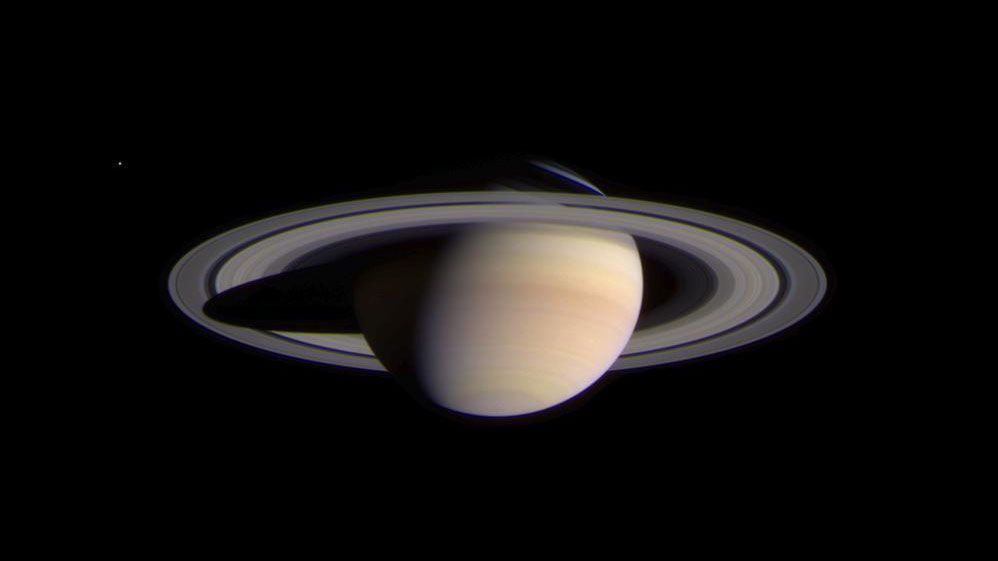
Saturn and its ring system — the ultimate test target for the NexStar 6SE vs NexStar 8SE comparison

Telescope Comparison · 2026

NexStar 8SE vs NexStar 6SE: Which Celestron GoTo SCT Is Right for You?

Both are excellent computerized telescopes on the same mount with the same GoTo system. The difference is 53mm of aperture — and whether that aperture gap justifies a ~$300–400 price premium. Here is the complete answer.

8.7 / 10

NexStar 6SE score

9.1 / 10

NexStar 8SE score

83%

More light collected by 8SE

8SE

Our pick for most observers

By Telescope Advisor Editorial Team Published: Updated: Editorial Standards

Quick Verdict: 6SE vs 8SE in Three Sentences

Buy the 8SE if…

You want the best planetary and deep-sky views the NexStar family offers, you have a fixed observing location or transport the scope in a car, and the extra ~$300–400 is manageable. The 8SE is the telescope most serious observers end up wishing they had bought from the start.

Buy the 6SE if…

Portability is genuinely important (you carry the scope up stairs or to dark-sky sites), you are budget-constrained, or you are stepping up from a beginner telescope and the 8SE cost is a real barrier. The 6SE is not a compromise — it is an outstanding planetary telescope in its own right.

Neither if…

You are buying your first telescope, you primarily want deep-sky visual observing on a budget (a Dobsonian delivers more aperture per dollar), or you want serious long-exposure astrophotography (both need an equatorial wedge, and dedicated EQ mounts are better suited). See our beginners guide or Dobsonian guide instead.

Full Specs: NexStar 6SE vs NexStar 8SE

Both scopes use identical optical designs and the same GoTo mount. The difference is entirely in the size of the primary mirror — and the cascade of performance advantages that follow.

Celestron NexStar 6SE

NexStar 6SE

8.7 / 10

$1,199.00

View on Amazon →
Celestron NexStar 8SE

NexStar 8SE (Our Pick)

9.1 / 10

$1,699.00

View on Amazon →
Specification NexStar 6SE NexStar 8SE
Aperture 150 mm (5.9″) 203 mm (8″) ▲
Optical design Schmidt-Cassegrain (SCT) Schmidt-Cassegrain (SCT)
Focal length 1,500 mm 2,032 mm ▲
Focal ratio f/10 f/10 (identical)
Light gathering Baseline 1.83× more (83% more) ▲
Limiting magnitude ~13.4 ~14.0 ▲
Resolution (Dawes limit) 0.77″ 0.57″ (35% finer) ▲
Tube length 432 mm (17″) 432 mm (17″) — identical
OTA weight 3.6 kg (8 lbs) ▲ 5.4 kg (12 lbs)
Total weight (with tripod) ~12.5 kg (27 lbs) ▲ ~18 kg (40 lbs)
GoTo system NexStar+ / 40,000+ objects NexStar+ / 40,000+ objects
Mount type Single-arm GoTo alt-az Single-arm GoTo alt-az
Astrophotography Planetary video; wedge needed for DSO Planetary video; wedge needed for DSO
Price (approx. 2026) ~$600–800 ▲ ~$800–1,000

▲ = advantage in this category. Check Amazon for current live pricing — prices fluctuate by $50–150.

Planetary Performance: Saturn, Jupiter, Mars, Moon

Both scopes share an f/10 Schmidt-Cassegrain optical design — the same inherently high-contrast geometry. The difference is raw aperture: more mirror area means finer resolution and brighter planetary detail at equivalent magnifications.

🪐 Saturn (Oct 4, 2026 opposition — 7.5° ring tilt)

NexStar 6SE at 150×

Rings clearly separated from disk. Cassini Division detectable on steady nights. Titan visible. Equatorial belt present. Shadow on globe on good nights. A genuinely stunning view that rewards patience.

NexStar 8SE at 200× ▲

Cassini Division as a definite dark line, multiple cloud belts, ring shadow reliably visible, 4–6 moons identifiable in one field. The extra aperture adds genuine detail — the Cassini Division stops being marginal and becomes a landmark. Arguably the finest visual Saturn experience under $1,500.

🌍 Jupiter

NexStar 6SE

North and South Equatorial Belts clearly visible with colour. Galilean moons easily resolved. Great Red Spot identifiable on the correct rotation. Festoons and ovals visible on excellent nights. The 6SE on Jupiter is very impressive.

NexStar 8SE ▲

Additional equatorial belts visible consistently. More festoon and oval detail. Great Red Spot with interior structure. The moons show measurable disks at highest power on perfect nights. The gap between the 6SE and 8SE on Jupiter is noticeable but smaller than on Saturn.

🌕 Moon

Both scopes deliver exceptional lunar views. The 8SE shows slightly finer crater and rille detail at maximum power, but for most observers the 6SE lunar view at 150×–200× is already breathtaking. This category is effectively a tie. Both will make you feel like you are orbiting the Moon.

Bottom line on planets: The 8SE is a meaningfully better planetary telescope — not marginally better. The Cassini Division, in particular, goes from “detectable on the best nights” to “reliably present every good session.” If Saturn is your primary target and budget allows, the 8SE is worth it for planets alone.

Deep Sky Objects: Where Aperture Matters Most

Both scopes access the full Messier catalog with genuine detail. At 150mm vs 203mm, the gap matters most for faint galaxies (magnitudes 10–14), faint nebulae, and globular cluster resolution at the edge of each scope’s limit.

Object Type 6SE (150 mm) 8SE (203 mm)
Bright galaxies (M31, M81, M101) Excellent — structure and companion galaxies visible ▲ More structural detail, fainter companions
Faint galaxies (mag 10–13) Good — many NGC objects accessible ▲ Noticeably brighter, more detail
Globular clusters (M13, M92) Fully resolved at 150×+ ▲ More stars to edge, richer cores
Bright nebulae (M42, M8, M20) Excellent — structure and colour texture ▲ More structural detail but difference is subtle
Planetary nebulae (M57, M27) Excellent — ring and dumbbell shapes clear Essentially identical — both are superb
Limiting magnitude ~13.4 ▲ ~14.0 (0.6 mag deeper)
Important context: At f/10, neither scope is optimised for wide-field deep-sky sweeping. Both work best for objects that reward high magnification. For low-power, wide-field galaxy hunting, a fast 6″–8″ Newtonian Dobsonian gives more exit pupil per dollar. See our best Dobsonian guide for the comparison.

Portability & Setup: Where the 6SE Has a Real Advantage

This is the 6SE’s strongest case against the 8SE — and it is a genuine differentiator for a specific type of observer.

Weight comparison

The 6SE total system weighs 12.5 kg (27 lbs). The 8SE weighs 18 kg (40 lbs). That is a 13 lb difference — the equivalent of adding two bowling balls to your kit. Both can be transported in a single trip by most adults, but the 6SE is noticeably easier. For observers who carry their scope up stairs, into an elevator, or to a dark-sky site on foot, the 6SE is a materially better experience.

A counterintuitive fact: identical tube length

Both scopes have exactly the same optical tube length — 432mm (17 inches). The SCT folded design puts 2,032mm of focal length in that 432mm tube (for the 8SE) and 1,500mm in an identical-length tube (for the 6SE). Neither has a storage advantage. The size difference is entirely in the tube diameter, not length.

Cooldown time

The 8SE’s larger mirror requires more time to reach thermal equilibrium with the outdoor air. The 6SE typically needs 20–25 minutes; the 8SE benefits from 30–45 minutes. Both require patience for the best high-magnification views.

GoTo performance: identical

Both use the same NexStar+ hand controller, the same SkyAlign alignment routine (centre 3 bright stars), and the same database of 40,000+ objects. GoTo accuracy is identical between the two models. Neither has an advantage here.

Who the weight difference matters for: apartment dwellers carrying down stairs, observers who dark-sky trip using public transport or on foot, older observers with physical limitations, or anyone whose back gives them a say. For car-based observers with a driveway, the difference is manageable either way.

Which to Buy: 4 Decision Scenarios

🔭

I want the best Saturn views the NexStar line offers

Buy the 8SE. The aperture difference translates into a reliably visible Cassini Division, more moons, ring shadow, and greater cloud belt detail on every good night. This is the sharpest gap between the two scopes. For the October 2026 opposition, the 8SE at 200–250× is the closest thing to a flagship planetary experience at this price point. See our Saturn Opposition 2026 guide for what to expect.

🚗

I observe from my car at dark-sky sites and need to carry the scope

Buy the 6SE. At 27 lbs vs 40 lbs, the portability advantage is real and meaningful over years of use. The 6SE is a serious telescope — it shows the Cassini Division, Jupiter’s belts, and the full Messier catalog. You are not compromising by choosing it; you are choosing a scope you will set up more often because it’s easier to carry.

💰

The 8SE is ~$300 more than I planned to spend

Buy the 6SE without guilt. The NexStar 6SE is a legitimately outstanding telescope, not a stepping stone. It handles everything you want to observe. If you find yourself wanting more aperture in two years, you can sell the 6SE and step up — it holds its resale value well. A happy 6SE observer is infinitely better off than an overstretched 8SE owner who doesn’t use it.

📷

I want to do astrophotography eventually

For planetary video imaging, buy the 8SE — more aperture means more detail in your Jupiter and Saturn video stacks. For long-exposure deep-sky imaging, both scopes need a Celestron equatorial wedge to polar-align the alt-az mount, and both carry the same limitation of an f/10 focal ratio (slow for DSO imaging). If dedicated deep-sky imaging is your real goal, a fast Newtonian on a proper equatorial mount is a better platform than either NexStar. See our astrophotography telescope guide.

Celestron NexStar 6SE

NexStar 6SE

Best for portability, budget, and first serious scope

View NexStar 6SE on Amazon →

Full review: NexStar 6SE Review

Celestron NexStar 8SE

NexStar 8SE (Our Pick)

Best for planetary performance, serious observers

View NexStar 8SE on Amazon →

Full review: NexStar 8SE Review

Affiliate links — we may earn a small commission at no extra cost to you.

Frequently Asked Questions

Is the NexStar 8SE worth the extra money over the 6SE?

Yes — for most observers who can manage the extra weight and cost. The 8SE collects 83% more light than the 6SE, which translates to a meaningfully better planetary experience (particularly on Saturn’s Cassini Division), deeper reach on faint galaxies, and finer resolution. The GoTo system is identical on both. If you will observe Saturn regularly and can transport 40 lbs, the 8SE is worth the premium. If portability or budget are serious constraints, the 6SE is an excellent telescope and not a consolation prize.

What is the main difference between NexStar 6SE and 8SE?

Aperture: 150mm vs 203mm. This translates to 83% more light-gathering, a limiting magnitude of ~14 vs ~13.4, and finer angular resolution (0.57″ vs 0.77″ Dawes limit). Both use the same f/10 Schmidt-Cassegrain optical design, the same NexStar+ GoTo hand controller with 40,000+ objects, the same alt-azimuth single-arm mount, and even the same 432mm (17-inch) tube length. The 8SE is heavier (40 lbs vs 27 lbs total) and more expensive.

Can the NexStar 6SE see the Cassini Division in Saturn's rings?

Yes — on nights of steady atmospheric seeing at 150×+. It is not as reliably visible as through the 8SE, but a quality 6SE night on Saturn will show the Cassini Division. At the October 2026 opposition with 7.5° ring tilt, a dark, steady night with the 6SE will produce excellent Cassini Division views. The 8SE makes it more reliable and more defined.

Should I buy the 6SE or 8SE as my first serious telescope?

The 6SE is the better first NexStar for most people. It is lighter, less expensive, and somewhat less intimidating as a first GoTo scope. If you discover after a year that you want more, the 6SE holds resale value well and the upgrade path to the 8SE is straightforward. That said, if budget allows and you are confident you will stick with the hobby, buying the 8SE once is better than buying the 6SE and then upgrading — you will not regret the aperture.

Do the 6SE and 8SE use the same eyepieces and accessories?

Yes. Both accept the same 1.25″ and 2″ accessories, use the same NexStar+ hand controller, and are compatible with the same Celestron equatorial wedge, dew heaters, and camera adapters. Any eyepiece, Barlow, or accessory that works with one will work with the other. This makes upgrading between them easier since your eyepiece collection transfers completely.

How much does the NexStar 6SE cost compared to the 8SE in 2026?

The NexStar 6SE typically retails for $600–800 in 2026. The NexStar 8SE runs $800–1,000. The price gap is roughly $200–400 depending on promotions and availability. Both prices fluctuate by $50–150 — check Amazon for the current live price before buying.

Related Guides

Published May 16, 2026, by the Telescope Advisor Editorial Team. Specifications sourced from Celestron’s official product data and verified against both review pages on this site. Prices are approximate 2026 retail — check Amazon for current live pricing.

Some links in this article are affiliate links. If you purchase through them, we earn a small commission at no additional cost to you. This never influences our recommendations. See our affiliate disclosure for full details.