Geminid Meteor Shower 2026: Peak Dec 13–14, Moon Phase & Best Viewing Guide
Telescope Advisor Logo Telescope Advisor
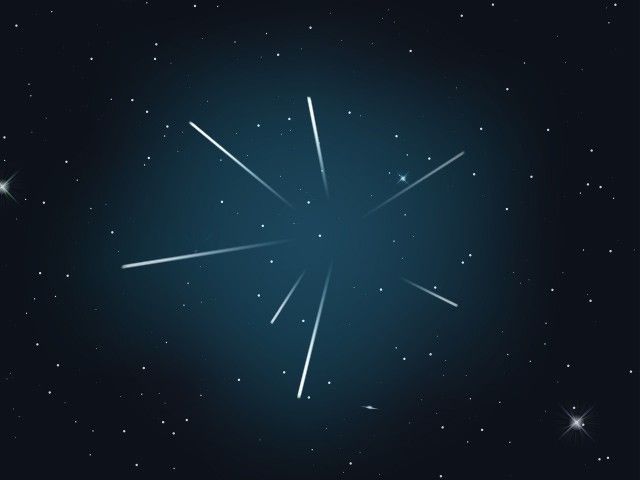
Geminid meteor shower streaking across a dark winter night sky — the best meteor shower of the year

Meteor Shower Guide · December 2026

Geminid Meteor Shower 2026: Peak Dec 13–14, Best Viewing Guide

The Geminids are the best meteor shower of the year — up to 120 meteors per hour from 9pm through dawn. In 2026 a thin crescent moon sets before 10pm, leaving fully dark skies for the entire peak. Here is everything you need to make the most of it.

120+

Meteors per hour (ZHR)

Dec 13–14

2026 peak nights

Crescent

Moon sets ~10pm — dark skies

#1

Best meteor shower of 2026

By Telescope Advisor Editorial Team Published: Updated: Editorial Standards

Geminid 2026 Key Facts at a Glance

📅

Peak nights

December 13 evening through December 14 pre-dawn. Active from ~Dec 4 through Dec 20.

🌟

ZHR at peak

Up to 120 meteors/hour under ideal conditions (dark sky, radiant overhead, no Moon).

🌙

Moon phase 2026

Thin waxing crescent (~25% lit), setting by 10pm local time. Excellent dark-sky conditions after moonset.

🪐

Parent body

Asteroid 3200 Phaethon — not a comet. The Geminids are uniquely sourced from rocky asteroid debris.

📍

Radiant point

Constellation Gemini, near the star Castor. Above the horizon by 9pm, highest at ~2am local time.

👁️

Best equipment

Naked eye for meteors. Binoculars or telescope for adjacent deep-sky targets in Orion and Gemini.

Why the Geminids Are the Best Meteor Shower of the Year

Most meteor shower guides list the Perseids as the “best” shower. But on the numbers, the Geminids are better — higher ZHR, longer peak window, more colourful meteors, and accessible from the early evening rather than only pre-dawn. The Perseids get more attention because they arrive in August when people are outdoors; the Geminids arrive in December cold. But if you are willing to bundle up, the Geminids deliver more.

From an Asteroid, Not a Comet

Every other major meteor shower comes from comet debris. The Geminids are different: their parent body is asteroid 3200 Phaethon, a rocky body that orbits closer to the Sun than Mercury. Astronomers still debate exactly how it sheds debris — one theory is that solar heating causes the rock to fracture and shed dust. This makes the Geminids a genuinely unusual shower and a point of active scientific research.

Visible from 9pm — Not Just Pre-Dawn

Most meteor showers only peak after midnight, when Earth’s rotation turns us to face the incoming debris stream head-on. The Geminids are different. Because the radiant in Gemini rises early — above the horizon by 9pm local time in December — you can watch from early evening right through dawn. The best rates are still between midnight and 2am, but good activity starts from 9pm.

Multi-Coloured, Slow Meteors

Geminid meteors are unusually slow (35 km/s vs 60 km/s for Leonids) and often show distinct colours — white, yellow, orange, and occasionally blue or green from different trace minerals. The slower speed also means many fireballs last 1–2 full seconds, long enough to see details and leave glowing afterglow trails. This makes the Geminids the best shower for naked-eye enjoyment and wide-angle astrophotography.

Geminids vs Perseids — quick comparison: Geminids: 120+ ZHR, Dec 13–14, active from 9pm, colourful slow meteors, from an asteroid. Perseids: 100 ZHR, Aug 11–12, peak after midnight only, fast bright meteors, from a comet. Both are world-class. The Geminids win on raw rates; the Perseids win on comfort.

2026 Geminid Peak: Timing, Moon Phase, and Viewing Windows

Peak nights: December 13 and 14, 2026

The Geminid peak for 2026 falls on the night of December 13–14. The shower is active for two weeks either side of peak (roughly December 4–20), but the peak night delivers most of the best rates. On the peak night, meteors radiate from near the star Castor in Gemini.

Moon phase: excellent conditions

In 2026, the new moon falls around December 8. By December 13–14, the moon is a thin waxing crescent approximately 25% illuminated, setting in the western sky by around 10pm local time. This means from ~10pm through to dawn on December 14, the sky is completely dark. The best Geminid viewing — midnight to 3am when Gemini is near its highest — will take place under perfectly dark conditions.

This is a significant advantage. In years when a bright moon rises after midnight, rates visible to the eye can drop from 120+ to 30–40 per hour. In 2026 you get the full show.

Geminid 2026 viewing windows (all times approximate local time, Northern Hemisphere)
Time window Activity Notes
8pm – 10pm Moderate (~30–50/hr) Crescent moon still up. Gemini rising in NE. Worth watching.
10pm – midnight Good (~60–80/hr) Moon has set. Fully dark skies. Rates rising. Family-friendly window.
Midnight – 2am ★ Peak (~100–120/hr) Best window. Gemini near highest point. Fully dark. Highest rates.
2am – Dawn Good (~70–90/hr) Still excellent. Radiant begins to fall. Worth staying up for.

★ = best window. ZHR figures are theoretical maximums under ideal dark-sky conditions with radiant at zenith.

Christmas gift timing: The Geminid peak is December 13–14 — just 11 days before Christmas. If the Geminids inspire someone in your family to want a telescope, see our best telescopes for beginners guide for the best gift recommendations at every budget.

How to Watch the Geminids: The Practical Guide

1. Choose your location

Find a location with a clear view of the sky and as little light pollution as possible. A rural field, a hilltop, or even a quiet suburban park away from street lights makes a significant difference. The Geminids are bright enough that suburban viewers will still see 30–50 meteors per hour; dark-sky locations will see 80–120+.

2. Look toward Gemini — but not directly at it

The radiant (the point in Gemini where meteors appear to originate) will be in the northeast early evening and near overhead at 2am. Face generally toward Gemini, but watch the full sky — meteors appear anywhere. Those closest to the radiant appear short; those far from the radiant streak across more of the sky.

3. Let your eyes dark-adapt

Full dark adaptation takes about 20–25 minutes. Avoid looking at your phone screen (use red light mode if you need to check the time). You will see roughly 3× more meteors with fully dark-adapted eyes than if you check your phone every few minutes.

4. Dress for December cold

In December you will be outside and motionless for hours on a cold night. Hand warmers, a sleeping bag or blanket, a hat, and gloves are essential. A reclining camp chair or mat lets you watch the full sky without neck strain. Cold is the number one reason people give up early — over-prepare on warmth.

5. No telescope needed — but it helps later

Meteors move too fast for a telescope’s narrow field of view. Watch with naked eyes. Once you have watched for an hour, you can use binoculars or a telescope to explore the surrounding deep-sky objects — Orion, the Pleiades, Gemini star clusters — while continuing to watch for meteors in your peripheral vision.

6. US regional guide

December weather varies widely. The US Southwest (Arizona, New Mexico, Nevada, southern California) has the most reliably clear December skies. Texas, the Great Plains, and the Southeast are usually good. Pacific Northwest and Northeast are cloudiest. Check clear-sky charts (cleardarksky.com) for your specific location 24–48 hours out.

Equipment for Geminid Night

You do not need a telescope to enjoy the Geminids — but a telescope or binoculars can make the surrounding night far richer. December nights around Gemini are some of the best of the year for deep-sky objects: the Orion Nebula is at its highest, the Pleiades glitter overhead, and the Winter Hexagon fills the entire sky.

Binoculars — Best First Step

Wide-field binoculars let you sweep the Winter Milky Way and catch fireball afterglows while still leaving full sky awareness for naked-eye meteors. The Celestron SkyMaster 15×70 is the most popular astronomy binocular under $100: large enough for the Orion Nebula and open clusters, light enough to hand-hold for short sessions.

Beginner Telescope — Deep Sky Alongside

A 130mm Dobsonian on a Geminid night is a remarkable experience: point it at the Orion Nebula while watching meteors overhead. The Sky-Watcher Heritage 130P is the most capable sub-$200 telescope available — wide-field, portable, no-collimation-drift tabletop design ideal for a cold night where setup time matters.

Upgrade Pick

GoTo Telescope — Explore the Winter Sky

A GoTo telescope like the Celestron NexStar 6SE lets you spend meteor-watching breaks exploring the Winter Sky automatically — Orion Nebula, Pleiades, Gemini star clusters M35, the Eskimo Nebula, all without hunting. You watch meteors naked-eye, and the scope finds the next target for you.

Deep-sky targets on Geminid night: The surrounding winter sky is exceptional. While the Geminids radiate from Gemini, within 90 degrees you have: the Orion Nebula (M42), the Pleiades (M45), M35 (bright Gemini open cluster at the feet of Gemini, near the radiant), the Eskimo Nebula (NGC 2392) — a planetary nebula in Gemini visible in small scopes — and the entire Winter Hexagon asterism. A 130mm scope on a Geminid night is one of the year’s most rewarding experiences.

Frequently Asked Questions

When exactly are the Geminids in 2026?

The Geminid meteor shower is active from approximately December 4 to December 20, 2026. The peak is the night of December 13–14. The best viewing window on the peak night is midnight to 2am local time, when the radiant in Gemini is near its highest point. Good activity starts from around 9pm on December 13, much earlier than most showers.

What is the moon phase for the Geminids in 2026?

In 2026, the new moon falls around December 8. By the Geminid peak (December 13–14) the moon is a thin waxing crescent, approximately 25% illuminated, and sets by around 10pm local time. This leaves the peak midnight-to-dawn window completely free of moonlight. Conditions for the 2026 Geminids are excellent.

Can you see Geminids with a telescope?

No — and you should not try. Meteors move far too fast to track through a telescope’s narrow field of view. Watch the Geminids with your naked eyes. A telescope is useful alongside meteor watching: set it up on a nearby deep-sky target (the Orion Nebula, M35 cluster, Eskimo Nebula) and alternate between watching meteors overhead and observing through the eyepiece.

Why do the Geminids come from an asteroid and not a comet?

All major meteor showers except the Geminids come from debris shed by comets as they approach the Sun and their ice vaporises, releasing dust. Asteroid 3200 Phaethon — the Geminids’ parent body — is rocky and has almost no volatile ice. Scientists believe it may shed debris through thermal fracturing as it passes extremely close to the Sun (closer than Mercury), or through some other mechanism. Phaethon is classified as a “rock comet” by some researchers. The exact process is still being studied.

Are the Geminids visible from the Southern Hemisphere?

Yes, but rates are lower. The radiant in Gemini is in the northern sky as seen from the Southern Hemisphere, and it does not rise as high above the horizon. Southern Hemisphere observers can expect roughly 30–50 meteors per hour at peak, compared to 80–120+ from northern mid-latitudes. The best Australian and South African viewing is in the hours just before dawn when the radiant reaches its highest southern elevation.

Published May 17, 2026, by the Telescope Advisor Editorial Team. Viewing times are approximate for Northern Hemisphere mid-latitudes. Some links are affiliate links: we earn a small commission at no extra cost to you. See our affiliate disclosure.