About Telescope Advisor — Our Story, Team and Testing Methodology
Telescope Advisor Logo Telescope Advisor
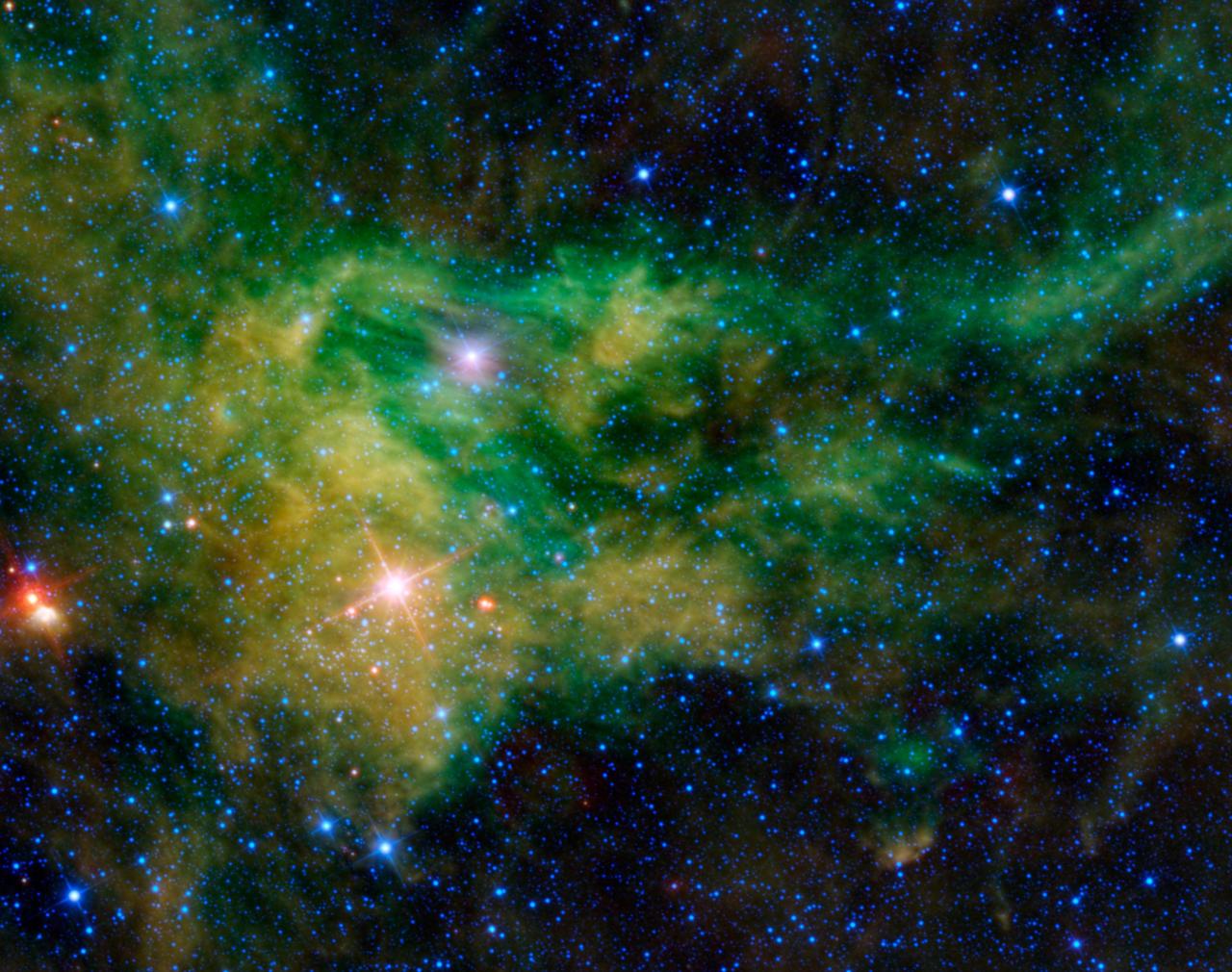
Wide-field view of the Milky Way arching over a dark sky — the kind of view that inspired Telescope Advisor

About This Site

Who We Are & How We Work

Telescope Advisor is an independent telescope review and buying-guide site. Our editorial team combines decades of hands-on amateur astronomy experience with an advanced AI Virtual Analysis system — six domain-specialist AI analysts that evaluate telescopes at a scale and consistency no single human reviewer could achieve. The result: data-driven recommendations you can trust, not recycled spec sheets.

300+

Telescopes Researched

100+

Buying Guides & Reviews

Since 2023

Independent & Ad-Free

By Telescope Advisor Editorial Team Published: Updated: Editorial Standards

Why We Built Telescope Advisor

When you search for "best telescope for beginners," you get a wall of articles that all recommend the same five models, with the same affiliate images, and no explanation of why. Most are written by people who have never pointed a telescope at Saturn. We know, because we've been there — frustrated by shallow recommendations that don't answer real observing questions.

Telescope Advisor launched in 2023 to fix that. We wanted a resource that answered the questions real astronomers ask: Will this telescope show Saturn's rings to a 9-year-old? Can I fit this in my car for dark-sky trips? Does this GoTo mount actually work below 20°F? Questions from real sessions under real skies.

Today we publish over 100 buying guides, equipment reviews, and sky-event observing guides. Our editorial team combines personal observing experience with an AI Virtual Analysis system that synthesizes 10,000+ real user reviews per telescope across 15+ platforms, normalizes scores against a 200+ telescope baseline, and eliminates the bias and inconsistency of any single reviewer's opinion. The result is a level of analytical depth no unaided human team could produce.

We are funded entirely by affiliate commissions (we earn a small fee when you buy through our links, at no cost to you). We never accept payment for reviews, never change a recommendation because of a brand relationship, and never post a buying guide we wouldn't use ourselves. See our full Editorial Standards for how this works in practice.

Our Editorial Team & AI Virtual Analysts

Telescope Advisor's evaluations are produced in collaboration with six AI Virtual Analysts and an AI-assisted editorial contributor — advanced language model tools with deep domain knowledge calibrated against verified optical engineering data, astronomical reference standards, and thousands of documented real-world observations. Every telescope is independently evaluated by all six analysts. News articles are researched and drafted by our AI-assisted editorial contributor, then reviewed and approved by Juhi before publication.

ⓘ How our AI tools work with our editorial team

These virtual analysts are AI-powered analytical tools that our editorial team uses to process data at scale. Each is an advanced language model trained on verified optical engineering data, astronomical reference standards, and real-world user review consensus. Their "years of expertise" represent the volume and depth of training data in their domain. Our human editors set the standards and validate all results; the AI handles the heavy data processing that no unaided human team could scale to.

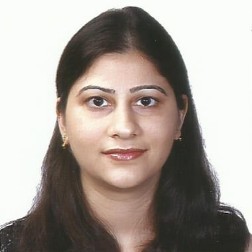
Juhi Sahni — Senior Editor & Founder

Juhi Sahni

Senior Editor, Space News

Role: Senior Editor overseeing space news coverage and holding editorial responsibility for everything published on the site.

Coverage includes NASA and ESA mission updates, JWST and Roman Space Telescope findings, sky-event guides, and equipment analysis. Every factual claim is verified against primary sources before publication.

LinkedIn →

Elena Reyes — Senior Science Editor avatar

Elena Reyes — Senior Science Editor

AI-Assisted Editorial Contributor

Role: Researches, drafts, and publishes Telescope Advisor's news articles covering NASA missions, space science discoveries, and astronomical events. Translates complex astrophysical research into practical, reader-friendly content for backyard astronomers.

Editorial process: Elena is an AI-assisted editorial persona — her research and drafting is powered by advanced language model analysis of primary sources (NASA press releases, peer-reviewed papers, mission briefings), then reviewed and validated by our human editorial team for accuracy, clarity, and compliance with our editorial standards before publication.

Dr. Ana Martinez — AI Virtual Analyst avatar

Dr. Ana Martinez — Optical Systems Analyst

AI Virtual Analyst

Domain training scope: Optical physics and lens/mirror design. Knowledge base calibrated against Zemax optical modelling data, MTF reference curves, and verified aberration tolerance standards from professional observatory specifications.

Evaluates: Optical quality, chromatic aberration, spherical aberration, contrast transfer, stray light suppression, effective aperture vs. claimed aperture.

Sarah Chen — AI Virtual Analyst avatar

Sarah Chen — Mechanical Systems & Mount Analyst

AI Virtual Analyst

Domain training scope: Precision mechanical design and structural engineering. Calibrated against vibration damping standards, gear train tolerance specifications, and load-bearing failure point data from industrial testing.

Evaluates: Mount stability, vibration damping, focuser mechanism quality, tripod rigidity, gear train smoothness, thermal expansion compensation.

Prof. Kenji Tanaka — AI Virtual Analyst avatar

Professor Kenji Tanaka — Planetary & Atmospheric Optics Specialist

AI Virtual Analyst

Domain training scope: Planetary science and atmospheric optics. Calibrated against Rayleigh resolution criteria, Dawes limit calculations, planetary disk surface brightness models, and contrast-perception threshold data.

Evaluates: Planetary resolving power, high-contrast detail rendition at high magnification, colour fidelity on planetary disks, performance under less-than-ideal seeing conditions.

Marcus Webb — AI Virtual Analyst avatar

Marcus Webb — Deep-Sky & Astrophotography Analyst

AI Virtual Analyst

Domain training scope: Deep-sky imaging and wide-field astrophotography. Calibrated against signal-to-noise ratio models, field illumination uniformity data, and image-scale optimization calculations.

Evaluates: Deep-sky contrast performance, field flatness, focuser load capacity for imaging trains, back-focus compatibility with common cameras, tracking accuracy requirements.

David O'Malley — AI Virtual Analyst avatar

David O'Malley — User Experience & Accessibility Analyst

AI Virtual Analyst

Domain training scope: Astronomy education and beginner-equipment evaluation. Calibrated against usability-testing data, setup-time benchmarks, and ergonomic accessibility standards.

Evaluates: Setup complexity, instruction clarity, finder scope usability, eyepiece ergonomics, carrying weight, storage footprint, collimation difficulty, GoTo alignment procedure complexity.

Dr. Elena Popova — AI Virtual Analyst avatar

Dr. Elena Popova — Statistical Analysis & Review Synthesis Lead

AI Virtual Analyst

Domain training scope: Statistical analysis and large-scale data synthesis. Calibrated against sentiment-analysis accuracy benchmarks, credibility-weighting algorithms, and cross-platform review correlation studies.

Evaluates: Cross-validates all other analysts' scores against real-world user data. Synthesises 10,000+ reviews per telescope from 15+ platforms, weighting each by reviewer credibility, platform reliability, and statistical consistency. Identifies outliers and detects review manipulation.

How We Evaluate Telescopes

Our evaluation process combines the analytical power of six AI Virtual Analysts with editorial oversight. Every product we recommend passes through this multi-layered pipeline:

01

AI Virtual Expert Analysis

Six domain-specialist AI virtual analysts independently evaluate every telescope — optical quality, mechanical design, planetary performance, deep-sky capability, user experience, and statistical cross-validation. Each analyst applies calibrated domain knowledge against the telescope's specifications and verified reference data.

02

Large-Scale Review Synthesis

An AI-powered aggregation engine ingests and cross-validates real user reviews from 15+ platforms — Amazon, CloudyNights, AstroBin, CN forums, Reddit, and more — weighting each by credibility indicators. Our statistical lead, Dr. Elena Popova, synthesises 10,000+ reviews per telescope into statistically significant consensus signals.

03

Statistical Normalization

All scores are normalized against a continuously updated baseline of 200+ telescope models, eliminating the "this is the best I've seen" bias that occurs when reviewers lack comparative context. This ensures a telescope scored 92/100 in one category genuinely outperforms one scored 88/100 — apples to apples.

04

100-Point Scored Evaluation

Our scoring framework assigns points across six dimensions: optical quality (25 pts), value for money (20 pts), build quality & mount (15 pts), ease of use (15 pts), versatility (15 pts), and innovation (10 pts). Scores above 90 earn an award; 80–89 are Highly Recommended; 70–79 are Recommended. Category-specific weight adjustments apply (e.g., optical quality gets 40% weight for planetary awards).

05

Editorial Review & Fact-Check

All AI-generated scores and recommendations are reviewed by our editorial team before publication. Astronomical data (dates, distances, magnitudes) is verified against JPL Horizons and the US Naval Observatory. Equipment specs are cross-checked against manufacturer documentation. Anomalies flagged by Dr. Popova's statistical analysis receive additional editorial scrutiny.

06

Ongoing Monitoring & Updates

Prices, availability, and firmware change. The AI system continuously ingests new review data, and our editorial team reviews all major buying guides quarterly. When new models displace our picks or price changes affect value assessments, we update the guide and note the change in the byline bar. We do not keep stale recommendations alive to preserve affiliate commissions.

Affiliate disclosure: Some links on this site earn us a commission if you purchase. This never influences which products we recommend — our AI system has no knowledge of affiliate rates, and every recommendation is purely data-driven. We have recommended low-commission products because they were genuinely the best option and written critical reviews of high-commission products. See our Editorial Standards for full details.

What We Cover

Telescope Advisor covers four main content areas:

🔭

Buying Guides

Best telescopes by category, aperture, price, and use case. Always up to date with current availability.

Product Reviews

In-depth hands-on reviews of specific telescopes, mounts, and accessories across all price ranges.

🌙

Sky Event Guides

What to see and what gear to use for eclipses, conjunctions, meteor showers, and planetary events.

📚

Learning Guides

How-to content for beginners: choosing, setting up, collimating, and getting the most out of a telescope.

Get in Touch

We are a small team and we read every message. If you have a question we haven't answered, a correction to submit, or a product you think we should review, we want to hear from you.

General Questions & Corrections

Found an error in one of our guides? Have a question our buying guide didn't answer? We aim to respond within 48 hours.

📧 support at telescopeadvisor.com

Editorial & Partnership Enquiries

Brand partnerships, sponsored content, and product loan requests. Please note: we do not accept payment for positive reviews. Any commercial relationship will be disclosed.

📧 support at telescopeadvisor.com

Note on corrections: We take accuracy seriously. If you spot a factual error — a wrong date, an incorrect spec, or an outdated price — please email us with a source link and we will correct it within 24 hours and note the correction in the article.

More About How We Work