Andromeda Constellation: How to Find M31 and Star Hop with Confidence
Telescope Advisor Logo Telescope Advisor
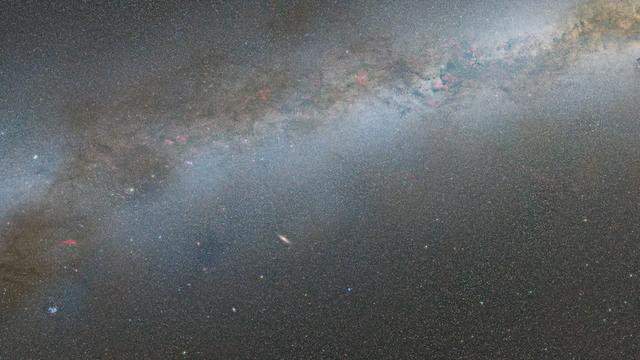
Andromeda Galaxy M31 wide-field image

Constellation Guide · Galaxy Finder

Andromeda Constellation: How to Find the Andromeda Galaxy (M31)

Andromeda is one of the highest-intent beginner galaxy searches because M31 is visible even without a telescope in dark skies. This guide gives you practical star-hopping, realistic visual expectations, and equipment guidance that actually improves first-night success.

M31

Primary Target

2.5M ly

Distance

Aug-Nov

Best Season

45-90 min

Typical Session

By Telescope Advisor Editorial Team Published: Updated: Editorial Standards

Quick Answer: How Do You Find Andromeda Galaxy Fast?

Start from the Great Square of Pegasus, follow the Andromeda chain stars, then hop from Mirach toward the faint elongated glow of M31. In dark skies, M31 can be visible to the naked eye. In binoculars, it appears as a distinct oval glow with a bright core. In telescopes, you usually see a brighter nucleus and elongated halo, not colorful spiral-arm detail. For first-night success, use binoculars or low-power eyepieces before increasing magnification.

🔭

Not sure which telescope actually fits your goals?

Answer 5 quick questions about your budget, observing targets, and experience level — our Telescope Finder Tool recommends a specific model in under 2 minutes.

Find My Telescope →

What Is the Andromeda Constellation and Why Is It So Popular?

Andromeda is one of the most searched constellations because it contains M31, the Andromeda Galaxy, the most famous galaxy target for beginners. The constellation itself is useful as a star-hopping framework, but the dominant search intent is nearly always practical: where is M31 and what can I realistically see? That is why successful Andromeda content must combine constellation orientation and visual expectation management in one workflow.

M31 is roughly 2.5 million light-years away and is often described as the most distant object visible to the naked eye under dark conditions. That fact alone drives curiosity and recurring search traffic. But first-time observers often expect camera-like detail and feel disappointed when they see a subtle glow. A good guide should prevent that mismatch early so users get quick, satisfying wins instead of confusion.

The practical advantage of Andromeda observing is that success is achievable with modest gear. Binoculars often outperform high-magnification telescopes for first detection because M31 is large and benefits from wider field framing. This makes Andromeda one of the best objects for building confidence in deep-sky observing.

Step-by-Step Star-Hop: Great Square to M31

  1. Find the Great Square of Pegasus in autumn evening skies.
  2. Locate Alpheratz, then trace the Andromeda chain toward Mirach.
  3. From Mirach, hop upward toward the area where M31 sits as a faint elongated patch.
  4. Use binoculars first to confirm the bright core, then move to telescope low-power view.

If detection fails, check three variables before changing equipment: sky transparency, moonlight, and field framing. In bright moon or haze, M31 contrast drops sharply. In those conditions, wait for better sky or focus on brighter targets, then return to M31 on a darker night.

Andromeda Visual Reference (NASA)

NASA image of the Andromeda Galaxy M31 for observing context
Reference image for orientation and context. Eyepiece views are subtler, with a bright core and extended glow rather than processed color detail.

What Andromeda Galaxy Really Looks Like Through Your Optics

InstrumentTypical ViewCommon Mistake
Naked eye (dark sky)Small faint patchExpecting detailed shape
10x50 / 15x70 binocularsClear elongated glow + bright coreUsing shaky hand-hold at higher powers
Telescope low-power viewBrighter nucleus with wider halo contextToo much magnification, losing galaxy extent

Expect subtlety, not color. The visual reward in M31 is scale and context: you are seeing another galaxy with your own eyes. Once expectations align, the object becomes deeply satisfying and worth revisiting.

M32 and M110: Andromeda's Companion Galaxies

After locating M31, many observers try for its satellite companions M32 and M110. Under decent skies and with careful framing, these companions can be visible in the same broad viewing context. M32 tends to be easier and appears as a compact glow. M110 is more diffuse and can require better transparency and dark adaptation.

Finding companions is a strong progression step because it trains contrast sensitivity and patient scanning. Do not chase high power first. Keep field context, confirm M31 position, then look for nearby subtle patches. This method is far more successful than zooming in too aggressively.

For many observers, the first clear M31+M32 or M31+M32+M110 session is a milestone moment that marks the shift from casual stargazing to intentional deep-sky observing.

Best Time to Observe Andromeda in 2026

Andromeda is generally best in late summer through autumn evening skies, with peak convenience around August to November. During this window, M31 climbs to more favorable altitude earlier at night, improving contrast and reducing atmospheric losses. Moon phase remains critical: darker skies produce significantly better first-detection rates, especially for beginners.

If moonlight is bright, use the night for orientation and star-hopping practice rather than faint-galaxy expectations. Then return on darker nights for higher success. This staged approach reduces frustration and builds stronger long-term results.

Best Gear for Andromeda Sessions

Editor's Pick - Best First Andromeda View
Celestron SkyMaster 15x70 binoculars

Celestron SkyMaster 15x70

A strong wide-field choice for first successful M31 detection with enough brightness to reveal structure better than small binoculars.

Sky-Watcher Heritage 130P telescope

Sky-Watcher Heritage 130P

Excellent entry telescope for low-power M31 framing and progressive deep-sky skill-building.

Sky-Watcher Classic 200P Dobsonian telescope

Sky-Watcher Classic 200P

Best upgrade when your goal includes stronger M31 context and better consistency on M32/M110 companion detection.

Andromeda Session Plans: Quick Win and Deep Practice

45-minute quick win

  1. 10 min: Find Great Square + Mirach chain.
  2. 15 min: Locate M31 in binoculars and confirm core.
  3. 10 min: Telescope low-power framing pass.
  4. 10 min: Attempt M32 identification.

120-minute deep practice

  1. 15 min: Orientation, focus, and transparency check.
  2. 30 min: Binocular and telescope comparison passes.
  3. 35 min: M31 + M32 + M110 careful scanning attempts.
  4. 25 min: Repeat with slight magnification adjustments.
  5. 15 min: Session notes for future optimization.

Extended Guidance: Avoiding the Most Common M31 Frustrations

The biggest Andromeda frustration is expectation mismatch. Visual M31 is subtle and low-contrast compared to processed images. The second frustration is over-magnification. Large objects like M31 often look better at lower power where context is preserved. The third is poor timing: bright moon and haze can suppress detectability dramatically.

Use this rule: if you cannot find M31 in binoculars, do not move immediately to high-power telescope searching. Fix sky conditions, orientation certainty, or framing strategy first. This one adjustment solves a large percentage of beginner failures.

For long-term progression, Andromeda is an excellent benchmark target. Revisit it across seasons, log sky conditions, and compare outcomes with different optics. Over time this creates practical evidence for when upgrades are worth it and which observing habits produce the largest gains.

From a content strategy perspective, this persistent practical intent is exactly why Andromeda topics convert into recurring organic traffic: users return for improved execution, not just one-time facts.
FAQ: Andromeda Constellation and M31

Can I see Andromeda Galaxy without a telescope?

Yes, from darker skies M31 can be visible as a faint patch to the naked eye.

Are binoculars better than telescopes for first M31 detection?

Often yes. Wide-field binoculars make first detection and framing easier than narrow high-power telescope views.

When is M31 easiest to observe?

Late summer through autumn evenings, with best convenience from August to November.

Can small telescopes show M32 and M110?

M32 is usually easier and often possible. M110 is more diffuse and more sensitive to sky conditions.

Why does M31 look less detailed than photos?

Photos stack long exposures and processing. Visual observing is subtler but still powerful when expectations are realistic.

Related Guides