
Orion Constellation: Stars, Nebula & Best Telescopes to See It All
Telescope Advisor Logo Telescope Advisor
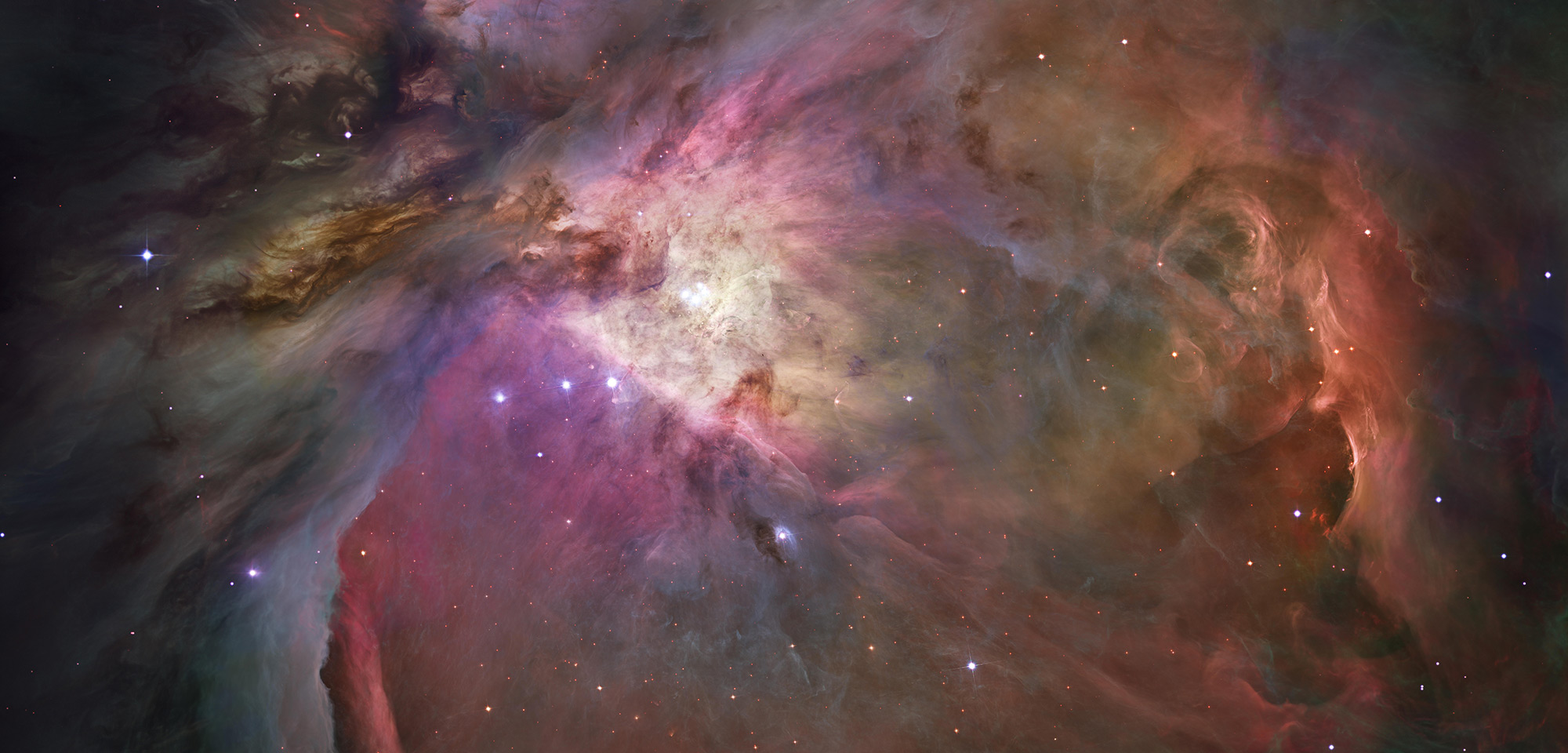
The Orion Nebula (M42) photographed by the NASA/ESA Hubble Space Telescope, showing thousands of newly forming stars in a vast cloud of gas and dust

Constellation Guide · Northern & Southern Hemisphere

Orion Constellation: Stars, Nebula & the Best Telescopes to See It All

Orion is the most recognizable constellation in the night sky and home to one of the best telescope targets in the universe — the Orion Nebula (M42), a stellar nursery visible even through a 70mm beginner telescope. Here’s everything you need to find it, understand it, and see it properly.

Oct–Feb

Best season to view

7

Named bright stars

1,344 ly

Distance to M42 Nebula

5+

Deep-sky objects

By Telescope Advisor Editorial Team Published: Updated: Editorial Standards

What Can You See in Orion? (Quick Answer by Equipment)

Orion rewards every level of equipment — from the naked eye all the way up to a large-aperture telescope revealing the Horsehead Nebula. Here’s what each level reveals:

Naked Eye

The full constellation outline — the distinctive hourglass shape, three Belt stars in a perfect row, and a faint smudge where M42 hangs in the Sword. On a dark night, the Belt is unmissable even in light-polluted suburbs. Betelgeuse’s orange-red colour contrasts visibly with blue-white Rigel.

Binoculars (7× to 15×)

The Orion Nebula resolves into a bright, misty patch with the Trapezium star cluster glinting in its centre. The colour contrast between orange Betelgeuse and blue-white Rigel is striking. The Running Man Nebula (NGC 1977) is faintly visible above M42 on transparent nights.

Telescope (70mm+)

M42 shows wings, texture, and the Trapezium’s four hot blue stars sharply resolved. A 130mm scope shows the nebula’s fish-mouth shape and greenish-gray gas structure. The Horsehead Nebula requires an 8”+ scope with a hydrogen-alpha filter. See telescope picks →
What Is the Orion Constellation?

Orion constellation is one of the 88 officially recognized constellations, named after the mythological hunter. Fully visible from latitudes +85° to −75°, it is best seen from October to April. Its 7 bright named stars include the red supergiant Betelgeuse and the blue-white supergiant Rigel. Its Sword region contains the Orion Nebula (M42) — the closest large star-forming region to Earth at 1,344 light-years — visible to the naked eye and stunning through any telescope.

Orion (the Hunter) is one of the 88 officially recognized constellations and consistently ranks as the most recognizable pattern in the night sky, visible from virtually every location on Earth. It straddles the celestial equator — meaning observers in both the Northern and Southern Hemispheres can see it fully, though the orientation appears flipped depending on your latitude.

The constellation covers 594 square degrees of sky and contains 7 bright named stars: two marking the shoulders (Betelgeuse and Bellatrix), two the feet (Rigel and Saiph), and three forming the famous Belt (Alnitak, Alnilam, and Mintaka). Hanging below the Belt is Orion’s Sword — and within the Sword, the Orion Nebula (M42), one of the nearest and most spectacular star-forming regions to Earth.

Why is Orion the most important constellation for telescope observers? Because M42, at just 1,344 light-years away, is the closest large stellar nursery to Earth. Under even moderate magnification, it shows gas structure, newly forming stars, and the famous Trapezium cluster at its heart. No other area of sky this bright rewards a beginner telescope so immediately or so dramatically.

The Orion Nebula (M42) photographed by the Hubble Space Telescope, showing swirling gas and young stars in the Trapezium cluster

The Orion Nebula (M42) — Hubble Space Telescope

M42 is 24 light-years across and contains over 3,000 stars in formation. Visible to the naked eye as a smudge in Orion’s Sword, it is the finest deep-sky object for observers in both hemispheres. Credit: NASA/ESA/Hubble Heritage Team. Public domain.

Orion Fast Facts

DesignationOrion (Ori)
Area594 sq. degrees (26th largest)
Right Ascension5h 00m to 6h 25m
Declination−10° to +22°
Visible fromLatitudes +85° to −75°
Best monthJanuary at 9 PM local time
Brightest starRigel (β Ori, mag. 0.13)
Nearest deep-sky objectM42 at 1,344 light-years
Associated meteor showerOrionids (October 21 peak)

The 7 Named Stars of Orion

Orion’s brightest stars are some of the best-known in all of astronomy. Two are supergiants visible to the naked eye in distinctly different colours: Betelgeuse is an orange-red supergiant nearing the end of its life; Rigel is a brilliant blue-white supergiant. This colour contrast is obvious without any optical aid, making Orion one of the only constellations where you can see stellar evolution at a glance.

Star Bayer Position in Orion Magnitude Type / Colour Distance (ly)
Rigel β Ori Bottom-right foot 0.13 Blue supergiant 863
Betelgeuse α Ori Top-left shoulder 0.42 (var.) Red supergiant 700
Bellatrix γ Ori Top-right shoulder 1.64 Blue-white giant 243
Alnitak ζ Ori Belt — east (left) 1.77 Blue supergiant 1,260
Alnilam ε Ori Belt — centre 1.69 Blue supergiant 2,000
Mintaka δ Ori Belt — west (right) 2.23 Blue-white binary 900
Saiph κ Ori Bottom-left foot 2.07 Blue supergiant 650

Betelgeuse: A Star That Could Go Supernova

Betelgeuse is a red supergiant nearing the end of its life. It will eventually explode as a Type II supernova — potentially bright enough to cast shadows at night and visible in daylight. Astronomers believe this will happen within the next 100,000 years. In 2019–2020, it temporarily dimmed to magnitude 1.6 (“The Great Dimming”), thought to be caused by a mass ejection event that briefly cooled the surface, not an imminent explosion.

Orion’s Belt: The Sky’s Best Navigation Tool

Alnitak, Alnilam, and Mintaka form one of the most useful celestial pointers in the sky. Extend the Belt line to the right (west) and you reach the Pleiades cluster and Taurus. Extend it to the left (east) and you arrive at Sirius — the brightest star in the entire night sky. Mintaka (the westernmost Belt star) lies almost exactly on the celestial equator, rising due east and setting due west from any point on Earth.

How to Find Orion in the Night Sky

Orion is one of the easiest constellations to find — the three Belt stars are impossible to miss on any clear night from October through early April in the Northern Hemisphere.

Step-by-Step: Finding Orion Tonight

  1. 1
    Face south if you’re in the Northern Hemisphere, or face north if you’re in the Southern Hemisphere. Orion transits high in the south from northern latitudes and high in the north from southern latitudes.
  2. 2
    Look for the three Belt stars — Alnitak, Alnilam, and Mintaka — three equally bright stars in a perfectly straight, evenly spaced diagonal line. Nothing else in the sky looks like this.
  3. 3
    Find the shoulders: above and to the left of the Belt, look for a noticeably orange-red star — that’s Betelgeuse. To the upper-right, a slightly dimmer blue-white star is Bellatrix.
  4. 4
    Find the feet: below the Belt, blue-white Rigel glows at bottom-right (brightest star in Orion), and Saiph is at bottom-left.
  5. 5
    Locate the Sword: three dimmer stars hanging below the Belt in a near-vertical line. The middle “star” appears slightly fuzzy — that’s the Orion Nebula (M42). Point any binoculars or telescope there.

When Is Orion Visible?

Month Northern Hemisphere Southern Hemisphere
OctoberRising in the east after midnightRising in the northeast after midnight
NovemberRising ~9 PM, well-placed by midnightGood evening viewing begins
DecemberRises at dusk, high by 10 PMHigh in the north after dark
January ★Due south at 9 PM — prime viewingDue north at 9 PM — prime viewing
FebruaryHigh in south by 8 PMHigh in north by 8 PM
MarchSetting in the west by midnightSetting in northwest by midnight
Apr–SepNot visible (rises and sets with the Sun)Not visible

Southern Hemisphere Note

In Australia, South Africa, and South America, Orion appears rotated compared to Northern Hemisphere views. Rigel is at the top-left, Betelgeuse at the bottom-right, and the Belt slants the opposite direction. The constellation is fully visible and just as spectacular — in fact, at lower southern latitudes Orion transits higher overhead, giving an even better view.

Orion Constellation Star Map Labeled star chart of Orion showing seven named stars — Betelgeuse (orange-red supergiant), Bellatrix, Belt stars Alnitak/Alnilam/Mintaka, Saiph, and Rigel (brightest) — plus the Orion Nebula M42 in the Sword. ORION ↑ N Meissa Betelgeuse α Ori · red supergiant Bellatrix γ Ori — BELT — Mintaka Alnilam Alnitak ↓ Sword M42 Orion Nebula Rigel β Ori · brightest Saiph κ Ori Northern Hemisphere · facing south · Oct–Feb
Orion Star Map — Seven named stars plus the Orion Nebula (M42). Betelgeuse’s orange-red contrasts with blue-white Rigel. The Belt points left to Sirius and right to the Pleiades.

Using Orion as a Pointer

Orion’s Belt is one of the best navigational guides in the night sky. Extend the Belt to the right (west): you reach the Pleiades open cluster and the constellation Taurus. Extend the Belt to the left (east): follow the line down-left to find Sirius in Canis Major — the brightest star in the entire sky at magnitude −1.46. Follow a line from Rigel through Betelgeuse northward: it leads to Gemini’s twin stars Castor and Pollux.

Deep-Sky Objects in Orion

Orion sits in front of the Orion Molecular Cloud Complex — a vast star-forming region spanning hundreds of light-years behind the constellation. This concentration of active nebulae makes Orion the most rewarding patch of sky for any telescope observer:

Object Catalogue Type Magnitude Min. scope needed What to expect
Orion Nebula M42 Emission nebula 4.0 Naked eye 70mm scope shows fish-mouth shape and the Trapezium cluster at its core
De Mairan’s Nebula M43 Emission nebula 9.0 70mm scope Separate comma-shaped glow just north of M42; easy to overlook
Running Man Nebula NGC 1977 Reflection nebula 7.0 Binoculars (dark sky) Blue-tinted reflection cloud above M42; needs transparent skies
Trapezium Cluster Θ¹ Ori Open cluster (young) 5.0 70mm scope 4 bright blue-white OB stars at M42’s core; 6 stars visible in 150mm+
Horsehead Nebula B33 Dark nebula 8”+ with H-α filter Horse-head silhouette against glowing IC 434; dark sky and filter essential
Flame Nebula NGC 2024 Emission nebula 2.0 130mm + dark sky Bright flame-shaped glow around Alnitak (Belt); star glare makes it tricky
Reflection Nebula M78 Reflection nebula 8.3 80mm scope Two stars embedded in a comet-like glow; located northeast of Belt

M42: The Most Important Telescope Object for Beginners

At magnitude 4.0, M42 is bright enough to detect without assistance in suburban skies. Even a 70mm refractor at 40× shows the iconic fish-mouth shape and the Trapezium — four young stars (designated Θ¹ Ori A, B, C, D) blazing at the nebula’s heart, each dozens of times more luminous than the Sun, and the reason the surrounding gas glows in visible light. A 130mm+ telescope on a dark night reveals the full ‘wings’ of the nebula and subtle swirling structure in the gas. This is the object that convinces skeptics that owning a telescope is worthwhile.

What You’ll See Through a Telescope — by Aperture

Aperture (the diameter of the primary mirror or lens) is the single most important factor in how much detail you see in Orion’s nebulae. Here is a frank breakdown of what each telescope size actually shows:

50–60mm Refractor

e.g. Celestron FirstScope

  • ✅ M42 as a bright glowing cloud
  • ✅ Trapezium stars visible (4)
  • ⚠️ Minimal nebula detail or shape
  • ❌ Horsehead, Flame not visible

70–80mm Refractor
or 130mm Reflector ★

Sweet spot for M42

  • ✅ M42 fish-mouth shape clearly visible
  • ✅ All 4 Trapezium stars sharp and distinct
  • ✅ M43 and NGC 1977 with dark sky
  • ✅ M78 on transparent nights
  • ⚠️ Horsehead needs filter + dark sky

150–200mm Reflector
/ 5–6” Aperture

Advanced nebula detail

  • ✅ M42 gas structure and texture
  • ✅ 6 Trapezium stars resolved
  • ✅ Flame Nebula begins to show
  • ✅ Horsehead visible with H-α filter

8” (200mm) and Larger

Full Orion capability

  • ✅ Stunning M42 with full wing detail
  • ✅ All 6 Trapezium stars + colour hints
  • ✅ Horsehead visual (H-α filter)
  • ✅ Flame Nebula structure visible
  • ✅ Shock fronts and bow waves in M42

Magnification guide for M42

M42 is a large object — approximately 1° × 1.5° across — so it benefits from low to medium magnification (35×–80×). At too-high magnification, the field narrows and you lose the nebula’s wings. Start at 40× for the full picture, then switch to 80×–100× to sharpen the Trapezium stars. For the Horsehead Nebula, use 100×–150× with a narrowband or hydrogen-alpha filter to boost the contrast of the glowing background against which the dark horse-head silhouette sits.

Best Telescopes for Viewing Orion

These three telescopes cover the range from first telescope to serious deep-sky observer, each matched to what Orion’s objects actually require in terms of aperture and mount:

Editor’s Pick — Best Overall for the Orion Nebula
Sky-Watcher Heritage 130P collapsible Dobsonian reflector telescope

Sky-Watcher Heritage 130P

130mm (5.1”) Parabolic Reflector · f/5 · Collapsible Dobsonian Mount

130mm (5.1”) aperture 650mm focal length · f/5 Tabletop Dobsonian ~5 kg — ultra-portable

Why it won this category

130mm is the threshold where M42 transforms from a bright cloud into a structured nebula with visible fish-mouth wings. The parabolic primary mirror eliminates spherical aberration, delivering sharp stars across the full field. At this price point, nothing else offers this aperture-to-cost ratio. The collapsible FlexTube design packs to half its observing length with no tools needed and sets up in under a minute.

What you’ll see through it

M42’s fish-mouth shape with wing extensions clearly defined, all 4 Trapezium stars as sharp blue-white pinpricks, M43 as a separate small glow, NGC 1977 faintly visible above M42 on dark transparent nights. The colour contrast between orange Betelgeuse and blue-white Rigel is striking when star-hopping across the constellation at low power.

Budget Pick — Best Entry Scope for Orion
Celestron AstroMaster 70AZ refractor telescope on alt-azimuth mount

Celestron AstroMaster 70AZ

70mm Refractor · f/10 · Alt-Azimuth Mount · Best budget pick

70mm aperture 700mm focal length f/10 refractor No collimation needed

A solid entry-level refractor that brings M42 to life for the first time. At 70× the Trapezium resolves into four distinct blue-white stars at the nebula’s core. The intuitive alt-azimuth mount requires no polar alignment — point it at Orion’s Sword and look. No batteries, no setup complexity, no collimation required. The main limitation versus the Heritage 130P is aperture: on identical nights, the Heritage shows dramatically more nebula detail and fainter objects. But as a first step into serious astronomy, the AstroMaster 70AZ delivers a convincing M42 experience without the learning curve.

Premium Pick — Maximum Orion Performance
Celestron NexStar 8SE Schmidt-Cassegrain telescope with computerized GoTo mount

Celestron NexStar 8SE

8” (203mm) Schmidt-Cassegrain · GoTo Computerized Mount · Premium upgrade

203mm (8”) aperture 2032mm focal length GoTo computerized 40,000 object database

For the observer who wants to see everything Orion contains, the NexStar 8SE’s 8” aperture makes M42 one of the most spectacular sights in amateur astronomy — the full nebula structure is revealed in extraordinary detail, 6 Trapezium stars separate cleanly on excellent seeing nights, and the Horsehead Nebula becomes achievable on dark nights with a hydrogen-alpha filter. The GoTo computer automatically slews to any of 40,000 objects: M78, NGC 1977, the Flame Nebula, every deep-sky object in Orion is a button press away. The single-arm GoTo mount with tracking keeps objects centred during long observing sessions.

Not sure which scope to choose?

Start with the Heritage 130P if you’re new to astronomy — it punches well above its weight for Orion. For a complete aperture-by-aperture comparison across budgets, see our Best Telescopes for Beginners guide. If maximum aperture per dollar is your goal, the Best Dobsonian Telescopes guide covers the full range up to 12” and beyond.

Viewing Tips: Getting the Best View of Orion

🌑

Dark-adapt your eyes first

It takes 20–30 minutes for your pupils to fully dilate in the dark. Avoid any white light source during this time. A red-filtered flashlight preserves night vision for reading star charts.

🌡️

Let your telescope cool down

A reflector brought from a warm room to cold air needs 20–40 minutes to reach thermal equilibrium. Tube currents from warm glass blur views significantly. Set up before dark and let it cool while your eyes adapt.

🔭

Start at low magnification

Use your widest eyepiece (25mm or 32mm) to locate M42 in the Sword, then switch to 10mm or 9mm to resolve the Trapezium. M42 is large — lower magnification shows more of the full nebula at once.

👁️

Use averted vision for faint detail

To see the outer wings of M42 or the Horsehead, look slightly to the side of the target — not directly at it. The retina’s rod cells are more sensitive to faint light than the central cone-dense fovea. With practice, averted vision reveals structure invisible to direct gaze.

🗓️

Best night: January, near new moon

January places Orion high in the south (Northern Hemisphere) at prime evening hours. Choose nights near new moon — a bright moon washes out nebula detail substantially. Check your local moon phase calendar before planning your session.

🌫️

Transparency matters more than seeing for nebulae

Atmospheric “seeing” (steadiness) matters mainly for planets. For M42, atmospheric “transparency” — how clear and moisture-free the sky is — is the critical factor. A hazy winter night suppresses nebulae dramatically. Check Clear Outside or Meteoblue for transparency ratings before heading out.

Frequently Asked Questions

Can I see the Orion Nebula with the naked eye?

Yes. M42 is magnitude 4.0 — visible as a faint smudge at the centre of Orion’s Sword (the three dimmer stars hanging below the Belt) from any reasonably dark sky. From suburban areas with light pollution it appears as a slightly fuzzy star. From a truly dark site, it is an unmistakable glowing patch roughly the apparent size of the Moon.

When is Orion visible in the night sky?

In the Northern Hemisphere, Orion is visible from October through early April. Peak viewing is January when it transits (highest point) due south around 9 PM local time. It is not visible from mid-April to September because it rises and sets with the Sun. In the Southern Hemisphere, the same seasonal pattern applies, but Orion appears in the northern sky.

Is Betelgeuse going to explode soon?

In astronomical terms, “soon” means within the next 100,000 years — not during any living person’s lifetime. When Betelgeuse does go supernova, it will briefly outshine the full Moon. The famous “Great Dimming” of 2019–2020, when Betelgeuse dropped from magnitude 0.4 to 1.6, was caused by a mass ejection that temporarily cooled the surface — not an imminent explosion.

Can I see the Horsehead Nebula through a regular telescope?

The Horsehead is a dark nebula (a silhouette against glowing background gas), which makes it notoriously difficult visually. You need at minimum an 8” (200mm) aperture, very dark skies, and a hydrogen-alpha or narrowband filter to boost the contrast of the glowing IC 434 background. Most beginners encounter the Horsehead first through astrophotography — it photographs relatively easily with a camera and filter from a dark site. Visually, it remains an advanced-observer target.

What direction should I look to find Orion?

From the Northern Hemisphere, look south during winter evenings. Orion rises in the east and transits the south. From the Southern Hemisphere (Australia, South Africa, South America), look north — Orion is in the northern sky. The three Belt stars rise due east and set due west from any latitude on Earth, making them the perfect starting point regardless of where you are.

What are the stars in Orion’s Belt?

The three Belt stars are Alnitak (ζ Ori, the eastern/left star), Alnilam (ε Ori, the centre star), and Mintaka (δ Ori, the western/right star). All three are hot blue supergiants hundreds of light-years away. Mintaka lies almost exactly on the celestial equator. Alnitak is the nearest to M42 and is the illuminating star for the nearby Flame Nebula.

What is the best telescope for the Orion Nebula?

For most observers, the Sky-Watcher Heritage 130P (130mm/5.1” Dobsonian reflector) provides the best combination of aperture, value, and ease of use for M42. It shows the fish-mouth nebula shape and resolves all four Trapezium stars. Larger scopes (6”, 8”) show progressively more detail, but the Heritage 130P is the recommended starting point for anyone specifically targeting the Orion Nebula.

Related Guides