70mm vs 130mm Telescope: Is the Upgrade Worth It? (Side-by-Side Comparison)
Telescope Advisor Logo Telescope Advisor
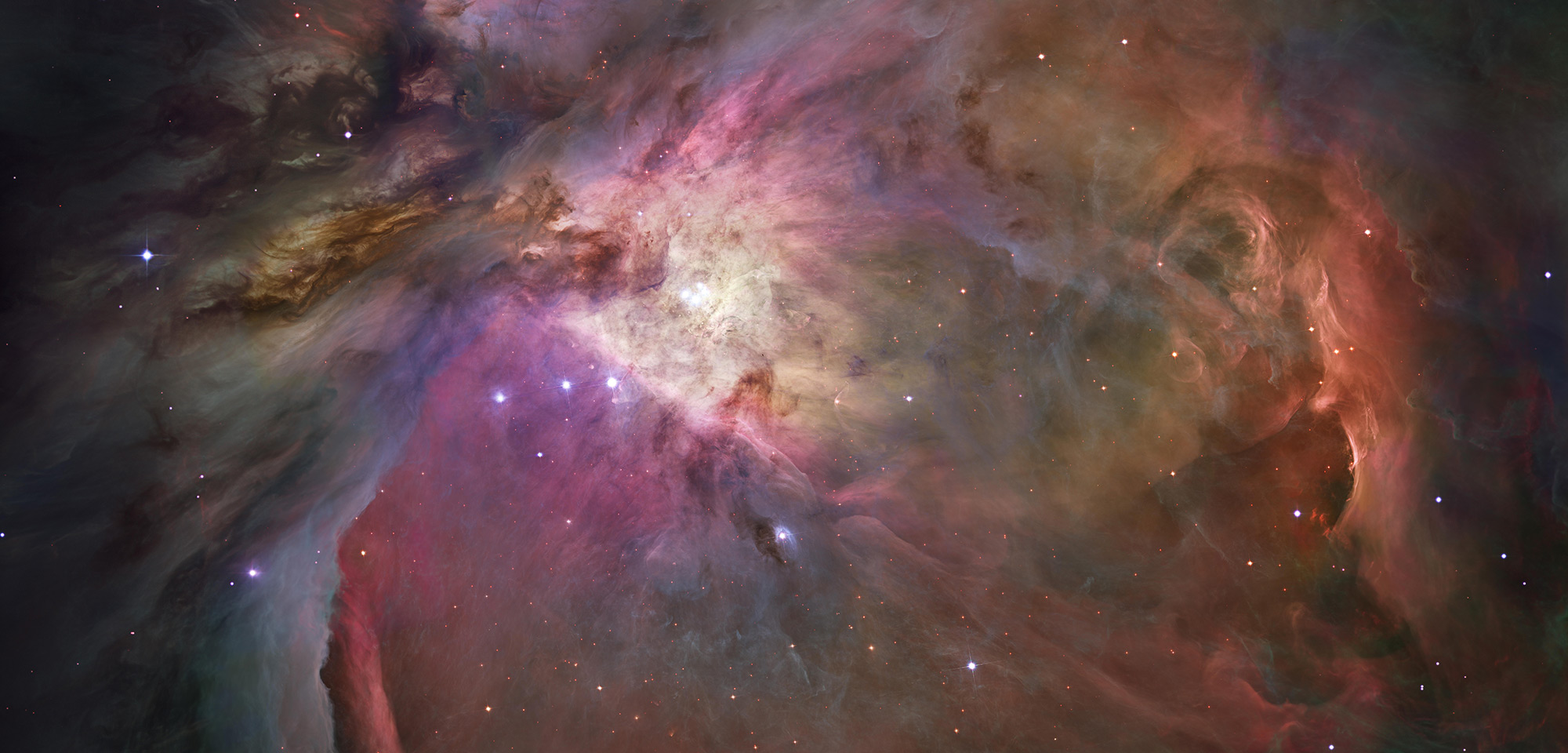
Orion constellation and Orion Nebula against the night sky — visible through both 70mm and 130mm telescopes but dramatically richer through the larger aperture

TELESCOPE COMPARISON · BUYER GUIDE

70mm vs 130mm Telescope: Is the Upgrade Worth It?

Short answer: almost always yes. The 130mm gathers 3.45× more light, resolves the Cassini Division in Saturn’s rings more cleanly, and opens up an entirely different class of deep-sky objects. Here’s the full breakdown.

3.45×

More Light (130mm)

More Stars Visible

0.89″

Resolution (130mm)

1.66″

Resolution (70mm)

By Telescope Advisor Editorial Team Published: Updated: Editorial Standards

70mm vs 130mm: Side-by-Side Specifications

The difference between 70mm and 130mm is more than a number — it’s a fundamental jump in what the telescope can show. Here’s what the optical math actually means in practice:

Specification 70mm Telescope 130mm Telescope
Aperture 70mm (2.75″) 130mm (5.1″)
Light collecting area 3,848 mm² 13,273 mm² (3.45× more)
Limiting magnitude ~11.3 ~12.7 (1.4 mag deeper)
Approx. stars visible ~270,000 ~1,800,000 (6.7× more)
Angular resolution (Dawes’ limit) 1.66 arcseconds 0.89 arcseconds (1.9× sharper)
Useful max magnification ~140× ~260×
Typical type Refractor Newtonian / Dobsonian
Typical price (entry model) $100–$150 $130–$200

The key number: A 130mm telescope collects 3.45× more photons per second than a 70mm telescope. This isn’t a subtle difference — it means objects that appear faint and featureless in the 70mm become bright, detailed, and structured in the 130mm. And since the price gap between entry 70mm and 130mm models is now very small ($30–$70), the optical jump represents extraordinary value.

What Each Aperture Shows: Object-by-Object

This is where the difference becomes real. The same sky, two telescopes:

Target 70mm 130mm
🌑 The Moon Excellent. Craters, mountains, terminator detail. Stunning in both. Excellent. Slightly more fine detail. Both apertures fully satisfy.
🔜 Saturn rings Rings clearly separated from planet disk at 75×+. Beautiful view. Cassini Division requires ideal conditions. Rings vivid, Cassini Division routinely visible at 150×+. Ring tilt and cloud bands more distinct.
🌒 Jupiter Two main equatorial cloud bands visible at 90×+. Four Galilean moons as dots. 3–4 cloud bands, equatorial belts separated, Great Red Spot visible in good seeing. Moons show distinct sizes.
⭐ Orion Nebula (M42) Bright, cloudy patch with Trapezium stars at center. Four trapezium stars visible at 75×. Nebula structure (wings, dark lane) visible. Brighter core, more complex texture. Clearly a better view.
🎖 Globular cluster (M13) Fuzzy ball with granular texture. Outer edges hint at resolution. Satisfying but unresolved. Partially resolved. Outer stars pop as individual points. Core glows, edges sparkle. Recognizable as a ball of stars.
🌎 Andromeda Galaxy (M31) Faint fuzzy glow from a dark site. Barely visible from suburbs. No structure. Clearly visible glow from dark site, brighter core. Some extent visible. Suburbs: still faint but present.
⸻ Double stars Resolves pairs >1.66″ apart. Albireo (gold & blue) is spectacular. Most common doubles split cleanly. Resolves pairs >0.89″ apart. Reaches tight pairs the 70mm cannot split. Colors more vivid.
💎 Open clusters (Pleiades, M45) Wide-field views are beautiful. All main stars visible. Same wide-field beauty with more faint members visible. Background stars richer.

Verdict: For the Moon and wide open clusters, the views are comparable. For planets, deep-sky objects, globular clusters, and faint nebulae, the 130mm is in a meaningfully different class. The gap isn’t subtle on a clear night — you see it immediately.

Should You Upgrade? Answer These 4 Questions

The optical case for 130mm is clear. Whether the upgrade makes sense for you depends on four practical factors:

1

Are the two scopes at the same price point?

In 2026, the Celestron AstroMaster 70AZ costs approximately $120–$135 and the Sky-Watcher Heritage 130P costs approximately $135–$165. The price difference is $30–$50. At this gap, choosing 70mm over 130mm purely for cost reasons almost never makes sense — you are paying nearly the same price for dramatically less telescope. If the 130mm costs $100+ more, the calculus is different and personal preference (portability, mount type) matters more.

2

What is your primary target?

If your answer is “the Moon and planets”: both apertures satisfy. A 70mm refractor is a crisp, reliable planetary scope and shows Saturn’s rings beautifully. If your answer is “nebulae, galaxies, and star clusters”: the 130mm isn’t just better, it’s required — several deep-sky objects that are accessible with 130mm are at the edge of detectability (or invisible) with 70mm from suburban skies.

3

How important is portability?

A 70mm refractor on a tripod is slender, light (typically 5–7 kg assembled), and sets up in under 5 minutes. The Heritage 130P is compact for a 130mm scope but is a tabletop Dobsonian that needs a stable surface — a table, folding stool, or wall. If you are car-camping or have a balcony with a ledge, this is a non-issue. If you need a standalone tripod at ground level, note that the Heritage 130P doesn’t have one. Alternatively, the Celestron StarSense Explorer LT 130AZ gives 130mm on a tripod but costs more.

4

Do you have access to dark skies?

From Bortle 7–8 city skies, the deep-sky advantage of 130mm over 70mm is real but smaller — both scopes are sky-limited on faint objects. You still get the planetary and resolution advantage. From Bortle 4–5 rural or dark sites, the 130mm opens up entire object classes the 70mm cannot reach. If you ever drive 20–30 minutes to observe, 130mm is the right choice.

Bottom line

For most buyers comparing these two sizes, the 130mm is the right choice. It costs marginally more, shows dramatically more, and is unlikely to feel limiting for years. The 70mm makes sense if: you need a dedicated travel/backpack scope, you’re buying for a young child, or you already own a 70mm and are deciding whether to sell up — in which case the jump is worth the cost of a used Heritage 130P.

When the 70mm Is the Right Choice

Despite the optical advantage of 130mm, there are genuine scenarios where a 70mm is the better purchase:

✅ The 70mm wins here

  • Buying for a child under 10. A light 70mm refractor on a simple alt-az mount is easy for small hands to move and aim. The 130P Dobsonian is harder for kids to use intuitively without help.
  • Primary use is the Moon and planets from a fixed suburban backyard. A 70mm refractor delivers excellent planetary views, requires no collimation, and gives crisp images. If you never plan to observe deep-sky, the 130mm advantage is smaller.
  • Travel or backpacking. A compact 70mm refractor fits in a carry-on or backpack. The 130P is too large for this use case.
  • No suitable surface for the Dobsonian. If you don’t have a balcony ledge, garden table, or folding table to use with the Heritage 130P, a tripod-mounted 70mm refractor is more practical.

✗ Poor reasons to choose 70mm

  • Price. The gap is often under $50. This is almost never worth the optical sacrifice.
  • “It’s my first telescope so I don’t need much.” The 130mm is actually easier to be impressed by as a beginner because everything looks better. “Upgrading later” costs more than buying right the first time.
  • “Higher magnification numbers.” Marketing often lists 250× or 300× for 70mm scopes. These are unusable — the maximum useful magnification of a 70mm is ~140×, and pushing beyond that produces blurry mush.
  • Size/weight. The Heritage 130P weighs about 3.1 kg (tube only). It is lighter than most 70mm scopes on tripods.

The Canonical Matchup: Best 70mm vs Best 130mm

These are the two most recommended beginner telescopes at each aperture — the benchmarks everything else is measured against.

Editor’s Pick — Take the Upgrade · Best 130mm
Sky-Watcher Heritage 130P tabletop Dobsonian telescope

The Upgrade Choice — 130mm Parabolic Newtonian

Sky-Watcher Heritage 130P

130mm f/5 parabolic mirror · tabletop Dobsonian · collapsible tube · 650mm focal length · ~3.1 kg

The Heritage 130P is the benchmark 130mm beginner scope and the standard recommendation when someone asks “should I upgrade from 70mm?”. Its parabolic primary mirror (not spherical like many budget Newtonians) produces sharp, coma-free star images across the field. The f/5 focal ratio keeps the tube short enough to collapse into a genuinely portable package. Setup is under 90 seconds — collapsible tube open, place on a table, insert eyepiece. Saturn’s Cassini Division is visible on good nights. The Orion Nebula shows nebulosity structure. M13 shows hints of resolution. This is what 130mm of aperture for approximately $150 buys you in 2026.

✓ Parabolic mirror ✓ Collapsible tube ✓ No collimation needed often ✗ Needs table to use
Celestron AstroMaster 70AZ refractor telescope

Best 70mm — When Portability or Kids Are the Priority

Celestron AstroMaster 70AZ

70mm f/10 achromatic refractor · alt-az tripod mount · 700mm focal length · no tools assembly

The AstroMaster 70AZ is the best-selling entry refractor in its price range for good reason: it’s optically honest, mechanically solid for its price, and works well for its intended purpose. Saturn’s rings are clearly separated at 75× — a genuinely rewarding first view. The Moon is spectacular. Jupiter shows two cloud bands with four moons. The tripod is the best in its class for a beginner refractor. The limitation is real: limiting magnitude of ~11.3 means the Milky Way’s deep objects remain out of reach, and objects like globular clusters never quite resolve. If you know this going in, it remains an excellent scope for casual planetary observing from a suburban backyard.

✓ Tripod included ✓ No collimation ever ✓ Kids-friendly ✗ Limited deep sky
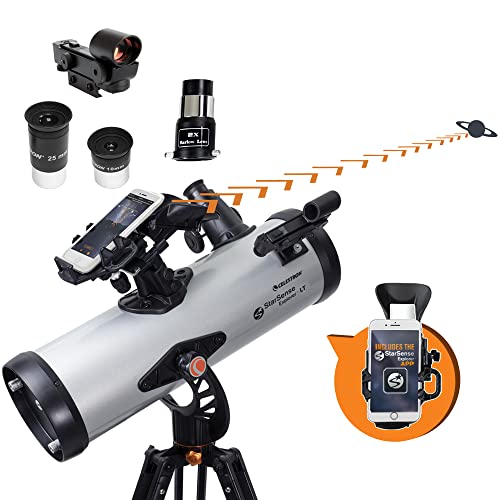
Celestron StarSense Explorer LT 114AZ telescope

Middle Ground — 114mm on a Tripod, App-Assisted

Celestron StarSense Explorer LT 114AZ

114mm f/8.8 Newtonian · StarSense smartphone app dock · alt-az tripod mount · 1000mm focal length

If you want more aperture than 70mm but need a tripod mount (not the Heritage’s tabletop design), the StarSense LT 114AZ bridges the gap. It has 114mm of aperture — nearly double the light-gathering of 70mm — on a full tripod with the StarSense app dock for finding objects. The app shows which direction to push the telescope to center any target from a catalog of 120,000+ objects. Not as wide or as bright as the 130P, but a capable middle-ground with a tripod and guided finding built in.

Frequently Asked Questions

Is 130mm enough to see galaxies?

Yes, for the brightest ones from dark skies. The Andromeda Galaxy (M31), the Triangulum Galaxy (M33), and the brighter Virgo Cluster members are all detectable with 130mm from Bortle 4–5 skies. They appear as extended glows, not as detailed structures — the 130mm shows their existence and rough shape, not their spiral arms. For spiral arm detail you typically need 200mm+ with excellent seeing and dark skies. That said, even a faint fuzzy glow in a telescope is a galaxy millions of light-years away — a genuinely moving experience.

Can a 70mm telescope see Saturn’s rings?

Yes, clearly. Saturn’s rings are visible in a 70mm telescope at around 75×. The ring system is separated from the planet disk and the gap between rings and planet is visible. The Cassini Division (the dark gap within the ring system) requires better seeing and a 130mm+ for routine visibility, but the rings themselves are one of the most satisfying views in any telescope and are well within reach of a 70mm. A 70mm view of Saturn is still jaw-dropping on a good night.

Does a bigger telescope always give a better view?

Not always. Atmospheric seeing (thermal turbulence in the air) limits what any telescope can show, and on nights of poor seeing a 70mm in a stable atmosphere can outperform a 130mm in turbulent air. The quality of the optics matters: a well-made 70mm refractor can produce sharper planetary views than a poorly-made 130mm Newtonian. And a wobbling, shaky 130mm on a poor mount is worse than a rock-solid 70mm. Aperture is the most important single factor, but mount stability and optical quality matter too. This is why the Heritage 130P’s parabolic mirror and solid Dobsonian base make it the benchmark: aperture plus quality plus stability.

What is the real-world price difference in 2026?

The Celestron AstroMaster 70AZ typically sells for $115–$140. The Sky-Watcher Heritage 130P typically sells for $130–$165 (prices vary by retailer and sales). The gap is approximately $30–$50 for the most popular models in each category. At that price difference, the 130mm delivers approximately 3.45× more light for a 25–40% price premium — the aperture-per-dollar ratio strongly favors the 130mm.

Will I outgrow a 70mm telescope?

If your interests grow to include deep-sky objects (nebulae, galaxies, globular clusters), yes. Many beginners who start with 70mm find themselves wanting more within 6–12 months once they discover the limitations on deep-sky objects. The 130mm is far less likely to feel limiting in the first few years of the hobby. If your interests remain primarily the Moon and planets, a quality 70mm can remain satisfying indefinitely — Saturn’s rings never get old.

Related Guides