Dobsonian vs Schmidt-Cassegrain Telescope: Which Should You Buy? (2026) | Telescope Advisor
Telescope Advisor Logo Telescope Advisor
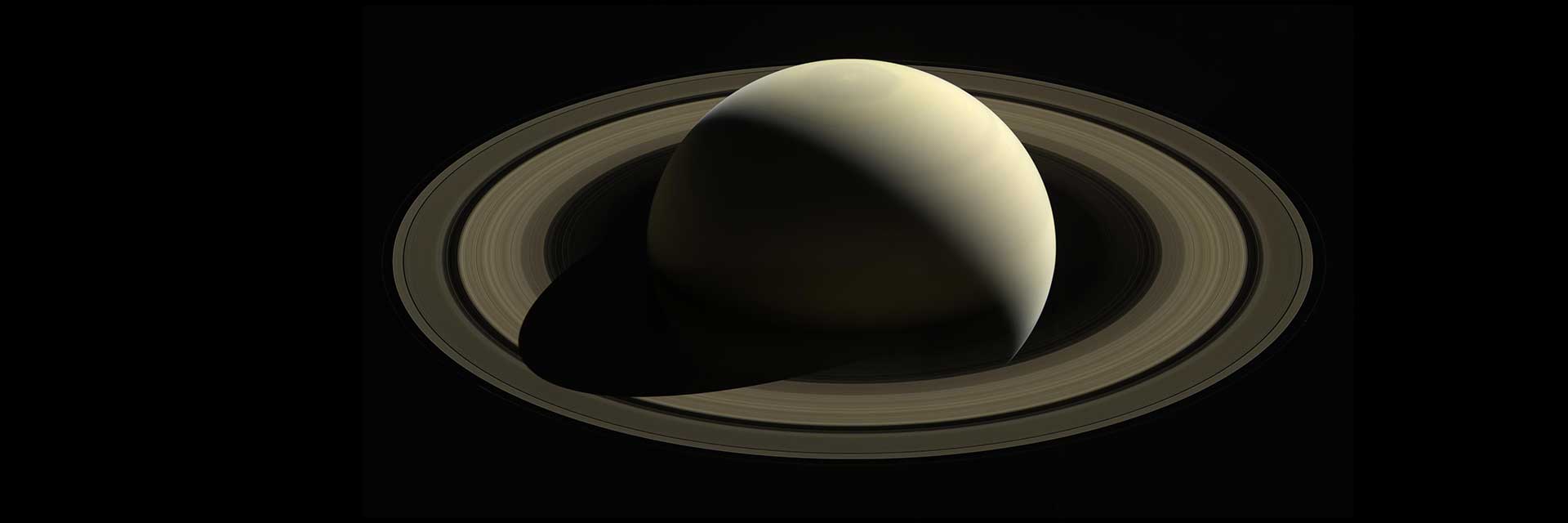
Saturn as seen by Cassini — a target both Dobsonians and SCTs excel on

Buying Guide · Telescope Comparison

Dobsonian vs Schmidt-Cassegrain: Which Telescope Should You Buy?

Two of the most popular telescope designs for serious amateur astronomy — but they serve very different purposes. A Dobsonian gives you maximum aperture per dollar for visual observing. A Schmidt-Cassegrain offers GoTo, compact size, and astrophotography capability. This guide helps you decide which one fits your needs.

DobsonianBest for visual, value
SCTBest for versatility, AP
Aperture range6"–30" vs 4"–14"
Avg cost$150–$1,500 vs $500–$5,000+
By Telescope Advisor Editorial Team Published: Updated: Editorial Standards

Quick Answer: Which One Should You Choose?

Choose a Dobsonian if:

  • You want the most aperture for your money
  • You primarily observe visually (planets, deep-sky)
  • You are willing to learn star-hopping
  • You have a fixed observing location or a vehicle
  • Your budget is under $800

Choose an SCT if:

  • You want GoTo computerised object location
  • You plan to do astrophotography
  • You need a compact, portable telescope
  • You observe from light-polluted urban skies
  • Your budget is $800+

Understanding the Two Designs

Before comparing specifications, it helps to understand what each design is and why the differences matter in practice. These are two of the most popular telescope types in amateur astronomy, but they were designed for fundamentally different priorities.

Dobsonian: Simplicity and Pure Aperture

A Dobsonian is a Newtonian reflector mounted on a simple alt-azimuth base. The design was popularised by John Dobson in the 1960s and 1970s as a way to make large-aperture telescopes affordable for the masses. Dobson, a former monk with a passion for public outreach, wanted to build telescopes that could show deep-sky objects to anyone, regardless of budget. His design succeeded beyond imagination — today, Dobsonians are the most recommended telescope type for beginners and experienced visual observers alike.

The optical tube contains a parabolic primary mirror and a flat secondary mirror that directs light to the eyepiece at the side of the tube near the top. The mount is a wooden or particle-board box with Teflon bearing pads that allow smooth manual movement in altitude and azimuth. There are no motors, no electronics, and no GoTo system — just pure, unassisted stargazing. You push the tube to where you want it, and the Teflon bearings hold it in place. This simplicity is both the Dobsonian's greatest strength and its most significant limitation.

The defining characteristic of a Dobsonian is aperture per dollar. Because the mount is a simple box and the optics are mirrors (which are considerably cheaper to produce than the lenses used in refractors or the corrector plates used in SCTs), Dobsonians offer the lowest cost per millimetre of aperture of any telescope design available today. An 8-inch (203mm) Dobsonian typically costs $500–$600. A Schmidt-Cassegrain of the same aperture costs $1,200–$1,500, and a refractor of similar aperture costs several thousand dollars. That difference is the single most important factor in the Dobsonian vs SCT decision — and it is the reason Dobsonians remain the go-to recommendation for visual observers on any budget.

However, the Dobsonian design has real drawbacks. The tube is long — an 8-inch Dobsonian's optical tube is roughly 120 cm (48 inches) long, making it bulky to transport. The alt-azimuth mount does not track the rotation of the Earth, so objects drift out of the field of view and must be nudged back every 30–60 seconds at high magnification. And because there is no GoTo, you need to learn the night sky to find objects — either through star-hopping with a printed chart or using a smartphone app as a guide.

Schmidt-Cassegrain: Compact Versatility and GoTo

The Schmidt-Cassegrain design was invented in the 1940s and commercialised by Celestron in the 1970s. It uses a combination of a thin corrector plate at the front, a spherical primary mirror at the back, and a convex secondary mirror mounted on the corrector plate to fold the optical path into a remarkably compact tube. An 8-inch SCT has an optical tube roughly 40 cm (16 inches) long — about one-third the length of a Dobsonian of the same aperture, and less than one-tenth the length of a refractor of equivalent focal length. This folded-path design makes SCTs highly portable for their aperture class.

The compact tube is only half the story. Most SCTs are sold as complete systems on computerised GoTo mounts that can automatically locate and track thousands of celestial objects. The mount contains two motors (one for right ascension, one for declination), an embedded computer with a database of 40,000+ objects, and a hand controller that lets you select targets by name, catalogue number, or type. After a simple two-star or three-star alignment procedure, the telescope slews to any object you choose and tracks it automatically, keeping it centred in the eyepiece for as long as you want to observe.

This convenience comes at a significant cost premium. When you buy an SCT, you are paying for the optics, the precision fork or German equatorial mount, the motors, the embedded computer, the hand controller, and the software. An 8-inch SCT package like the Celestron NexStar 8SE costs roughly $1,400 — more than double the price of an 8-inch Dobsonian. The trade-off is a dramatic reduction in setup complexity and learning curve: an SCT can be set up, aligned, and observing in 15–20 minutes, while a Dobsonian requires manual skills that take weeks or months to develop.

Mount Systems: Alt-Azimuth vs GoTo Equatorial

The mount is arguably more important than the optical tube. A telescope on a poor mount is frustrating to use, while the same tube on a good mount delivers a premium experience. The Dobsonian and SCT designs use fundamentally different mount philosophies, and understanding these differences is essential to choosing the right system.

The Dobsonian Alt-Azimuth Mount

The Dobsonian mount is an alt-azimuth (altitude-azimuth) design. It moves in two axes: up and down (altitude) and left and right (azimuth). This is the most intuitive mount design to use — it matches the way your head moves when looking at the sky, and there is no need to align the mount to the celestial pole before observing. You simply place the base on a level surface and start using it.

The Teflon bearing pads on a Dobsonian mount provide smooth, friction-controlled movement. When properly adjusted, the telescope stays where you push it without drifting, but moves easily when you apply gentle pressure. This "push-to" system is remarkably effective once you develop the touch for it. At low to medium magnifications (under 150x), you can easily nudge the tube every 20–30 seconds to keep objects centred. At higher magnifications, the nudging becomes more frequent, which can be tiring during extended observing sessions.

A significant limitation of alt-azimuth mounts is field rotation. Because the mount does not rotate to match the Earth's axis, the field of view slowly rotates over time. This is invisible to the eye at the eyepiece, but it becomes a problem for long-exposure astrophotography, where field rotation causes trailed stars at exposures longer than about 30 seconds without a field de-rotator.

The SCT GoTo Mount

SCTs are typically mounted on either fork mounts (as in the NexStar series) or German equatorial mounts (as in the Celestron AVX or Sky-Watcher EQ6-R). Both types include GoTo computer control, but they differ in capability. Fork mounts are simpler and more compact, while German equatorial mounts offer better tracking for astrophotography.

The GoTo alignment process is the main learning curve for SCT owners. The standard procedure involves centring two bright stars in the eyepiece or finderscope, which tells the computer exactly where the telescope is pointing. Once aligned, the mount's computer calculates the position of any object in its database and slews to it automatically. A well-aligned GoTo mount places objects within the field of view of a low-power eyepiece 95% of the time, and within a medium-power eyepiece 80% of the time.

The tracking accuracy of an SCT mount is significantly better than manual nudging. Once tracking is engaged, objects remain centred in the eyepiece for hours. This is invaluable for high-magnification planetary observing, lunar work, and especially astrophotography, where tracking accuracy of arcsecond-level precision is required for sharp images.

Aperture, Focal Ratio, and What They Mean for You

Two technical specifications — aperture and focal ratio — determine most of what you will see through a telescope. Understanding how Dobsonians and SCTs compare on these metrics helps clarify the trade-offs.

Specification8" Dobsonian (f/5.9)8" SCT (f/10)Winner
Aperture203mm203mmEqual
Focal length~1,200mm~2,032mmSCT
Focal ratiof/5.9 (fast)f/10 (slow)Different uses
Wide-field max~2.0°~0.7° (1.1° w/ f/6.3 reducer)Dobsonian
Planetary mag (w/ 10mm EP)120x203xSCT
Light graspIdenticalIdenticalEqual

At identical apertures, both designs collect the same amount of light. The difference lies in how that light is delivered to the eyepiece. The SCT's longer focal length gives higher native magnification — with a 10mm eyepiece, an 8-inch SCT delivers 203x compared to 120x through the Dobsonian. This makes the SCT better for planetary observing straight out of the box, without needing a Barlow lens. However, the Dobsonian's faster focal ratio (f/5.9 vs f/10) provides wider true fields of view, making it better for sweeping Milky Way star fields and observing large deep-sky objects like the Andromeda Galaxy and the Pleiades.

The Dobsonian's fast f/ratio also makes it more demanding on eyepiece quality — cheap eyepieces will show noticeable edge distortion (coma) at f/5.9. The SCT's slower f/10 beam is much more forgiving, so even budget eyepieces perform reasonably well. This is a hidden advantage of the SCT design: you can get good views with modest accessory investment.

Astrophotography: Which Design Can Do What?

Astrophotography is where the Dobsonian vs SCT decision becomes most clear-cut. The two designs have vastly different capabilities for imaging, and choosing the wrong one for your AP goals can be an expensive mistake.

Planetary and Lunar Imaging

Both designs can capture excellent planetary and lunar images. The technique for planetary imaging — taking video with a specialised planetary camera and stacking the best frames — works well with any telescope that can deliver sharp, stable images at high magnification. The Dobsonian's faster focal ratio is actually an advantage here: it allows shorter exposure times, reducing the impact of atmospheric turbulence. However, the lack of tracking means you must manually nudge the telescope to keep the planet centred during the 60–90 second video capture. This is entirely feasible with practice, but it adds difficulty. An SCT with tracking keeps the planet perfectly centred, making planetary imaging significantly more relaxing and consistent.

Deep-Sky Astrophotography

For deep-sky imaging of galaxies, nebulae, and star clusters, the SCT on a German equatorial mount is the clear winner. Long exposures of 30 seconds to 10 minutes require precise tracking that only a motorised equatorial mount can provide. The Dobsonian's alt-azimuth mount cannot track at all without an expensive equatorial platform add-on, and field rotation limits exposures to 15–30 seconds even with tracking. A Dobsonian on an equatorial platform can produce decent wide-field images, but the platform itself costs $400–$800, bringing the total cost close to an SCT system.

For specialised deep-sky imaging, the SCT's long focal length (2,032mm at f/10) is actually a challenge — it makes the field of view narrow and magnifies tracking errors. Most astrophotographers use a focal reducer (f/6.3, giving 1,280mm focal length) to open up the field and speed up exposures. Even so, an 8-inch SCT at f/6.3 has a focal length of 1,280mm, which is still longer than the Dobsonian's native 1,200mm but with a slower focal ratio. For wide-field deep-sky, a dedicated astrograph or a small refractor on the same mount is often preferred.

Portability and Storage: Real-World Considerations

The physical size and weight of a telescope determine how often you will actually use it. The best telescope in the world is useless if it stays in the garage because it is too heavy to carry outside.

Dobsonian Portability

An 8-inch Dobsonian breaks down into two main components: the rocker box base (roughly 50 cm x 50 cm x 60 cm, weighing 12–15 kg) and the optical tube (120 cm long, 10–12 kg). Most owners can carry these two pieces separately from their house to a garden or driveway. Transporting a Dobsonian by car requires folding down a rear seat for the tube to fit. A 10-inch Dobsonian is significantly heavier (the tube alone weighs 18–20 kg) and may require two trips or a dolly. Beyond 12 inches, Dobsonians become semi-permanent observatory instruments.

SCT Portability

An 8-inch SCT on a fork mount is a single compact unit. The optical tube is 40 cm long, and the entire assembly (tube + fork arm + base) weighs 15–18 kg. Many 8-inch SCTs fit comfortably in a large suitcase or a purpose-built hard case with foam inserts. The NexStar 8SE, for example, has a built-in carrying handle on the fork arm, making it genuinely one-hand portable. For flying observers or those who travel to dark-sky sites, the SCT's compact size is a decisive advantage.

The mount tripod is a separate consideration. Most SCT fork mounts come with a steel tripod weighing 12–18 kg. A German equatorial mount like the Celestron AVX adds another 12 kg. The total system weight of an SCT setup is comparable to or heavier than a Dobsonian, but it breaks down into smaller, more manageable pieces that fit in a passenger car boot more easily.

The GoTo vs Manual Debate: Learning Curve and Enjoyment

One of the most polarising questions in amateur astronomy is whether GoTo computer control enhances or diminishes the observing experience. Both sides have valid arguments, and your preference will significantly influence whether a Dobsonian or SCT is right for you.

The Case for Manual (Dobsonian)

Manual observing forces you to learn the night sky. Within a few sessions, you begin to recognise constellations, bright stars, and the seasonal patterns of the Milky Way. You develop a mental map of the sky that becomes a lifelong skill. There is a deep satisfaction in finding a faint galaxy by star-hopping from a known star, using nothing but a printed chart or a smartphone app. Many experienced observers say that manual finding creates a stronger connection to the sky — you are not just looking at objects, you are navigating to them.

There is also a practical benefit: manual telescopes have fewer things that can break. There are no motors to fail, no hand controllers to replace, no alignment procedures to troubleshoot. A Dobsonian from the 1980s works as well today as the day it was built. An SCT from the same era may have obsolete electronics that are difficult or impossible to repair.

The Case for GoTo (SCT)

GoTo technology lets you see more objects in a single session. An experienced GoTo user can observe 30–40 objects in a two-hour session, compared to 8–12 for a manual observer of similar experience. This is especially valuable for users who have limited time to observe — a GoTo system wastes no time on star-hopping and lets you spend your available time actually looking through the eyepiece.

GoTo is also transformative for urban observers. In light-polluted skies, only a handful of stars are visible to the naked eye, making star-hopping extremely difficult. A GoTo system can find objects even when you cannot see the guide stars — it knows where the telescope is pointing and can calculate positions without visual confirmation. For observers in cities, GoTo is not a luxury, it is a necessity.

Budget Breakdown: What You Actually Pay For

Let us compare the total cost of ownership for an 8-inch Dobsonian vs an 8-inch SCT over the first three years, including essential accessories.

Item8" Dobsonian8" SCT (GoTo)
Telescope$550$1,400
Collimation tool$50$0 (rarely needed)
Wide-field eyepiece$100$100
Power tank$0$80
Dew heater$0$70
Barlow lens$40$0 (high mag native)
Carrying case$0$150 (optional hard case)
3-year total$740$1,800

The Dobsonian saves roughly $1,000 over three years. However, that $1,000 difference buys you GoTo tracking, compact size, and astrophotography capability. Whether the premium is worth it depends on how you plan to use your telescope. If you only observe visually from a garden, the Dobsonian is the smarter financial choice. If you value convenience, travel, or imaging, the SCT's premium is well justified.

Scenario-by-Scenario Recommendations

Scenario 1: "I want to see as much as possible for $500"

The answer is always a Dobsonian. A 6-inch (150mm) Dobsonian at $350 gives you 75% more light grasp than a 4-inch SCT at $600. For pure visual observing on a budget, Dobsonians cannot be beaten. Recommended: Sky-Watcher Classic 150P or Apertura AD8.

Scenario 2: "I want to photograph the Orion Nebula"

You need an SCT on an equatorial mount — specifically a Celestron NexStar 6SE or 8SE, or a Sky-Watcher 8-inch SCT on an EQ6-R Pro mount. The GoTo tracking is essential for long exposures. A Dobsonian cannot do this without an expensive equatorial platform add-on.

Scenario 3: "I travel to dark sky sites"

An SCT wins on portability. A 6-inch SCT fits in a carry-on hard case. An 8-inch Dobsonian fills a car boot. If you fly to observing sites, an SCT on a lightweight mount is the only practical choice. Recommended: NexStar 6SE or Celestron C8 on AVX mount.

Scenario 4: "I want to observe from my light-polluted backyard"

Aperture still matters, but GoTo becomes valuable because you cannot see enough stars to star-hop reliably. An 8-inch SCT with GoTo lets you punch through light pollution on bright objects. A Dobsonian works too if you know your way around the sky, but finding faint objects is harder without GoTo.

Maintenance and Longevity: Which Design Serves You Better Over Time?

A telescope is a long-term investment. Understanding the ongoing maintenance requirements of each design type helps you choose one that fits your willingness to tinker.

Dobsonian Maintenance

The Dobsonian's simplicity extends to maintenance. There are no electronics to fail, no motors to replace, and no software to update. The primary maintenance task is collimation — aligning the primary and secondary mirrors so that light is properly focused. Collimation should be checked before every observing session and adjusted as needed. With practice, the process takes 2–5 minutes using a Cheshire eyepiece or laser collimator. The Teflon bearing pads may need occasional cleaning or replacement after several years of use, but this is a simple DIY job. The primary mirror will need re-coating every 10–15 years if the telescope is kept in a humid environment, though many Dobsonians go 20+ years without needing re-coating.

SCT Maintenance

SCT maintenance is more complex. The sealed optical tube requires little internal cleaning — the corrector plate can be cleaned with a microfiber cloth and distilled water every few years. The mount, however, is where most maintenance is needed. GoTo mounts have motors, gears, bearings, and circuit boards that can fail. Periodic re-greasing of the worm gears is recommended every 2–3 years. The hand controller firmware can be updated via the Celestron or Sky-Watcher website. Battery-powered mounts require fresh batteries or a rechargeable power tank. The tripod bolts may loosen over time and need tightening. None of these tasks are difficult, but they require more attention than a Dobsonian.

The longevity comparison is interesting: a Dobsonian from the 1990s is fully functional today with no modifications. An SCT from the 1990s with a working GoTo system is a rare find — the electronics of that era are often obsolete or malfunctioning. However, modern SCTs can still be used manually if the GoTo system fails, so they are not entirely dependent on electronics.

The Verdict: Which Should You Buy?

After analysing the differences across every dimension — aperture, portability, GoTo, astrophotography, maintenance, and cost — the answer depends on your personal priorities. There is no universal winner, but there is a clear winner for each type of astronomer.

Buy a Dobsonian if you:

  • Want the most telescope for your money
  • Primarily observe planets, the Moon, and deep-sky objects visually
  • Enjoy learning the night sky through star-hopping
  • Have a garden, driveway, or dark-sky site you can drive to
  • Want a low-maintenance instrument that will last decades
  • Have a budget under $800

Buy an SCT if you:

  • Want GoTo convenience and automatic tracking
  • Plan to do astrophotography now or in the future
  • Need a compact telescope for travel or apartment storage
  • Observe from light-polluted urban skies
  • Have a budget of $1,000+
  • Value setup speed and ease of use over aperture per dollar

If you are still uncertain, our recommendation is to start with a Dobsonian. The lower cost and simpler operation make it the lower-risk investment for anyone new to the hobby. If you outgrow its manual limitations, Dobsonians hold their value well and can be resold for 60–70% of their purchase price. At that point, you will have the experience to confidently choose an SCT that matches your upgraded needs.

Below are our recommended telescopes for each category, with current pricing.

Editor's Pick — Best Dobsonian
Sky-Watcher Classic 200P

Sky-Watcher Classic 200P Dobsonian

8-inch Dobsonian with parabolic mirror. Our Best Overall Telescope 2026 award winner. Exceptional value at ~$550.

View on Amazon ->
Celestron NexStar 8SE

Celestron NexStar 8SE SCT

8-inch Schmidt-Cassegrain with GoTo. The most popular SCT for visual observing and planetary imaging. ~$1,400.

Check price ->

The Hidden Costs: What Each Design Costs Beyond the Purchase Price

The purchase price is only the beginning. Each design comes with ongoing costs and requirements that are worth considering before you commit.

Dobsonian Hidden Costs

  • Collimation tools: A Cheshire eyepiece or laser collimator ($30–$80) is essential for maintaining optical alignment.
  • Eyepieces: The included eyepieces are adequate but not great. Budget $100–$200 for a good 2-inch wide-field eyepiece and a high-power planetary eyepiece.
  • Transport: A furniture dolly or wheelbarrow handle if you store the telescope separately from where you observe.
  • Storage: The base and tube take up roughly 0.5 cubic metres of floor space. An 8-inch Dobsonian cannot be stored in a closet easily.

SCT Hidden Costs

  • Power supply: GoTo mounts require 12V power. A rechargeable power tank ($60–$120) is almost mandatory for field use.
  • Dew prevention: SCT corrector plates dew up easily. A dew heater strip and controller ($50–$100) becomes necessary in humid conditions.
  • Focal reducer: For deep-sky imaging, an f/6.3 focal reducer ($150–$200) is highly recommended.
  • Alignment time: You will spend the first few sessions learning the GoTo alignment procedure. Expect 30 minutes of setup before you start observing.

What You Can See: Comparing Views Through Each Design

At the same aperture, a Dobsonian and an SCT show essentially the same views. The key differences come from the mount and the optical design. Dobsonians typically offer wider true fields because of their faster focal ratios, while SCTs offer higher native magnification for planetary work.

Through an 8-inch Dobsonian (f/5.9)

  • Wide 2-degree field with a 2-inch eyepiece
  • Andromeda Galaxy fills the entire field
  • Orion Nebula with extended wing structure
  • Saturn's Cassini Division clearly split at 180x
  • Globular clusters resolved to the core

Through an 8-inch SCT (f/10)

  • Narrower 0.7-degree field without reducer
  • Planets appear larger at native focal length
  • Better for high-mag lunar detail
  • GoTo tracks objects automatically
  • Easier to push to 300x+ for planetary


Frequently Asked Questions

Is an SCT better than a Dobsonian for beginners?

A Dobsonian is generally better for beginners because it is simpler, cheaper per inch of aperture, and teaches fundamental observing skills. An SCT with GoTo can be overwhelming for a first-time user due to the alignment procedure and higher cost.

Can a Dobsonian be used for astrophotography?

Planetary and lunar astrophotography, yes — using a planetary camera or smartphone adapter. Long-exposure deep-sky astrophotography requires an equatorial platform add-on ($300–$800) or switching to an equatorial mount. For dedicated AP, an SCT on an equatorial mount is the better choice.

Which holds its value better, a Dobsonian or an SCT?

SCTs generally hold their value better because the precision mount and electronics retain more resale value. Dobsonians, being simpler, depreciate less in percentage terms but have lower absolute resale prices. A used 8-inch Dobsonian sells for 60–70% of its new price; a used NexStar 8SE sells for 65–75%.

Is collimation harder on a Dobsonian or an SCT?

Dobsonians require more frequent collimation because the secondary mirror can shift during transport. The process takes 5–10 minutes after initial setup and 1–2 minutes of touch-up before each session. SCTs hold collimation much better due to the fixed secondary mirror and typically only need adjustment after rough handling.