
Newsroom Update Log
Published:
|
Last reviewed:
|
Primary source verified against NASA Roman update page.
Breaking Mission Update · June 3, 2026
NASA Sets Roman Space Telescope Launch Date to Aug. 30, 2026
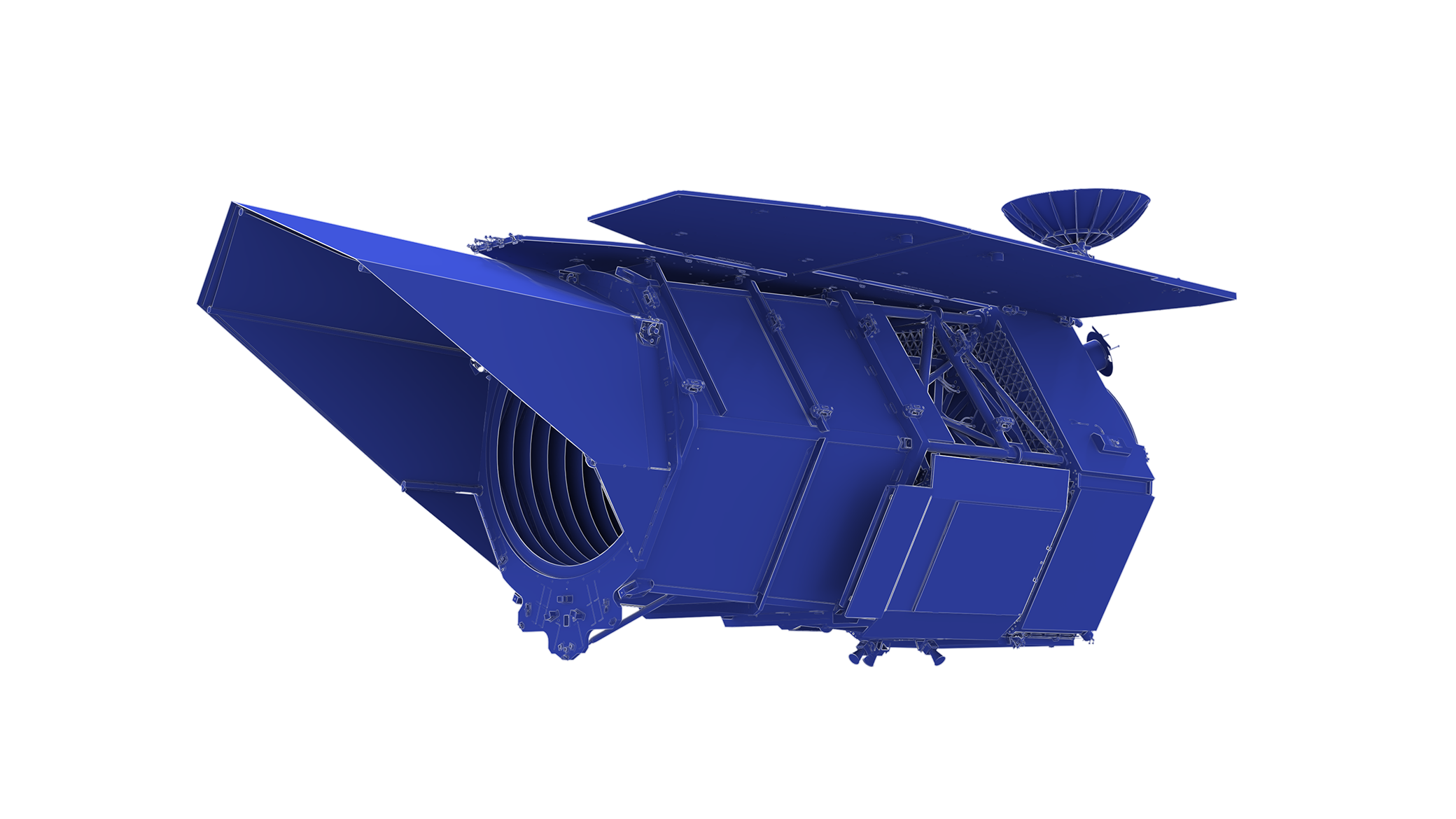
NASA announced today that the Nancy Grace Roman Space Telescope is set to launch on Aug. 30, 2026, about eight months ahead of the previous target. Here is what changed and what telescope users should watch next.
Aug 30
Current target date
+8 mo
Ahead of prior target
Falcon
Heavy launch vehicle
L2
Destination point
🎉
Latest Status (Aug. 30, 2026): Roman Successfully Launches
The Nancy Grace Roman Space Telescope successfully launched on Aug. 30, 2026 aboard a SpaceX Falcon Heavy from Pad 39A at Kennedy Space Center and separated from the second stage — now flying on its own toward L2. NASA concluded its live launch coverage after separation and hosted a postlaunch news conference at 9:30 a.m. EDT. Every processing step described on this page has now been completed and the mission is in flight. NASA: Launch Coverage Concluded ↗ | NASA: Roman Flying on Its Own ↗
Quick Answer
NASA's official Roman blog update dated June 3, 2026 set the Nancy Grace Roman Space Telescope's launch for Aug. 30, 2026 — about eight months ahead of the previously targeted schedule. The mission successfully launched on that date aboard a SpaceX Falcon Heavy and separated from the second stage.
Roman launched from Kennedy Space Center's Pad 39A and is now flying on its own toward the Sun-Earth L2 point. For readers tracking this mission, the practical takeaway is that coverage has shifted from launch-watch planning to deployment, commissioning, and early science milestones.
What Changed in NASA's June 3 Update
- Roman is set to launch on Aug. 30, 2026.
- NASA states this is about eight months earlier than the previous target.
- The observatory is being prepared to move from Goddard to Kennedy Space Center.
- At Kennedy, Roman is expected to move through inspection, powered testing, rehearsals, fueling, and integration steps before rollout.
- Destination remains the second Sun-Earth Lagrange point, L2.
Primary source: NASA Roman Blog, June 3, 2026
News Brief: What NASA Confirmed Today
NASA published the update at 5:30 PM (June 3, 2026) on the mission's new official blog channel and described it as a launch update plus a central feed for upcoming Roman milestones. The headline date shift is Aug. 30, 2026, but NASA also provided concrete processing details that matter for how this schedule should be interpreted.
Confirmed in the update
- Roman is set to launch on Aug. 30, 2026.
- NASA characterizes that date as roughly eight months ahead of the previous target.
- The team is preparing to move the observatory from Goddard to Kennedy Space Center.
- Roman is expected to go through final powered testing, rehearsals, fueling, and vehicle integration flow at KSC.
Operational context
- Roman's destination remains Sun-Earth L2, a deep-space operating point.
- The planned launch vehicle remains SpaceX Falcon Heavy.
- NASA references about 290 gallons (~1,100 liters) of hydrazine fueling in final prep.
- The official Roman blog is now the most direct channel for incremental schedule updates.
Updated Timeline Snapshot
| Phase | Current Status | Why It Matters |
|---|---|---|
| Launch | Complete — launched Aug. 30 | Roman successfully launched aboard a Falcon Heavy from Pad 39A; now in flight. |
| Spacecraft separation | Complete — Aug. 30 | Roman separated from the second stage and is flying on its own toward L2. |
| Transport to KSC | Complete — arrived June 21 | Observatory delivered to Kennedy Space Center, beginning launch-site operations. |
| Launch-site processing | Complete — fueling Jul. 25, FRR Aug. 21, LRR Aug. 28 | Inspection, powered tests, rehearsals, hydrazine fueling, and readiness reviews all completed. |
| Rollout to Pad 39A | Complete — Aug. 29 | Falcon Heavy rolled out from the hangar to the launch pad; mission briefings scheduled. |
| Vehicle | SpaceX Falcon Heavy | Launch architecture and watch planning context. |
| Destination | Sun-Earth L2 | Mission operations location, roughly four times Moon distance. |
Road to Launch: What Happened Between June 3 and Aug. 30
For news readers, the key value was not just the date but the path to liftoff. Every step in the sequence below was completed ahead of the successful Aug. 30, 2026 launch — Roman lifted off, separated from the second stage, and is now flying on its own toward L2. Each step served as a practical checkpoint for update stories.
- Transport to Kennedy Space Center: Roman departs Goddard and arrives at KSC for launch-site processing.
- Payload Hazardous Servicing Facility processing: post-transport inspection and mission-level verification checks.
- Powered tests and launch rehearsals: end-to-end electrical and procedural readiness checks.
- Fueling operations: hydrazine loading and associated safety protocols.
- Falcon Heavy adapter integration: observatory mounting flow before encapsulation.
- Fairing encapsulation and rollout chain: encapsulation, hangar integration activity, then Launch Complex 39A sequence.
Newsroom note: this sequence is the reason to keep coverage active through June-August. For mission traffic, follow-up updates on each milestone can outperform a single one-day date-change headline.
NASA Visual Context: Why This Mission Update Matters
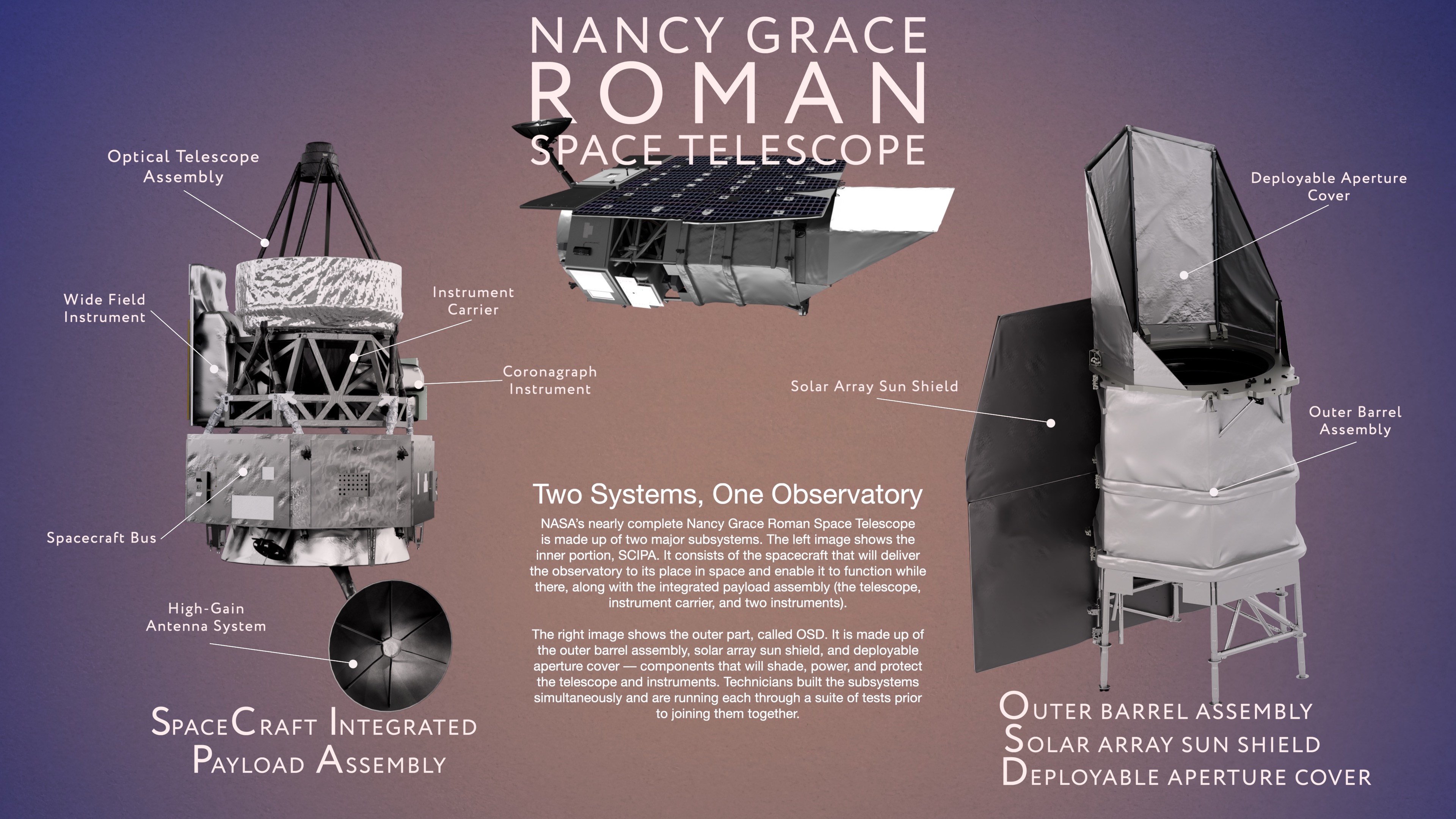
These two NASA visual explainers provide the broader science context behind the launch-date update: what Roman is expected to discover and how one of its most important core surveys is structured.
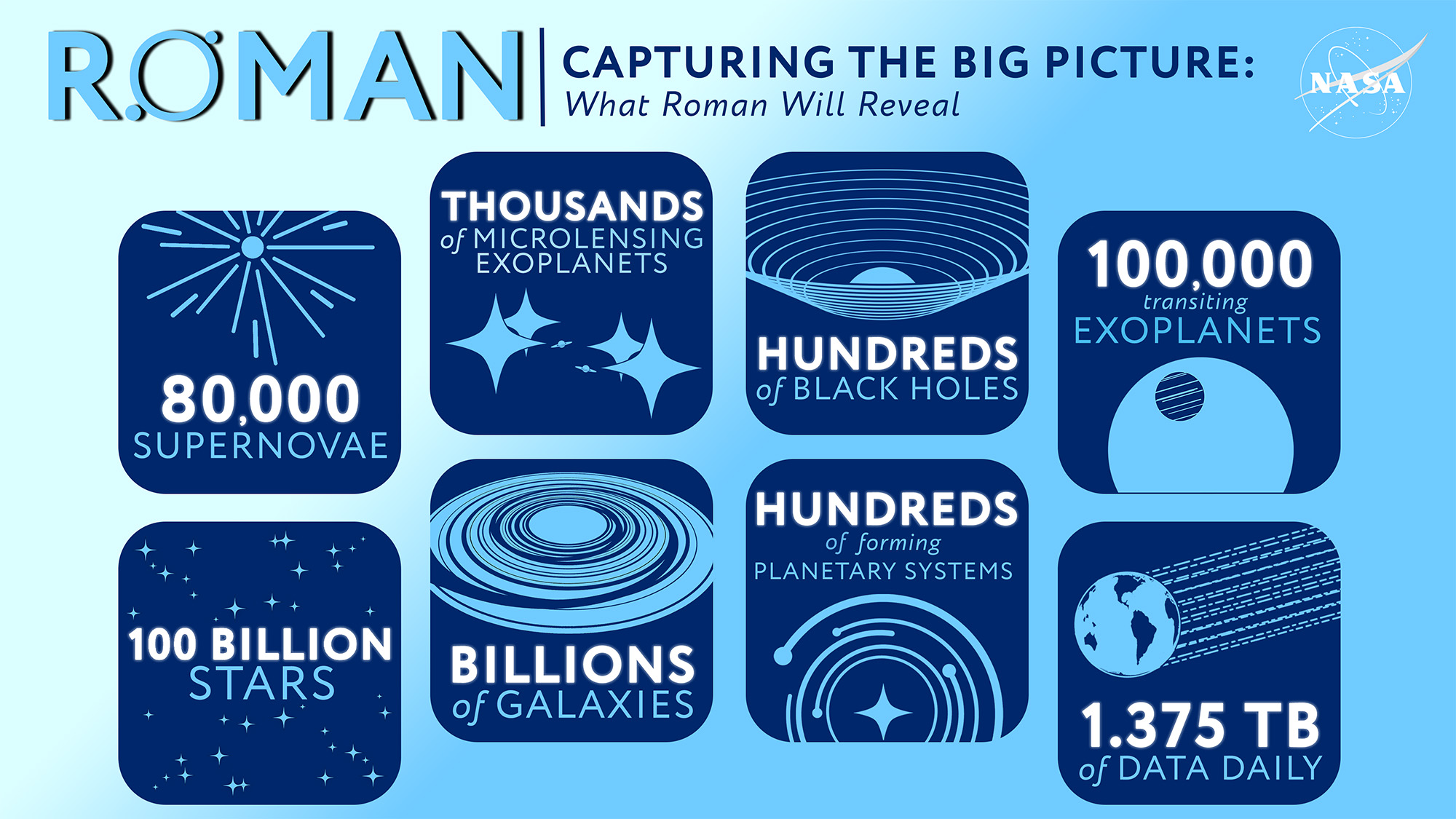
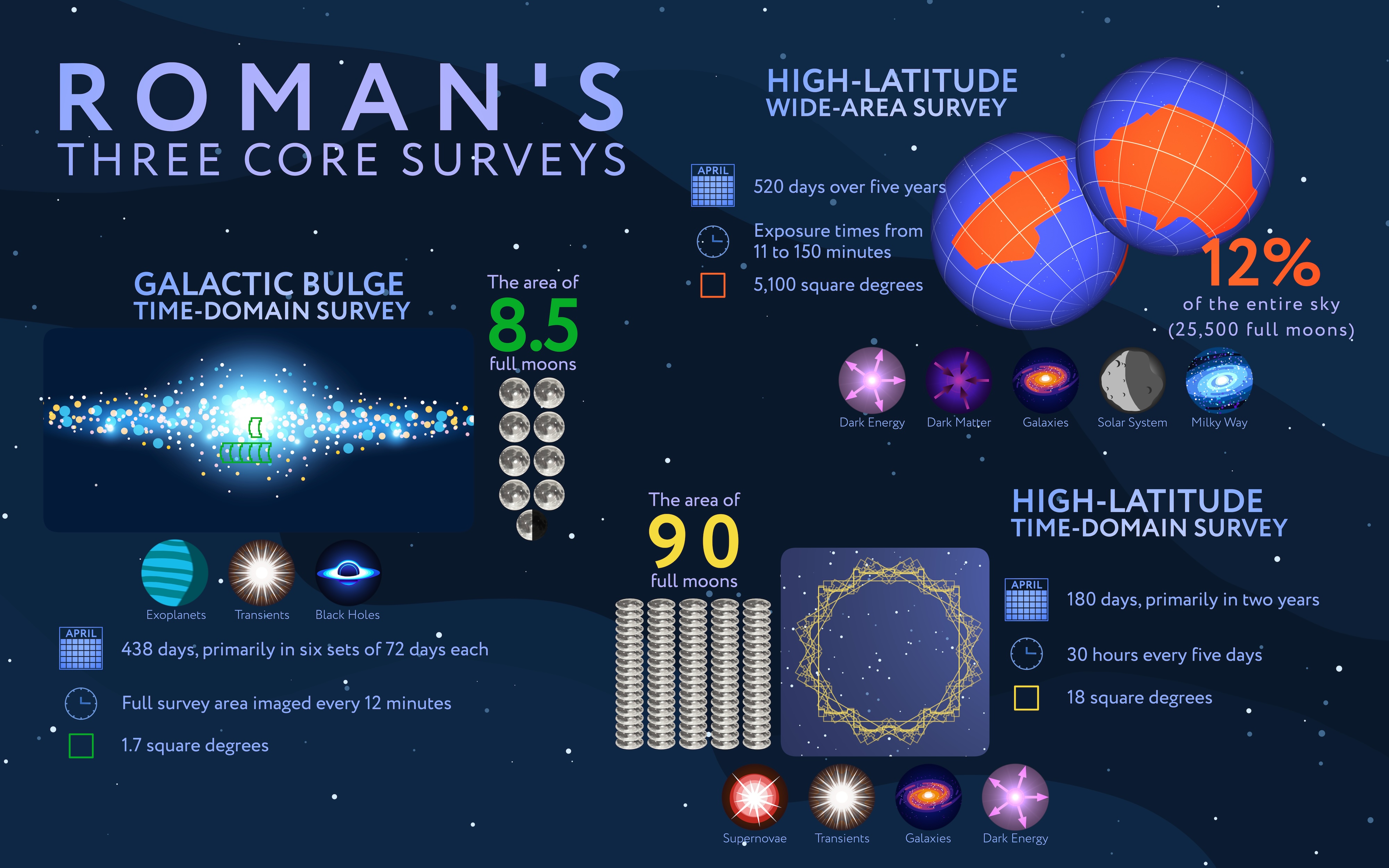
Photo Log: Roman Mission Update Timeline
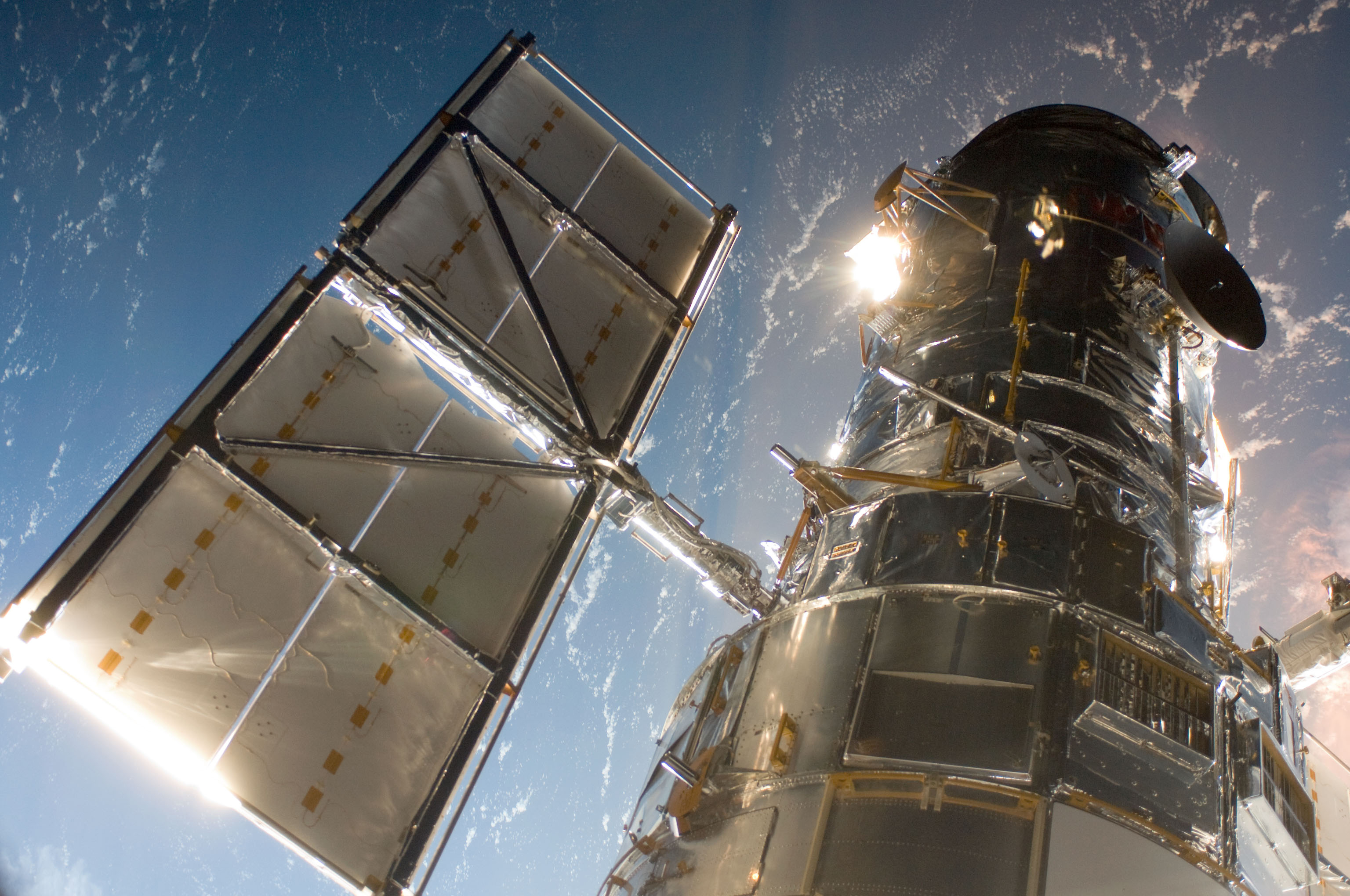
This visual timeline tracks the mission status context behind today's date update and the next milestones readers should watch through launch season.
June 3, 2026
Launch Target Updated
NASA's Roman update sets the current official launch target to Aug. 30, 2026.
Late June 2026
Kennedy Processing Window
Transport and launch-site operations begin the final chain of checks, rehearsals, and fueling prep.
August 2026
Countdown to Launch
Final integration and range coordination drive the last prelaunch updates before Falcon Heavy liftoff.
Could the Date Move Again?
Yes, mission launch schedules can still move during final integration windows. The Aug. 30 date is NASA's current official target, but late-stage operations always include technical and weather dependencies. The correct editorial posture is to treat the date as current and official while continuing to monitor NASA's Roman channel for any updates.
- Most likely change drivers: vehicle integration timing, launch-range constraints, and weather windows.
- Best verification practice: check NASA Roman blog posts and NASA mission pages before publishing a date-sensitive update.
- Reader guidance: plan around the current date, but expect final launch-window details and timing refinements closer to launch.
What This Means for Amateur Astronomers
Launch Night Expectations
Roman itself is not a backyard target at L2, but the Falcon Heavy launch is a major public-space event and a practical outreach opportunity. If you are in Florida or nearby regions, late-August launch windows may support visual tracking of ascent for a short period after liftoff, depending on weather and exact timing.
Practical Next Step
Use this update to lock in your launch-watch plan now, then pair it with a target list of deep-sky objects Roman science is connected to. That way, mission excitement translates into actual observing sessions rather than one-time headline clicks.
Frequently Asked Questions
What is the updated Roman launch date?
NASA's June 3, 2026 update says Roman is set to launch on Aug. 30, 2026.
How much earlier is this than the previous target?
NASA states the Aug. 30 date is about eight months ahead of the previous target.
Where will Roman launch from?
Roman is planned to launch from Kennedy Space Center in Florida on a SpaceX Falcon Heavy.
Is Aug. 30, 2026 a guaranteed launch day?
It is the current official target date from NASA's June 3 update. As with any major space mission, final launch timing can still shift based on technical readiness, launch-range scheduling, or weather.
What major prep steps are still ahead?
NASA says Roman still needs launch-site inspections, powered tests, rehearsals, fueling, and final integration steps before launch operations at Kennedy Space Center.
Related Guides
🚀
📡
🛰️
🚀
🔭
🌟
📰
Roman Launch 2026 Guide
Long-form mission explainer with observer context.
Roman Launch Live Tracker
Rolling milestone and readiness tracker.
Roman vs Hubble vs Webb
Understand how each mission complements the others.
NASA Swift Boost Mission
LINK spacecraft launched July 3 to save Swift.
Best Telescopes for Deep Sky
Top picks for galaxies and faint nebulae.
Best Telescopes for Beginners
Beginner-safe options that are easy to use.
Telescope News Hub
Latest mission and sky-event updates in one place.
Sources
- • NASA Roman Blog: June 3, 2026 update
- • NASA Roman Mission Page
- • NASA: Roman mission preps to unveil new populations of faraway worlds
- • NASA: Journey to center of Milky Way with Roman core survey
- • NASA Kennedy: Roman facility preparation update
- • NASA prior target reference (early September)
- • NASA Roman Observatory and L2 overview