Partial Lunar Eclipse August 28, 2026 — Live Times, Viewing Guide, and Telescope Tips
Telescope Advisor Logo Telescope Advisor
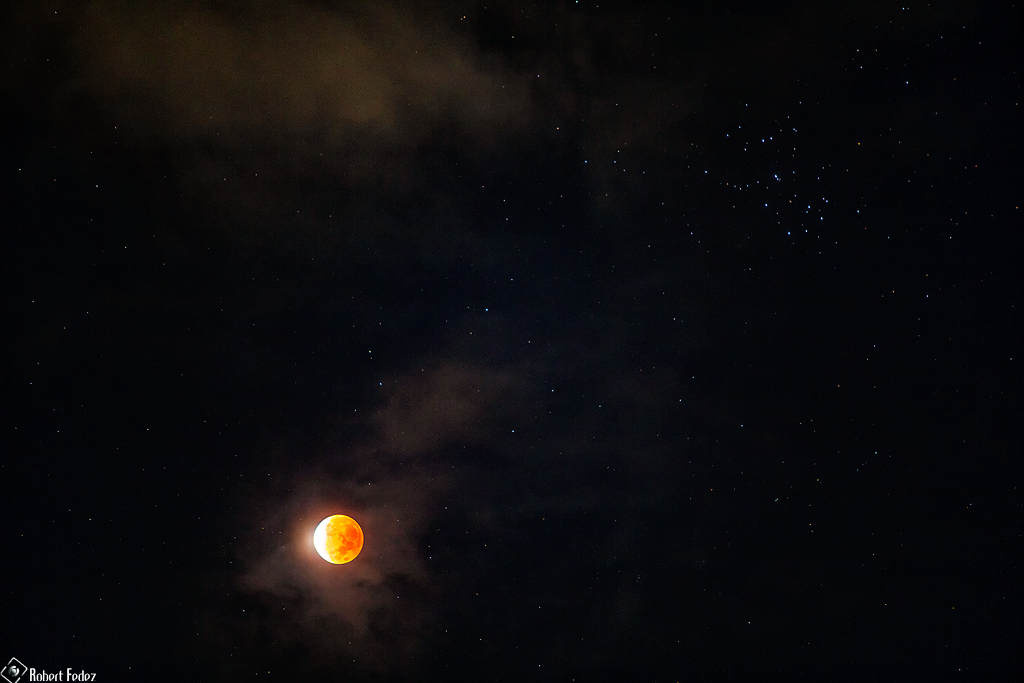
A deep partial lunar eclipse showing the Moon partially immersed in Earth's shadow — the August 28, 2026 eclipse will reach 96% coverage

Sky Event Guide · August 28, 2026

Partial Lunar Eclipse August 28, 2026 — Complete Viewing Guide

The year's most significant lunar event arrives on August 28, 2026, when 96% of the Moon's visible surface passes through Earth's dark umbral shadow. This is a deep partial eclipse — so close to total that the Moon will appear deep orange with a brilliant silver sliver remaining. This guide covers exact timing by US timezone, what 96% coverage looks like through different optics, and the best gear to bring.

DateAugust 28, 2026
Eclipse typeDeep partial (96.1%)
VisibilityAmericas, Europe, Africa
Best toolBinoculars or any telescope
By Telescope Advisor Editorial Team Published: Updated: Editorial Standards 2026 Lunar Eclipse Guide →

Quick Answer: What Is the August 28, 2026 Lunar Eclipse?

On August 28, 2026, the Moon will pass through Earth's umbral shadow, producing a deep partial lunar eclipse that covers 96.1% of the Moon's visible surface at maximum eclipse. This is the most significant lunar eclipse visible from North America in 2026 — the Moon will appear deep orange-copper in colour, with only a thin silver sliver of direct sunlight remaining on the lower edge of the lunar disc.

The eclipse is visible in its entirety across North and South America, with later stages visible from western Europe and Africa. Unlike a solar eclipse, a lunar eclipse is completely safe to view with the naked eye, binoculars, or any telescope — no special filters are required. The entire event from first umbral contact to last umbral contact lasts approximately 3 hours and 25 minutes, with the deep partial phase (the "best" part) lasting about 90 minutes centred on maximum eclipse.

For comparison with the year's other eclipses, see our complete 2026 lunar eclipse guide which covers all three lunar eclipses of the year together.

Exact Eclipse Times by US Timezone

All times below are for August 28, 2026. The eclipse occurs during convenient evening hours for observers across the continental United States — the Moon rises already partially eclipsed for western time zones and becomes fully eclipsed mid-evening in eastern time zones.

Event EDT (New York) CDT (Chicago) MDT (Denver) PDT (Los Angeles)
Penumbral eclipse begins6:23 PM5:23 PM4:23 PM3:23 PM
Umbral eclipse begins7:36 PM6:36 PM5:36 PM4:36 PM
Maximum eclipse (96.1%)9:10 PM8:10 PM7:10 PM6:10 PM
Umbral eclipse ends10:44 PM9:44 PM8:44 PM7:44 PM
Penumbral eclipse ends11:57 PM10:57 PM9:57 PM8:57 PM

Moonrise note for western observers

For Pacific time zone observers (and those further west), the Moon rises between 6:30–7:30 PM local time on August 28 — already partially eclipsed and rising in deep twilight. Find an east-south-eastern horizon with clear views to catch the Moon as it rises, already showing the deep partial eclipse. An unobstructed view of the eastern horizon is essential for catching the early stages of the eclipse.

What 96% Coverage Looks Like — and How It Differs from Totality

A 96.1% partial eclipse is visually quite close to a total eclipse, but the difference is significant. During a total lunar eclipse, the entire Moon passes through the umbra, and the lunar surface takes on a deep red-orange colour across the entire disc — the famous "blood Moon" effect caused by sunlight refracting through Earth's atmosphere. During a 96% partial eclipse, the Moon appears as a dramatic orange disc with a thin, brilliant silver crescent along the lower edge — the 4% that remains in direct sunlight.

The visual contrast is striking: the shadowed portion of the Moon is distinctly red-orange (the exact shade depends on atmospheric dust content and cloud cover along Earth's limb at the time of the eclipse), while the sunlit crescent is dazzlingly bright in comparison — similar to a 3-day-old Moon in terms of surface brightness. This contrast between the deep orange umbral shadow and the silver crescent is arguably more striking to the naked eye than a total eclipse, where the entire Moon is uniformly dimmed.

Through binoculars or a telescope, the shadow boundary (the terminator of the eclipse) moves across the lunar surface revealing detailed topography. Craters near the terminator show enhanced contrast as the long shadows of the low-angle sunlight highlight their rims and central peaks. The progression of the shadow across specific craters becomes a timed observation event — noting when a prominent crater like Tycho or Copernicus is fully engulfed by the umbra adds a scientific dimension to the visual experience.

Best Binoculars and Telescopes for Eclipse Viewing

Unlike solar eclipses, lunar eclipses require no special filters — you can use any optical instrument safely. The choice of instrument depends on whether you want to see the full Moon in context or focus on specific craters as the shadow crosses them.

Editor's Pick — Best for Eclipse Night
Celestron SkyMaster 15x70

Celestron SkyMaster 15×70 Binoculars

15×70 binoculars are the ideal eclipse instrument. The 70mm objective gathers enough light for a bright, detailed view of the Moon's colour, while the 15× magnification frames the entire lunar disc with enough power to show individual craters and the moving shadow boundary. The wide field of view also allows you to see the Moon in context with surrounding stars — the eclipsed Moon will be in the constellation Aquarius, near the star Skat (Delta Aquarii) at maximum eclipse. The tripod-mountable design is strongly recommended for steady viewing at 15×.

Celestron UpClose 10x50

Celestron UpClose G2 10×50

A classic 10×50 binocular frames the whole Moon beautifully. Handheld-stable and ready instantly. Great for sharing the view.

Sky-Watcher Classic 200P

Sky-Watcher Classic 200P

An 8-inch Dobsonian at 80–100× reveals the shadow creeping across individual craters — a mesmerising experience.

Photographing the Eclipse

Lunar eclipses are among the easiest celestial events to photograph well, even with basic equipment. The Moon during the partial phase is bright enough for reasonable smartphone shots through a telescope eyepiece, while a DSLR on a tripod with a telephoto lens produces stunning results.

Smartphone + Telescope (Afocal)

  • Use a universal smartphone adapter ($15–25) to hold the phone steady over the eyepiece
  • Lowest zoom setting on the phone; focus on the Moon's surface, not the phone screen
  • Multiple exposures are better than one — bracket your shots
  • For the best results, shoot during the partial phases when the bright crescent provides auto-focus contrast

DSLR + Telephoto Lens

  • 200–400mm lens on a tripod; use ISO 400–800, f/8–f/11
  • Start at 1/250s for the uneclipsed crescent, increase to 1–4 seconds for the shadowed portion
  • Bracket exposures by 1 stop to capture the dynamic range between bright crescent and dark umbra
  • A remote shutter release or 2-second timer minimises vibration

The most creative eclipse photograph you can take is a wide-angle view of the eclipsed Moon above a landscape — this captures the orange colour in context with the environment. A 50mm lens or a smartphone in Night Mode on a tripod can produce a beautiful image showing the deep orange Moon above trees, buildings, or a horizon silhouette. For the August 28 eclipse, plan your composition around a distinctive foreground — a mountain silhouette, a desert cactus, or a coastal pier adds drama and scale to the image. The Moon will be in Aquarius during the eclipse, so it will appear in the south-eastern to southern sky for northern hemisphere observers, rising higher as the eclipse progresses.

Danjon Scale and Eclipse Colour Prediction

The Danjon Scale rates lunar eclipse brightness from L=0 (very dark, Moon nearly invisible) to L=4 (bright orange-red with a bluish bright rim). August 2026's eclipse is expected to rate between L=2 and L=3 — a moderately dark eclipse with a deep orange or brick-red colour in the umbra, becoming brighter toward the shadow's edge. The exact colour depends on upper-atmospheric conditions at the time, particularly the amount of volcanic aerosol and dust suspended in Earth's atmosphere. The recent eruption of Hunga Tonga (January 2022) injected significant aerosol into the stratosphere, which tends to redden lunar eclipses — the August 2026 eclipse may show a warm, deep copper colour as a result.

How Lunar Eclipses Work: A Quick Primer

A lunar eclipse occurs when the Sun, Earth, and Moon align in a straight line — or nearly so — with Earth in the middle. The Moon passes through Earth's shadow, which has two distinct parts: the penumbra (a light, outer shadow where only part of the Sun's light is blocked) and the umbra (the dark, inner shadow where the Sun is completely hidden by Earth).

Lunar eclipses can only occur during the Full Moon phase, when the Moon is opposite the Sun in our sky. Not every Full Moon produces an eclipse because the Moon's orbit is tilted by about 5 degrees relative to Earth's orbital plane (the ecliptic). When the Moon passes through the ecliptic plane during a Full Moon, an eclipse occurs. This is why we get two to four lunar eclipses per year, rather than one every month.

The partial phase of the eclipse begins when the Moon first enters the umbra. At this point, a dark "bite" appears on the lunar disc — this is the curved edge of Earth's shadow, and its shape was used by ancient Greek astronomers to deduce that Earth is spherical. As the Moon moves deeper into the umbra, the bite grows until, in a total eclipse, the entire disc is engulfed. In a partial eclipse like August 28's event, the Moon never fully enters the umbra — 96% of it does, leaving a brilliant silver sliver along one edge as a reminder of the direct sunlight still reaching the lunar surface.

Why the Moon Turns Orange

The orange-red colour of an eclipsed Moon is the result of Rayleigh scattering — the same physical process that causes sunsets to appear red. As sunlight passes through Earth's atmosphere, blue light is scattered away by air molecules, while red and orange wavelengths pass through more directly. During a lunar eclipse, the only sunlight reaching the Moon is the light that grazes Earth's atmosphere — essentially, the combined light of all the sunsets and sunrises happening around Earth at that moment. This filtered red light illuminates the Moon, giving it its characteristic copper or blood-red colour.

The exact shade depends on the condition of Earth's atmosphere. A clear, clean atmosphere produces a bright orange eclipse (L=3–4 on the Danjon scale). A dusty or volcanic atmosphere produces a darker, deeper red eclipse (L=1–2). The 2026 eclipse, occurring about four years after the Hunga Tonga volcanic eruption, is expected to show a moderately dark orange hue as stratospheric aerosols continue to circulate. Observers should note the colour carefully and compare it to the Danjon scale — this is a scientifically useful observation that anyone can contribute.

Observing the Shadow: Scientific Contributions You Can Make

Lunar eclipses are not just visually spectacular — they also offer opportunities for scientifically useful observations that anyone with a telescope or good binoculars can contribute. One of the most valuable observations you can make during the August 28 eclipse is timing the contacts — the exact moments when the Moon's leading edge touches the umbra (first contact) and when it leaves the umbra (last contact). These timings help refine models of Earth's atmosphere and the Moon's orbital geometry.

You can also estimate the Danjon number (L-scale) at maximum eclipse — the brightness and colour of the umbra. The Danjon scale runs from L=0 (very dark) to L=4 (bright orange-red with a blue rim). To estimate it, look at the Moon at mid-eclipse and compare its appearance to the scale descriptions published by the International Occultation Timing Association (IOTA). Record your estimate along with the time of observation, your location, and the instrument used. Submit your observation to IOTA or to the AAVSO's lunar eclipse database.

Another citizen-science project during lunar eclipses is recording the disappearance and reappearance of stars behind the Moon — these are called lunar occultations. During the eclipse, the Moon will pass in front of several stars in Aquarius. Timing when a star disappears behind the Moon's dark limb (the eclipsed portion) and reappears on the opposite side provides data that helps refine the Moon's orbital path and can even reveal whether the star is a close binary system. A video recording with a time stamp is the best way to capture occultation timings accurately.

Historical Lunar Eclipses and What Made Them Famous

Lunar eclipses have been recorded for thousands of years. Ancient Chinese astronomical records document lunar eclipses as early as 2,000 BCE, and Babylonian clay tablets contain detailed eclipse records from the 8th century BCE. The Greek astronomer Hipparchus used lunar eclipses to estimate the distance to the Moon with remarkable accuracy around 150 BCE — he calculated the Earth-Moon distance at about 380,000 kilometres, very close to the modern average of 384,400 km.

One of the most famous lunar eclipses in history occurred on April 15, 1910, when the Moon was observed shortly after the passage of Halley's Comet — creating what some called the "comet eclipse." More recently, the lunar eclipse of December 21, 2010, coincided with the winter solstice — an event that had not occurred since 1638. The August 28, 2026 eclipse, while not as historically significant, will be the year's most observed lunar event because of its deep partial nature and favourable timing for evening viewing across North America.

Lunar eclipses also played a crucial role in navigation. Before the invention of accurate chronometers, sailors used lunar eclipses to determine longitude at sea — by comparing the local time of the eclipse with the predicted time at a reference meridian (like Greenwich), they could calculate their east-west position. The August 2026 eclipse, though observed for enjoyment rather than navigation, continues this long tradition of using the Moon's position in Earth's shadow to measure time and space.


Frequently Asked Questions

Do I need eclipse glasses for a lunar eclipse?

No — lunar eclipses are completely safe to view with the naked eye, binoculars, or any telescope. Unlike solar eclipses, the Moon emits no dangerous radiation and the reflected sunlight during a lunar eclipse is far too dim to damage your eyes. This is one of the reasons lunar eclipses are more relaxed, family-friendly events than solar eclipses.

Will the Moon turn blood red?

During the maximum of this deep partial eclipse, 96% of the Moon will be in Earth's shadow. The shadowed portion will appear deep orange to copper-red — not the deep "blood red" of a total lunar eclipse, but a dramatic warm colour nonetheless. The 4% remaining in direct sunlight will appear as a brilliant silver crescent. The contrast between the two zones is arguably more photogenic than a total eclipse.

What's the difference between penumbral and umbral eclipse?

The penumbra is Earth's outer, lighter shadow — the Moon passing through it shows a subtle dimming that is hard to detect with the naked eye. The umbra is Earth's dark, central shadow — when the Moon enters the umbra, you see the characteristic "bite" taken out of the lunar disc, followed by the deep orange colour. The August 28 eclipse has both phases, but the umbral eclipse (7:36 PM – 10:44 PM EDT) is the visually spectacular part.

Is this eclipse visible from Europe?

Yes — the later stages of the eclipse are visible from western Europe, including the UK, Ireland, France, Spain, and Portugal. For these locations, the Moon sets while still partially eclipsed. Observers in the UK will see the Moon low in the south-western sky around dawn on August 29, with the partial eclipse in progress. An unobstructed south-western horizon is essential for European observers.

When is the next total lunar eclipse after August 2026?

The next total lunar eclipse visible from North America after the August 28, 2026 deep partial eclipse occurs on March 3, 2026 (already passed). The next significant lunar eclipse after August 28 is another deep partial eclipse in February 2027. A full total lunar eclipse — the next "blood Moon" — occurs on December 31, 2028, visible from North America and Europe.