
Moon Occults Jupiter October 6, 2026: Exact Times, What You'll See & How to Watch
Telescope Advisor Logo Telescope Advisor
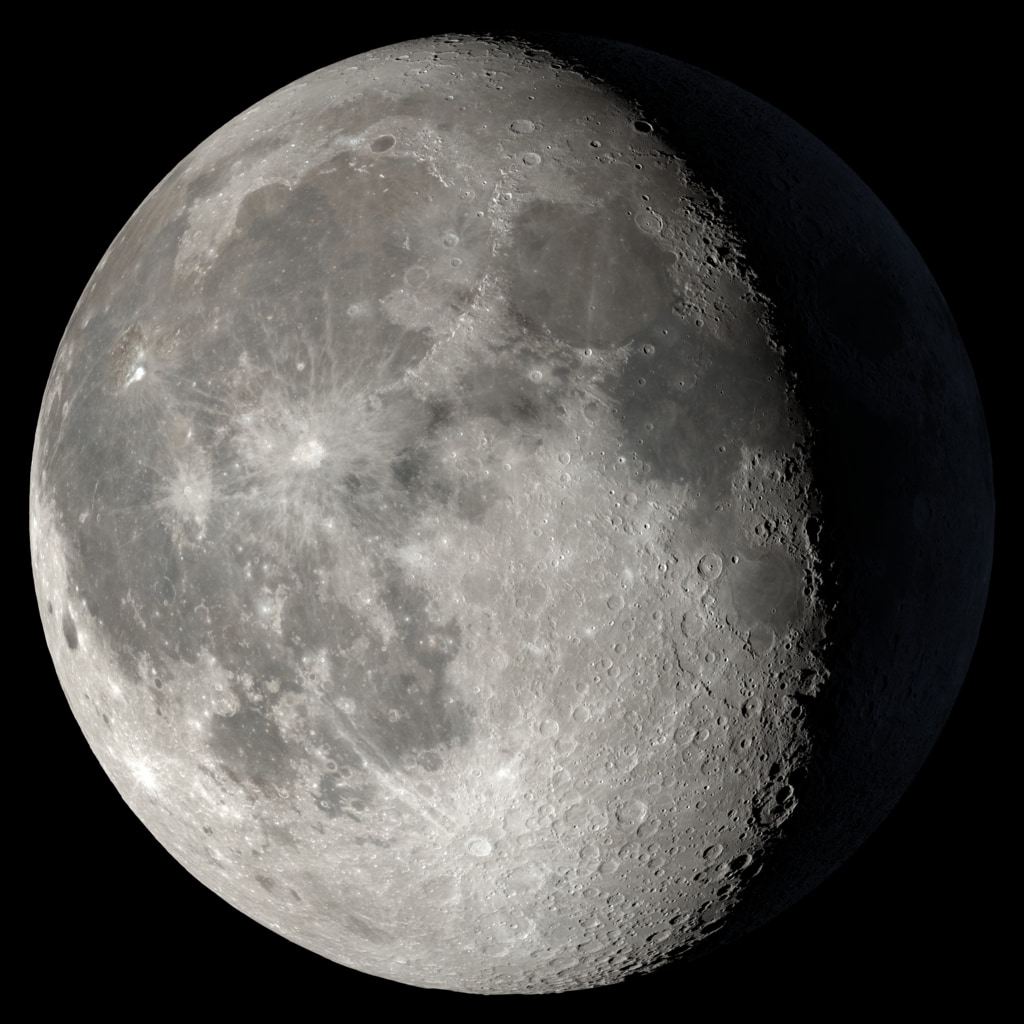
Detailed waning crescent Moon surface photographed by NASA's Lunar Reconnaissance Orbiter — the Moon phase visible during the October 6, 2026 Jupiter occultation

Lunar Occultation · October 6, 2026

Moon Occults Jupiter October 6, 2026

Jupiter — blazing at magnitude −1.9, the brightest point of light in the pre-dawn sky — vanishes behind the Moon’s bright limb and reappears from the dark side 67 minutes later. The entire contiguous US has a front-row seat.

04:22 AM

Disappearance EDT

05:29 AM

Reappearance EDT

~67 min

Duration (Eastern US)

−1.9

Jupiter magnitude

By Telescope Advisor Editorial Team Published: Updated: Editorial Standards

Quick Summary

  • What: The Moon passes directly in front of Jupiter, hiding it from view for about 67 minutes (times vary by location)
  • When: Tuesday, October 6, 2026 — pre-dawn, roughly 4–5 AM local time in the Eastern US
  • Where visible: Entire contiguous United States and Canada; also visible from parts of Central America and western Africa
  • Moon phase: Waning crescent, ~15% illuminated — dark skies, minimal lunar glare
  • Jupiter: Magnitude −1.9 in Leo, angular diameter 32″ — a genuine disk, not a point of light, through a telescope
  • Equipment: Naked eye is enough to watch Jupiter blink out. Binoculars or any small telescope let you follow all four Galilean moons vanishing individually.

Event times computed from the in-the-sky.org database using JPL DE430 planetary ephemeris. Exact disappearance/reappearance times differ by several minutes depending on your precise longitude and latitude — look up your city for exact local times.
What Is a Lunar Occultation — and Why Is This One Special?

A lunar occultation occurs when the Moon’s disk moves directly in front of another celestial object as seen from Earth. Because the Moon is only 239,000 miles away, its apparent disk is large enough to cover planets, stars, and even bright star clusters that lie hundreds of millions of miles beyond it.

What makes an occultation of a bright planet different from a star occultation is the partial ingress: Jupiter spans 32 arcseconds in October 2026, so the Moon’s limb takes approximately 55–60 seconds to fully cover the disk. Through a telescope at even 80× you watch the planet progressively disappear, cloud band by cloud band, as the dark edge of the Moon advances across it.

The reappearance is even more dramatic. Jupiter emerges from the Moon’s completely dark (unlit) limb — from what appears to be featureless black sky — at full brightness in less than a second. There is no slow fade; the planet simply materialises from nothing. Many observers rate this as the most striking two seconds in amateur astronomy.

The October 6 event is especially significant because Jupiter is at magnitude −1.9 — brighter than every star in the sky — and the Moon is only a thin 15% crescent, keeping the sky dark for an unobstructed view.

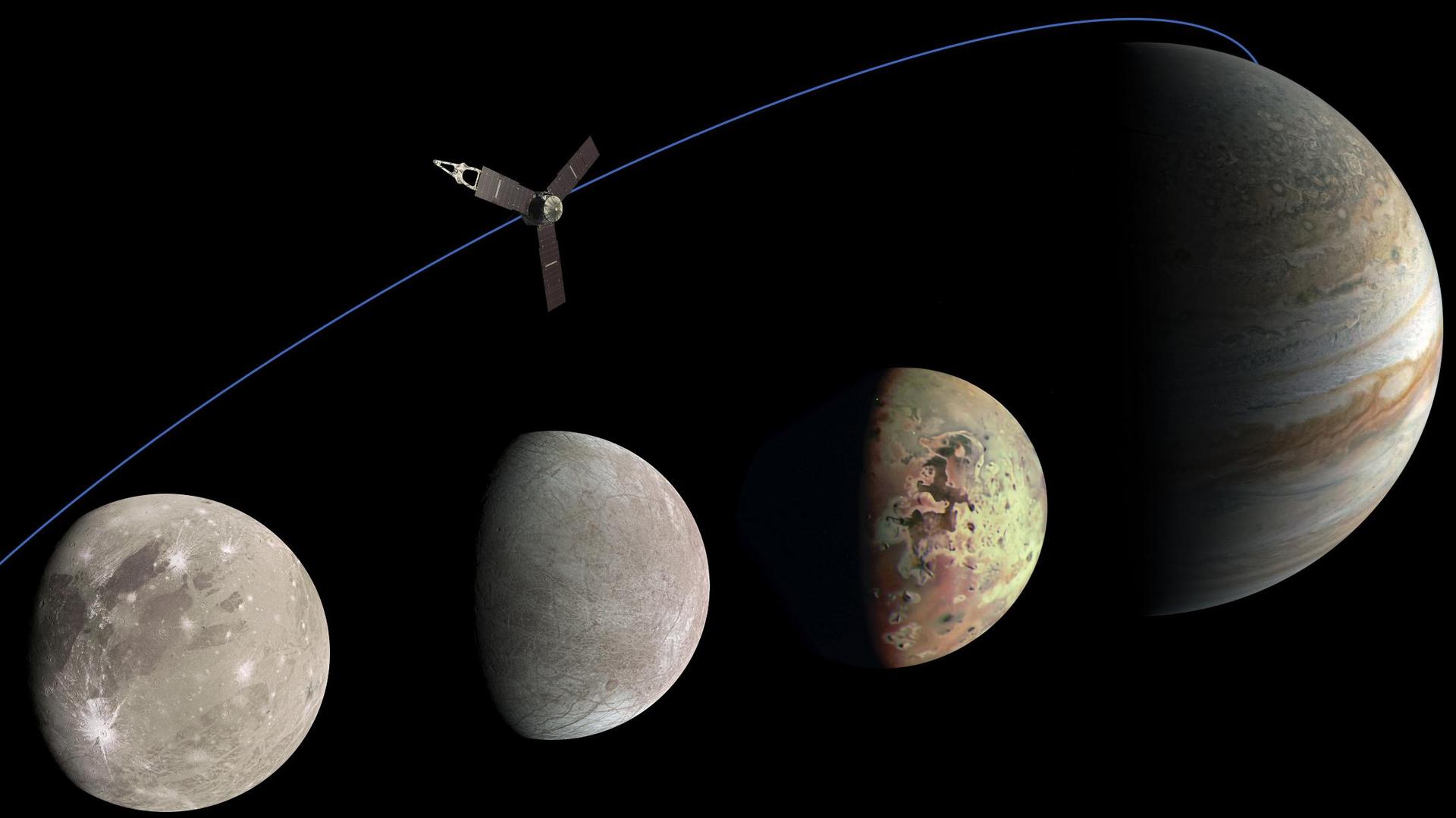
Jovian family portrait from NASA's Juno spacecraft showing Jupiter with Galilean moons Io, Europa, Ganymede, and Callisto

Jupiter’s Galilean moons visible in binoculars. On October 6 all four will disappear behind the Moon at slightly different times. Credit: NASA/JPL-Caltech/SwRI/MSSS — processed by Kevin M. Gill (CC BY)

Jupiter in October 2026

  • Constellation: Leo
  • Magnitude: −1.9 (very bright — outshines all stars)
  • Angular size: 32″ — largest it appears before opposition
  • Rises: ~02:28 AM EDT on October 6
  • Position at disappearance: 20.4° altitude, due east

The Remarkable Three-Day Planetary Sequence

The Jupiter occultation is the culmination of one of the most remarkable 72-hour windows for northern hemisphere observers in 2026. Three major planetary events stack in sequence:

Oct 4

Saturday Night

Saturn at Opposition

Saturn rises at sunset, shines at magnitude 0.3 all night, rings at 7.5° tilt. The best single night of the year to observe Saturn.

Full Saturn Guide →

Oct 5

Sunday Pre-Dawn

Moon Occults Mars

The same waning crescent Moon passes in front of Mars. A rare back-to-back occultation of two different planets within 24 hours.

Oct 6

Tuesday Pre-Dawn

Moon Occults Jupiter

Jupiter disappears at 04:22 AM EDT, reappears at 05:29 AM EDT. 67 minutes of one of the most dramatic planetary events of the decade for US observers.

To put this in perspective: the Moon occulting both Mars and Jupiter within 24 hours of Saturn’s opposition is extraordinarily rare. This three-day sequence is a once-in-a-decade alignment. Set multiple alarms.

Disappearance & Reappearance Times — US Time Zones

All times are for Tuesday morning, October 6, 2026. Times shift by a few minutes depending on your latitude and longitude within each zone. For precise times at your exact city, visit in-the-sky.org and change the location to your city.

Time Zone Example Cities Disappearance ▼ Reappearance ▲ Sky Conditions
Eastern (EDT) New York, Boston, Miami, Atlanta, Washington DC ~4:22 AM ~5:29 AM Near-dark; twilight begins ~5:23 AM
Central (CDT) Chicago, Dallas, Houston, Nashville, St. Louis ~3:22 AM ~4:30 AM Fully dark sky; deep pre-dawn
Mountain (MDT) Denver, Salt Lake City, Albuquerque, Boise ~2:22 AM ~3:29 AM Fully dark; excellent transparency
Pacific (PDT) Los Angeles, Seattle, San Francisco, Portland ~1:22 AM ~2:29 AM Late-night dark skies; midnight conditions

⚠ Important: These are approximate times based on UTC conversion. Occultation times vary by several minutes depending on your exact geographic coordinates within each time zone. Always verify with in-the-sky.org for your precise disappearance and reappearance moments.

What You’ll See: A Minute-by-Minute Account

1

02:25–04:00 AM EDT — Watch them rise together

The Moon rises at 02:25 AM EDT; Jupiter follows at 02:28 AM EDT. They ascend side by side in the eastern sky. Jupiter blazes at −1.9 — no star comes close. A thin silver crescent Moon hangs beside it. Even without equipment this pairing is worth setting an alarm for.

2

~04:20 AM EDT — The approach

At roughly 20° altitude, the Moon’s bright limb draws visibly close to Jupiter in binoculars. You can see Jupiter’s four Galilean moons arrayed around it. The first moon on the near side will disappear 1–2 minutes before Jupiter itself. Start your video recording now.

3

04:22 AM EDT — Disappearance behind bright limb

Jupiter slides behind the Moon’s illuminated edge. The last ~55 seconds of ingress are visible through a telescope as the dark lunar limb advances across the disk. Then, in under a second: the planet is gone. The remaining Galilean moons visible on the far side of Jupiter hang in space as tiny orphaned dots.

4

05:29 AM EDT — Reappearance from dark limb

Jupiter erupts from the Moon’s unlit edge at 33° altitude — higher, steadier, and in fully dark sky (twilight begins at 5:23 AM, so you have a 6-minute window of near-darkness). Unlike the disappearance, you cannot predict the exact second — watch the dark limb closely. The Galilean moons reassemble around the planet over the following minutes.

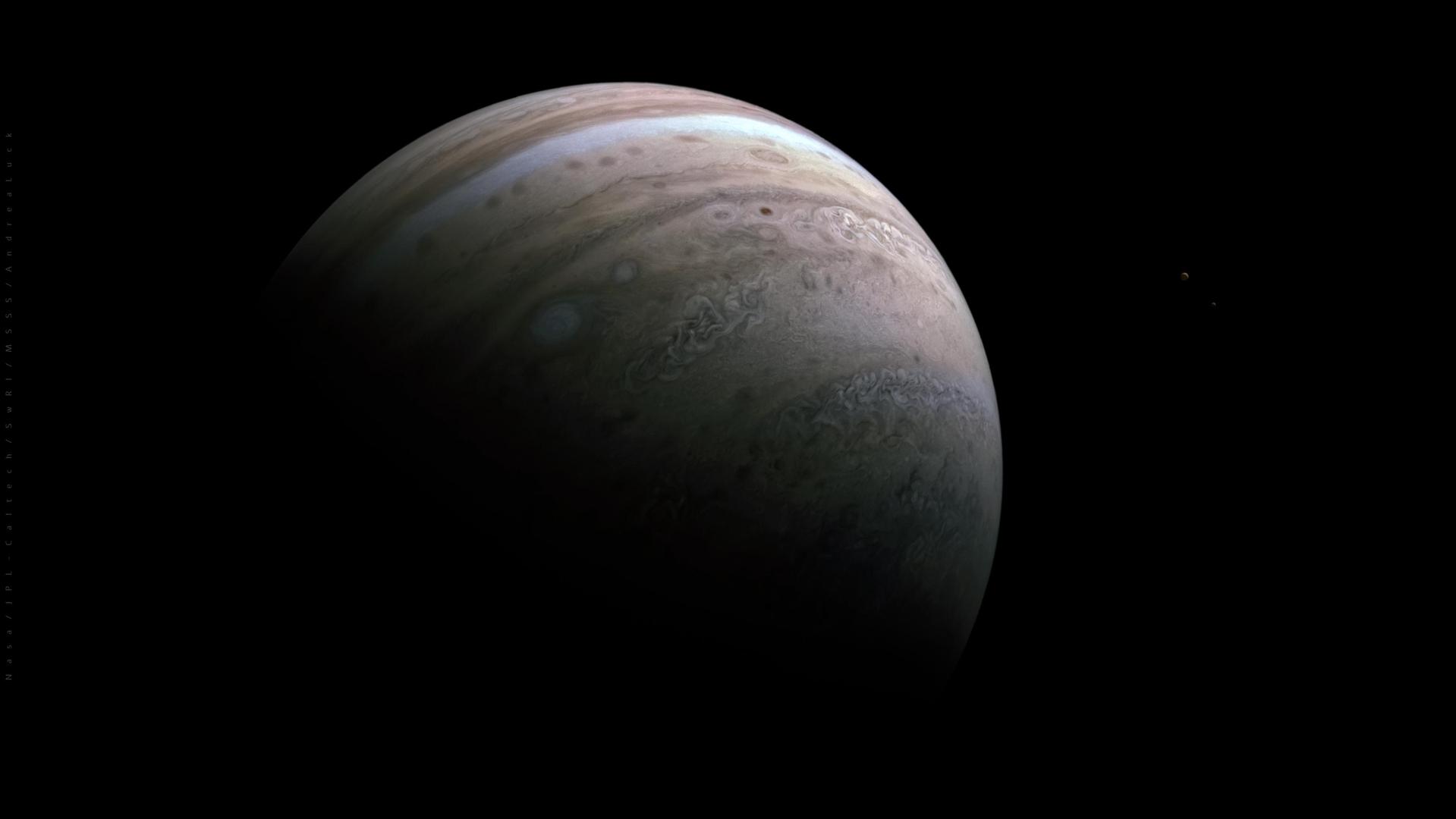
NASA Juno spacecraft image of Jupiter with moons Io and Europa nearby against black space

Jupiter with Io and Europa as seen by NASA’s Juno spacecraft. All four Galilean moons will disappear behind the Moon at slightly different times from Jupiter. Credit: NASA/JPL-Caltech/SwRI/MSSS

🔭 What each equipment level shows

  • Naked eye: Jupiter disappears and reappears as a brilliant point. The contrast against the dark sky is striking.
  • 7×50 binoculars: Jupiter’s disk is faintly visible; 2–3 Galilean moons visible as separate points. Watch each one vanish.
  • 60–90mm refractor at 80×: Cloud bands clearly visible. Watch all four Galilean moons disappear in sequence over 5–10 minutes around the event.
  • 150mm+ reflector at 120×: Great Red Spot (if transiting), belt structure, and individual moon disks. Outstanding event.

What Equipment Do You Need?

👀 Naked Eye

Completely adequate for the main event. Jupiter at −1.9 is the second-brightest point of light in the pre-dawn sky that morning — you cannot miss it. Watching it blink out and pop back into existence with the naked eye is genuinely awe-inspiring.

🧭 Binoculars — Recommended

7×50 or 10×50 binoculars reveal 2–3 Galilean moons strung out like tiny diamonds beside Jupiter’s disk. Watching each moon disappear individually — then Jupiter itself — is an experience that stays with you. This is the ideal instrument for most people.

📡 Small Telescope — Best

Any 60mm+ refractor or 150mm reflector at 80–120× shows all four Galilean moons clearly. Watch Io, Europa, Ganymede, and Callisto disappear in sequence, then see Jupiter’s disk wink out, cloud bands and all. Then wait for reappearance from the dark limb.

Need a telescope recommendation? See our guides: Best Telescopes for PlanetsBest Telescopes for BeginnersBest Astronomy Binoculars

How to Prepare — Six Things to Do Before October 6

Set multiple alarms

Set one alarm for 03:45 AM EDT (get up, get warm, go outside), one for 04:10 AM (start watching), and one for 05:20 AM EDT (reappearance warning). Missing the reappearance is the most common regret.

🌧

Check clear-sky and weather forecasts

Use Clear Outside or ClearDarkSky.com — these astronomy-specific apps show cloud cover, transparency, and seeing on an hourly basis. You need transparency more than seeing for this event.

📹

Record the reappearance

Hold your phone camera to the eyepiece (afocal video) or against binoculars. Set it recording on the dark limb from 05:20 AM. The reappearance is over in under a second; you need video to capture it properly.

🌍

Know where to look

Face east. Jupiter will be at ~20° altitude (two fists above the horizon) at disappearance time — clearly the brightest thing in that direction. It sits in Leo at RA 9h 31m, Dec +15°N.

🔦

Dark-adapt your eyes

Avoid bright phone screens for 15 minutes before stepping outside. Use a red flashlight. Jupiter is unmissable, but the Galilean moons in binoculars benefit greatly from fully dark-adapted eyes.

📅

Watch the Mars occultation first (Oct 5)

The night before, the Moon also occults Mars. Use that as a practice run: same equipment, same eastern sky, same pre-dawn window. It is a perfect warmup for the far more dramatic Jupiter event that follows 24 hours later.

Frequently Asked Questions

How quickly does Jupiter disappear behind the Moon?

Jupiter’s disk spans 32 arcseconds in October 2026. The Moon’s limb moves across the sky at roughly 0.55 arcseconds per second of time, so the ingress takes approximately 55–60 seconds. Through a telescope at 80×, you can watch the disk progressively covered, cloud band by cloud band. The reappearance from the dark limb is nearly instantaneous — Jupiter simply appears from empty space in under a second.

Can I see the Galilean moons disappear separately?

Yes, with binoculars or any small telescope. Each of the four Galilean moons (Io, Europa, Ganymede, Callisto) orbits at a different distance from Jupiter and will be at a different angular position from Jupiter on October 6. Those on the near side of Jupiter (between Jupiter and the Moon) disappear first; those on the far side disappear after Jupiter itself. Some may reappear before Jupiter, some after. Load a Jupiter moon position app (Sky Safari, Stellarium) on the evening of October 5 to see exactly which moons are where.

Why can’t everyone on Earth see it?

The Moon is so close to Earth that its apparent position in the sky varies by up to two degrees depending on your location on Earth — a phenomenon called lunar parallax. From one region, the Moon is precisely aligned to cover Jupiter. From other parts of the globe, the Moon appears shifted enough to pass below or above Jupiter without touching it. For October 6, 2026, the occultation path crosses the entire contiguous United States, Canada, Mexico, and western Africa.

Is it safe to observe? Do I need any filters?

Completely safe — this is a pre-dawn event with no involvement of the Sun at any point. No special filters are needed. A neutral-density Moon filter can reduce glare from the bright limb of the Moon if you’re using a large telescope, but it is entirely optional. The 15% crescent Moon produces far less glare than a quarter or full Moon.

When is the next Jupiter occultation visible from North America?

According to in-the-sky.org, the previous Jupiter occultation visible from the Americas was September 8, 2026, and the next one is November 2, 2026. However, the October 6, 2026 event is uniquely timed: it falls just two days after Saturn’s opposition and one day after a Moon-Mars occultation — a three-day planetary sequence that will not repeat in the same form for many years.

Related Guides

Sources & Image Credits