

Quick Answer
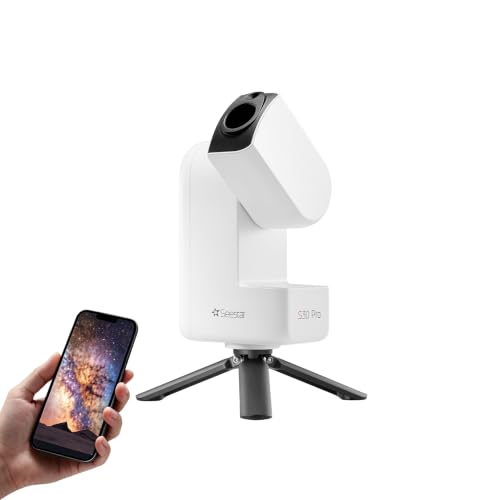
The ZWO Seestar S50 Pro launched on August 25, 2026 at $899 (regular price $999) and shipped from September 1, 2026. That launch window closed on September 15, 2026. As of October 22, 2026, it's back on pre-order at US dealers such as High Point Scientific at the $999 regular price, with no confirmed ship date. The Amazon listing is still unavailable, so if you need a smart telescope now, the in-stock alternative in the Seestar line is the S30 Pro. The aperture stays at 50mm — the money went into a 4-element APO lens, an 8.3MP main sensor with a 2.8° field of view, a second wide-angle camera, EQ mode with 60-second exposures, and a bigger battery.
Own an original S50?
A real upgrade in framing, resolution, and tracking — but not in light-gathering. Upgrade if the S50's narrow field, 2MP sensor, or 10-second subs are what limit you; otherwise your S50 still takes the same photons.
First smart telescope?
On paper this is the most complete smart telescope ZWO has offered, and in our experience the Seestar app is the most beginner-friendly in the category. The $899 launch price made it a strong first pick on paper — but the Amazon listing is currently unavailable, so we now point buyers to the S30 Pro instead.
Watching your budget?
$899 is a big step past the S50's old $499. The Seestar S30 Pro (~$699) and Dwarf 3 (~$549) are capable alternatives, and clearance S50 stock is cheaper still. Details in Cheaper Alternatives.
