

Test Eclipse Glasses & Solar Filters: 5-Minute Safety Check
Telescope Advisor Logo Telescope Advisor
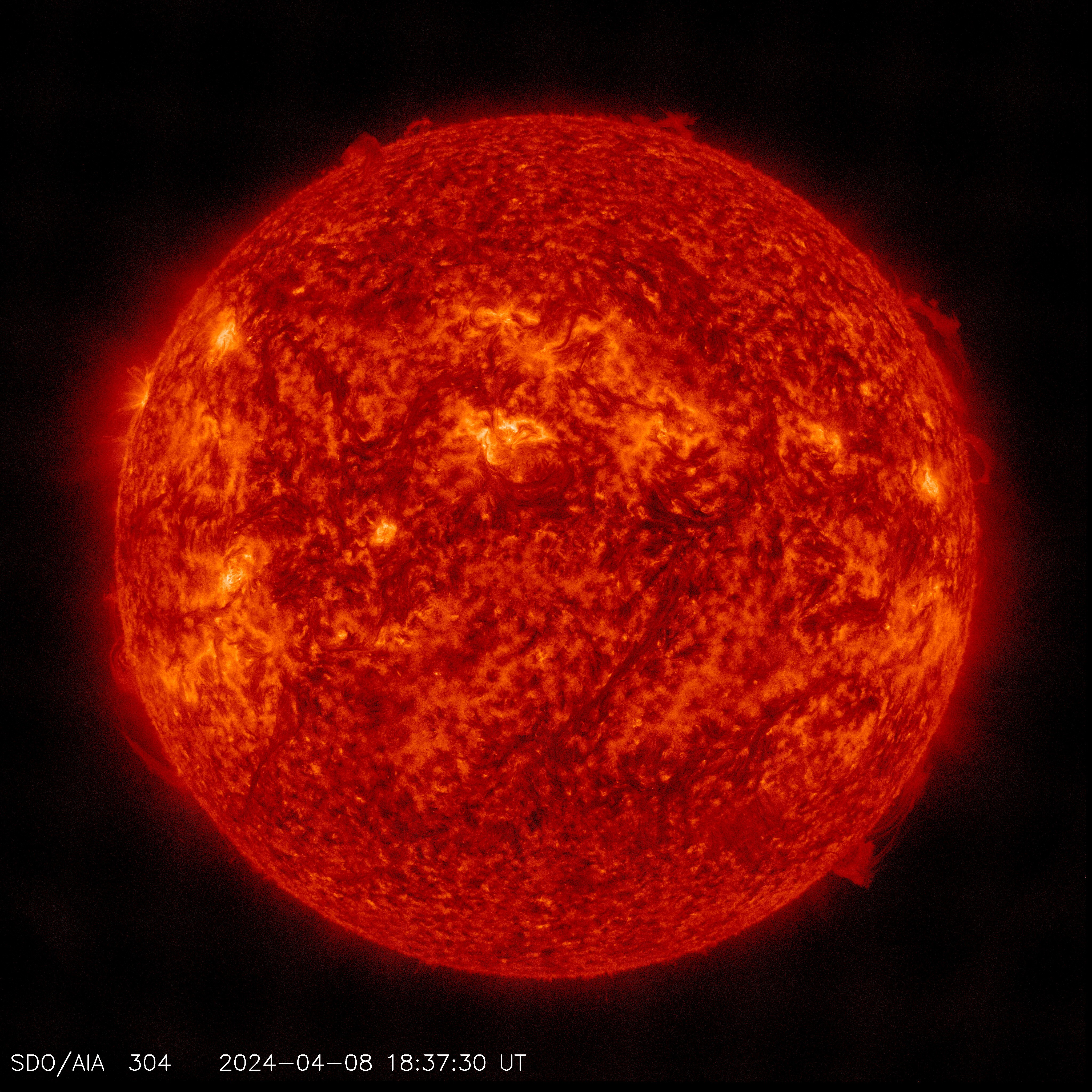
The Sun in ultraviolet light, showing active regions and solar flares — captured by NASA's Solar Dynamics Observatory

Solar Safety Guide · Eclipse 2026

How to Test Your Solar Filter or Eclipse Glasses Before August 12, 2026

A five-minute inspection could save your eyesight. Before you use any solar filter or eclipse glasses for the August 12 total solar eclipse, run through these simple checks — visual inspection, pinhole test, and damage assessment — to confirm your equipment is safe. We also cover what to do if your filter fails inspection and where to find certified replacements in time for the eclipse.

What to testEclipse glasses & solar filters
Test time~5 minutes
Safety standardISO 12312-2
Next testBefore every use
By Elena Reyes Published: Updated: Reviewed & approved by Juhi Sahni, Senior Editor Editorial Standards
Elena Reyes — Senior Science Editor

Elena Reyes

Senior Science Editor

Covers NASA missions, space science discoveries, and astronomical events for Telescope Advisor. Translates complex astrophysical research into practical insights for backyard observers. Based in the San Francisco Bay Area.

Quick Answer: Is My Eclipse Equipment Safe to Use?

Your eclipse glasses or solar filter is safe to use if all three of the following are true: (1) It is marked with the ISO 12312-2 safety certification. (2) A visual inspection in bright indoor light shows no scratches, pinholes, delamination, or damage of any kind. (3) When you shine a bright flashlight or household LED through it in a dark room, you see nothing — no pinpricks of light, no visible filament shape, no light leakage around the edges.

If any of these checks fail, do not use the filter under any circumstances. Discard it immediately. Counterfeit eclipse glasses without proper ISO markings are known to circulate before major eclipses, and even a tiny scratch or pinhole in an otherwise good filter can concentrate enough sunlight to cause permanent retinal damage.

The American Astronomical Society maintains a list of reputable solar filter and eclipse glasses suppliers. If your current equipment fails inspection, their supplier list is the safest place to find certified replacements. Never buy eclipse glasses from third-party marketplace sellers with no verified reputation — counterfeit filters have been documented on major online platforms during every recent eclipse.


⚠️

Critical Safety Warning

Never look at the Sun — even for a split second — through an unfiltered telescope, binoculars, camera viewfinder, or any optical device. Instant and permanent retinal damage can occur with no pain sensation. This applies to every phase of an eclipse except totality. Even when 99% of the Sun is covered by the Moon, the remaining 1% is bright enough to cause severe eye damage. Only remove your solar filter or eclipse glasses during the brief moments of totality, and replace them immediately as the first ray of sunlight re-emerges.

For more details, consult the American Astronomical Society's solar eclipse safety page and the American Optometric Association's eye safety guide.

Why Testing Your Solar Filter Matters

Solar filters and eclipse glasses are precision safety devices, not accessories. Unlike sunglasses (which reduce overall visible light by perhaps 70–90%), certified solar filters reduce visible light, ultraviolet radiation, and infrared radiation by over 99.99% — a factor of approximately 100,000 to 1. The ISO 12312-2 standard specifies the exact optical density required across the entire solar spectrum to make direct solar viewing safe.

However, even a certified filter can become unsafe over time. The most common causes of filter failure are:

  • Scratches or abrasions from casual storage — filters stored loose in a drawer or bag often develop fine scratches that can scatter unfiltered sunlight
  • Pinholes from manufacturing defects or wear — even a microscopic hole can concentrate sunlight into a point hot enough to burn the retina
  • Delamination of the filter film from its cardboard or plastic frame — this creates gaps that bypass the filter entirely
  • Frame damage — bent or cracked frames can create light leaks around the edges of the filter
  • Counterfeit products — unmarked or falsely marked filters that do not actually meet ISO 12312-2 requirements

The testing process described in this guide takes approximately five minutes and requires no special equipment beyond a bright household light source. It does not require you to look at the Sun — in fact, we recommend performing the first four steps indoors before ever taking your equipment outside.

Step 1: Verify ISO Certification Markings

Before inspecting anything, check that your eclipse glasses or solar filter carry the ISO 12312-2 marking. This is the international safety standard for "Filters for direct observation of the Sun." The marking should be printed on the product itself, not just on the packaging (since packaging can be swapped).

What to look for

  • "ISO 12312-2" printed on the glasses or filter frame — this is the required certification mark
  • Manufacturer name or logo — reputable brands (Lunt Solar, Helioclipse, Celestron, American Paper Optics, Rainbow Symphony, Thousand Oaks) print their names on the product
  • Country of origin — optional but common on legitimate products
  • Compliance statement — e.g., "Meets the requirements of ISO 12312-2:2015"

Red flags (do not use)

  • No ISO marking at all — these are sunglasses at best, not eclipse glasses
  • "CE" marking without ISO 12312-2 — CE is not a solar safety certification
  • ISO 12312-2 printed on packaging only, not on the product itself
  • Generic unbranded glasses from a third-party marketplace seller
  • Glasses that appear to be printed on thin cardboard with no visible film layer

Important: ISO certification is necessary but not sufficient. Even a genuine ISO-certified filter can become unsafe if damaged. Proceed through all the remaining steps regardless of whether your filter carries the ISO mark.

Step 2: Visual Inspection in Bright Indoor Light

Bring your eclipse glasses or solar filter to a brightly lit room. Hold them up to a light source (a ceiling light, desk lamp, or window — not the Sun) and examine both sides of the filter surface carefully.

1

Check for scratches

Look across the entire surface of the filter for fine lines, scuffs, or abrasions. Minor cosmetic scratches on the frame are not a concern, but any scratch on the optical surface itself — even one that appears faint — can scatter sunlight unpredictably. If you see any scratches on the filter material, fail.

2

Check for pinholes

Hold the filter against a bright light source and look for tiny points of light shining through. Even a single pinhole — smaller than the head of a pin — is enough to cause retinal damage if you look through that spot. If you see any points of light, fail.

3

Check for delamination

Look at the edges where the filter film meets the frame. If the film is peeling away from the frame, or if there are air bubbles between layers of the filter material, the filter has delaminated. This creates gaps that bypass the filter entirely. If you see any separation, fail.

4

Check the frame

Inspect the cardboard or plastic frame for bends, creases, cracks, or damage. For telescope filters, check that the retaining ring is tight and the filter cell is not deformed. A damaged frame can misalign the filter or create light leaks. If the frame is compromised, fail.

Step 3: The Bright Light Test

This is the most sensitive test you can perform without actually looking at the Sun. It will reveal pinholes and light leaks that are too small to see during a casual visual inspection.

1

Set up in a completely dark room

Turn off all lights, close the blinds, and wait 30 seconds for your eyes to adapt to the dark. The darker the room, the more sensitive this test becomes.

2

Shine a bright light through the filter

Use a bright LED flashlight or the flashlight on your phone. Hold the filter directly against the light source (or as close as possible) and examine the opposite side. You are looking for any pinpricks of light coming through the filter material.

3

Check the edges

Move the light around the edges of the filter. Light leaking around the frame is just as dangerous as a pinhole in the center. Rotate the filter and shine the light from multiple angles.

4

Interpret the result

✓ Pass: You see absolutely nothing through the filter — no light, no glow, no pinpricks. ✗ Fail: You see any light at all coming through. Even a tiny point of light means the filter has a defect. Do not use it.

Why this test works: A certified solar filter reduces visible light by a factor of over 100,000. In a dark room with dark-adapted eyes, even a hole too small to see with the naked eye will pass enough light from a bright LED to be detectable. If you see light, that hole would also pass sunlight — and sunlight is far more dangerous than any LED.

Step 4: Additional Checks for Telescope Solar Filters

Telescope solar filters — both the glass and Baader-film types — require two additional checks beyond the basic inspection described above.

Check the Mounting System

A solar filter that falls off during use is catastrophic — the full, unfiltered light of the Sun would pour into your telescope's optics and into your eye. Before every observing session:

  • Verify that the filter attaches securely to the telescope's dew shield or tube. It should require deliberate force to remove — it should never be loose or wobble.
  • Check that any set screws or retaining rings are tight. Glass filters with loose retaining rings can rotate or tilt, creating gaps.
  • For Baader film filters (Thousand Oaks, Seymour Solar), check that the film is taut and not wrinkled. Wrinkles can create micro-fractures in the film that are invisible to the naked eye.
  • Give the mounted filter a gentle tap. If it shifts or rattles, the mounting is unsafe. Re-secure it before use.

Check for Internal Reflections

Before mounting a solar filter on your telescope for the first time, hold it at arm's length in bright sunlight (not looking through it — just observing the filter itself) and look for any glints or bright reflections from the edges of the glass or the interior of the filter cell. Reflections indicate that the filter coatings may be compromised or that light is entering from the side. A well-made solar filter should appear completely dark and matte from every angle.

Telescope filter tip: Always attach your solar filter to the front of the telescope (the objective end), never to the eyepiece. Eyepiece solar filters are dangerous — the concentrated sunlight at the eyepiece can shatter the filter or burn through it instantly. Front-mounted filters are the only safe option for telescopic solar observation.

Step 5: The Sun Test — Final Verification

After passing the indoor inspections, the final step is to test your filter against the actual Sun — but without looking through it. This test confirms that the filter blocks enough light for safe visual use.

1

Project the Sun's image

On a sunny day, hold your eclipse glasses or filter about 12–18 inches below a piece of white paper or cardboard. If the filter is safe, you should see a faint, sharp, round disk of light projected onto the paper — this is the Sun's image being projected through the filter. The projected image should be dim, not bright.

2

Check for bright spots

If you see bright points of light, streaks, or irregular bright patches in the projected image, the filter has defects large enough to be dangerous. Fail.

3

For telescope filters: flashlight-through test

Mount the filter on your telescope. Point the telescope at the Sun (without looking through the eyepiece). Hold a white card or piece of paper behind the eyepiece. You should see a dim, sharp solar disk projected. If the projected image is bright enough to hurt your eyes when you glance at it, the filter is not safe.

Only after passing all five steps — ISO certification check, visual inspection, bright light test, telescope-specific checks (if applicable), and the Sun projection test — should you consider your equipment safe for use. Perform this entire test sequence before every eclipse or solar observing session, not just once.

When to Replace or Discard Your Solar Filter

Solar filters and eclipse glasses are not permanent equipment. They degrade over time and should be replaced under any of the following conditions:

Condition Action Urgency
Visible scratch on filter surface Replace immediately Critical
Pinhole detected in light test Replace immediately Critical
Filter film delaminating from frame Replace immediately Critical
Cardboard frame bent or creased Replace before next use High
Glasses older than 3 years (cardboard frame) Replace — film degrades High
Telescope filter retaining ring loose Tighten or replace High
No ISO 12312-2 marking on product Replace — likely counterfeit Critical
Stored in hot car or direct sunlight Inspect carefully; replace if any doubt Medium

When in doubt, replace. Certified eclipse glasses are inexpensive — typically $1–3 per pair — and the cost of replacement is negligible compared to the value of your eyesight. If you are unsure whether a filter is safe, err on the side of caution and buy new ones from a reputable supplier.

Where to Buy Certified Replacements in Time for the Eclipse

If your equipment fails inspection, you still have time to order certified replacements before August 12, 2026. However, as the eclipse approaches, stock diminishes and shipping times increase. Order as soon as possible.

Helioclipse ISO 12312-2 Eclipse Glasses — certified solar viewing glasses for the August 12, 2026 eclipse

Helioclipse Eclipse Glasses (12-Pack)

ISO 12312-2 certified. Cardboard-frame glasses suitable for direct solar viewing. The 12-pack is ideal for families, classrooms, or group viewing events. Each pair is individually sealed and has the ISO marking printed on the frame.

Lunt Solar Eclipse Glasses 5-Pack — ISO and CE certified solar viewing

Lunt Solar Eclipse Glasses (5-Pack)

ISO 12312-2 and CE certified. Lunt is one of the most trusted names in solar observing equipment. These glasses feature a sturdy cardboard frame with a high-quality polymer filter film. Each pack contains five individually wrapped pairs.

Shipping note: As of early July 2026, both products listed above are in stock with standard delivery times of 3–7 days. Order before late July to ensure delivery before eclipse day. If you see "ships in 1–2 months" or similar extended delivery estimates, look for alternative sellers or consider local pickup options at science museums or university astronomy departments.

Safe Alternatives If You Have No Solar Filter

If your filter fails inspection and replacements arrive too late, you still have safe ways to experience the August 12 eclipse — even without direct viewing equipment.

Pinhole Projection

The simplest and safest method. Punch a small hole (1–2 mm) in a piece of cardboard. Hold it in sunlight and let the image project onto a second white card or a flat surface. The projected image will show the eclipse's partial phases. Multiple small holes create a dramatic array of overlapping crescent images.

Colander Projection

A kitchen colander or slotted spoon naturally creates dozens of tiny pinhole projections. Hold it above a white surface during the partial phases and you will see a grid of miniature solar crescents. This is one of the most crowd-pleasing ways to experience an eclipse and requires no equipment at all.

Watch the Livestream

If you cannot observe safely in person, watch the eclipse via one of the free livestreams. NASA, Time and Date, and ESA are all broadcasting the event with multi-camera coverage. You will see the corona, prominences, and diamond ring in detail that is difficult to match even with binoculars.

What NOT to use: Regular sunglasses (even very dark ones), smoked glass, exposed photographic film, polarized filters, neutral density filters that are not specifically rated for solar viewing, welding goggles below shade 14, CD-ROMs, DVDs, potato chip bags, or any other improvised filter material. None of these reduce infrared or ultraviolet radiation sufficiently for safe solar viewing.

Frequently Asked Questions About Solar Filter Safety

Can I use regular sunglasses to watch the eclipse?

No. Regular sunglasses, even very dark ones, are not safe for looking at the Sun. They block only a fraction of visible light and offer virtually no protection against the ultraviolet and infrared radiation that can damage your eyes. Only ISO 12312-2 certified eclipse glasses or hand-held solar viewers are safe for direct solar observation.

How do I know if my eclipse glasses are counterfeit?

Check for the ISO 12312-2 marking printed on the glasses themselves (not just the packaging). Verify the manufacturer's name is present and recognizable — reputable brands include Lunt Solar, Helioclipse, Celestron, American Paper Optics, Rainbow Symphony, and Thousand Oaks. Perform the bright light test in a dark room: if any light penetrates the filter, do not use it, regardless of markings.

Are eclipse glasses sold out for the 2026 eclipse?

As of early July 2026, certified eclipse glasses are still widely available. However, stock diminishes rapidly in the final 3–4 weeks before a major eclipse. We recommend ordering by late July to ensure delivery. If eclipse glasses become unavailable, consider solar binoculars (which serve double duty for general stargazing) or pinhole projection as a free alternative.

Can I use a welding helmet to watch the eclipse?

Only if the welding filter is shade 14 or darker. Shade 12 welding filters — which are the most common — do not provide enough protection. Even with shade 14, you should limit viewing to brief glances and never combine a welding filter with any optical device (telescope or binoculars). For most people, certified ISO 12312-2 eclipse glasses are a safer and more convenient choice.

Can I photograph the eclipse through my telescope?

Yes, but only with a certified solar filter securely attached to the front of your telescope. Never point an unfiltered telescope at the Sun — the concentrated sunlight can damage your camera sensor and, more importantly, can cause permanent eye damage if you look through the viewfinder or eyepiece. Remove the solar filter only during the brief moments of totality.

How should I store my eclipse glasses between uses?

Store eclipse glasses flat in a protective sleeve or envelope, away from heat, moisture, and direct sunlight. Avoid folding or bending the frame, as creases can damage the filter film. Do not leave glasses in a car dashboard or glove compartment — temperatures in a parked car can exceed 140°F (60°C), which can degrade the filter material. Keep them in a cool, dry place where they will not be scratched by other objects.

What if my eclipse glasses are more than 3 years old?

The filter film in cardboard-frame eclipse glasses can degrade over time, especially if stored in less-than-ideal conditions. While ISO 12312-2 certified glasses do not have a hard expiration date, the American Astronomical Society recommends inspecting older glasses carefully and replacing them if there is any doubt about their condition. If your glasses predate the 2024 eclipse, we recommend replacing them for the 2026 event.