
Venus Occultation September 14, 2026: Moon Covers Venus — Complete Timing & Viewing Guide | Telescope Advisor
Telescope Advisor Logo Telescope Advisor
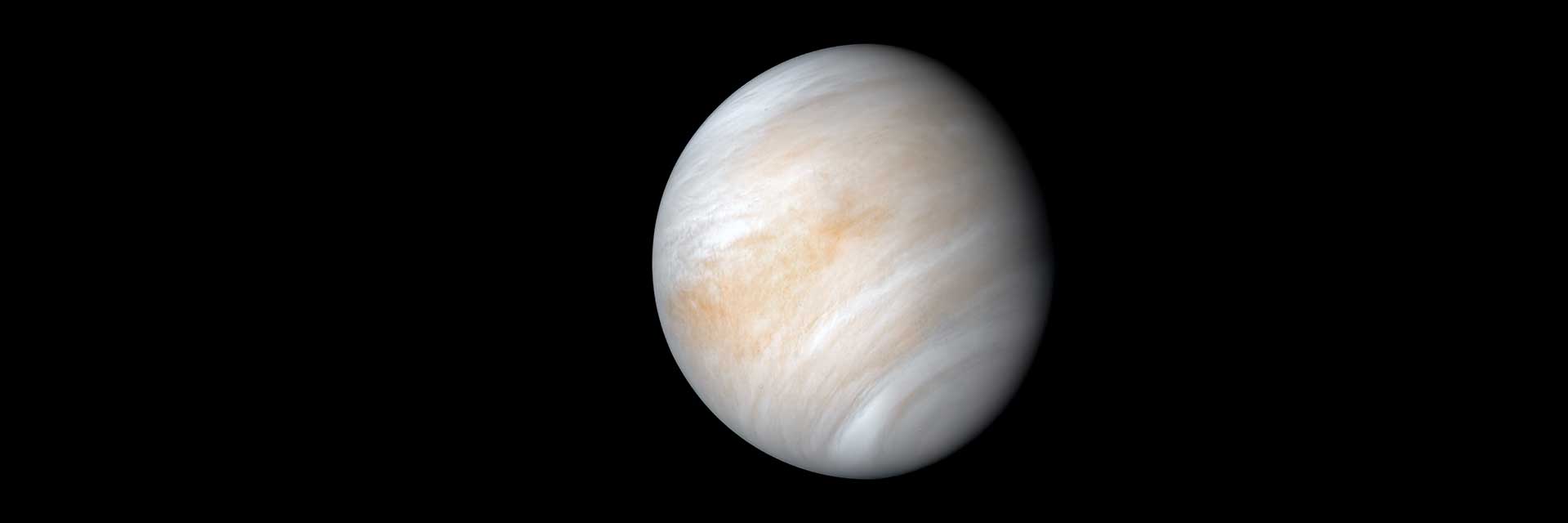
Venus as seen from NASA — the brilliant planet will be occulted by the Moon on September 14, 2026

Sky Event Guide · September 2026

Venus Occultation September 14, 2026: The Moon Covers Venus — Complete Observer's Guide

One of the most striking celestial events of 2026: the crescent Moon slides directly in front of brilliant Venus, covering it completely. This guide provides exact regional timings, scientific context, and the telescope setup that captures the disappearing act at its best.

DateSeptember 14, 2026
Event typeLunar occultation
VisibilityDaylight (Americas) / Twilight (Europe)
Best toolTelescope or binoculars
By Telescope Advisor Editorial Team Published: Updated: Editorial Standards

Quick Answer: What Is the Venus Occultation and How to See It

On September 14, 2026, the waxing crescent Moon passes directly in front of Venus — an event astronomers call a lunar occultation. Venus, the brightest planet in the sky, disappears behind the Moon's dark limb and then reappears on the opposite side up to an hour later. This is one of the most dramatic and photogenic sky events of 2026.

For observers in the Americas, this is a daytime event. The occultation occurs during daylight hours — Venus and the Moon will be visible in a blue daytime sky if you know where to look. A telescope or binoculars are essential for the daytime phase. For observers in Europe and Africa, the event occurs in twilight or darkness, making for spectacular evening viewing.

The best telescope for this event is a mid-aperture instrument with good tracking capability. The Celestron NexStar 8SE is our top recommendation because its computerized GoTo mount can track Venus automatically during daylight (when manual finder alignment is difficult), and its 8-inch aperture delivers stunning detail on both the Moon's terrain and Venus's crescent phase. For budget-conscious observers, the Celestron AstroMaster 70AZ is a capable alternative.

Naked eye

During twilight/darkness, the event is visible naked-eye — Venus winks out behind the Moon. In daytime, you need binoculars or a telescope.

Binoculars

10×50 or 15×70 binoculars show Venus approaching the Moon's limb and the disappearance. The wide field helps you find the pair during daytime.

Telescope (best)

A telescope at 40–100× reveals Venus's crescent phase sliding behind lunar mountains. Timing the exact moment of disappearance is scientifically valuable.

🔭

Not sure which telescope actually fits your goals?

Answer 5 quick questions about your budget, observing targets, and experience level — our Telescope Finder Tool recommends a specific model in under 2 minutes.

Find My Telescope →

What Is a Lunar Occultation?

An occultation occurs when one celestial body passes in front of another, hiding it from view. A lunar occultation of a planet happens when the Moon — moving along its orbital path at about 1 km/second relative to Earth — passes directly between Earth and that planet. The geometry is similar to a solar eclipse, but the Moon covers a planet instead of the Sun.

Venus is occulted by the Moon several times per year from some location on Earth, but a given location may only see one every few years. The September 14, 2026 event is special because it is widely visible across the Americas, Europe, and Africa, with the Moon at a favorable phase (waxing crescent, 14% illuminated) that creates dramatic visual contrast: a thin, delicate crescent Moon sliding in front of brilliant Venus.

Key Facts About the September 14 Event

Moon phaseWaxing crescent (14%)
Venus magnitude−4.0
Venus phase~65% illuminated
Venus separation~35° from Sun
Event duration~40–60 minutes
DisappearanceBehind Moon's dark (night) limb
ReappearanceFrom Moon's bright (day) limb

Why Occultations Are Scientifically Important

  • Lunar topography: Precise timing of occultations helps refine our knowledge of the Moon's limb profile — the exact shape of its edge with its mountains and valleys.
  • Double star discovery: Occultations of stars by the Moon have revealed hundreds of previously unknown double stars. For planets, timing reveals atmospheric effects.
  • Orbital refinement: Each occultation provides a precise data point for the orbits of both the Moon and the occulted planet, improving ephemeris accuracy.
  • Amateur contribution: Timed observations by amateur astronomers — even with modest equipment — are valuable to professional researchers. The International Occultation Timing Association (IOTA) collects and analyzes these observations.

The Science Behind Occultations

Occultations are among the most precisely predictable celestial events, and they offer unique scientific opportunities that cannot be replicated by other observing methods.

The Geometry of an Occultation

The Moon orbits Earth at an average distance of 384,400 km, moving at about 1.022 km/second relative to Earth's center. Venus on September 14, 2026, is approximately 1.2 AU (180 million km) from Earth, moving much more slowly in angular terms. From our perspective, the Moon appears to approach Venus from the west, cover it, and then reveal it on the opposite side.

The exact timing of the occultation depends on your location on Earth due to parallax — the Moon is close enough that observers in different cities see it in a slightly different position against the background sky. This means the disappearance and reappearance times vary by up to several minutes across a continent. The timing tables below account for this.

What You Are Actually Seeing

When Venus disappears behind the Moon's dark limb, you are watching the planet pass behind the lunar mountains and craters along the terminator. Because the Moon has no atmosphere, the disappearance is instantaneous — Venus does not fade gradually; it is there, and then it is gone, cut off by the irregular lunar limb. The reappearance on the bright limb is similarly abrupt. This sharp cutoff is one of the most striking visual aspects of a lunar occultation.

A note on the daytime challenge

For most of the Americas, the occultation occurs in daylight. Venus is bright enough (magnitude −4.0) to be visible in a blue daytime sky through binoculars or a telescope, but finding it requires precision. Use a computerized GoTo mount (like the NexStar 8SE) or a planetarium app to determine the exact separation between the Moon and Venus at your location and time. Scan slowly — Venus will appear as a brilliant white point against the blue sky, unmistakable once found.

Visibility by Region: Who Sees What

The Venus occultation on September 14, 2026, is visible across a broad swath of the Earth, but the experience differs dramatically by region.

Region Time of Day Visibility Notes
North America (East) Late afternoon (EDT) Daytime — binoculars/telescope required Sun still up. Venus and Moon visible with optical aid. Reappearance may occur in twilight.
North America (Central/West) Mid-late afternoon Daytime — binoculars/telescope required Full daylight for entire event. Higher chance of clear skies (summer/fall).
South America Late afternoon / early evening Twilight — partially naked-eye Northern South America sees event in deepening twilight. Stunning visual.
Europe (West) Evening Twilight / dark — fully visible naked-eye Reappearance occurs after sunset. Best overall viewing conditions.
Africa (North/West) Evening / night Dark sky — fully visible naked-eye Best region for dark-sky viewing. Reappearance in total darkness.
Asia, Australia, Pacific Not visible Occultation occurs during daytime for these regions, with the Moon below the horizon.

Best viewing location: Canary Islands

The Canary Islands (Spain) offer near-perfect conditions for this event: the occultation occurs in early evening twilight at high altitude with stable atmospheric conditions. The islands' renowned astronomical seeing and low light pollution make them an ideal observing site. The event is also well-placed from the southwestern US, Mexico, and the Caribbean.

Timing Tables for Major Cities

Times are given in local time for each city. "Disappearance" is when Venus disappears behind the Moon's dark limb. "Reappearance" is when Venus emerges from the bright limb. Both times are approximate to ±1 minute and depend on your exact location within the city.

City Disappearance Reappearance Sun Altitude Notes
New York, NY 2:47 PM EDT 3:41 PM EDT +40° Daytime. Use GoTo telescope for Venus acquisition.
Chicago, IL 1:39 PM CDT 2:33 PM CDT +45° Daytime. Brighter sky makes Venus harder — use higher power to increase contrast.
Denver, CO 12:35 PM MDT 1:27 PM MDT +60° High altitude helps with atmospheric clarity. Midday event.
Los Angeles, CA 11:33 AM PDT 12:25 PM PDT +55° Late morning event. Sun high in sky.
Mexico City, MX 1:18 PM CST 2:12 PM CST +60° Daytime. High altitude location aids clarity.
London, UK 7:28 PM BST 8:35 PM BST −5° to −15° Twilight/dark. Naked-eye visible. Dazzling.
Paris, France 7:35 PM CEST 8:42 PM CEST −3° to −12° Disappearance in twilight, reappearance in dark sky.
Madrid, Spain 7:48 PM CEST 8:55 PM CEST −2° to −10° Excellent conditions. Event in deepening twilight.
Cairo, Egypt 8:12 PM EEST 9:18 PM EEST −15° to −25° Dark sky for both phases. Best viewing in Africa.
Rio de Janeiro, BR 4:05 PM BRT 5:10 PM BRT +20° to −5° Disappearance in daylight, reappearance at sunset.

Times are approximate and calculated for city centers. For precise timing for your exact location, use the Occultation Timing Calculator at lunar-occultations.com or the IOTA website.

How to Observe the Venus Occultation

Observing a daytime occultation requires a different approach than an evening event. Here is a step-by-step plan for success.

Daytime Observing (Americas)

  1. Calculate your exact times. Use the table above or an occultation website to get your disappearance and reappearance times to the nearest minute.
  2. Find the Moon first. The waxing crescent Moon is easy to spot in the daytime sky. Use it as your anchor.
  3. Locate Venus. Venus will be just to the west of the Moon. At magnitude −4.0, it is visible in a blue sky through any binoculars or telescope. Scan slowly — it will appear as a brilliant white point.
  4. Track the approach. Starting 15 minutes before disappearance, watch Venus approach the Moon's dark limb. The final approach is swift — Venus covers its own diameter (~20 arcseconds) in about 10 seconds as seen from the Moon's edge.
  5. Time the disappearance. If possible, record the exact second Venus vanishes behind the Moon. Use a stopwatch synchronized to an accurate time source (time.gov). Report your timing to IOTA.
  6. Watch the reappearance. Venus will reappear from behind the Moon's bright limb up to an hour later. The reappearance is harder to see because the bright lunar limb washes out contrast — use higher magnification.

Evening/Twilight Observing (Europe/Africa)

  1. Go outside 20 minutes before sunset. The Moon and Venus will be visible in the western sky.
  2. Use binoculars first. Find the pair in binoculars, then try naked eye. The thinning twilight makes Venus stand out dramatically.
  3. Watch with naked eye. The disappearance is stunning — Venus, brilliantly bright, suddenly winks out behind the dark edge of the Moon. No equipment needed for the spectacle.
  4. Use a telescope for detail. Through a telescope at 40–80×, watch Venus's crescent phase slide behind the lunar mountains. You may see it "blink" behind individual peaks.
  5. Stay for reappearance. The reappearance from the bright limb is equally dramatic — Venus emerges "out of nowhere" from the Moon's glowing edge. This is harder to catch because you must anticipate the exact point of emergence.

Safety warning: daytime Sun

During the daytime occultation, the Sun is in the sky. Never point binoculars or a telescope at or near the Sun — severe eye damage will result. The Moon and Venus are safely far from the Sun (35° separation), but you must be aware of the Sun's position at all times. If using a GoTo telescope, ensure the mount's safety limits are set.

Best Telescopes for the Venus Occultation

The Venus occultation benefits from a telescope that can track the planet automatically (for daytime acquisition) and provide enough magnification to show Venus's crescent phase and the lunar limb detail. These two picks cover the premium and budget categories.

Editor's Pick — Best for Tracking the Occultation
Celestron NexStar 8SE telescope — best for tracking the Venus occultation

Celestron NexStar 8SE Computerized Telescope

203mm aperture 2032mm focal length GoTo mount SkyAlign tech

The NexStar 8SE is the ultimate telescope for the Venus occultation for one critical reason: its computerized GoTo mount can locate Venus in the daytime sky. During the daytime, you cannot see enough stars to align a mount conventionally. But the NexStar's SkyAlign technology allows alignment using the Moon and Venus themselves — you tell the mount "Venus" and "Moon," and it calculates the sky geometry. This automated pointing is the difference between success and frustration for a daytime event.

Once locked onto Venus, the 8-inch (203mm) aperture at 80–120× delivers a stunning view: Venus appears as a brilliant 65% illuminated crescent, and the Moon's terminator — the sunrise line where the occultation occurs — shows razor-sharp craters and mountains. You will see Venus's crescent slide behind individual lunar peaks, a breathtaking sight. The 8-inch aperture also gathers enough light to maintain excellent contrast even in the bright daytime sky.

View on Amazon →

Affiliate link — we may earn a small commission at no extra cost to you.

Celestron AstroMaster 70AZ telescope — budget option for Venus occultation viewing

Celestron AstroMaster 70AZ — Best budget option

70mm aperture 900mm focal length Alt-azimuth mount Budget-friendly

The AstroMaster 70AZ is a solid budget choice for the occultation. At 70mm aperture, Venus is brilliantly visible in daytime, and the 900mm focal length with a 10mm eyepiece provides 90× — enough to clearly show Venus's crescent phase and the lunar limb detail at the point of disappearance. The alt-azimuth mount is simple to set up and requires no power or electronics, making it the most portable option.

Daytime acquisition challenge: Unlike the NexStar 8SE, the AstroMaster has no GoTo capability. You must manually find Venus in the daytime sky with the finder scope. Practice this in the days leading up to September 14 — locate Venus during daylight with your naked eye first (using the Moon as a guide), then center it in the finder. It is doable with preparation but requires more skill than an automated mount.

View on Amazon

Affiliate link.

Prices and availability subject to change. All product links are affiliate links — see our editorial standards for our review process.

Photographing the Venus Occultation

The Venus occultation is one of the year's most rewarding astrophotography targets — but it is also one of the most technically challenging, especially for the daytime event in the Americas.

Smartphone through eyepiece (afocal)

  • ✓ Hold phone camera against telescope eyepiece
  • ✓ Set exposure manually to avoid overexposing Venus
  • ✓ Use a phone adapter for stability — hand shake ruins the shot
  • ✓ Record video (4K if possible) and extract frames
  • ✓ Venus will appear small but the Moon fills the frame

DSLR prime focus (through telescope)

  • ✓ Attach DSLR via T-ring directly to telescope
  • ✓ ISO 100–400, 1/250 to 1/1000 second (Venus is bright!)
  • ✓ Shoot in burst mode during disappearance/reappearance
  • ✓ Use a solar filter on the telescope if Sun is near (daytime)
  • ✓ Focus on the Moon's terminator for sharpest lunar limb

DSLR on tripod (wide-angle)

  • ✓ 200–400mm lens captures Moon + Venus with context
  • ✓ ISO 200–800, 1/30 to 1/250 second
  • ✓ Manual focus on the Moon's edge
  • ✓ Take a sequence every 30 seconds to build a time-lapse
  • ✓ Best for twilight/dark events (Europe/Africa)
Key photographic challenge: Venus and the Moon have vastly different surface brightnesses. The Moon's sunlit crescent is bright, but Venus at magnitude −4.0 is orders of magnitude brighter per unit area. In a single exposure, you may overexpose Venus to show the Moon's terrain, or underexpose the Moon to keep Venus properly exposed. For the disappearing/reappearing sequence, expose for Venus and allow the Moon to appear overexposed — the visual impact of Venus vanishing is more important than lunar surface detail.

Venus Occultation September 14, 2026 — FAQ

What is a lunar occultation of Venus?

A lunar occultation occurs when the Moon passes directly in front of Venus, hiding it from view. On September 14, 2026, the waxing crescent Moon covers Venus — then brilliant at magnitude −4.0 — for approximately 40–60 minutes, creating one of the most dramatic sky events of the year.

When is the Venus occultation in September 2026?

The occultation occurs on September 14, 2026. Exact timing depends on your location: for New York, disappearance is at 2:47 PM EDT; for London, at 7:28 PM BST. See the timing tables above for your city.

Do I need a telescope to see the Venus occultation?

For observers in the Americas (daytime event), yes — binoculars or a telescope are essential because Venus is visible in a blue daytime sky but hard to find without optical aid. For observers in Europe and Africa (twilight/night event), the occultation is visible to the naked eye — Venus winking out behind the Moon is obvious and spectacular without any equipment.

What is the best telescope for the Venus occultation?

Our top recommendation is the Celestron NexStar 8SE. Its computerized GoTo mount can find Venus in the daytime sky — a critical advantage for the Americas event. Its 8-inch aperture delivers stunning detail on Venus's crescent phase and the lunar mountains at the occultation point. For budget observers, the Celestron AstroMaster 70AZ is a capable alternative if you practice daytime Venus acquisition in advance.

Is it safe to observe a daytime occultation?

Yes — as long as you are aware of the Sun's position. Venus and the Moon are safely far from the Sun (approximately 35° separation) on September 14, 2026. However, you must never point your telescope or binoculars at or near the Sun. Use a GoTo mount with safety limits set, or carefully verify your aim before looking through the eyepiece.

Can I photograph the Venus occultation with a smartphone?

Yes, but with limitations. Pointing a smartphone camera through a telescope eyepiece (afocal method) can capture the event. Use manual exposure control (tap and drag to reduce exposure) to avoid overexposing Venus. A phone-eyepiece adapter is highly recommended. For better results, use a DSLR through the telescope or on a telephoto lens.

What does Venus look like during the occultation?

Through a telescope, Venus appears as a brilliant 65% illuminated crescent — like a smaller, brighter version of the Moon's own crescent. As it approaches the Moon's dark limb, the crescent shape becomes even more apparent. The disappearance is instantaneous as Venus passes behind the lunar mountains. On reappearance, Venus emerges from the Moon's bright limb, initially hidden by glare before becoming visible.

Is the Venus occultation visible from Europe?

Yes. Observers in Western Europe, the British Isles, and the Iberian Peninsula have excellent views of the occultation in evening twilight. Disappearance occurs in bright twilight (or daylight for southern Europe), and reappearance occurs after sunset in a dark sky. The Canary Islands offer the best overall conditions.

How long does the Venus occultation last?

From disappearance to reappearance, the occultation lasts approximately 40–60 minutes, depending on your exact location. During this time, Venus is completely hidden behind the Moon. The exact duration varies because of parallax — observers south of the center line see a shorter occultation than those near the center.

Can I submit my timing observations to science?

Yes! The International Occultation Timing Association (IOTA) welcomes amateur timing observations of occultations. Record the exact second of disappearance and reappearance (using a stopwatch synced to time.gov), note your precise location (GPS coordinates), and the telescope/aperture used. Submit your observation on the IOTA website. Your data helps refine lunar topography and planet ephemerides.

Related Guides