
What Is a Barlow Lens? How It Works and Which One to Buy (2026)
Telescope Advisor Logo Telescope Advisor
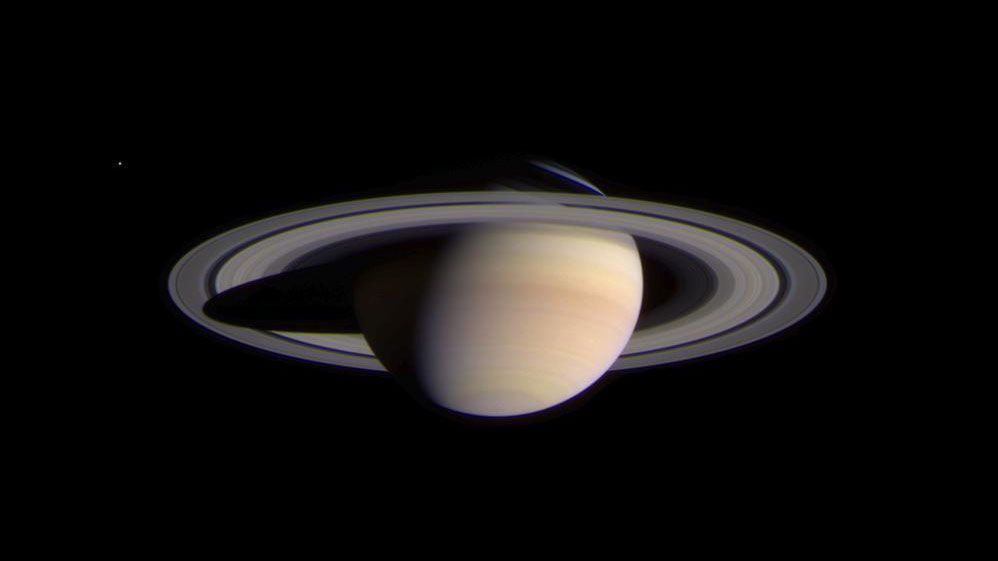
Saturn viewed through a telescope eyepiece

Accessory Guide · 2026

What Is a Barlow Lens?

A Barlow lens is one of the cheapest upgrades in astronomy, but only when you choose the right multiplier and avoid low-quality optics.

2x

Best for Most Buyers

3 Picks

Budget to Better Glass

$25-$80

Typical Price Range

Updated

May 2026

By Telescope Advisor Editorial Team Published: Updated: Editorial Standards

Quick Answer: What a Barlow Lens Does

A Barlow lens increases your telescope's effective focal length, which increases magnification with any eyepiece you insert into it. A 2x Barlow doubles magnification. A 3x Barlow triples it. Example: your 25mm eyepiece at 48x becomes 96x with a 2x Barlow. This is why a good Barlow can effectively double your eyepiece lineup for less money than buying many extra eyepieces.

The tradeoff is optical quality. Cheap Barlows can soften contrast and introduce glare. Good multi-coated Barlows preserve detail and can perform very well for lunar and planetary observing.

🔭

Not sure which telescope actually fits your goals?

Answer 5 quick questions about your budget, observing targets, and experience level — our Telescope Finder Tool recommends a specific model in under 2 minutes.

Find My Telescope →

How a Barlow Lens Works

A Barlow is a negative lens group placed between telescope and eyepiece. It diverges incoming light before the eyepiece, making the system behave as if the telescope had a longer focal length. The key point for buyers is practical, not theoretical: you get higher magnification from your current eyepieces without replacing your whole eyepiece kit.

Magnification = Telescope Focal Length / Eyepiece Focal Length
With Barlow: Magnification = (Telescope Focal Length x Barlow Factor) / Eyepiece Focal Length

If your telescope is 1200mm focal length, a 10mm eyepiece gives 120x. Add a 2x Barlow and that same eyepiece gives 240x. This can be useful for lunar craters, Saturn ring detail, and Jupiter belt structure when seeing conditions are good.

2x vs 3x Barlow: Which Should You Buy First?

2x Barlow (recommended first)

  • Most flexible across beginner eyepiece sets.
  • Easier to stay within realistic seeing limits.
  • Less likely to create dim, mushy over-magnified views.
  • Best first purchase for 70mm to 8-inch scopes.

3x Barlow (specialized)

  • Useful only when seeing is consistently excellent.
  • Can push many setups beyond practical magnification.
  • Better for larger apertures and experienced users.
  • Not ideal as a first and only Barlow.

When a Barlow Helps (and When It Does Not)

Use Case Barlow Verdict Why
Moon detailExcellentBrightness is high, extra magnification is often usable.
Jupiter and SaturnVery good2x often lands in a sweet magnification range.
Dim deep-sky objectsUsually poorHigher power dims view and narrows field.
Bad seeing nightsAvoidAtmospheric turbulence blurs high magnification.

Best Barlow Lens Picks for 2026

Editor's Pick - Best Overall Value
Celestron Omni 2x Barlow lens

Celestron Omni 2x Barlow Lens (1.25-inch)

A reliable first Barlow with solid coatings, good compatibility, and enough optical quality for meaningful planetary gains.

Celestron X-Cel LX 25mm eyepiece

Celestron X-Cel LX + 2x Barlow Combo

A practical pairing: the 25mm remains easy to use while the Barlow creates a useful medium-power option.

Celestron X-Cel LX 9mm eyepiece

Use 3x Only If Your Seeing Supports It

Instead of rushing into 3x, many observers get better results by pairing a sharp 9mm eyepiece with a quality 2x Barlow on stable nights.

1.25-inch vs 2-inch Barlow Compatibility

Most beginner scopes use 1.25-inch eyepieces, so a 1.25-inch Barlow is usually the right first buy. If your setup already uses 2-inch eyepieces for wide-field deep-sky work, choose a 2-inch Barlow only when you have a clear high-power use case. Otherwise, money is often better spent on one excellent eyepiece.

How to Use a Barlow Correctly

  1. Center the target first at low power.
  2. Insert the Barlow in focuser, then insert eyepiece into Barlow.
  3. Refocus slowly; focus point will change.
  4. Increase magnification only if image remains stable and sharp.
  5. If view becomes dim and soft, step back to lower power.

Magnification Roadmap by Telescope Type

Most poor Barlow outcomes come from trying to force one magnification plan onto every telescope. A short 80mm refractor and an 8-inch SCT do not behave the same. Use this practical starting roadmap, then adjust to your local seeing.

Scope Type Safe First Target Power Barlow Strategy
70-90mm refractor80x-140xUse 2x with longer eyepieces first; avoid 3x most nights.
114-150mm Newtonian120x-200x2x is highly useful on Moon and planets when collimated well.
6-8 inch SCT/Mak150x-260x2x can be excellent; 3x only in consistently steady air.

Seeing Limits and Real-World Power

A Barlow does not create detail on its own. It only enlarges whatever the atmosphere and your optics already deliver. On average suburban nights, most observers get cleaner planetary detail with moderate power than with maximum possible power.

  • If stars are twinkling hard at zenith, reduce Barlow use and stay conservative.
  • If Jupiter edges shimmer continuously, step down one eyepiece level before blaming optics.
  • If lunar crater edges look crisp and stable for several seconds at a time, higher power may hold.

This is why a quality 2x is usually the best first choice: it lands in realistic magnification windows more often, across more nights, for more telescope types.

Should You Buy a Barlow or Skip It?

A Barlow is excellent value when it solves a real magnification gap. It is poor value when used as a shortcut around weak optics, poor seeing, or poor tracking habits.

Buy a 2x Barlow if...

  • Your current eyepieces have a big magnification gap.
  • You mostly observe Moon/planets.
  • You want flexible options without buying many eyepieces.

Skip for now if...

  • Your mount stability is still a major issue.
  • You mostly chase dim deep-sky targets at low power.
  • You are still learning basic focus and alignment consistency.

First Month Barlow Integration Plan

  1. Week 1: use Barlow only on Moon with one eyepiece pair.
  2. Week 2: test on Jupiter/Saturn during steady seeing windows.
  3. Week 3: document which combinations stay sharp and which do not.
  4. Week 4: keep only your best two Barlow pairings as default workflow.

This prevents accessory sprawl and gives you a compact, repeatable magnification ladder that works in real conditions.

Barlow vs Short-Focal Eyepiece: Which Is Better Value?

A Barlow wins when you want multiple focal lengths from a small eyepiece set. A dedicated short eyepiece wins when you need one specific magnification with maximum comfort and minimal optical stacking.

  • Barlow-first path: lower cost per magnification option and flexible across targets.
  • Eyepiece-first path: cleaner optical train and often easier eye relief choices.
  • Best hybrid: one quality medium-power eyepiece plus one quality 2x Barlow.

Barlow Troubleshooting: When the View Looks Soft

  1. Drop to lower magnification and confirm base focus quality first.
  2. Check seeing stability on a bright star before blaming the accessory.
  3. Re-seat Barlow and eyepiece to avoid slight tilt in the focuser.
  4. Test on Moon edge detail; if still mushy, step back one power tier.

Most soft-view complaints come from pushing power too far for local conditions, not from the Barlow itself.

Quick Barlow Buying Checklist

  • Choose 2x before considering stronger multipliers.
  • Confirm mechanical fit with your focuser and diagonal.
  • Plan one test target for low, medium, and high power.
  • Keep expectation tied to seeing, not just telescope aperture.

Common Barlow Buying Mistakes

  • Buying the cheapest no-name Barlow and expecting premium contrast.
  • Starting with 3x on a small scope in average seeing.
  • Using Barlow for dim galaxies and nebulae where lower power works better.
  • Ignoring barrel-size compatibility with existing eyepieces and focuser.
  • Stacking too many optical elements before mastering basic focus and collimation.

Frequently Asked Questions

Is a Barlow lens worth it for beginners?

Yes, if you buy a decent 2x model. It is one of the most cost-effective ways to expand useful magnification options.

Does a Barlow reduce image quality?

Good Barlows preserve quality well. Cheap units can reduce contrast and add glare, especially at high magnification.

Should I buy a short eyepiece instead of a Barlow?

If you only need one specific high-power focal length, a dedicated eyepiece can be better. If you want flexible options across multiple eyepieces, a quality 2x Barlow is usually better value.

Can I use a Barlow for astrophotography?

Yes, especially for lunar and planetary imaging where image scale matters. For deep-sky imaging, Barlows are less commonly used.

Continue Exploring

Stay in the planetary path instead of restarting your research

If planets are the reason you are here, the most useful next click is another planetary answer or a direct route to the right telescope.

Use Finder Tool →

Related Guides