Apertura AD8 Review (2026): Best 8-Inch Dobsonian for Serious
Telescope Advisor Logo Telescope Advisor
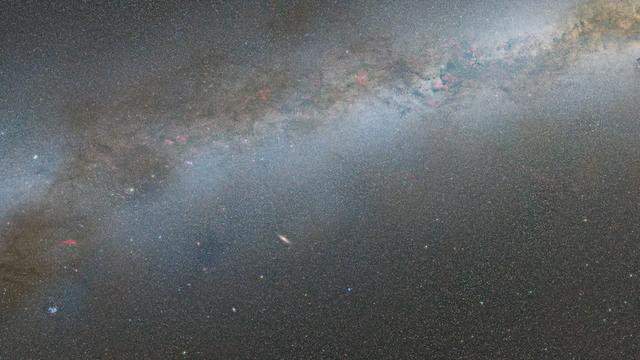
Dark-sky background for Apertura AD8 review

Dobsonian Review • 2026

Apertura AD8 Review

The AD8 is often treated as the value benchmark in 8-inch Dobsonians. This review focuses on what serious beginners care about most: optical quality, included accessories, setup friction, and whether it beats GoTo alternatives at the same total budget.

203mm

Aperture

1200mm

Focal Length

f/5.9

Focal Ratio

8.6/10

Overall Score

Availability note: Apertura AD8 is typically sold through High Point Scientific and may not be listed on Amazon.

By Telescope Advisor Editorial Team Published: Updated: Editorial Standards

Quick Verdict

The Apertura AD8 remains one of the strongest performance-per-dollar telescopes for serious beginners. Its 8-inch parabolic mirror delivers breathtaking deep-sky views — the Orion Nebula shows intricate structure, globular clusters resolve into hundreds of individual stars, and Saturn's Cassini Division is razor-sharp. The included dual-speed focuser, two Plössl eyepieces, and laser collimator make this the best-equipped Dobsonian in its class. If you are willing to learn manual Dobsonian operation, this scope will outperform every GoTo telescope at the same price on pure visual performance.

🔭

Quick Summary

✅ Pros

  • 8-inch parabolic mirror — stunning deep-sky views
  • Best-in-class accessory bundle (dual-speed focuser, 2 Plössls, laser collimator)
  • Excellent value — more aperture per dollar than any GoTo
  • Solid Dobsonian base with smooth motion
  • Open tube design — minimal cool-down time

👎 Cons

  • Manual tracking requires practice at high power
  • Large tube and base need storage space
  • Requires periodic collimation
  • Not portable for air travel
  • No GoTo — manual object finding only

⚖️ Bottom Line

The AD8 is the best-value 8-inch Dobsonian for serious beginners who want maximum visual performance per dollar. The included accessories are exceptional for the price. Choose this if you're willing to learn manual Dob operation and collimation for substantially better views than any GoTo scope at the same budget.
Apertura AD8: Full Specifications

SpecValue
Optical DesignNewtonian reflector (parabolic primary)
Aperture203mm (8 inches)
Focal Length1,200mm
Focal Ratiof/5.9
Mount TypeManual Dobsonian (alt-az)
FocuserDual-speed 2" Crayford (11:1 fine focus)
Eyepieces9mm Plössl (133×) and 30mm Plössl (40×)
FinderscopeRight-angle optical (9×50)
Included AccessoriesLaser collimator, 1.25" adapter, Moon filter
Optical Tube Weight~10.4 kg (23 lbs)
Base Weight~10 kg (22 lbs)
Tube Length~1,100mm (44 inches)

Limiting Magnitude: ~14.2 — reaches all Messier objects and thousands of NGC objects under dark skies.

Resolution (Dawes limit): 0.57 arc-seconds — exceptional planetary resolution for an 8-inch scope.

Highest Useful Magnification: ~400× (though seeing limits this to ~250× on most nights).

Best Accessory: The dual-speed Crayford focuser is rare at this price — the 11:1 micro-focus knob makes precise focus effortless at high magnification.

Included box: Optical tube, Dobsonian base, 30mm Plössl eyepiece, 9mm Plössl eyepiece, 9×50 finderscope, laser collimator, 1.25" adapter, Moon filter.

Note: The AD8 is sold through High Point Scientific, not Amazon. Availability can vary — check current stock.

What You'll See Through the AD8

The 8-inch aperture and f/5.9 focal ratio make the AD8 a superb deep-sky performer. The NASA/ESA reference images below show the objects you'll be pointing at — the captions describe what is actually visible at the eyepiece with an 8-inch Dobsonian under good skies.

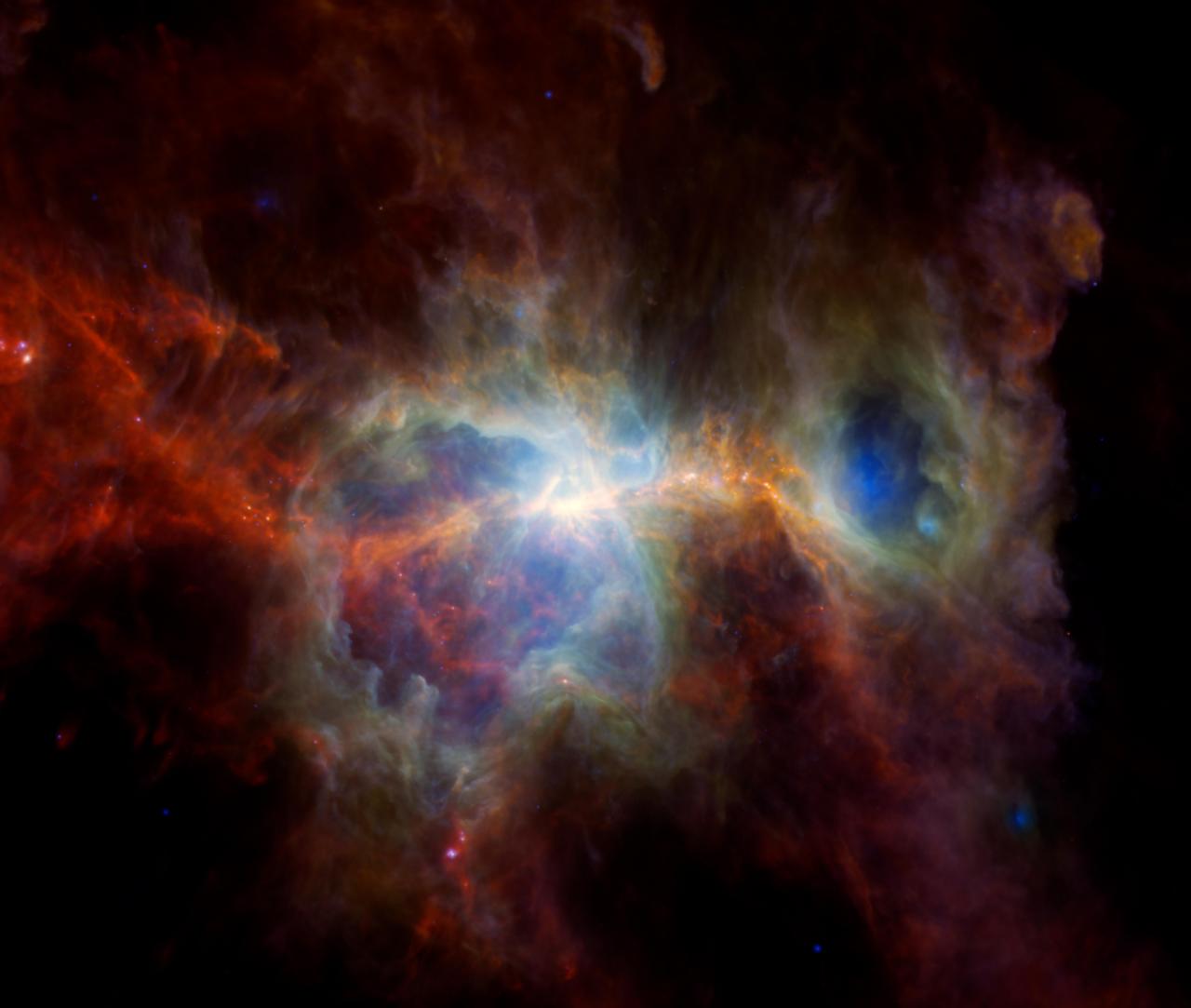
Orion Nebula M42 — Hubble Space Telescope reference

Orion Nebula (M42) — NASA/Hubble Reference

At 40–133×: bright nebulosity with visible 3D structure, the Trapezium cluster cleanly resolved into 4 stars. The Running Man Nebula is visible in the same low-power field. Credit: NASA/ESA/Hubble.

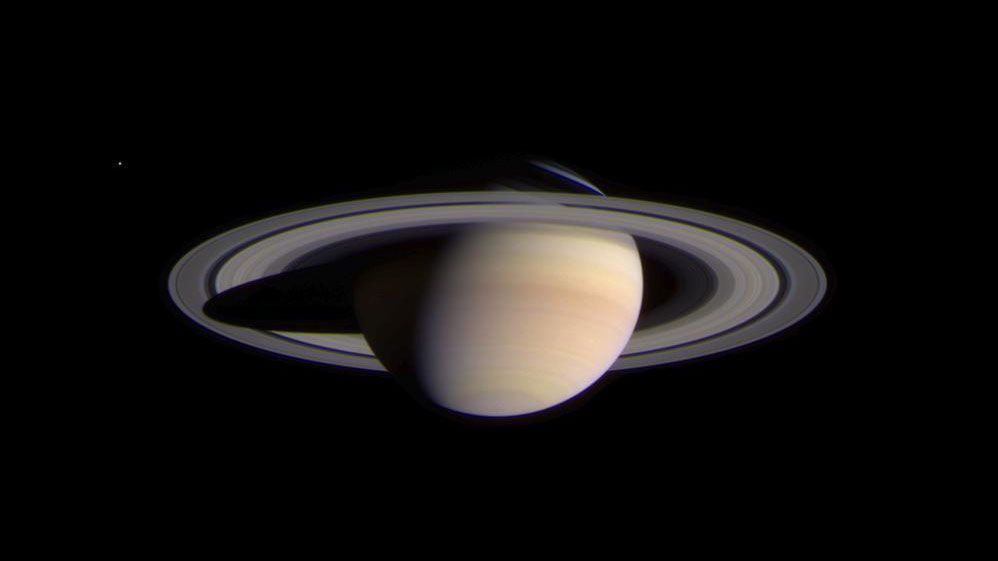
Saturn — NASA reference for AD8 planetary views

Saturn — NASA Reference Image

At 133–250×: Cassini Division clearly split, ring shadow on the globe, equatorial belts, and 4–6 moons in one view. The AD8's 8-inch aperture delivers outstanding planetary contrast. Credit: NASA/Hubble.

M31 Andromeda Galaxy — NASA/ESA reference

Andromeda Galaxy (M31) — NASA/ESA Reference

At 40×: bright oval core with extended halo, satellite galaxies M32 and M110 clearly resolved. The f/5.9 focal ratio delivers bright wide-field galaxy views. Credit: NASA/ESA/Hubble.

M81 Bode's Galaxy — NASA reference

M81 Bode's Galaxy — NASA Reference

At 40–80×: bright oval galaxy with visible core, M82 (Cigar Galaxy) in the same field showing its characteristic irregular shape. The AD8 reveals detail in both. Credit: NASA/JPL-Caltech.

About these images: The photos above are NASA/ESA reference images — they are not eyepiece photographs taken through the AD8. Visual views differ: deep-sky objects show structure rather than vivid color, but at 8 inches of aperture the brightness and detail are genuinely impressive. The captions describe what is actually visible at the eyepiece.

Optical Performance

The AD8 uses a parabolic primary mirror — the gold standard for Newtonian reflectors. Spherical mirrors (found in cheaper scopes) suffer from spherical aberration at f/5.9, but the AD8's parabolic figure eliminates this, delivering sharp, contrasty images across the entire field of view.

Deep-Sky Performance

The AD8's 8-inch aperture gathers 73% more light than a 6-inch scope and 4× more light than a 70mm refractor. M13 resolves into hundreds of individual stars at 133×. M42 shows intricate nebula structure with the Trapezium in sharp focus. M81 and M82 show clear structural differences. The f/5.9 focal ratio provides bright wide-field views — a 30mm eyepiece delivers a generous 1.7° true field for sweeping the Milky Way.

Planetary Performance

On Saturn at 200–250×: the Cassini Division is unmistakable, the ring shadow on the globe is clearly visible, and 4–6 moons are in the field. Jupiter shows 4–6 equatorial belts, the Great Red Spot when facing, and subtle festoons in the equatorial zone. The 8-inch aperture resolves fine planetary detail that smaller scopes cannot touch. The dual-speed focuser makes fine-tuning focus at high power effortless.

Collimation Note: Like all Newtonian reflectors, the AD8 needs periodic collimation. The included laser collimator makes this a 5–10 minute task. Plan to collimate before each observing session at first; as you gain experience, you'll learn when it holds alignment. A well-collimated AD8 delivers diffraction-limited performance.

Setup & Ease of Use

Assembly Time

15–20 minutes on first use (base assembly + tube placement + finder alignment). Routine setup after the first night: 5 minutes — carry the base outside, place the tube on top, and observe.

Portability

The AD8 is a large instrument. The tube is 44 inches long and weighs 23 lbs; the base weighs 22 lbs. It fits in most mid-size cars with the back seats folded. Not suitable for air travel, but manageable for backyard-to-dark-site transport.

Cool-Down & Maintenance

Open-tube design means minimal cool-down — 10–15 minutes versus 30–45 minutes for closed-tube designs. Periodic collimation is needed (see note above). The secondary mirror may need occasional dew management in humid conditions.

Is it beginner-friendly? The AD8 is best for motivated beginners willing to learn two skills: manual Dobsonian operation and Newtonian collimation. The Dobsonian mount is the simplest in astronomy — push the tube to point, release, and it stays. Collimation with the included laser tool is straightforward. Beginners who want simplicity over maximum aperture should consider a refractor or a Mak-Cass, but the AD8 rewards those who invest the learning time with substantially better views.

Pros & Cons

Pros

  • 8-inch parabolic mirror delivers stunning deep-sky and planetary views
  • Dual-speed Crayford focuser — rare at this price, essential for high-power focus
  • Best-in-class accessory bundle: 2 Plössl eyepieces, laser collimator, Moon filter
  • f/5.9 focal ratio — bright wide-field deep-sky views
  • Open tube — minimal cool-down, no dew issues on primary
  • Excellent value — more aperture per dollar than any GoTo alternative

Cons

  • Manual tracking at 200×+ requires practice — objects drift out of field
  • Large tube (44 inches) and heavy base (45 lbs total) need storage space
  • Periodic collimation required — manageable but one more skill to learn
  • No GoTo — finding faint deep-sky objects requires star-hopping skill or a good star atlas
  • Not portable for air travel — car transport only
  • Sold through High Point Scientific only — not on Amazon, availability varies
Check AD8 Availability →

Not an Amazon affiliate link. AD8 is sold through High Point Scientific.

AD8 vs Competitors

Editor's Pick — Best Value 8-Inch Class
🔭

Apertura AD8

203mm aperture f/5.9 Dual-speed focuser Laser collimator

The best-equipped 8-inch Dobsonian at its price. The dual-speed focuser and included laser collimator save you $150+ in accessories compared to competitors. Recommended for visual-first observers who want maximum aperture value and are willing to learn manual Dob operation and collimation.

View at High Point Scientific →
Sky-Watcher Classic 200P

Sky-Watcher Classic 200P — Closest competitor

200mm aperture f/6 Single-speed focuser

Same aperture class, same manual Dobsonian operation. The 200P typically costs less but comes with fewer accessories — no laser collimator, no Moon filter, and a single-speed focuser. Choose the 200P if budget is the primary constraint. Choose the AD8 if you value the dual-speed focuser and included accessories.

Read 200P Review →
Celestron NexStar 8SE

Celestron NexStar 8SE — GoTo alternative

203mm SCT f/10 GoTo + tracking

The NexStar 8SE adds GoTo automation and motorized tracking — point-and-slewing to 40,000+ objects. However, it costs significantly more than the AD8, has a slower f/10 focal ratio, and needs collimation. The AD8 delivers brighter deep-sky views and better value. Choose the 8SE if GoTo and tracking are essential. See our full NexStar 8SE review.

Read 8SE Review →

Who Should Buy the AD8?

Ideal Buyer ✓

  • ✓ Beginners who want maximum visual performance per dollar
  • ✓ Observers stepping up from a 70–90mm starter scope
  • ✓ Deep-sky enthusiasts who prioritize aperture over automation
  • ✓ Those willing to learn collimation and star-hopping
  • ✓ Backyard observers with space to store the base and tube

Consider Alternatives ⚠

  • ⚠ Need GoTo/tracking — consider the NexStar 8SE or a Smart Telescope
  • ⚠ Limited storage space — a compact 6" Dob or tabletop scope fits better
  • ⚠ Frequent travel — the AD8 is car-only, not portable for air travel
  • ⚠ Absolute beginner wanting simplest possible setup — a refractor may be easier

Not Recommended For ✗

  • ✗ Those wanting GoTo object-finding and tracking
  • ✗ Observers without car transport for dark-sky trips
  • ✗ Very budget-limited — the AD8 is at a premium over basic Dobs
  • ✗ Imagers needing an equatorial mount for long-exposure astrophotography

Frequently Asked Questions

Is the Apertura AD8 good for beginners?

Yes, for motivated beginners who want serious visual performance. The Dobsonian mount is the simplest in astronomy — push to point. However, beginners need to learn two skills: manual object-finding (star-hopping or using a star atlas) and Newtonian collimation (aligning the mirrors). The included laser collimator makes collimation straightforward. If you're willing to invest in these skills, the AD8 rewards you with views that rival telescopes costing twice as much.

AD8 vs NexStar 8SE: which is better?

The AD8 wins on pure visual performance per dollar — the 8-inch parabolic mirror and f/5.9 focal ratio deliver brighter deep-sky views than the 8SE's f/10 SCT. The 8SE wins on convenience with GoTo automation and motorized tracking. The AD8 includes better accessories (dual-speed focuser, laser collimator). Choose the AD8 if you want the best possible visual views and are happy with manual operation. Choose the 8SE if GoTo and tracking are essential for your enjoyment.

Does the AD8 need collimation?

Yes — like all Newtonian reflectors, the AD8 requires periodic collimation. The included laser collimator makes this a 5–10 minute task. Plan to collimate before each observing session initially. As you gain experience, you'll learn how well the scope holds alignment between sessions. Signs that collimation is needed: stars appear comet-shaped or show a non-round diffraction pattern at high power. A well-collimated AD8 produces diffraction-limited images.

What can I see with the AD8?

Solar system: Saturn's Cassini Division clearly split, 4–6 moons; Jupiter with 4–6 equatorial belts, Great Red Spot, and all Galilean moons; Mars showing polar caps and dark markings near opposition; the Moon with exceptional crater, rille, and mountain detail.

Deep sky: All 110 Messier objects with significant detail. M13 resolved into hundreds of individual stars. M42 with intricate 3D nebulosity. M31 Andromeda with satellite galaxies. M81/M82 showing structural detail. Thousands of NGC objects down to magnitude 14. The AD8 is a true deep-sky instrument.

What accessories come with the AD8?

The AD8 includes: 30mm Plössl eyepiece (40×), 9mm Plössl eyepiece (133×), 9×50 right-angle finderscope, laser collimator, 2" Crayford-style dual-speed focuser (11:1 micro-focus), 1.25" adapter, and a Moon filter. This is the best accessory bundle in its class — the dual-speed focuser and laser collimator alone would cost $150+ to add to other telescopes.

How much does the Apertura AD8 cost in 2026?

The AD8 typically retails for $650–$750 from High Point Scientific. Availability can vary as the AD8 is a popular model. Check the High Point Scientific website for current pricing and stock. Compared to other 8-inch Dobs, the AD8 offers exceptional value considering its included accessories — you'd pay $150–$200 more to equip a competing Dob to the same level.

Where can I buy the Apertura AD8?

The Apertura AD8 is sold through High Point Scientific (highpointscientific.com) and is not typically available on Amazon. Apertura is a brand exclusive to High Point Scientific. This also means the AD8 does not qualify for Amazon affiliate links. For GoTo alternatives available on Amazon, see the Best Computerized Telescopes guide.

Related Guides