Best Reflector Telescopes for Beginners (2026): Top 5 Ranked + Honest Buyer Guide
Telescope Advisor Logo Telescope Advisor
Beginner using a reflector telescope under dark sky

Buying Guide · 2026

Best Reflector Telescopes for Beginners (2026): Top 5 Picks With Honest Tradeoffs

Reflectors offer unmatched aperture per dollar, but beginner success depends on more than mirror size. This guide ranks beginner-friendly reflector telescopes by real usability, setup friction, and first-month learning curve so you can buy once and actually use it.

5

Beginner picks

Aperture value

Reflector strength

Collimation

Made practical

No hype

Realistic outcomes

By Telescope Advisor Editorial Team Published: Updated: Editorial Standards

What Is the Best Reflector Telescope for Beginners? (Quick Answer)

For most beginners, the Sky-Watcher Heritage 130P is the best reflector telescope in 2026. It combines meaningful 130mm aperture, intuitive Dobsonian-style movement, compact storage, and a price point that stays realistic for first-time buyers.

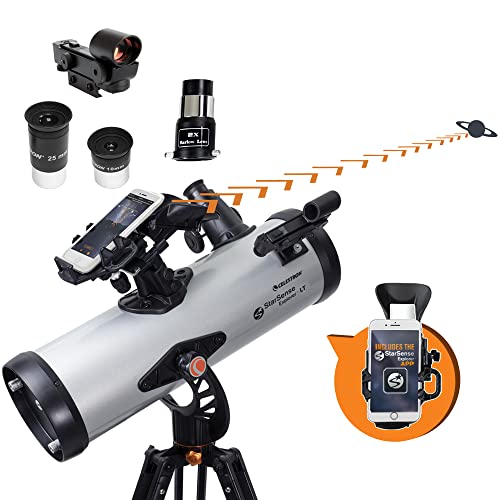
If you want more deep-sky power and can handle larger size, an 8-inch Dobsonian class (such as Sky-Watcher Classic 200P) is the strongest visual value. If you specifically want app-guided finding at lower budget, StarSense LT 114AZ can reduce first-night frustration.

How This Reflector Page Differs from Your Other Guides

This guide is intentionally reflector-only and beginner-specific. It does not duplicate your broader beginner, manual, or Dobsonian pages. Here, every recommendation is evaluated through one lens: how easy it is for a first-time buyer to succeed with a reflector workflow.

PagePrimary IntentDecision Axis
Best Telescopes for BeginnersAll telescope typesGeneral first scope selection
Best Dobsonian TelescopesDobsonian categoryAperture class comparison
Best Reflector Telescopes for Beginners (this page)Beginner reflector buyingCollimation tolerance, mount ease, first-month success

Top 5 Reflector Telescopes for Beginners (Ranked)

Editor's Pick — Best Beginner Reflector Overall
Sky-Watcher Heritage 130P

1) Sky-Watcher Heritage 130P

The strongest beginner reflector balance: meaningful aperture, compact transport, and intuitive manual operation. It gives real deep-sky and planetary potential without overwhelming setup complexity.

View on Amazon →
Celestron AstroMaster 130EQ

2) Celestron AstroMaster 130EQ

A reflector path for beginners willing to learn equatorial mechanics early. Better as a skill-building setup than a zero-friction first scope.

View on Amazon →
Sky-Watcher Classic 200P Dobsonian

3) Sky-Watcher Classic 200P

Best visual performance-per-dollar in this list, but larger and heavier. Excellent for committed beginners with storage and transport capacity.

View on Amazon →
Celestron StarSense Explorer LT 114AZ

4) Celestron StarSense Explorer LT 114AZ

A gentler beginner reflector path for users who value app-guided target finding and faster early wins over pure aperture.

View on Amazon →
Celestron NexStar 5SE

5) Celestron NexStar 5SE (comparison benchmark)

Not a reflector, included as a benchmark so beginners can compare reflector value against beginner-friendly GoTo convenience.

View on Amazon →

Reflector Basics Beginners Actually Need

Reflectors use mirrors instead of front lenses. This design gives large aperture at lower cost, which is why reflectors dominate value-focused recommendations. More aperture means more light, and more light means brighter deep-sky targets plus higher practical magnification on planets.

The tradeoff is maintenance and handling. Reflectors, especially faster Newtonians, benefit from periodic collimation checks. For beginners, this sounds intimidating, but in practice it becomes a short routine once you treat it like tire pressure checks instead of a complex engineering task.

There are two common beginner reflector paths: tabletop/full-size Dobsonian (simplest movement) and EQ-mounted Newtonian (more mechanical learning upfront). Dobsonian-style movement is usually easier in the first month, while EQ systems can be rewarding for users who specifically want axis-based tracking concepts early.

Collimation Reality: Important, But Not a Dealbreaker

Collimation is reflector alignment, and yes, it matters for sharp planetary performance. But beginners often overestimate difficulty. Most users are not doing full rebuild-level adjustment every night. They are performing quick checks and occasional tweaks.

Typical check time

2 to 5 minutes once routine is learned.

Typical full tweak

5 to 10 minutes for beginner-level correction.

Skill impact

High on planetary clarity and star sharpness.

The practical takeaway: buy a reflector only if you are willing to learn one short maintenance skill. If that feels unacceptable, a refractor path may be better. If acceptable, reflectors can deliver dramatically higher visual value for the same budget.

Mount and Workflow: The Real Beginner Success Multiplier

For beginners, mount usability often matters more than raw optical potential. A scope that moves smoothly and sets up quickly gets used more often. A scope with awkward motion, vibration, or long setup gets postponed, and postponed sessions kill progress.

Beginner Use CaseBest Reflector PathWhy
Fast weeknight sessionsTabletop DobsonianFast setup, intuitive movement, low friction
Deep-sky priority8-inch Dobsonian classAperture advantage transforms faint-target visibility
App-guided target findingGuided 114mm class reflectorLower early frustration for city beginners
Mechanics-curious usersEQ-mounted 130mm classBuilds axis-tracking understanding early

30-Day Beginner Reflector Plan

Use this progression to avoid common beginner collapse where night one is chaotic and motivation drops. Reflector success compounds when first sessions are structured.

  1. Week 1: finder alignment practice, Moon sessions, low-to-medium magnification only.
  2. Week 2: add Jupiter/Saturn sessions and one bright cluster target.
  3. Week 3: run short star-hop exercises and basic collimation checks before observing.
  4. Week 4: build personal 6-target list for your local sky quality and repeat it twice.

The goal is routine, not target quantity. By day 30, most beginners who follow structure can run independent sessions confidently and make better upgrade decisions with real evidence.

Reflector Beginner Mistakes to Avoid

  1. Buying for magnification numbers: mount quality and aperture matter more than printed max power.
  2. Skipping collimation checks: a slightly misaligned reflector can look far worse than it should.
  3. Starting with hard deep-sky targets: begin with high-success objects to build confidence.
  4. Choosing oversized scope without storage plan: transport friction quickly reduces observing frequency.
  5. No session plan: random target selection burns clear-sky time and increases frustration.

Reflector Budget Tiers: What Changes as You Spend More

Beginner reflector buying improves when you separate price jumps by practical outcomes instead of just optical specifications. Most frustration comes from spending in the wrong tier for your real use pattern. If you run short sessions, a smoother mount and faster setup may matter more than another inch of aperture. If you can commit to longer sessions, aperture gains become more meaningful.

Budget TierTypical Reflector OutcomeWho Should Buy
$150 to $250Entry reflector range with meaningful lunar/planetary starts and bright deep-sky accessFirst-time users who want value while limiting risk
$250 to $450Noticeably stronger deep-sky experience and better long-term growth roomBeginners who expect regular use and steady skill building
$450 to $800Large visual jump, especially under darker skies, but larger handling burdenCommitted users with space and transport capacity

If you are uncertain between two tiers, pick the model you can set up often. Frequency of use beats occasional peak performance in beginner outcomes. A telescope used twice weekly at moderate aperture creates more learning and satisfaction than a larger telescope used once every few weeks due to logistics friction.

What Beginners Can Realistically See With a Reflector

Realistic expectations protect motivation. Reflectors can deliver dramatic views compared with entry refractors at the same price, but they are still governed by seeing conditions, sky brightness, and observer skill. Beginners who understand this progression improve faster and avoid product-hopping.

In the first two weeks, your highest-confidence targets are the Moon, Jupiter, Saturn, bright star clusters, and Orion Nebula when in season. These targets build focus discipline, finder alignment confidence, and tracking rhythm. By week three to six, you can expand into globular clusters and brighter galaxy cores, especially with 130mm+ apertures in darker conditions.

High-success beginner targets

  • Moon craters, mountain shadows, and terminator detail
  • Jupiter bands and Galilean moons
  • Saturn rings and ring tilt changes through the year
  • Pleiades, Beehive, and other bright open clusters

Medium-difficulty targets

  • Globular clusters with partial star resolution
  • Brighter nebula structure with low-power eyepieces
  • Galaxy cores under decent transparency
  • Double-star color contrasts at stable seeing

Accessory Path That Improves Reflector Results Without Wasting Money

Beginner upgrades should follow sequence, not impulse. Buying too many accessories before mastering baseline setup creates confusion and rarely improves early outcomes. The most effective path is to stabilize fundamentals, then add one accessory at a time based on observed bottlenecks.

  1. Step 1: add a comfortable low-power eyepiece if included optics are weak.
  2. Step 2: add one medium-power eyepiece for planetary detail practice.
  3. Step 3: add a basic collimation tool and build a 5-minute pre-session routine.
  4. Step 4: add a red-light strategy and observation log workflow to improve retention.
  5. Step 5: only then consider specialty filters based on your local sky and target mix.

This sequence keeps spending proportional to skill growth and avoids common beginner regret purchases. The best reflector setup is not the one with the most accessories; it is the one where every accessory removes a proven bottleneck from your actual sessions.

When a Beginner Should Choose Reflector, Refractor, or GoTo Instead

Reflectors are usually the right choice for beginners who prioritize visual value and accept minor maintenance routines. However, no single telescope type is always best. If your goal is highest convenience in short city sessions, compact GoTo or app-assisted systems may outperform manual reflectors in practical success. If you want the lowest-maintenance experience and mostly lunar/planetary use, refractors remain a strong path.

Use this rule: choose reflector when you value aperture-per-dollar and are willing to learn basics; choose refractor when simplicity is non-negotiable; choose GoTo when target-finding friction is your biggest obstacle. This framework prevents the two most common mistakes: overbuying optical potential you do not use, or overbuying automation you do not need.

For many first-time buyers, the best strategy is reflector now, then GoTo later only if your observing pattern proves you need it. That staged approach preserves budget efficiency while still leaving a clear upgrade path based on real usage data.

Final Verdict: Best Beginner Reflector Strategy for 2026

If you want the safest high-value first buy, start with a 130mm class beginner-friendly reflector such as Heritage 130P. It gives meaningful performance on planets and brighter deep-sky targets while keeping learning complexity manageable. If you already know you can handle larger size and want more long-term visual headroom, 8-inch Dobsonian class is the strongest next tier.

Treat your first 30 days as a training block, not a performance test. Reflectors reward consistency quickly, and once your setup, finder alignment, and collimation routine become automatic, the category's value advantage becomes obvious.

Sample Beginner Buyer Profiles (And the Right Reflector Choice)

When buyers search for the best reflector telescope for beginners, they are often solving very different problems. Two beginners with the same budget can need opposite recommendations based on storage, observing frequency, and patience for setup routines. Profile-based decisions reduce regret because they map telescope choice to lifestyle, not only to optics.

Profile A: Weekend family observer. This buyer needs quick setup, simple movement, and durable handling. A compact 130mm beginner reflector is ideal because it offers visible upgrade over toy-level scopes while still being manageable for shared use. The key success metric here is number of enjoyable sessions, not advanced technical optimization.

Profile B: Skill-focused solo learner. This buyer is willing to track observing notes, learn collimation, and progressively challenge harder targets. A larger Dobsonian class can be the better choice if storage and transport constraints are manageable. The key metric is long-term ceiling and deep-sky growth potential.

Profile C: City apartment beginner. This buyer has limited space, limited carry tolerance, and often short observing windows. Here, smaller beginner-friendly reflector designs can work, but only if physical handling is realistic. If not, a compact GoTo alternative may produce better first-month outcomes despite higher cost.

Profile D: Budget-constrained first buyer. This buyer needs maximum value with minimal risk. The correct move is usually an honest entry-tier reflector with practical accessories and a focused first-month target plan. Avoid overextending budget into larger instruments without storage, because unused aperture has zero value.

Across all profiles, the same principle holds: choose the telescope that maximizes repeatable usage in your environment. If the scope is easy to deploy and enjoyable to operate, skill builds quickly, and results improve naturally with experience.


Long-Term Growth With a Beginner Reflector: 6 to 18 Month Outlook

A good beginner reflector is not a disposable first step. For many users, it remains a high-value primary scope for years. The first six months are usually about developing repeatable setup and target-finding confidence. Months six to twelve are where optical gains become more obvious because you are observing more efficiently and selecting better targets per sky condition.

By month twelve, many beginners can clearly identify whether they want to stay visual-first or move toward assisted imaging workflows. Reflectors are especially strong for visual growth because they continue to reward better collimation discipline, steadier tracking habits, and smarter eyepiece use. In other words, your skill unlocks more from the same hardware over time.

This is why buying a beginner reflector is often a better long-term value than cycling through multiple low-end scopes. One well-chosen reflector plus structured practice can outperform repeated replacement behavior. If you do upgrade later, your first reflector still remains useful as a grab-and-go, outreach, or backup visual platform.

Upgrade timing should be evidence-based. If your session logs show that target-finding is the bottleneck, consider GoTo/app-assisted support. If your bottleneck is faint-target brightness under dark skies, aperture upgrades make sense. If your bottleneck is inconsistent planetary sharpness, focus first on seeing conditions and collimation before changing telescope category.

The highest-ROI beginner strategy is simple: buy a realistic reflector, run it consistently for one season, learn what your actual constraints are, then upgrade only where real bottlenecks exist. This minimizes wasted spend and maximizes long-term observational progress.

Pre-Buy Reflector Checklist (Use Before You Checkout)

Run this five-point check before buying any beginner reflector telescope. It prevents the most expensive beginner errors and keeps your choice aligned with real usage conditions.

  1. Confirm where the telescope will be stored and how far you must carry it each session.
  2. Confirm whether you accept brief collimation checks as part of normal setup.
  3. Confirm your first-month target list is realistic for your sky quality and available time.
  4. Confirm your observing style: quick city sessions, longer dark-site sessions, or mixed use.
  5. Confirm you are buying for repeatability and learning pace, not max magnification marketing.

If all five answers are clear, your reflector purchase is likely to produce strong first-month momentum and long-term value.

Frequently Asked Questions

What is the best reflector telescope for beginners in 2026?

For most beginners, Sky-Watcher Heritage 130P remains the best reflector starting point because it balances aperture, ease, and price.

Do beginner reflector telescopes need collimation often?

They need regular quick checks, but not constant full adjustment. Most users can manage routine checks in a few minutes.

Is a Dobsonian better than an EQ reflector for beginners?

Usually yes for first-time users, because Dobsonian movement is more intuitive and setup is faster.

Can a beginner reflector telescope show Saturn's rings clearly?

Yes. A well-aligned 130mm+ reflector can show Saturn's rings and meaningful planetary detail under decent seeing.