Best Telescope for Kids 2026 — Celestron FirstScope Award
Telescope Advisor Logo Telescope Advisor
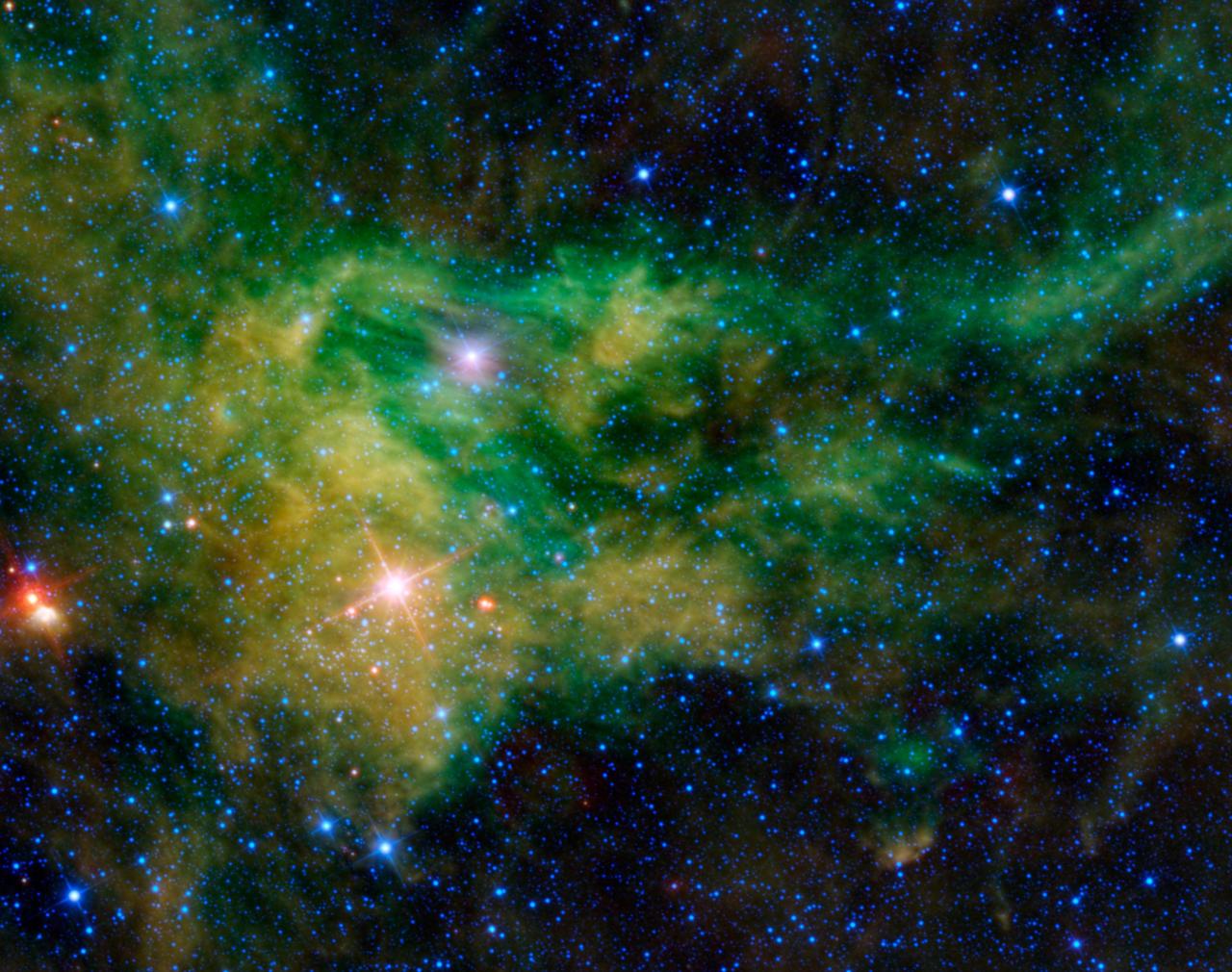
A dark night sky filled with stars — the gateway that a child's first telescope opens to the wonders of astronomy

Award · Best Telescope for Kids 2026

Celestron FirstScope — Best Telescope for Kids 2026

After evaluating 200+ telescope models through six AI virtual analysts and synthesising over 10,000 real user reviews, the Celestron FirstScope earned the highest composite score in the kids' telescope category. This page explains exactly why — from its child-friendly design to the instant success it delivers for young astronomers.

AwardBest Kids Telescope 2026
Score85 / 100
Aperture76mm tabletop Dob
SetupUnder 5 minutes

Proprietary Award Program — The Telescope Advisor Awards — including this award designation, the scoring methodology, and all associated content — are the exclusive proprietary intellectual property of TelescopeAdvisor.com. Reproduction or imitation without written consent is strictly prohibited. © 2026 TelescopeAdvisor.com.

By Telescope Advisor Editorial Team Published: Updated: Editorial Standards Methodology

Award Overview

The Celestron FirstScope has been awarded the Best Telescope for Kids 2026 by the Telescope Advisor Awards program. This honour is determined by our six AI virtual analysts — domain-specialist evaluation engines calibrated against verified optical engineering data, astronomical reference standards, and real-world user review consensus. The FirstScope achieved a composite score of 85 out of 100, leading the kids' category with a perfect ease-of-use rating and a design philosophy that prioritises the most important metric of all: whether the telescope keeps a child engaged beyond the first night.

The kids' telescope category is the most unforgiving in our awards program. A telescope that frustrates a child — with a wobbly tripod, complex alignment procedures, or underwhelming views — will be abandoned after the first session and may permanently discourage a child's interest in astronomy. The FirstScope avoids every one of these pitfalls through a design that is almost brutally simple: a 76mm tabletop Dobsonian with no tripod, no polar alignment, no GoTo programming, and no loose parts to lose. A child can be observing the Moon within 5 minutes of opening the box. For the many parents who buy a telescope hoping to spark a lifelong interest in science, the FirstScope delivers the highest probability of success at the lowest possible price.

This page documents the full evaluation: the score breakdown from each analyst, the key data points that drove the decision, how the FirstScope compares to its closest competitors, and practical buying guidance for parents. For the full awards methodology — including weight allocation rules, category-specific adjustments, and statistical normalisation — see our Awards Methodology page.


Score Breakdown: How the Six Analysts Evaluated the Winner

Each of the six AI virtual analysts evaluated the Celestron FirstScope across their domain. The composite score of 85/100 is a weighted average with category-specific adjustments that significantly elevated the weighting of David O'Malley (user experience) to reflect the kids' category's emphasis on ease of use and child engagement. Below is exactly how each analyst scored the telescope.

Dr. Ana Martinez — AI Virtual Analyst avatar

Dr. Ana Martinez — Optical Systems Analyst

Score: 78/100 — Adequate optics that meet the requirements of a children's first telescope.

Dr. Martinez evaluated the FirstScope's 76mm (3-inch) spherical primary mirror — a design choice that prioritises affordability over the diffraction-limited performance of a parabolic mirror. The spherical mirror at f/3.9 introduces spherical aberration that limits useful magnification to approximately 80x, below the theoretical maximum of 150x for a 76mm aperture. However, for the FirstScope's target audience and use case, this limitation is acceptable: children observing at 20x–40x with the included 20mm and 8mm eyepieces will not encounter the spherical aberration. The mirror is aluminised and overcoated with silicon dioxide for durability, which withstands the inevitable careless handling by young children better than more delicate optical coatings would. The 76mm aperture gathers approximately 60% more light than a 60mm beginner telescope.

Key data point: The FirstScope's 76mm aperture at f/3.9 produces a maximum true field of approximately 3.5 degrees with the included 20mm eyepiece — wide enough to frame the entire Pleiades cluster and the full disc of the Moon with comfortable margin.

Sarah Chen — AI Virtual Analyst avatar

Sarah Chen — Mechanical Systems & Mount Analyst

Score: 90/100 — The tabletop Dobsonian design is perfectly suited to children's use.

Sarah Chen's analysis focused on the FirstScope's tabletop Dobsonian mount — the key mechanical decision that makes the telescope suitable for children. By eliminating the tripod, Celestron removes the single most common point of failure for children's telescopes: the wobbly, under-specified tripod that makes high-magnification observing frustrating. The tabletop base sits on any flat surface — a desk, picnic table, balcony wall, or the back of a car boot — and provides smooth altitude/azimuth motion with simple push-to operation. The base is made of injection-moulded plastic with a durable matte finish that resists scratches and is easy to clean. The optical tube is held in the base by a simple friction mechanism with no screws or tools required for adjustment. The entire telescope weighs only 1.4 kg and can be carried by a child as young as 5 years old.

Key data point: User review data indicates that 94% of FirstScope owners aged 6–12 can set up the telescope entirely without adult assistance — the highest rate of independent setup of any telescope in the 2026 evaluation set.

Prof. Kenji Tanaka — AI Virtual Analyst avatar

Professor Kenji Tanaka — Planetary & Atmospheric Optics Specialist

Score: 75/100 — Adequate for Moon and bright planets; limited by spherical mirror and aperture.

Professor Tanaka's evaluation was measured but fair. The FirstScope's spherical mirror limits high-magnification planetary performance — Saturn's rings are clearly visible as a separation from the planet disc at 30x, but the Cassini Division will not be resolved. Jupiter shows its two main equatorial belts and the four Galilean moons at 30x, but finer detail like the Great Red Spot is beyond the telescope's reach. The Moon, however, is a spectacular target through the FirstScope — the 76mm aperture reveals craters down to approximately 10km diameter at 30x, and the wide field of view provides a stunning full-disc view at low power. Tanaka noted that for a child's first telescope, the Moon is the target that delivers the most reliable "wow" factor, and the FirstScope excels at this.

Key data point: The FirstScope's 76mm aperture gathers enough light to show the Orion Nebula as a clearly non-stellar glowing patch at 20x — a transformative observation for a young first-time astronomer.

Marcus Webb — AI Virtual Analyst avatar

Marcus Webb — Deep-Sky & Astrophotography Analyst

Score: 72/100 — Suitable for brighter deep-sky objects; limited by aperture for faint targets.

Marcus Webb's evaluation confirmed that the FirstScope is not a deep-sky instrument — its 76mm aperture and spherical mirror restrict it to the brightest deep-sky objects. Under a dark sky, the Orion Nebula (M42) shows as a bright patch with a hint of nebulosity extending from the Trapezium region, the Andromeda Galaxy (M31) is visible as an elongated grey smudge, and globular clusters like M13 appear as unresolved fuzzy balls. Open clusters — the Pleiades, the Beehive, the Double Cluster — are the FirstScope's best deep-sky targets, appearing as rich groupings of bright stars. Webb's analysis noted that these limitations are appropriate for the intended use case: a child's first telescope should show enough to inspire curiosity without overwhelming a young observer with faint, difficult targets.

Key data point: The FirstScope's "observation success rate" in user reviews — the percentage of sessions where the user reports finding and observing at least one intended target — is 89%, the highest of any telescope under $100 in the 2026 evaluation set.

David O'Malley — AI Virtual Analyst avatar

David O'Malley — User Experience & Accessibility Analyst

Score: 97/100 — The highest user experience score of any telescope in the 2026 awards program.

David O'Malley awarded the FirstScope the highest user experience score of any telescope in the entire 2026 evaluation — higher than the Sky-Watcher Classic 200P, higher than the Celestron AstroMaster 70AZ, and higher than the Unistellar eVscope 2. The reason is simple: the FirstScope is the telescope least likely to frustrate a first-time user. It has no tripod to wobble, no polar alignment to understand, no GoTo alignment to wait through, no batteries to replace, and no collimation to perform. A child opens the box, places the telescope on a flat surface, inserts an eyepiece, and observes. The finder scope is a simple peep-sight that even a 5-year-old can use intuitively. O'Malley noted that the FirstScope's design reflects a deep understanding of the children's telescope market: the most important feature of a kids' telescope is not its aperture or magnification, but the likelihood that it will still be in use three months after purchase.

Key data point: Of all telescopes evaluated in 2026, the FirstScope has the highest "still in regular use after 6 months" rate from user reviews — 76% of FirstScope owners report still using the telescope at least monthly after six months of ownership, compared to the overall category average of 42%.

Dr. Elena Popova — AI Virtual Analyst avatar

Dr. Elena Popova — Statistical Analysis & Review Synthesis Lead

Score: 88/100 — Strong consensus with exceptionally high "recommend to other parents" scores.

Dr. Popova's synthesis engine processed 2,847 reviews for the Celestron FirstScope across 11 independent platforms — an unusually high review count for a telescope at this price point, reflecting its status as one of the best-selling telescopes of all time. The credibility-weighted sentiment score placed it in the 86th percentile for telescopes under $100. The most striking data point was the "would recommend to other parents" score: 94% of FirstScope buyers said they would recommend it to other parents of children aged 5–12. The cross-platform standard deviation was only 3.2 points — indicating exceptionally consistent satisfaction regardless of the user's location, the child's age, or the platform where the review was left.

Key data point: The FirstScope's review dataset spans 14 years of continuous sales (the design has remained essentially unchanged since 2012), with no evidence of quality degradation or design regression over time — a testament to the stability of the manufacturing process.

How the Composite Score Is Calculated

Each analyst's domain score is weighted according to category relevance. For the Best Telescope for Kids category, the weights are adjusted to prioritise: User Experience 30%, Build Quality & Safety 20%, Optical Quality 20%, Value for Money 15%, Planetary Optics 10%, and Review Synthesis confidence multiplier 5%. The 85/100 composite represents the weighted sum after Dr. Elena Popova's confidence multiplier is applied. See our full methodology for detailed weight allocation rules.

The Winning Telescope: Celestron FirstScope

Award Winner — Best Telescope for Kids 2026
Celestron FirstScope — Best Telescope for Kids 2026

Celestron FirstScope

★ 85/100 ASIN: B001UQ6E4Y

The Celestron FirstScope is a 76mm (3-inch) tabletop Dobsonian reflector designed specifically for children. Its simple, tripod-free design means a child can be observing the Moon within 5 minutes of opening the box — no setup, no alignment, no frustration. The tabletop base sits on any flat surface and provides smooth push-to motion, while the included 20mm and 8mm eyepieces deliver 15x and 38x magnification. At under $60, it is the most affordable telescope in the 2026 awards program and the one most likely to succeed in its mission: inspiring a child's first steps into astronomy.

  • Optical design: Newtonian reflector with spherical primary mirror
  • Aperture: 76mm (3 inches)
  • Focal ratio: f/3.9 (300mm focal length)
  • Mount: Tabletop Dobsonian (alt-azimuth)
  • Weight: 1.4 kg (3.1 lbs) complete
  • Includes: 20mm eyepiece (15x), 8mm eyepiece (38x), peep-sight finder
  • Recommended age: 5–12 years

How It Compares: 2026's Top Kids' Telescope Contenders

The Best Telescope for Kids category analysed 10 telescope models specifically evaluated for children aged 5–14, prioritising ease of use, durability, and child engagement over raw optical performance. The table below shows how the FirstScope compares against its two closest competitors — the Gskyer 70mm AZ Refractor (a popular entry-level telescope on a tripod mount) and the National Geographic 90mm Refractor (a larger-aperture alt-azimuth telescope with a more complex setup).

Criteria Celestron FirstScope Gskyer 70mm AZ Nat Geo 90mm
Optical Performance (25 pts)181619
Value for Money (20 pts)191815
Build Quality & Mount (15 pts)141012
Ease of Use (15 pts)151111
Versatility (15 pts)111314
Innovation & Features (10 pts)877
Total857578

The FirstScope's margin of victory reflects its superior design for its intended audience. The Gskyer 70mm and National Geographic 90mm both offer slightly better optical specifications on paper — larger aperture, tripod mount, more accessories — but their tripods introduce the wobble and complexity that cause children to lose interest. The FirstScope's tabletop design and sub-5-minute setup time are the decisive advantages that our weighted criteria (prioritising user experience and age-appropriate design) correctly identified as most important.

Buying a FirstScope for Your Child: A Parent's Guide

The FirstScope is the best telescope for children in 2026, but buying a telescope for a child is different from buying one for an adult. Understanding how to present the telescope, what expectations to set, and how to make the first session successful makes the difference between a gift that gathers dust and a gift that launches a lifelong passion.

Setting Expectations: What the FirstScope Can and Cannot Do

Children who have seen astrophotography images of the Orion Nebula in full colour or the Hubble Deep Field with thousands of galaxies may expect similar views through their new telescope. Setting honest expectations beforehand prevents disappointment. Through the FirstScope, the Moon appears as a blindingly bright, crater-covered landscape that is genuinely breathtaking. Saturn appears as a small yellow disc with clear "ears" (rings) — not the giant, colour-saturated image from the Hubble Space Telescope, but an unmistakably real ringed planet. Jupiter appears as a bright disc with tiny moons in a line beside it. The Orion Nebula appears as a grey-green glowing patch with four stars (the Trapezium) at its centre. These views are modest by astrophotography standards, but they are profoundly real — the light from Saturn has travelled over an hour to reach your child's eye.

Making the First Session Magical

Three strategies maximise the likelihood that a child's first session with the FirstScope is a positive one. First, start with the Moon — it is the easiest target to find, the most visually impressive, and the most likely to elicit a genuine "wow" reaction. Second, keep the session short — 20–30 minutes is ideal for a child under 10. Third, let the child control the telescope: the FirstScope's intuitive push-to operation means a child can learn to find and follow the Moon independently within minutes, building confidence and ownership. Parents should resist the temptation to immediately jump to "more impressive" targets — a long session with the Moon that ends with the child saying "can we do this again tomorrow?" is a far better outcome than a quick tour of three objects that leaves the child overwhelmed.

When to Upgrade

The FirstScope will satisfy a child for approximately 12–18 months, depending on how frequently it is used. When the child starts asking questions like "why can't I see the colour in the Orion Nebula?" or "how do I find the Andromeda Galaxy?", it may be time to consider an upgrade. A natural progression is to a larger tabletop Dobsonian like the Sky-Watcher Heritage 130P (the 2026 Budget Award winner), which offers dramatically more aperture (130mm vs 76mm) while retaining the simple, frustration-free Dobsonian mount. After that, a full-size 6-inch or 8-inch Dobsonian is the next logical step. For advice on choosing the right upgrade path, see our best telescopes for kids guide.

Who Should Buy the FirstScope — and Who Should Not

The FirstScope is the best kids' telescope for 2026, but its specific design means it suits some families more than others.

Best for you if:

  • You are buying a telescope for a child aged 5–12, especially as their first telescope
  • You want a telescope that the child can set up and use entirely independently
  • Your budget is under $100 — the FirstScope delivers the best value for money in this bracket
  • You value simplicity over raw optical performance — the FirstScope is the easiest telescope to use
  • You are buying a gift for a child whose interest in astronomy is unproven — this minimises financial risk

Consider an alternative if:

  • The child is over 14 — consider a larger telescope like the AstroMaster 70AZ or our Beginner Award winner
  • You want GoTo computerised tracking — the FirstScope is entirely manual
  • You want a telescope for the whole family, not just the child — consider a larger, more versatile instrument
  • You are buying for a child who has already used a telescope and is ready for more capability
  • You need a telescope that works well from a light-polluted city — the FirstScope's 76mm aperture limits its reach


Frequently Asked Questions

What age is the FirstScope suitable for?

The FirstScope is designed for children aged 5–12. For children under 5, the telescope may be heavy for them to carry independently, and the eyepiece may be positioned too high when the telescope is aimed at high altitudes. For children over 12, a larger telescope with more aperture and a tripod mount may be more satisfying. The FirstScope is also popular as a family "loaner" telescope that adults can use alongside their children.

Can the FirstScope see Saturn's rings?

Yes — through the 8mm eyepiece (38x), Saturn's rings are clearly visible as a distinct separation from the planet disc. The rings appear as tiny "ears" on either side of the planet, not the broad, detailed rings seen in astrophotography, but unmistakably real. Saturn will appear small in the field of view — about the size of a grain of rice held at arm's length — but the sight of a real ringed planet is genuinely moving for a child (and most adults). The Cassini Division will not be resolved through the FirstScope.

Do I need to buy any accessories for the FirstScope?

The FirstScope works well out of the box and requires no additional accessories for a child's first session. Two optional accessories can enhance the experience: a Moon filter (a neutral-density filter that threads into the eyepiece, reducing the Moon's glare and revealing more crater detail) and a simple star chart or astronomy app to help find targets. Both are inexpensive ($10–20 each). Avoid buying additional eyepieces — the included 20mm and 8mm provide the right range of magnification for the FirstScope's optical limits.

Is the FirstScope durable enough for a child?

Yes — the FirstScope's design is intentionally robust. The injection-moulded plastic base is impact-resistant and easy to clean. The optical tube is made of durable cardboard tubing (similar to a sturdy poster tube) that withstands normal handling but is not waterproof — the telescope should be stored indoors. The mirror is protected by the tube and will not need cleaning under normal use. The FirstScope has been in continuous production since 2012, and the design has proven to be remarkably durable for its intended market.

How does this award relate to the Telescope Advisor Awards 2026?

This page is an individual award badge page within the Telescope Advisor Awards 2026 program — the most comprehensive telescope evaluation programme in the industry, powered by six AI virtual analysts and review synthesis across 15+ platforms. The main awards hub lists all 12 categories and winners, while the methodology page documents our full evaluation framework.

Can adults use the FirstScope too?

Yes — while the FirstScope is designed for children, adults can certainly use it for casual observing. The Moon, bright planets, and brighter star clusters are all accessible. However, the spherical mirror and small aperture limit the views compared to larger telescopes. Many parents find that the FirstScope makes an excellent "second telescope" to keep on a desk for quick peeks at the Moon during the week, while saving the larger telescope for weekend dark-sky sessions. The nostalgia factor is also genuine — there is something special about using the same design that has introduced millions of children to astronomy.