Corona Borealis Constellation: Northern Crown Stars, T CrB Nova, and Viewing Guide
Telescope Advisor Logo Telescope Advisor
The Corona Borealis constellation — the Northern Crown — a distinctive arc of stars between Boötes and Hercules

Constellation Guide · Summer 2026

Corona Borealis — Finding the Northern Crown and the Blaze Star T CrB

Corona Borealis, the Northern Crown, is one of the most distinctive small constellations in the summer sky. Its elegant arc of stars has been recognised for millennia, and in 2026 it has become one of the most watched constellations in the world — it is home to T Coronae Borealis (T CrB), the Blaze Star recurrent nova expected to erupt at any moment.

Best observedMay–September (summer)
Brightest starAlphacca (mag 2.2)
Crowning jewelT CrB — the Blaze Star nova
Size ranking73rd of 88 constellations
By Telescope Advisor Editorial Team Published: Updated: Editorial Standards T CrB Live Status →

How to Find Corona Borealis

Corona Borealis is one of the easiest constellations to recognise, though its stars are not particularly bright. Its distinctive U-shaped or crown-shaped arc of seven main stars is located between the bright stars Arcturus (Boötes) and Vega (Lyra) — two of the brightest stars in the summer sky. To find it, first locate Arcturus (magnitude −0.05) high in the south-eastern to southern sky on a summer evening. Look about 15 degrees east of Arcturus — roughly one and a half fist-widths at arm's length. The arc of Corona Borealis should appear as a small, semi-circle of stars with the brightest star, Alphacca (Alpha Coronae Borealis, magnitude 2.2), at the centre of the crown.

The constellation is small — covering only 179 square degrees (73rd of 88) — but its shape is unmistakable once you know where to look. The crown pattern stands out because the surrounding area in Boötes and Hercules lacks bright stars in a similar arc pattern. Corona Borealis is best observed from May through September, when it culminates around midnight local time in June and July. From mid-northern latitudes (40°N), the crown reaches an altitude of 70° above the southern horizon — excellent for both naked-eye appreciation and telescopic study.

Quick find: Between Arcturus and Hercules

Find Arcturus, the brilliant orange star in Boötes. Look about 15 degrees east (toward Hercules). The small arc of seven stars forming the Northern Crown should be visible to the naked eye from suburban skies. The brightest star, Alphacca, marks the crown's central jewel. See our beginner constellation guide for more star-hopping techniques.

Key Stars of Corona Borealis

Though small, Corona Borealis contains several stars of interest — from the brilliant Alphacca to the variable R Coronae Borealis and, most famously, T Coronae Borealis, the recurrent nova that has captivated astronomers worldwide in 2026.

Star Magnitude Distance Type Notes
Alphacca (α CrB)2.2~75 lyWhite main sequence (A0)Brightest star; the central jewel of the crown; Algol-type eclipsing binary
Nusakan (β CrB)3.7~114 lyVariable (F2 + G5)Binary star; one of the brightest known in X-rays
Theta CrB4.1~210 lyOrange giant (K2)Useful comparison star for T CrB magnitude estimates
Gamma CrB3.8~145 lyBlue-white main sequence (B9)Marks the western end of the crown arc
Epsilon CrB4.1~277 lyOrange giant (K2)Close to T CrB — key reference for finding the nova
T CrB (Blaze Star)+10.2 (quiescent) → ~+2 (eruption)~3,000 lyRecurrent novaOne of only 10 known recurrent novae in Milky Way; predicted to erupt in 2026

T CrB is the scientific motivation for watching Corona Borealis in 2026. For live eruption status, visit our T CrB live status tracker.

T Coronae Borealis — The Blaze Star

T Coronae Borealis (T CrB) is the most famous star in Corona Borealis and the reason this small constellation has received global attention in 2026. It is a recurrent nova — a binary star system consisting of a white dwarf and a red giant that undergoes dramatic thermonuclear eruptions approximately every 80 years. The white dwarf siphons hydrogen-rich material from its companion star, and when enough accumulates on its surface, a runaway fusion reaction triggers a brilliant explosion that increases the star's brightness by a factor of over 1,500.

In quiescence, T CrB glows dimly at magnitude +10.2 — visible only in telescopes of 4-inch aperture or larger. At its expected eruption peak of magnitude +2, it will become as bright as Polaris and easily visible to the naked eye. The last eruptions occurred in 1866 and 1946, and astronomers predict the next eruption in 2026 based on matching pre-eruption brightness patterns. When it erupts, Corona Borealis will temporarily gain a new bright star in its crown — an event that will be visible to millions of observers worldwide and studied by every major observatory on Earth.

To find T CrB in the sky right now, locate Epsilon CrB (magnitude 4.1) at the eastern end of the crown arc. Through a telescope at 50–60×, T CrB is visible as a faint star approximately 1 degree south of Epsilon CrB. When it erupts, it will be unmistakable — a brilliant orange-red star where nothing bright was visible before. For the latest status, current magnitude, and eruption alerts, check our T CrB live status tracker page, updated every news cycle.

⚠️ This page works with our T CrB live tracker

Use this constellation guide to learn the night sky around Corona Borealis. Then visit the live status page for current magnitude, comparison star chart, and eruption alerts. Bookmark both for the 2026 nova event.

Best Telescope for Observing Corona Borealis

Observing Corona Borealis requires a telescope that can show T CrB in its current quiescent state, resolve the constellation's double stars, and provide wide-field context for the crown.

Editor's Pick — Best for Nova Watching
Sky-Watcher Heritage 130P

Sky-Watcher Heritage 130P (5-inch Dobsonian)

The Heritage 130P is ideal for monitoring T CrB. The 130mm aperture clearly shows the star at magnitude +10.2 in its quiescent state, and a 25mm eyepiece frames the entire Corona Borealis arc with T CrB and its comparison stars in one field. When the nova erupts, the Heritage's wide field will show the brilliant orange star against the crown's arc — a stunning sight.

Celestron UpClose G2 10x50

Celestron UpClose G2 10×50

Perfect for scanning the crown arc and comparing T CrB's brightness to Alphacca and Theta CrB. Handheld-stable for quick checks.

Celestron AstroMaster 70AZ

Celestron AstroMaster 70AZ

An affordable refractor that shows T CrB at quiescence under dark skies. The 70mm aperture is sufficient for nova monitoring.

Deep-Sky Objects in Corona Borealis

Corona Borealis is not rich in deep-sky objects, but it contains several intriguing targets for observers with moderate-sized telescopes.

Abell 2065 — Corona Borealis Galaxy Cluster

Abell 2065 is a rich cluster of hundreds of galaxies located about 1 billion light-years away in the constellation. It is a challenge for visual observers — requiring at least a 12-inch telescope under dark skies — but is a spectacular target for astrophotographers with moderate apertures. The cluster's brightest members glow at magnitude 14–15, making it a true test of deep-sky observing skill.

R Coronae Borealis — The Reverse Nova

R Coronae Borealis (R CrB) is a fascinating variable star of a very rare type. Unlike most variable stars that dim and brighten irregularly, R CrB spends most of its time at magnitude 5.7 (visible in binoculars) but unpredictably fades to magnitude 14 or fainter over weeks or months as clouds of soot — carbon dust — form in its atmosphere and block its light. It is the prototype of the R Coronae Borealis variable star class.

Mythology and History of Corona Borealis

In Greek mythology, Corona Borealis represents the crown of Ariadne, the princess of Crete who helped Theseus escape the Labyrinth after slaying the Minotaur. According to the myth, the god Dionysus (who later married Ariadne) placed her crown in the sky as a wedding gift, its stars forming a perfect semicircle that never sets below the horizon — representing eternal love and remembrance. The crown was placed between the constellations of the hero Hercules (who performed the twelve labours) and Boötes (the herdsman), creating a celestial narrative across the summer sky.

Corona Borealis was one of the 48 constellations catalogued by Ptolemy in the 2nd century. Its distinctive shape has been recognised by cultures worldwide: in Welsh mythology it is known as "Caer Arianrhod" (the Castle of the Silver Wheel), in Arabic astronomy it is "Al Fakkah" (the Broken Ring), and in Chinese astronomy its stars are part of the "Tiānjī" (the Celestial Market) asterism. The star Alphacca derives its name from the Arabic "al-fakkah," meaning "the breaking apart" — referring to the gap in the ring of stars that gives the crown its U-shape.

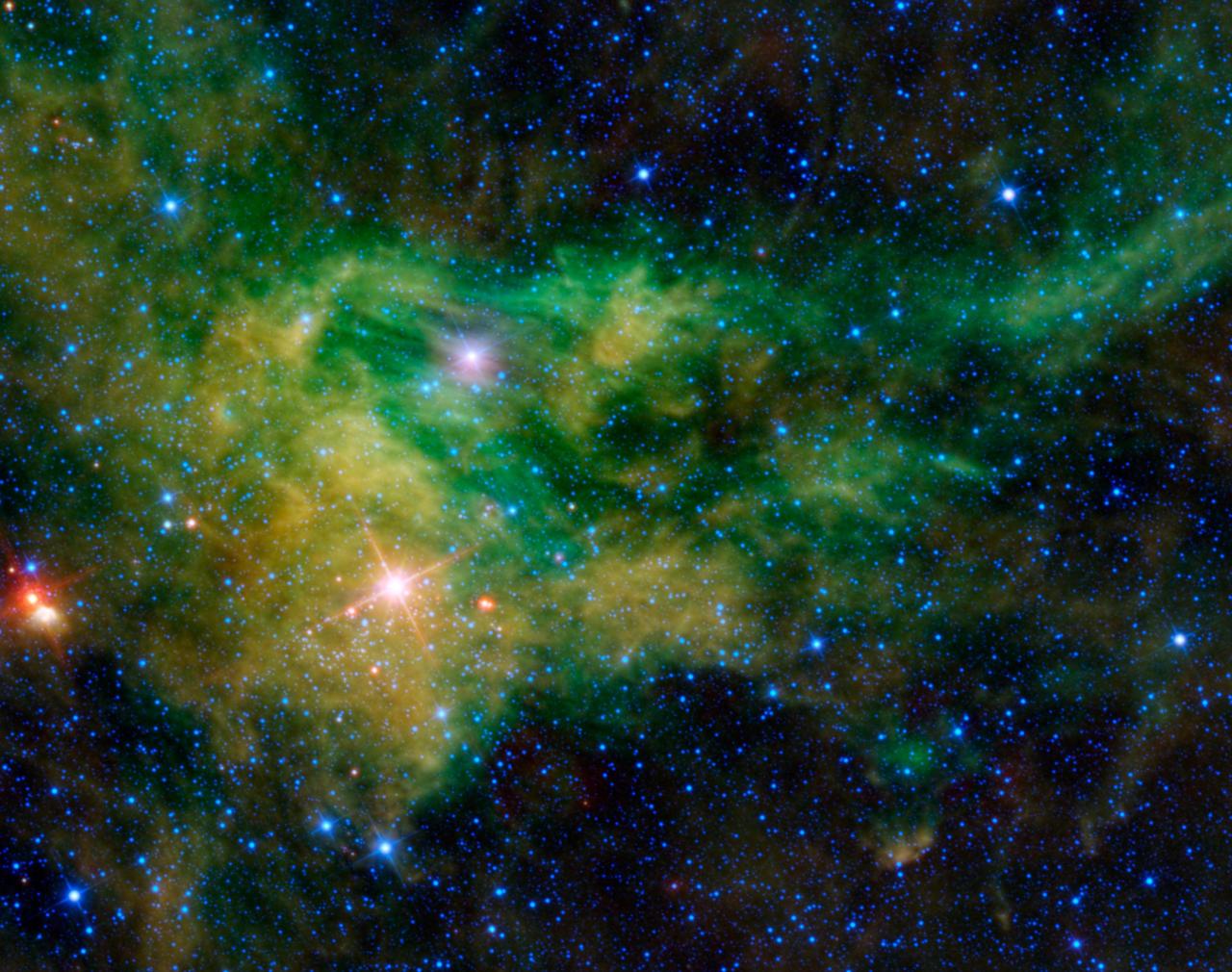
The Milky Way arching across a dark summer sky — Corona Borealis, the Northern Crown, sits between the bright stars Arcturus and Vega in this region of the sky

Credit: NASA/JPL-Caltech


Frequently Asked Questions

Is Corona Borealis visible from the southern hemisphere?

Yes — Corona Borealis is partially visible from the southern hemisphere. It appears low in the northern sky during winter (June–August) for observers north of about 40°S. The full arc is visible above 50°N, while observers at 30°S see only the brightest stars of the crown near the horizon.

What is the best time to see T CrB erupt?

T CrB is predicted to erupt in 2026, possibly between June and December. Corona Borealis is ideally placed for evening observing from May through September, meaning when the eruption occurs, the constellation will be high overhead in the evening sky for northern hemisphere observers. Check our live status tracker for real-time updates.

What does Alphacca mean?

Alphacca comes from the Arabic "al-fakkah," meaning "the breaking apart" or "the broken ring." This refers to the distinctive U- or C-shape of the Corona Borealis stars — the crown appears broken open rather than forming a complete circle.

Can I see the Corona Borealis galaxy cluster?

Abell 2065 is a challenging visual target requiring at least a 12-inch telescope under very dark skies. Its brightest member galaxies are magnitude 14–15. It is a spectacular target for astrophotographers with 8-inch or larger telescopes using long exposures.

How is Corona Borealis different from Corona Australis?

Corona Australis (the Southern Crown) is a smaller, fainter constellation in the southern hemisphere, located near Sagittarius. Both form crown shapes, but Corona Borealis is larger, brighter, and visible from the northern hemisphere. They are unrelated constellations from different mythological traditions.