How to See the Dumbbell Nebula (M27) Through a Telescope — Complete Guide
Telescope Advisor Logo Telescope Advisor
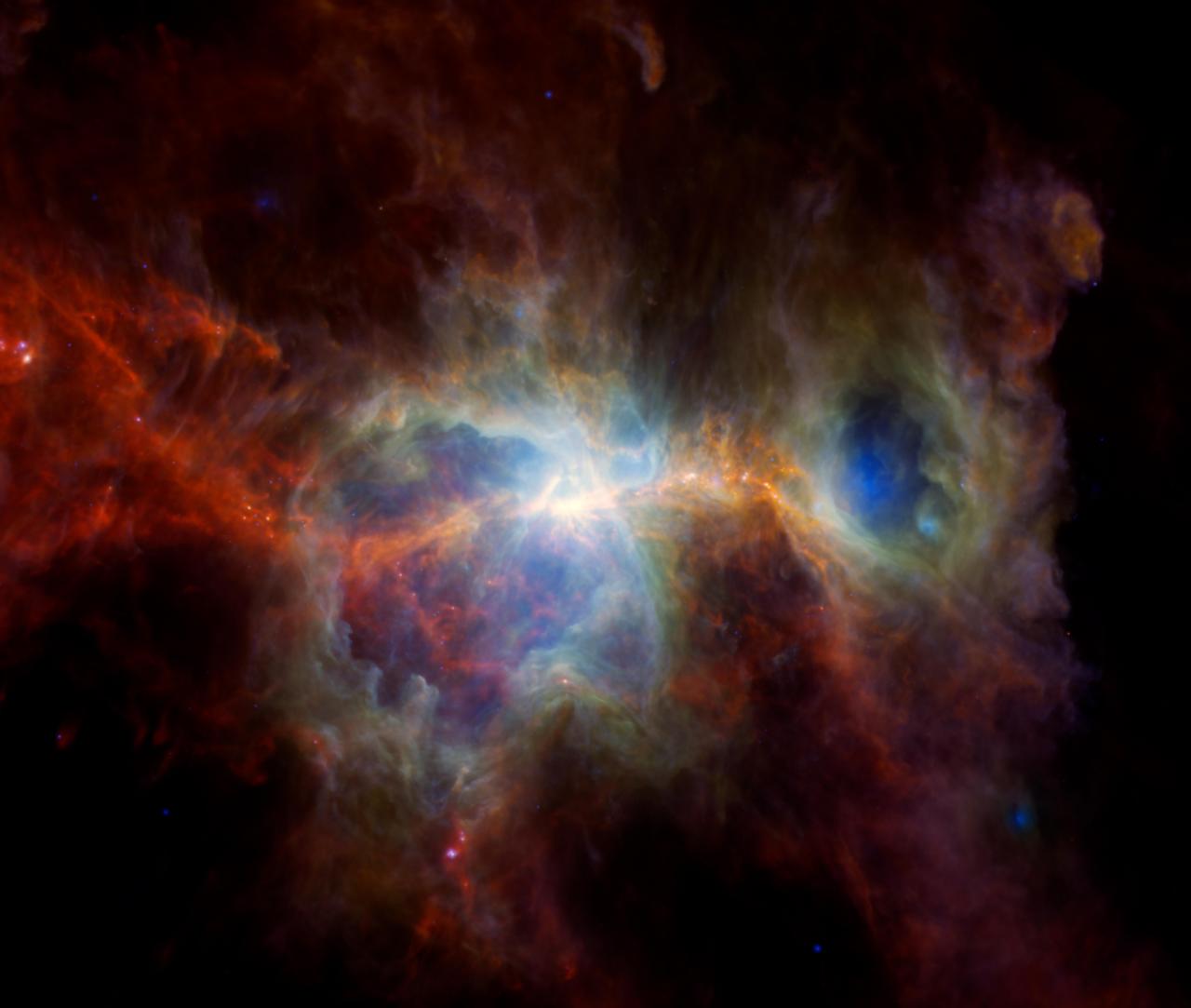
A glowing emission nebula — representative of the bright planetary nebulae visible through amateur telescopes, similar to the Dumbbell Nebula (M27)

Observing Guide · Summer Deep Sky

How to See the Dumbbell Nebula (M27) Through a Telescope

The Dumbbell Nebula is the brightest and largest planetary nebula in the entire sky — a glowing hourglass of ionized gas expelled by a dying star 1,360 light-years away. Unlike many deep-sky objects that require large apertures and dark skies to appreciate, M27 is bright enough to show its distinctive shape in modest telescopes from suburban locations. Discovered by Charles Messier in 1764, it was the first planetary nebula ever identified — and it remains one of the most rewarding summer targets for telescope owners of all skill levels.

Object typePlanetary nebula (M27)
Apparent magnitude7.4
Best seasonJune – October
Min. aperture60mm sees the shape
By Telescope Advisor Editorial Team Published: Updated: Reviewed & approved by Juhi Sahni, Senior Editor Editorial Standards

Quick Answer: What Telescope Do I Need for the Dumbbell Nebula?

The Dumbbell Nebula is visible in any telescope and even in large binoculars. Through 15×70 binoculars, M27 appears as a distinct grey patch — noticeably larger and brighter than the nearby Ring Nebula (M57). A 60–70mm refractor at 40–60× reveals the nebula's distinctive hourglass or apple-core shape, making it one of the few deep-sky objects that actually shows structural detail in small apertures. A 130mm (5-inch) scope at 80–100× reveals the full dumbbell shape with clearly defined lobes and a brighter central region. An 8-inch (200mm) Dobsonian at 120–150× shows mottled structure within each lobe, with the central star (magnitude 13.5) becoming visible on steady nights.

How to Find M27 in Vulpecula

M27 lies in the small, faint constellation Vulpecula (the Fox), which is best located by starting from the Summer Triangle — the prominent asterism formed by the bright stars Vega (Lyra), Altair (Aquila), and Deneb (Cygnus). M27 sits roughly halfway between Gamma Sagittae (the tip of Sagitta, the Arrow) and Albireo (Beta Cygni, the beautiful double star at the base of Cygnus).

A more precise method: centre your finder scope on the small constellation Sagitta (the Arrow), which is easy to identify as a compact arrow-shaped group of four stars pointing east-northeast. From the tip of Sagitta's arrow (Gamma Sagittae), move your finder about 3° north-northeast — approximately the width of a finder scope field of view. M27 appears as a large, bright fuzzy patch that is unmistakable even in a 6×30 finder scope. At magnitude 7.4, it is bright enough to be visible in 10×50 binoculars from suburban skies.

The best time to observe M27 is from June through October, when Vulpecula is high overhead in the evening sky. The constellation culminates around midnight in July and by 9–10 p.m. in September. From Bortle 4 skies or better, the nebula is obvious in any telescope. In Bortle 5–6 suburban skies, M27 remains clearly visible — its high surface brightness makes it one of the most resilient deep-sky objects against light pollution. An O-III or UHC filter enhances the nebula's contrast and reveals fainter extensions from the main lobes.

What M27 Looks Like Through Different Apertures

Instrument Tier Best Magnification What You'll See
15×70 binocularsEntry15×Distinct grey patch, clearly non-stellar. Larger and brighter than M57 in the same field.
70mm refractorEntry40–60×Clear hourglass/apple-core shape. The two lobes are visible as brighter regions with a darker central band.
130mm (5") reflectorMid-tier80–100×Full dumbbell shape with defined lobes. Central region appears brighter. Outer edges show subtle structure.
200mm (8") DobsonianMid-tier+120–150×Mottled structure within lobes. Central star visible with averted vision. Faint outer halo extends beyond main lobes.
300mm (12")+Premium150–250×Central star steadily visible. Detailed mottling and filamentary structure. Outer halo clearly traced. Color hints visible.

Best Telescopes for the Dumbbell Nebula

Because M27 is bright and large, it rewards observers at every aperture level. Even a small telescope shows its distinctive shape, but larger apertures reveal the subtle details that make this object truly spectacular. Here are our top telescope recommendations for M27 observation.

Editor's Pick — Best for Planetry Nebulae
Sky-Watcher Classic 200P

Sky-Watcher Classic 200P (8-inch Dobsonian)

The 8-inch Dobsonian at 120–150× transforms M27 from a simple dumbbell into a complex structure. Each lobe shows brightness variations and mottling, the central star becomes accessible with averted vision, and the faint outer halo — rarely seen in smaller scopes — extends beyond the main lobes. The same telescope reveals dozens of other planetary nebulae including M57, the Blue Snowball (NGC 7662), and the Blinking Planetary (NGC 6826).

Sky-Watcher Heritage 130P

Sky-Watcher Heritage 130P

At 80×, the 130mm shows the dumbbell shape clearly with distinct lobes. Portable tabletop design — ideal for dark sky trips where M27's outer structure pops.

Celestron AstroMaster 70AZ

Celestron AstroMaster 70AZ

Even at 70mm, M27 shows its distinctive apple-core shape at 40–60×. The most affordable way to see a planetary nebula's structure.

The Science Behind M27

M27 was the first planetary nebula ever recognized as such. When Charles Messier discovered it on July 12, 1764, he described it as a "nebula without a star" — an oval patch of light with no central point source visible in his modest telescope. It was not until 1785 that William Herschel, using his larger telescopes, began to suspect that these "planetary nebulae" might be shells of gas surrounding dying stars. Herschel's term "planetary nebula" stuck because the objects appeared round and greenish in his telescopes — resembling the planet Uranus — not because they have anything to do with planets.

The central star of M27 is a white dwarf with a surface temperature of approximately 85,000°C — so hot that most of its energy is emitted as ultraviolet radiation. This UV light ionizes the surrounding gas, causing it to fluoresce in visible wavelengths. The nebula's distinctive hourglass shape is the result of the dying star's earlier mass loss being focused into bipolar jets, possibly shaped by a binary companion star or by the star's own magnetic field. The nebula expands at roughly 31 km/s and spans approximately 3.5 light-years across — significantly larger than the Ring Nebula (M57) which is only about 1.3 light-years in diameter.

At 1,360 light-years away, M27 is one of the closest planetary nebulae to Earth, which explains why it appears so large and bright compared to other objects of its type. Its proximity makes it a favoured target for professional astronomers studying the chemical enrichment of the interstellar medium — planetary nebulae are responsible for dispersing carbon, nitrogen, and other heavy elements into space, enriching the raw material from which future generations of stars and planets form.

Observing M27 at different magnifications reveals different aspects of its structure. At low power (40–60×), the full nebula fits comfortably in the eyepiece field, showing the distinctive hourglass shape against the background sky. At medium power (80–120×), the internal structure of each lobe becomes apparent, with brightness variations hinting at the complex three-dimensional shape of the expanding gas shell. At high power (150×+), observers with 8-inch and larger telescopes can attempt to spot the central white dwarf — a faint point of light at magnitude 13.5, significantly brighter than the central stars of most other planetary nebulae. The central star is easiest to detect when using averted vision and an O-III filter, which darkens the nebula's glow relative to the star.

Filter Recommendations for M27

M27 responds exceptionally well to narrowband filters. An O-III filter dramatically increases contrast, making the nebula's lobes appear brighter and more structured against a darkened sky background. The central bridge between the lobes becomes more distinct, and the outer halo — a faint extension surrounding the main structure — becomes visible in 8-inch and larger telescopes. A UHC filter is also effective and may be preferred for smaller apertures (under 130mm) because it transmits more light. From dark skies, no filter is needed — M27's natural brightness and contrast are sufficient even at moderate magnification.

For those sketching M27 at the eyepiece, start by drawing the nebula's overall hourglass shape at low power, then increase magnification to add detail within each lobe. Note the brightness gradient — the central region between the lobes is often the brightest part, with the lobes themselves showing subtle variations. The northern lobe (top in most eyepiece views) is typically slightly brighter and more defined than the southern lobe. Adding an O-III filter and switching to a higher power can reveal faint extensions beyond the main lobes — streamers of gas escaping the nebula's gravitational pull as the central star continues to shed its outer layers.


Frequently Asked Questions

Can I see the Dumbbell Nebula with a small telescope?

Yes — M27 shows its distinctive dumbbell shape in a 60–70mm telescope at 40–60×. It is one of the few deep-sky objects that reveals structural detail in small apertures. Binoculars show it as a grey patch.

What magnification is best for the Dumbbell Nebula?

80–120× is ideal for most telescopes. M27 is large enough that low power (40–60×) shows its full extent, but medium power reveals the internal structure of the lobes and the central bridge.

How does M27 compare to the Ring Nebula M57?

M27 is larger (3.5 vs 1.3 light-years), brighter (magnitude 7.4 vs 8.8), and shows more structure in small telescopes. M57 is more iconic but M27 is easier to appreciate visually.

Can you see the central star of M27?

The central white dwarf of M27 is magnitude 13.5 — brighter than M57's central star (magnitude 15.8). It is visible in 8-inch+ telescopes under dark skies with averted vision.

What is the best time of year to see the Dumbbell Nebula?

June through October is prime season, when Vulpecula is high in the evening sky. July and August are best — M27 culminates near the zenith around midnight.

What filter is best for the Dumbbell Nebula?

An O-III narrowband filter provides the best contrast enhancement, making the lobes appear brighter and more defined. A UHC filter is also effective, especially for telescopes under 130mm aperture.