How to See the Ring Nebula (M57) Through a Telescope — Complete Guide
Telescope Advisor Logo Telescope Advisor
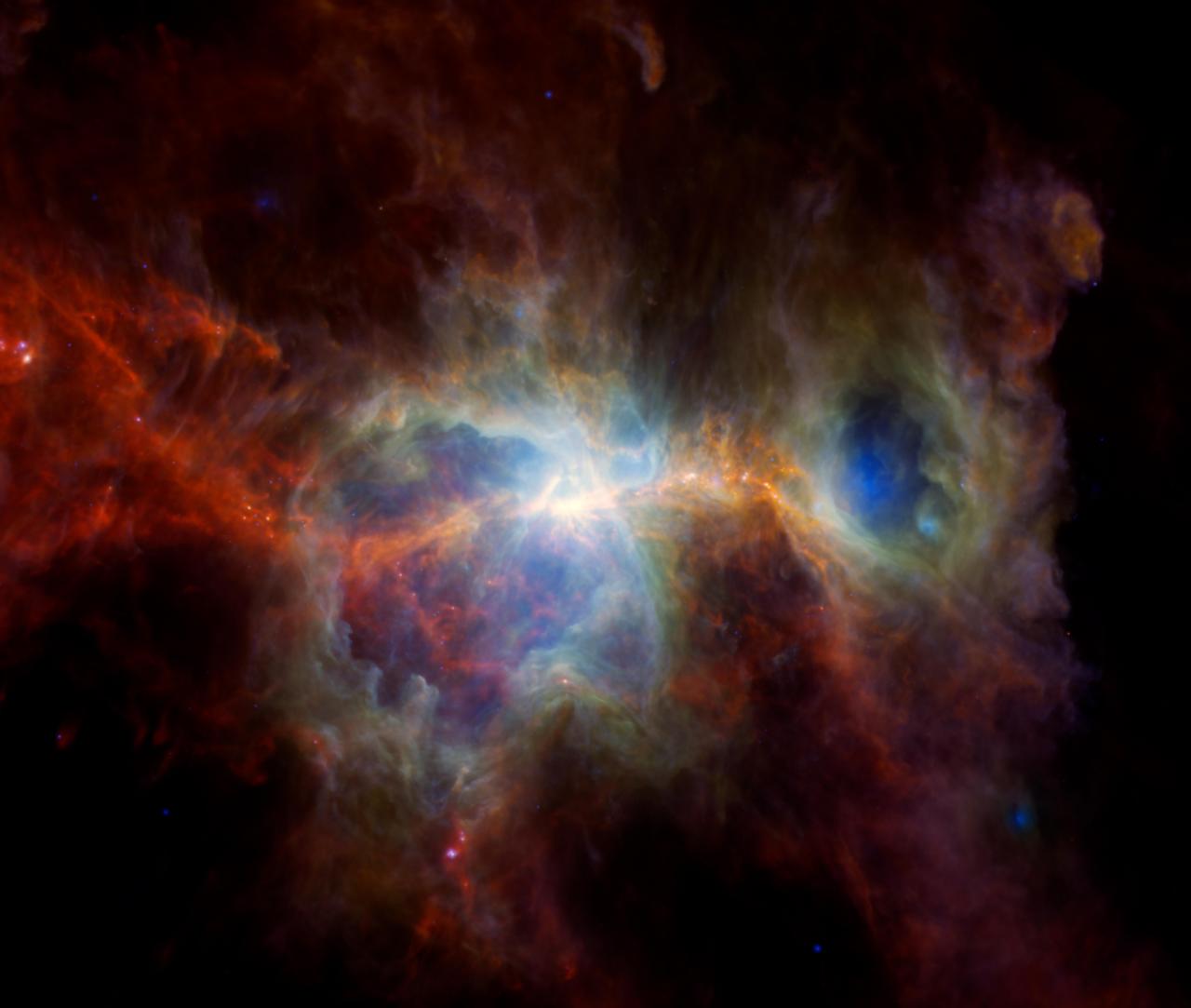
A glowing emission nebula in the night sky — representative of the deep-sky objects visible through amateur telescopes

Observing Guide · Summer Deep Sky

How to See the Ring Nebula (M57) Through a Telescope

The Ring Nebula is the summer sky's most famous deep-sky object — a perfect smoke-ring of glowing gas wrapped around a dying star 2,300 light-years away. Unlike many planetary nebulae that are barely visible in small telescopes, M57 is surprisingly accessible. This guide covers exactly what you need to see it, how to find it, and what it looks like through different telescopes.

Discovered by Antoine Darquier de Pellepoix in 1779 while observing a comet that passed near Lyra that year, M57 was independently identified just weeks later by Charles Messier, who added it to his growing catalog of nebulous objects. Messier described it as "a dim nebula, like a fading planet" — a prescient description given that planetary nebulae were not understood as dying stars until spectroscopic analysis in the 20th century. Today, M57 remains one of the most rewarding targets in the northern summer sky: a benchmark object for testing telescope optics and a consistent crowd-pleaser at public observing nights. Unlike sprawling nebulae such as M42 which span multiple Moon-widths, M57 fits comfortably at moderate to high magnification, challenging observers to pull out its delicate ring structure and — on exceptional nights — glimpse the faint central white dwarf that illuminates it.

Object typePlanetary nebula (M57)
Apparent magnitude8.8
Best seasonJune – October
Min. aperture80mm to see the ring
By Telescope Advisor Editorial Team Published: Updated: Reviewed & approved by Juhi Sahni, Senior Editor Editorial Standards

Quick Answer: What Telescope Do I Need for the Ring Nebula?

The Ring Nebula is visible as a small donut-shaped patch in any telescope with at least 80mm (3-inch) aperture. Through an 80mm refractor at 50–60×, M57 appears as a tiny grey smoke-ring — unmistakably non-stellar, with a darker centre. A 130mm (5-inch) scope at 100× reveals the ring clearly with a defined edge and a darker interior. An 8-inch (200mm) Dobsonian at 150× shows the ring structure in sharp detail — you can see variations in brightness around the ring, and on steady nights the central star becomes visible with averted vision. Binoculars (10×50) show M57 as a faint star-like point, not as a ring — a telescope is required to see its true shape.

How to Find M57 — The Ring Nebula in Lyra

M57 lies in the constellation Lyra, approximately one-third of the way from Sheliak (Beta Lyrae) toward Sulafat (Gamma Lyrae) — the two stars that form the base of Lyra's parallelogram. These two stars are about 4° apart, and M57 sits roughly centred between them. In a finder scope, the nebula appears as a faint star-like point — easy to mistake for an ordinary star at low magnification. The trick: it stays "fuzzy" when you focus perfectly, while real stars become pinpoints.

The best time to observe M57 is from June through October, when Lyra is high overhead in the evening sky. The constellation culminates around midnight in July and by 9–10 p.m. in September, placing M57 at the zenith where light pollution and atmospheric turbulence are minimised. Lyra's brightest star, Vega (magnitude 0.0), serves as a reliable starting point — M57 sits about 8° south-west of Vega.

From Bortle 4 skies or better, M57 is readily visible in an 80mm telescope. In Bortle 5–6 suburban skies, the nebula is fainter but still clearly visible — the ring shape becomes apparent at 80–100× with a UHC or O-III filter, which increases contrast against the skyglow. From Bortle 7+ city skies, use at least a 130mm aperture and an O-III filter to pull out the ring shape at 100×. For more on light pollution and filters, see our light pollution filter guide.

What M57 Looks Like Through Different Apertures

Instrument Tier Best Magnification What You'll See
10×50 binocularsEntry10×Faint star-like point. Appears stellar — no ring structure visible. Confirms location but not shape.
80mm refractorEntry50–60×Small grey donut shape. The hole in the centre is clearly darker than the surrounding ring. Unmistakably a planetary nebula.
130mm (5") reflectorMid-tier100–120×Ring is well-defined with even brightness. The hole is dark and distinct. Slight oval elongation visible.
200mm (8") DobsonianMid-tier+150–200×Sharp ring with brightness variations. Central star becomes visible with averted vision on steady nights. Outer halo hinted.
300mm (12")+Premium200–300×Central star steadily visible. Ring shows mottled structure. Faint outer halo extends beyond the main ring.

Best Telescopes for the Ring Nebula

While the Ring Nebula is visible in any telescope with 80mm+ aperture, the right scope makes the difference between a faint smudge and a spectacular ring. Here are our top picks for M57 observation.

Editor's Pick — Best for M57
Sky-Watcher Classic 200P

Sky-Watcher Classic 200P (8-inch Dobsonian)

The 8-inch Dobsonian transforms M57 from a ghostly ring into a detailed structure. At 150×, the ring is sharp, bright, and clearly shows variations in intensity around its circumference. The central star — a white dwarf with a surface temperature exceeding 100,000°C — becomes visible with averted vision on steady nights. The 200P's 8-inch aperture also makes it the best all-round telescope for summer deep-sky — it delivers stunning views of M13, M27, M11, and countless other objects beyond M57.

Sky-Watcher Heritage 130P

Sky-Watcher Heritage 130P

At 100×, the 130mm shows M57's ring shape clearly with a defined dark centre. Portable tabletop design — ideal for taking to dark sky sites where M57 truly shines.

Celestron AstroMaster 70AZ

Celestron AstroMaster 70AZ

At 50×, the 70mm shows M57 as a tiny but clear donut shape. Budget-friendly entry point for planetary nebula observation.

Why M57 Is a Perfect Summer Target

Planetary nebulae represent the final evolutionary stage of Sun-like stars. When a star of roughly one to eight solar masses exhausts its nuclear fuel — ultimately fusing elements up to carbon and oxygen in its core — it can no longer generate the outward radiation pressure needed to counterbalance its own gravity. The core collapses into a white dwarf, while the outer layers are gently shed into space, forming an expanding shell of ionized gas. The exposed white dwarf, with a surface temperature exceeding 100,000°C, emits intense ultraviolet radiation that causes the surrounding gas to fluoresce — producing the ethereal glow we observe through our telescopes.

M57 is one of the closest and brightest examples of this process, at a distance of approximately 2,300 light-years. The ring structure we see is not actually a ring in the three-dimensional sense — it is a cylindrical or hourglass-shaped shell viewed nearly end-on, which projects as a ring onto the sky. This orientation effect is why M57's shape is so distinct compared to other planetary nebulae: we are looking almost directly down the axis of an expanding bubble of gas, where the denser walls appear as a bright ring and the thinner central region appears darker. The ring itself spans roughly 1.3 light-years in diameter and expands outward at 20–30 km/s. At this rate, the nebula has been growing for approximately 1,600 years since the initial ejection event — a mere blink of an eye in astronomical timescales.

What makes M57 particularly rewarding for amateur observers is that it is one of the few deep-sky objects that actually resembles its photographs — albeit in monochrome. The iconic smoke-ring shape is unmistakable even in modest telescopes, making it a favourite target for public observing nights and a benchmark object for testing telescope optics. The ring's surface brightness is high enough to withstand moderate magnification, allowing small telescopes to show its structure clearly while larger scopes reveal subtle details: brightness variations around the ring, faint extensions on the outer edge, and — with sufficient aperture and steady skies — the 15th-magnitude central white dwarf that powers the entire display.

For planetary nebula enthusiasts, M57 serves as a gateway to more challenging targets. After mastering the Ring, observers typically move to the Dumbbell Nebula (M27) in Vulpecula, the Blue Snowball (NGC 7662) in Andromeda, the Blinking Planetary (NGC 6826) in Cygnus, the Ghost of Jupiter (NGC 3242) in Hydra, and the Eskimo Nebula (NGC 2392) in Gemini. Each of these targets reveals different geometries and central star characteristics — but none quite match M57 for immediate visual impact from suburban skies.

Filter Recommendations for M57

Narrowband filters significantly enhance M57's visibility, especially from light-polluted skies. An O-III filter is the most effective — it isolates the doubly ionized oxygen emission that dominates M57's spectrum, darkening the sky background while keeping the nebula bright. The ring becomes more defined, with better contrast against the surrounding sky. A UHC filter is a good second choice, transmitting both O-III and H-beta lines. From dark skies, neither filter is necessary, but from suburban locations they make the difference between a faint ring and a striking object.


Frequently Asked Questions

Can I see the Ring Nebula with a small telescope?

Yes — M57 is visible as a tiny donut shape in an 80mm telescope at 50–60×. Smaller apertures show it as a faint star-like point without ring structure. A 130mm scope at 100× reveals the ring clearly.

What magnification is best for the Ring Nebula?

100–150× is the sweet spot for M57 in most telescopes. This magnification is high enough to resolve the ring shape clearly while keeping the image bright. Higher power (200×+) works on 8-inch+ scopes but the image dims.

Does the Ring Nebula have colour through a telescope?

Through most telescopes, M57 appears grey-white with a slightly greenish tint from O-III emission. The colour is subtle and most noticeable in 8-inch+ apertures. The vivid blue-green seen in photographs requires long-exposure imaging.

Can you see the central star of M57?

The central white dwarf star of M57 is magnitude 15.8 — extremely faint. It requires at least an 8-inch telescope under dark skies, steady seeing, and averted vision to glimpse. It is invisible in smaller telescopes.

What is the best time of year to see the Ring Nebula?

June through October is the prime season, when Lyra is high in the evening sky. July and August are best — M57 culminates near the zenith around midnight, minimising atmospheric and light pollution effects.

What filter is best for the Ring Nebula?

An O-III narrowband filter significantly enhances M57's contrast — the ring becomes more defined against the sky background. A UHC filter is also effective. From dark skies, no filter is needed, but from suburban locations an O-III filter makes a noticeable difference.

How big is the Ring Nebula compared to other deep-sky objects?

M57 spans about 1.3 light-years across, or roughly 230 arcseconds — about one-eighth the apparent diameter of the full Moon. For comparison, the Orion Nebula (M42) spans 24 light-years but appears larger because it is much closer at 1,344 light-years.