Gemini Constellation: Castor, Pollux, M35, and Winter Twins Guide
Telescope Advisor Logo Telescope Advisor
Winter sky background for Gemini constellation and twins observing

Constellation Guide · Winter Twin Anchor

Gemini Constellation: Castor, Pollux, M35, NGC 2392, and Winter Sky Workflow

Gemini is one of the most practical winter constellations because it offers bright anchor stars, a beginner-friendly cluster, and a rewarding planetary-nebula challenge in one region. This guide focuses on repeatable observing strategy, not just object lists.

Dec-Feb

Best Window

Castor/Pollux

Twin Anchors

M35 + NGC2392

Core Targets

45-90 min

Typical Session

By Telescope Advisor Editorial Team Published: Updated: Editorial Standards

Quick Answer: Why Is Gemini a High-Value Winter Constellation?

Gemini is high-value because Castor and Pollux are easy to identify, M35 is an accessible and beautiful open cluster, and NGC 2392 provides a meaningful medium-difficulty challenge. It is one of the best constellations for moving from beginner confidence into more technical winter observing.

🔭

Not sure which telescope actually fits your goals?

Answer 5 quick questions about your budget, observing targets, and experience level — our Telescope Finder Tool recommends a specific model in under 2 minutes.

Find My Telescope →

What Is the Gemini Constellation?

Gemini is a zodiac constellation represented by the twin stars Castor and Pollux, and it is one of the most useful winter observing regions for practical progression. It has bright, recognizable anchors plus both easy and moderate deep-sky targets. This makes Gemini ideal for structured learning where each session includes one high-confidence object and one technique-building challenge.

In contrast to broader constellations that can feel diffuse, Gemini offers concentrated value. Once Castor and Pollux are fixed, navigation to M35 and nearby targets is straightforward. This allows more observing time and less searching overhead, which is critical for cold-season sessions where comfort and pace affect productivity.

Gemini also links naturally with Orion and Taurus in winter sky workflows. Observers who build route-based sessions across these neighboring constellations usually progress faster than those who treat each target as an isolated one-off mission.

How to Find Castor and Pollux Reliably

  1. Locate Orion first if needed, then move northeast to bright twin stars.
  2. Identify Pollux (orange tint) and Castor (whiter appearance) as Gemini anchors.
  3. Use the twin-line geometry to orient the rest of Gemini.
  4. Start hops toward M35 and other targets once anchor certainty is confirmed.

For beginners, color contrast between Pollux and Castor can aid confidence, especially in moderate skies. This visual distinction is subtle but useful when multiple bright stars compete for attention in winter regions.

The fastest way to improve Gemini acquisition is repetition with minimal tools: lock twins, trace geometry, then execute one target hop. Repeating this on multiple nights builds durable sky memory quickly.

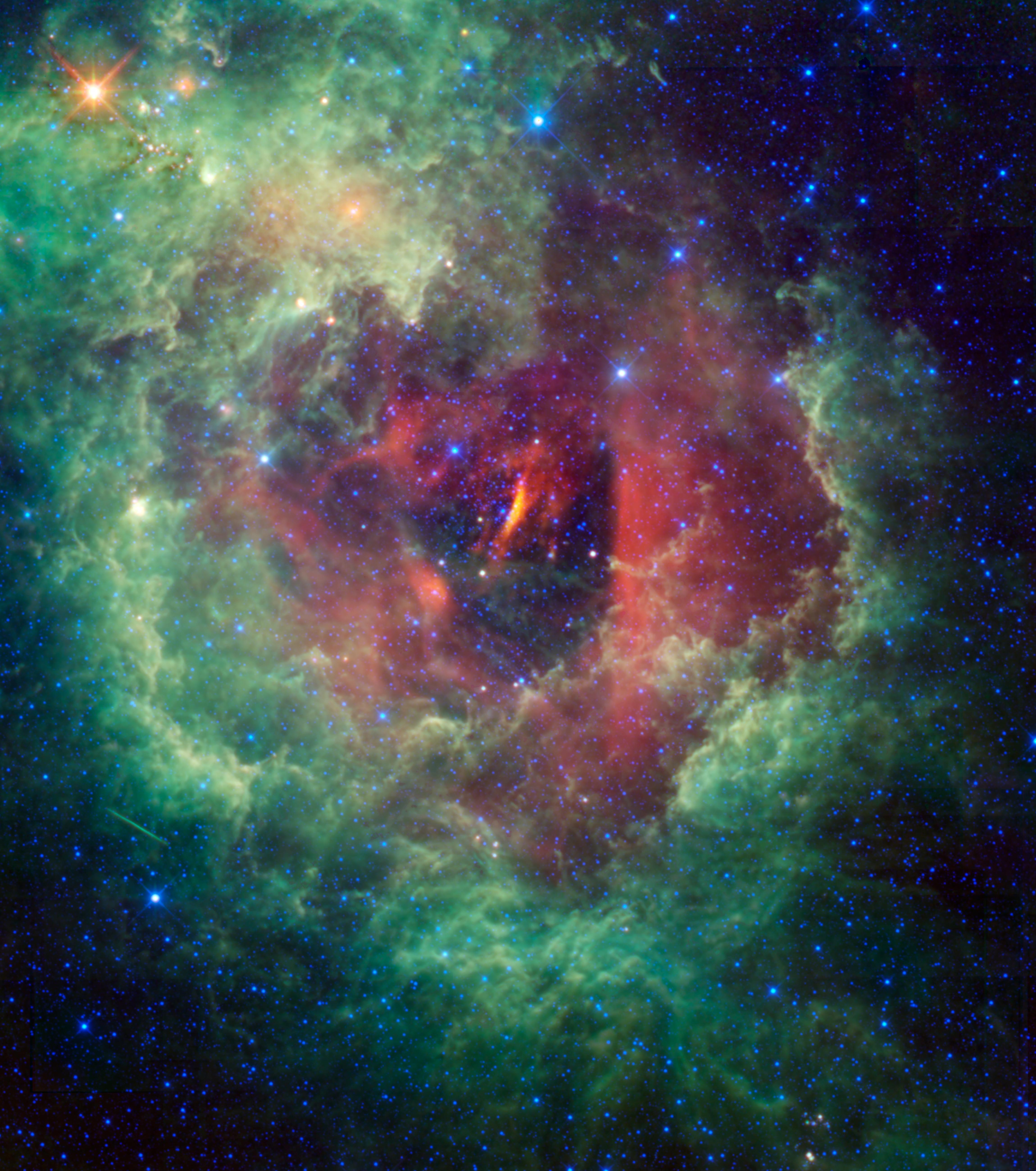
Winter Sky Reference Image (NASA)

NASA winter starfield style image for Gemini session orientation
Use this as a winter-sky atmosphere reference while tracing Gemini from nearby Orion and Taurus anchors.

M35: The Best Beginner Cluster in Gemini

M35 is one of the most approachable open-cluster targets in winter skies. In binoculars it appears as a soft concentration of stars; in small and medium telescopes it resolves into a rich field that responds well to low and medium magnification. This makes M35 a strong confidence anchor for beginners and a reliable calibration target for experienced observers.

M35 is especially useful because it rewards field framing choices. Too much magnification can reduce the contextual beauty of the cluster. Start lower, confirm shape and extent, then increase only if seeing and framing still support a better view. This teaches adaptable magnification strategy, a core skill across deep-sky observing.

For group sessions, M35 often performs better than subtler nebulae because the view is immediately understandable. That shared clarity helps newcomers stay engaged and improves first-night success rates.

If conditions are mediocre, M35 remains one of the most resilient Gemini targets and can still deliver meaningful observing value when fainter objects are compromised.

NGC 2392 (Eskimo Nebula): A Compact Winter Challenge

NGC 2392, often called the Eskimo Nebula, is a compact planetary nebula that offers a rewarding challenge once Gemini orientation is solid. In many amateur scopes it appears as a small disk-like patch rather than detailed structure. Under better seeing and with appropriate magnification, shape confidence and brightness concentration become clearer.

The key is expectation control and workflow discipline. Acquire with moderate power, confirm position against field stars, then adjust magnification incrementally. Jumping immediately to very high power often hurts more than helps unless seeing is excellent.

NGC 2392 is valuable because it teaches small-target patience. Success here transfers directly to other compact nebulae and faint structured targets across seasons.

Winter Planning: Balancing Comfort, Efficiency, and Object Quality

Winter astronomy sessions are often shortened by temperature and dew risk, so planning matters more. Gemini is ideal for efficient winter use because high-value targets are close enough for compact route design. This reduces setup churn and keeps observers focused during narrow comfort windows.

Use a two-tier plan: one high-success target (M35) plus one technical challenge (NGC 2392 or double-star work). If weather degrades, complete at least the high-success tier. This prevents empty nights and maintains progression momentum.

Moon phase remains relevant, but Gemini contains targets that can still be productive in brighter conditions. On moonlit nights, focus on brighter clusters and star-pattern training, then reserve faint-detail attempts for darker windows.

Best Gear for Gemini Winter Targets

Editor's Pick - Best Overall Gemini Performance
Celestron NexStar 8SE for Gemini cluster and nebula observing

Celestron NexStar 8SE

Reliable all-round choice for M35 richness and compact-nebula targeting in cold-season sessions.

Sky-Watcher Heritage 130P for Gemini beginner sessions

Sky-Watcher Heritage 130P

Great entry point for Gemini twin-star orientation and M35 first detections.

Sky-Watcher Classic 200P for Gemini detailed views

Sky-Watcher Classic 200P

Aperture-forward option for stronger M35 star richness and improved compact-nebula confidence.

Gemini Session Plans for Beginner and Intermediate Observers

55-minute winter plan

  1. 10 min: Find Castor and Pollux and lock field geometry.
  2. 20 min: M35 low-medium power pass.
  3. 15 min: Optional NGC 2392 attempt.
  4. 10 min: Repeat easiest target and log conditions.

125-minute full session

  1. 15 min: Winter setup and seeing baseline.
  2. 35 min: M35 with two magnification comparisons.
  3. 30 min: NGC 2392 search and refinement passes.
  4. 25 min: Twin-star color and geometry review.
  5. 20 min: Repeat best target before close.

In cold conditions, short structured sessions with repeatable goals produce better long-term gains than infrequent long attempts.

Extended Guidance: Keeping Gemini Distinct and High-Intent

Gemini content can overlap with broad winter constellation pages unless it is built around distinctive user intent. The strongest intent cluster is practical: find Castor/Pollux quickly, observe M35 successfully, and understand whether NGC 2392 is realistic in current conditions. This guide is intentionally structured around that execution path to reduce cannibalization and improve user task completion.

A second intent stream is comparative winter planning across Orion, Taurus, and Gemini. Gemini often wins for compact efficiency. You can achieve meaningful results with less slewing and fewer repositioning errors. Emphasizing this practical advantage helps users choose better session routes.

From a skills perspective, Gemini is ideal for transitioning from wide-field comfort to compact-target discipline. M35 provides a forgiving success baseline while NGC 2392 introduces precision. This duality makes Gemini one of the best instructional constellations in winter skies.

If you want to improve faster, keep a simple log for each Gemini night: seeing quality, successful targets, and magnification thresholds. Over a few sessions, this reveals reliable patterns that directly improve future object selection and setup choices.

The biggest productivity gain comes from repeating a compact workflow. A constellation you can execute consistently in winter weather is more valuable than a larger plan you rarely finish.

Winter Efficiency System: How Gemini Improves Session Yield in Cold Weather

Winter observing has unique friction: shorter comfort windows, glove-related handling issues, battery performance drops, and higher setup reluctance. Gemini is one of the best constellations for overcoming these constraints because its key anchors are bright, stable, and easy to re-acquire after interruptions. The practical implication is simple: you spend less time recovering orientation and more time on productive observations.

A strong winter system begins with preparation, not optics. Pre-define your first two targets before going outside. In Gemini, that usually means a rapid Castor/Pollux lock followed by M35. If the night becomes uncomfortable, you still secure a meaningful result. This first-win philosophy protects continuity during winter months, when many observers otherwise lose momentum and pause the hobby until spring.

Gemini also supports modular session design. You can run a short module focused only on twin-star orientation and cluster framing, or extend into a technical module with NGC 2392. The same base geometry supports both paths. This modularity is valuable because winter conditions can degrade quickly; you can downshift without abandoning the night.

Another efficiency gain comes from eyepiece discipline. Define one low-power eyepiece for acquisition and one medium/high option for compact-target inspection. Avoid carrying a broad eyepiece spread into the field unless conditions justify it. Less swapping means less heat loss, fewer dropped accessories, and lower cognitive overhead in gloves.

The final element is closure. End each Gemini session with a one-minute note: what was easy, what was hard, and what should be first next time. This tiny habit converts random winter attempts into progressive training blocks and makes each clear night compound previous learning.


Gemini as a Skills Bridge: Double-Star Control and Compact Nebula Technique

One reason Gemini deserves a dedicated page is that it naturally teaches two skills that many beginners struggle to combine: broad-field confidence and compact-target precision. The twin-star anchors and M35 build broad-field fluency, while NGC 2392 introduces small-target confirmation technique. Running both in a single session creates deliberate practice variety without forcing large sky jumps.

For double-star training, focus on clean focus transitions and steady seeing assessment. Even when dramatic splits are not the goal, pair-star observation improves your tolerance for subtle contrast and prepares you for planetary and lunar fine detail later. Gemini gives this training context because the twin-star identity is already central to constellation recognition.

For compact nebula attempts like NGC 2392, avoid the "hunt harder" trap. Use a controlled sequence: acquire field, verify star pattern, increase power gradually, then hold view long enough for low-contrast structure to stabilize in perception. Quick glances often underperform on tiny targets; intentional dwell time matters.

These techniques also reduce cross-page cannibalization risk because they define Gemini intent around workflow depth, not generic constellation trivia. Users searching for practical viewing execution are more likely to stay, complete tasks, and return for adjacent guides.

If your long-term goal is better planetary-nebula and double-star performance, Gemini should be a recurring winter training ground, not a one-time checklist stop.

Troubleshooting Gemini Nights: Fast Fixes for Common Failures

Problem: You can see Orion but cannot confidently identify Gemini twins. Fix: Draw a simple sky triangle with Orion and nearby bright markers before starting. Externalizing geometry improves first-pass confidence more than repeated naked-eye guessing.

Problem: M35 appears underwhelming or sparse. Fix: Drop magnification and widen framing. M35 often looks better when contextual star field is included rather than tightly cropped.

Problem: NGC 2392 is repeatedly missed. Fix: Treat it as a positional exercise first. Confirm field stars around expected location before judging visibility. Many misses are position errors, not sensitivity limits.

Problem: Dew or frost reduces optical quality mid-session. Fix: Prioritize the highest-value target first (usually M35), then proceed to technical targets. Sequence order should account for winter degradation risk.

Problem: Session ends early from cold discomfort. Fix: Pre-commit to a 30- to 60-minute micro-plan instead of aiming for a long run. Short successful sessions build more skill than occasional failed marathons.

Problem: Too many target ideas create indecision. Fix: Use a fixed Gemini template: twins, M35, one challenge target, repeat best object. This structure removes friction and improves repeatability.

Most Gemini failures are process failures. Once workflow is simplified, constellation performance improves quickly even without equipment upgrades.

FAQ: Gemini Constellation

When is Gemini best visible?

Gemini is generally best from December through February in evening skies.

Can beginners find Castor and Pollux easily?

Yes. They are bright and form one of winter sky's easiest anchor pairs.

Is M35 a good first deep-sky target?

Yes. M35 is one of the best beginner winter clusters and works well in binoculars and telescopes.

Is NGC 2392 difficult?

It is a moderate challenge and benefits from stable seeing and careful magnification control.

How is Gemini linked to the Geminid meteor shower?

The Geminid radiant lies in Gemini, making the constellation relevant for meteor-planning context.

Related Guides