
Is a GoTo Telescope Worth It for Beginners? The Honest Case For and Against | Telescope Advisor
Telescope Advisor Logo Telescope Advisor
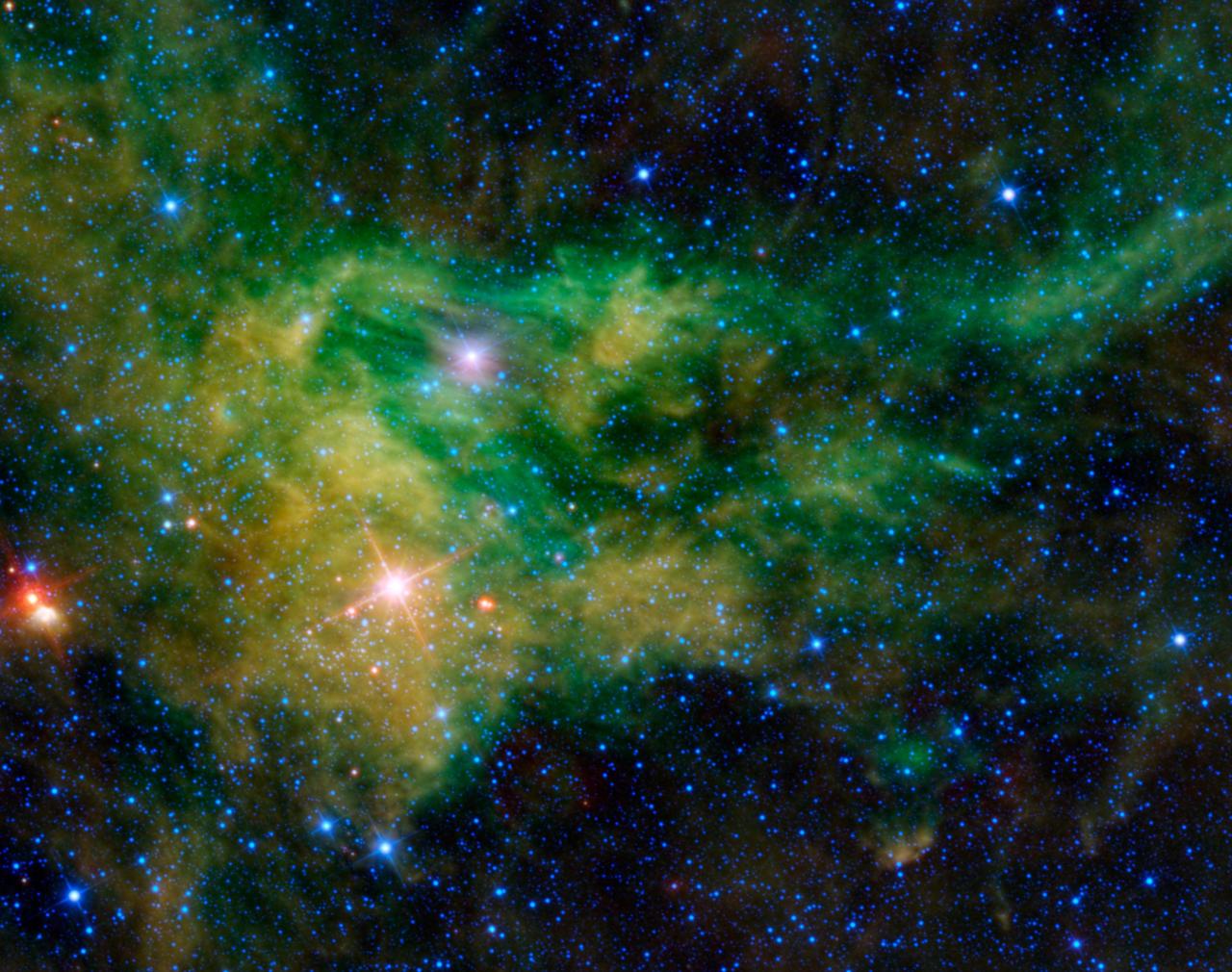
A starry night sky — the question every beginner asks is whether a computerized GoTo telescope is worth the extra cost

GoTo Telescope Guide · 2026

Is a GoTo Telescope Worth It for Beginners?

An honest look at the case for and against computerized telescopes — so you spend $500–$1,500 on the right scope, not the wrong one.

Yes*

For most adults

40,000+

Objects in database

~$500+

GoTo starting price

2–5 min

Align & start observing

By Telescope Advisor Editorial Team Published: Updated: Editorial Standards
ℹ️

This guide is based on manufacturer specifications, community discussion on CloudyNights, and synthesised verified buyer experiences — not hands-on testing of every model. We are transparent about what we know and what we don’t. See our editorial standards →

The Short Answer

Yes — for most busy adults, a GoTo telescope is absolutely worth the extra cost. If your observing sessions are limited to evenings on weekdays or weekends, spending 20–40 minutes manually “star-hopping” to find a single object will quickly kill your enthusiasm. A computerized GoTo mount finds thousands of objects on command in under 10 seconds. You spend your time looking, not searching.

That said, it isn’t the right choice for everyone. The asterisk (*) in our headline matters. Here’s the honest breakdown.

✅ Get a GoTo if you...

  • • Have limited time per session (weeknights, work schedule)
  • • Observe from a suburban or urban backyard
  • • Want to see a variety of objects each session
  • • Plan to do astrophotography even casually
  • • Are buying for someone who isn’t a dedicated hobbyist

❌ Skip GoTo if you...

  • • Are on a tight budget and want the most aperture per dollar
  • • Have access to genuinely dark skies and plenty of time
  • • Want to learn the sky deeply (star-hopping builds real skill)
  • • Prefer a simpler setup — no batteries, no motors
  • • Are buying for a child who may quickly outgrow it

What Is a GoTo Telescope?

A GoTo telescope (also called a computerized telescope) is any telescope mounted on a motorized alt-azimuth or equatorial mount controlled by an onboard computer. You tell the controller what object you want to see — say, the Orion Nebula or Jupiter — and the motors slew the telescope directly to it. Once there, the same motors keep tracking the object as Earth rotates, so it stays centred in your eyepiece.

🌞

Manual Telescope

You push the tube by hand. Objects drift out of view. Finding faint targets requires “star-hopping.”

💻

GoTo Telescope

You type the target. Motors slew to it. Tracking keeps it centred. You just look and enjoy.

📷

Smart Telescope

Phone-controlled, camera built in. Automates both finding and imaging. (e.g. ZWO Seestar S50)

This guide focuses on traditional GoTo SCT and reflector mounts. For smart telescopes, see our ZWO Seestar S50 vs S30 comparison.

The Case FOR GoTo: 5 Real Reasons

These aren’t marketing claims — they’re the reasons experienced observers on CloudyNights consistently recommend GoTo to beginners with limited time.

1

It saves 20–40 minutes per session

Manual star-hopping to find a faint galaxy requires a detailed star atlas, red-light flashlight, memorised star patterns, and 10–20 minutes per target. With GoTo, you align on 2–3 bright stars once (about 5 minutes), then navigate to any of 40,000+ objects in seconds. On a weeknight with a clear window of 90 minutes, that time difference is enormous.

2

40,000+ objects at your fingertips

A Celestron NexStar hand controller contains the entire Messier catalogue (110 objects), the NGC catalogue (over 7,800 objects), IC objects, SAO and HD star catalogues, solar system bodies, and more. You can explore a new type of object every single session for years without exhausting the database.

3

Tracking keeps objects centred — critical for astrophotography

Even for casual astrophotography with a phone adapter, GoTo tracking is essential. Without it, objects drift out of frame within seconds at high magnification. With tracking, you can take 15–30 second exposures that reveal detail invisible to the naked eye. Every NexStar and Synscan GoTo mount includes motorised tracking as standard.

4

It actually helps you learn the sky

Contrary to a common objection, GoTo mounts can accelerate sky knowledge. When the controller slews to M31 Andromeda and you look through the eyepiece and then look up to see where in the sky it is, you form a spatial memory much faster than from a book. Many experienced observers credit their GoTo experience with building the intuition they now use without one.

5

It keeps beginners engaged past the first month

The single biggest telescope graveyard is the one in suburban garages: manual telescopes, barely used, on sale at car boot sales. Frustration from not being able to find anything is the most commonly cited reason beginners quit astronomy. A GoTo scope removes that barrier and lets the hobby actually grow roots.

The Honest Case Against GoTo: 4 Real Objections

These aren’t straw men. If any of these apply strongly to you, a manual telescope may be the better buy.

GoTo costs $200–$500 more than a manual equivalent

A Celestron NexStar 6SE costs around $850–$900. A manual 6-inch Dobsonian reflector with the same aperture costs $300–$400. That $500 gap buys a lot of eyepieces, a Barlow lens, a red-dot finder, and a star atlas. If budget is genuinely tight, more aperture per dollar often wins for visual observing.

More moving parts = more that can fail

GoTo mounts need batteries or a power supply. Motors can develop periodic error or mechanical noise over years. Controllers can freeze. None of these are common problems, but they add a layer of complexity that a simple alt-azimuth mount simply does not have. If you’re heading to a remote dark-sky site, a motor failure is more consequential than forgetting your finder scope.

Manual finding builds skills GoTo never teaches

If you aspire to become a genuinely skilled visual observer — someone who can navigate by eye and find faint objects without electronics — then star-hopping is the path. The discipline required to star-hop to NGC 253 with a paper chart builds intuition that GoTo users often lack after years of use. This is a legitimate objection and many serious amateurs hold it sincerely.

Heavier and bulkier than equivalent manual mounts

The motor housings, counterweight arm, and controller handset add weight and bulk. A NexStar 6SE setup weighs around 30 lb fully assembled. A comparably aperture Dobsonian can be lighter and breaks down more intuitively for transport. If portability is a priority — camping, travel, hiking — a simpler manual setup may make more practical sense.

Which Type of Beginner Are You?

GoTo is the right choice if:

  • ✓  You have 1–2 hours max per session on weeknights
  • ✓  You observe from a suburban backyard with moderate light pollution
  • ✓  You want to see many different objects quickly — not spend a night on one
  • ✓  You are interested in phone-adapter astrophotography
  • ✓  You are gifting to someone who is enthusiastic but not a dedicated student of the sky
  • ✓  You want to share the telescope with non-hobbyist family members who won’t star-hop
🏭

A manual telescope may be better if:

  • ✓  Budget is under $400 and aperture matters most to you
  • ✓  You have access to dark skies and long, uninterrupted sessions
  • ✓  You want to systematically learn your way around the sky
  • ✓  You are buying for a teenager who will enjoy the challenge of finding objects
  • ✓  You prefer simple, battery-free equipment
  • ✓  You are already an intermediate observer considering an upgrade

Best GoTo Telescopes for Beginners (2026)

If you’ve decided GoTo is right for you, these three NexStar models represent the clearest value at each budget tier. All three use Celestron’s mature NexStar+ hand controller with a 40,000+ object database, two-star alignment, and motorised alt-azimuth tracking.

Editor’s Pick — Best GoTo for Serious Beginners
Celestron NexStar 8SE

Celestron NexStar 8SE

Schmidt-Cassegrain • 8″ aperture • f/10 • 2,032mm focal length

The NexStar 8SE is the most popular GoTo telescope in the world for good reason. Its 8-inch aperture delivers genuinely spectacular views of Saturn’s rings, Jupiter’s cloud bands, and deep-sky objects that smaller scopes can only hint at. The single-arm alt-azimuth fork mount makes it manageable solo. The NexStar+ controller is battle-tested and the software is mature. This is the scope serious beginners often skip to — and rarely regret.

Best for planets & deep-sky Astrophotography ready ~$1,499
View on Amazon →
Celestron NexStar 6SE

Celestron NexStar 6SE Best mid-range GoTo

Schmidt-Cassegrain • 6″ aperture • f/10 • 1,500mm focal length

The sweet spot in the NexStar lineup. The 6SE delivers excellent planetary views and sharp images of the Messier objects. It is lighter and more portable than the 8SE while still offering substantially more aperture than entry-level GoTo scopes. The same NexStar+ controller, same alignment process, same mature software ecosystem. The right choice for most beginners who want GoTo without the 8SE’s weight and cost.

Best value mid-range GoTo ~$849
View on Amazon →
Celestron NexStar 5SE

Celestron NexStar 5SE Best entry-level GoTo

Schmidt-Cassegrain • 5″ aperture • f/10 • 1,250mm focal length

The lightest and most portable NexStar SCT, weighing under 14 lb fully assembled. The 5SE is ideal for observers who prioritise portability, want a true GoTo system, and are working with a tighter budget. Saturn’s rings and Jupiter’s moons are clear and satisfying. Globular clusters show resolved stars. Brighter Messier objects look great. It won’t reveal the detail of the 8SE, but it’s a telescope you’ll actually use because it’s easy to carry out.

Most portable NexStar SCT ~$699
View on Amazon →

Want a full comparison of all GoTo telescopes including non-Celestron options? See our Best Computerized Telescopes guide →

What Can a GoTo Beginner Scope Actually See?

🍝  Planets

  • • Saturn: rings, Cassini Division (6SE+), Titan
  • • Jupiter: cloud bands, Great Red Spot, 4 Galilean moons
  • • Mars: polar ice cap at opposition
  • • Venus: crescent phases (any aperture)
  • • The Moon: craters, mountains, rilles

🌈  Nebulae & Clusters

  • • M42 Orion Nebula: green-grey cloud with Trapezium
  • • M13 Hercules Globular: resolved star ball
  • • M45 Pleiades: stunning wide-field cluster
  • • M57 Ring Nebula: smoke ring in Lyra
  • • M1 Crab Nebula (6SE+): faint supernova remnant

⸻  Galaxies

  • • M31 Andromeda: elliptical glow from dark sites
  • • M81 & M82 Bode’s pair: two in one field
  • • M51 Whirlpool: spiral hint visible (8SE from dark sky)
  • • M104 Sombrero: dark dust lane (6SE+)
  • • M87: supergiant elliptical in Virgo Cluster

⚠️ Light pollution note: Galaxies and faint nebulae require dark skies to show detail. From a Bortle 6–8 suburban site, planets and bright star clusters are the main draw. From Bortle 4 or better, a 6SE or 8SE opens up the full deep-sky catalogue. Find your Bortle class →

Frequently Asked Questions

Do GoTo telescopes need GPS?

Most entry- and mid-range GoTo telescopes (including all NexStar SE models) do not require GPS. You enter your date, time, and location manually into the hand controller, then align on two or three bright stars. Higher-end models like the Celestron NexStar Evolution or NexStar GPS series include built-in GPS for fully automated alignment, but it is not necessary for excellent results from the standard SE line.

Can I use a GoTo telescope without knowing any stars?

You need to recognise two or three of the brightest stars in the sky for the initial alignment — stars like Arcturus, Vega, Sirius, or Capella. Most hand controllers include a list of alignment stars and show which ones are above the horizon at your current location and time. A free phone app like SkySafari or Stellarium (pointing at the sky in AR mode) makes identifying alignment stars trivially easy even for complete beginners. After alignment, you need no further star knowledge to use the GoTo system.

Is a NexStar GoTo better than a large Dobsonian for a beginner?

It depends on what you value. A 10-inch Dobsonian ($600–$700) gathers nearly twice the light of a NexStar 6SE ($850) and costs less — but you must find everything manually. A GoTo scope finds objects automatically but offers less aperture at the same price. If you have patience and clear dark skies, a large Dob will show you more. If you are time-limited, urban-based, or sharing the scope with non-hobbyist family members, the NexStar wins. For most casual beginners, the GoTo advantage outweighs the aperture disadvantage.

What is Celestron StarSense Explorer — is it real GoTo?

StarSense Explorer is a push-to system, not a true GoTo. It uses your phone’s camera to recognise star patterns and tells you which direction to push the tube manually to reach a target — the motors do not drive the telescope. It is cheaper and simpler than GoTo, and an excellent upgrade for manual telescopes. However, once you are pointing at the target, there is no tracking — objects drift through the eyepiece as Earth rotates. For any astrophotography beyond brief snapshots, or for keeping objects centred over long sessions, a true GoTo mount is necessary.

Is a GoTo telescope good for kids?

GoTo telescopes are generally not the first recommendation for children under about 14. The two-star alignment process requires patience and fine motor control that younger children often find frustrating. More importantly, children benefit from the challenge of finding objects manually — it keeps them engaged as a skill-building activity rather than a passive button-pressing experience. For younger children, a simple 70–80mm refractor or a 6-inch Dobsonian is usually the better starting point. For teenagers with genuine interest, a NexStar 5SE or 6SE is an excellent step-up choice. See our guide to telescopes for kids →

Related Guides