What Is a Bortle Class? How to Find Yours and What It Means for Your Telescope
Telescope Advisor Logo Telescope Advisor
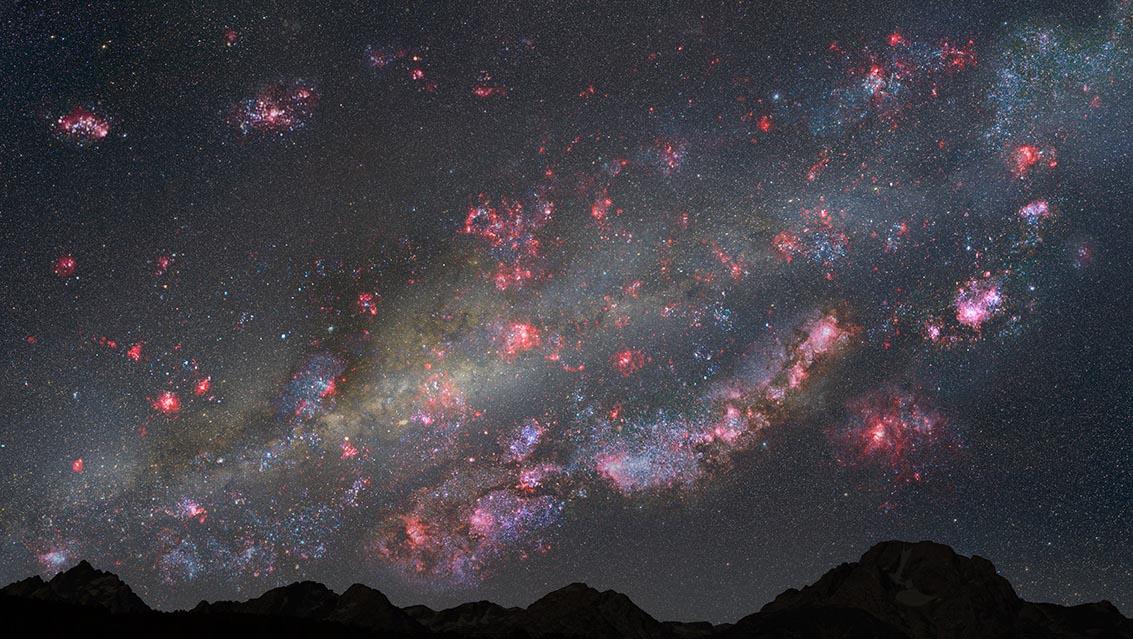
The Milky Way arching over a dark-sky site — visible only from Bortle Class 4 skies and darker

OBSERVING CONDITIONS · BEGINNER GUIDE

What Is a Bortle Class? How to Find Yours in 60 Seconds

The Bortle scale tells you exactly how dark your sky is — and what your telescope can actually show you tonight. Rank 1 is pristine wilderness. Rank 9 is downtown Manhattan. Most backyards are somewhere in between.

9

Bortle classes

60s

To find yours

2001

Scale published

80%

Targets visible at B7

By Telescope Advisor Editorial Team Published: Updated: Editorial Standards

The 30-Second Answer

The Bortle scale is a nine-level rating for how dark your night sky is. It was created by amateur astronomer John E. Bortle and published in Sky & Telescope magazine in February 2001. The scale runs from Class 1 (the darkest skies on Earth, found in remote wilderness) to Class 9 (the washed-out sky above a bright inner city).

Your Bortle class determines what deep-sky objects your telescope can reveal. It has zero effect on planets and the Moon — those look equally spectacular from any city. It matters a great deal for galaxies, nebulae, and the Milky Way.

Quick Bortle class lookup

Class 1–3Rural dark sky — Milky Way stunning
Class 4–5Suburban fringe — Milky Way visible
Class 6–7Suburban — bright deep-sky objects
Class 8–9City/inner-city — planets & Moon

Most US suburban backyards: Bortle 5–7

The 9 Bortle Classes — What Each One Looks Like

The key column for telescope owners is What your telescope shows — this is what changes most dramatically with sky darkness.

Class Sky type Naked-eye limit What your telescope shows
1 Pristine dark Mag 7.6–8.0 Faint galaxies mag 17+, intricate nebulae, zodiacal light
2 Typical dark site Mag 7.1–7.5 M33 direct vision, dark nebulae visible, galaxies to mag 16
3 Rural sky Mag 6.6–7.0 M33 easy direct, Virgo Cluster galaxies resolved
4 Rural–suburban transition Mag 6.1–6.5 All Messier objects, globulars resolved, many NGC objects
5 Suburban fringe Mag 5.6–6.0 Bright Messier objects, M42 Orion Nebula excellent
6 Bright suburban Mag 5.1–5.5 Messier objects prominent, globulars & open clusters excellent
7 Suburban–urban transition Mag 4.6–5.0 Planets superb, Moon breathtaking, 30–40 Messier objects
8 City sky Mag 4.1–4.5 Planets, Moon, Orion Nebula, Pleiades, brightest clusters
9 Inner-city sky < Mag 4.0 Planets and Moon excellent — deep sky very limited

Source: Bortle, J.E. (2001). Gauging Light Pollution: The Bortle Dark-Sky Scale. Sky & Telescope. Magnitudes are approximate limiting naked-eye magnitudes at zenith.

How to Find Your Bortle Class in 60 Seconds

Three methods — pick whichever is easiest.

1

Light Pollution Map (fastest — any device)

Visit lightpollutionmap.info in your browser. The colour overlay uses satellite data to show sky brightness at every point on Earth. Zoom into your home location and match the colour to the key:

■ Black/Blue = Bortle 1–2 ■ Green = Bortle 3–4 ■ Yellow = Bortle 5–6 ■ Red/White = Bortle 7–9
2

Look at the Milky Way (no tools needed)

On a clear moonless night, go outside and look for the Milky Way:

  • You can’t see it at all → Bortle 7–9 (typical suburban/urban)
  • Faint smudge of light overhead → Bortle 5–6 (suburban fringe)
  • Clear arch with dark patches → Bortle 3–4 (rural)
  • Brilliant, casts faint shadows, complex → Bortle 1–2 (exceptional dark site)
3

Sky Quality Meter app

Apps like Dark Sky Finder (iOS/Android) or Globe at Night use your GPS to look up the Bortle class at your exact location. Globe at Night also lets you contribute your own observation to a global citizen-science database.

💡 What is the average Bortle class in the US?

Roughly 80% of Americans live under Bortle 5–8 skies. The most common single class for US suburban neighborhoods is Bortle 6. Only about 10% of the US population has access to Bortle 3 or darker skies from home.

What Your Bortle Class Means for Your Telescope

Here’s the practical breakdown — what you can realistically expect to see with a mid-range 4–8 inch telescope at each sky quality level.

■ Bortle 1–3 — Rural Dark Sky

What you’ll see: Everything. Your telescope’s aperture, not the sky, becomes the limiting factor. Thousands of galaxies, intricate nebulae, globular clusters resolved to the core, zodiacal light, the gegenschein.

Recommended targets: Virgo Galaxy Cluster, Leo Triplet, Veil Nebula, Crab Nebula, all Messier and NGC objects, faint Markarian Chain galaxies.

✓ This is what astrophotographers drive hours to reach. If you live here, you have a rare gift.

■ Bortle 4–5 — Suburban Fringe

What you’ll see: Almost everything in a mid-aperture telescope. The Milky Way is visible overhead. Most Messier objects are easy. Galaxies beyond mag 13 require concentration but are achievable.

Recommended targets: Andromeda Galaxy (M31), Orion Nebula (M42), Ring Nebula (M57), Dumbbell Nebula (M27), Hercules Cluster (M13), Whirlpool Galaxy (M51).

✓ The sweet spot for most serious amateur astronomers. Well worth driving 30–45 minutes from a city.

■ Bortle 6–7 — Typical Suburban (most backyards)

What you’ll see: The brightest 30–50 deep-sky objects, all planets with excellent detail, the Moon with astonishing crater resolution, double stars, open clusters, and bright globular clusters.

Recommended targets: Jupiter (cloud bands, moons), Saturn (rings, Cassini division), Mars, Moon craters, Pleiades (M45), Orion Nebula (M42), Beehive Cluster (M44), Hercules Cluster (M13).

✓ Still highly rewarding. A 130mm Dobsonian shows you hundreds of targets from here.

■ Bortle 8–9 — City & Inner-City Sky

What you’ll see: Planets are unaffected by light pollution — Jupiter, Saturn, Mars, Venus, and the Moon look spectacular from any city. Bright star clusters and the Orion Nebula are visible. Faint galaxies become difficult.

Recommended targets: All 8 planets (even Uranus & Neptune as dots), Moon, double stars (Albireo, Mizar), Orion Nebula, Pleiades, Andromeda Galaxy (smudge), Jupiter’s 4 moons.

✓ Don’t skip astronomy because of city lights. Planets from a city are jaw-dropping. You are missing deep sky, not astronomy.

The One Thing Every Telescope Buyer Gets Wrong About Light Pollution

The most common mistake new telescope owners make is thinking their city sky makes astronomy pointless. It doesn’t. Light pollution affects extended deep-sky objects. It does not affect planets, the Moon, or double stars — at all.

Jupiter’s cloud bands look exactly as detailed from a Bortle 9 city rooftop as they do from a Bortle 2 mountain top. Saturn’s rings are equally sharp. The Moon’s craters are identical. A telescope from a bright city is still a telescope.

Affected by light pollution (Bortle 6+)

  • ✘ Faint galaxies beyond mag 12–13
  • ✘ The Milky Way (naked eye)
  • ✘ Faint planetary nebulae
  • ✘ Very faint nebulae without filters

NOT affected by light pollution

  • ✓ All 8 planets
  • ✓ Moon (crater detail)
  • ✓ Double stars
  • ✓ Bright star clusters
  • ✓ Bright nebulae (Orion Nebula, etc.)
  • ✓ Jupiter’s Galilean moons

Which Telescope to Buy for Your Bortle Class

Two telescopes that excel across the most common Bortle conditions in the US (Bortle 5–8).

Editor’s Pick — Best for Bortle 4–7
Sky-Watcher Heritage 130P tabletop Dobsonian telescope

Sky-Watcher Heritage 130P

Tabletop Dobsonian · 130mm aperture · f/5

At 130mm, this compact Dobsonian gathers enough light to show you galaxies, nebulae, and globular clusters even from Bortle 5–6 suburban skies. The parabolic mirror delivers sharper stars than comparably priced refractors, and the collapsible tube means it stores on a bookshelf. For Bortle 4 dark-sky sites, this scope punches well above its price.

  • ✓ 130mm parabolic primary — excellent at Bortle 4–7
  • ✓ Collapsible FlexTube — packs to 46cm
  • ✓ Included 25mm + 10mm eyepieces ready to use
  • ✓ No electronics — zero alignment, just point and look
Celestron AstroMaster 70AZ refractor telescope

Celestron AstroMaster 70AZ

Refractor · 70mm · Never needs collimating

If you live in a Bortle 7–9 city and mainly want planets and the Moon, this no-fuss refractor is ideal. Refractors are lower maintenance than reflectors — no mirrors to collimate, no thermal cool-down wait. The 70mm lens shows Jupiter’s cloud bands, Saturn’s rings, and the Moon’s craters in crisp detail regardless of your Bortle class.

  • ✓ 70mm refractor — never needs collimation
  • ✓ Perfect for Bortle 7–9 (planets unaffected by city light)
  • ✓ Alt-azimuth mount — intuitive for beginners
  • ✓ Celestron’s top-selling beginner scope

Not sure which is right for your Bortle class?

Use the Telescope Advisor finder tool — enter your Bortle class, budget, and experience level, and it recommends the exact telescope for your specific sky conditions.

Bortle Class FAQ

Does my Bortle class change with the seasons?

Your location’s base Bortle class (from the light pollution map) doesn’t change seasonally. However, atmospheric transparency varies — winter nights are often cleaner and darker-feeling than summer nights due to lower humidity and less atmospheric turbulence. A Bortle 6 sky in January can feel like Bortle 5.

Can I use a light pollution filter to improve my Bortle class?

Light pollution filters (broadband, UHC, or OIII) block the specific wavelengths emitted by sodium and LED street lights, improving contrast for emission nebulae significantly. They don’t improve galaxy or star cluster viewing (which require dark skies). A UHC filter in a Bortle 7 sky can make nebulae look comparable to Bortle 5–6 without a filter. They don’t help with planets or the Moon.

Is Bortle 6 good enough to enjoy astronomy?

Absolutely. From Bortle 6 you can see all the planets, the Moon in stunning detail, 40–50 Messier objects, bright open and globular clusters, the Orion Nebula, the Andromeda Galaxy as a fuzzy patch (naked eye and binoculars), and dozens of NGC galaxies and clusters. Many lifelong amateur astronomers observe almost entirely from Bortle 6 skies and find it completely satisfying.

How far do I need to drive to reach Bortle 4 skies?

It depends on your starting city. From large metro areas (Los Angeles, Chicago, New York, Houston), reaching Bortle 4 typically requires 60–120 miles of driving. Smaller cities often have Bortle 3–4 skies within 30–45 minutes. Use lightpollutionmap.info to plan a dark-sky drive — search for a blue or green-shaded area near your city and check state parks, national forests, or rural open land.

Does aperture help overcome light pollution?

Partly. A larger aperture collects more light — which helps galaxy brightness. But it also brightens the sky background equally, so the contrast of a faint galaxy against the glowing city sky doesn’t improve as much as you’d hope. Moving to a darker site gives more benefit than doubling aperture for deep-sky observing from light-polluted skies. For planets, more aperture always helps, regardless of Bortle class.

What is a Bortle 1 sky like?

A Bortle 1 sky is extraordinary. The Milky Way is so bright it casts visible shadows on the ground. M33 (the Triangulum Galaxy) is easily visible to the naked eye. The zodiacal light is so obvious it can be mistaken for the Milky Way. You can see gegenschein — a faint anti-solar glow — with the naked eye. Truly pristine Bortle 1 skies exist in places like the Australian Outback, Chilean Atacama Desert, Atacama desert, and a few remote US desert locations.

Related Guides

Sources & Further Reading

  • • Bortle, J.E. (2001). Gauging Light Pollution: The Bortle Dark-Sky Scale. Sky & Telescope, February 2001.
  • • Cinzano, P., Falchi, F., & Elvidge, C.D. (2001). The first World Atlas of the artificial night sky brightness. Monthly Notices of the Royal Astronomical Society.
  • • International Dark-Sky Association (IDA). Light Pollution and the Bortle Scale. darksky.org
  • • Light Pollution Map data — Falchi et al. (2016). The new world atlas of artificial night sky brightness. Science Advances.
  • • Globe at Night citizen science program — globeatnight.org