
The 675× Magnification Lie: Why Telescope Box Claims Are Meaningless and How to Read Real Specs
Telescope Advisor Logo Telescope Advisor
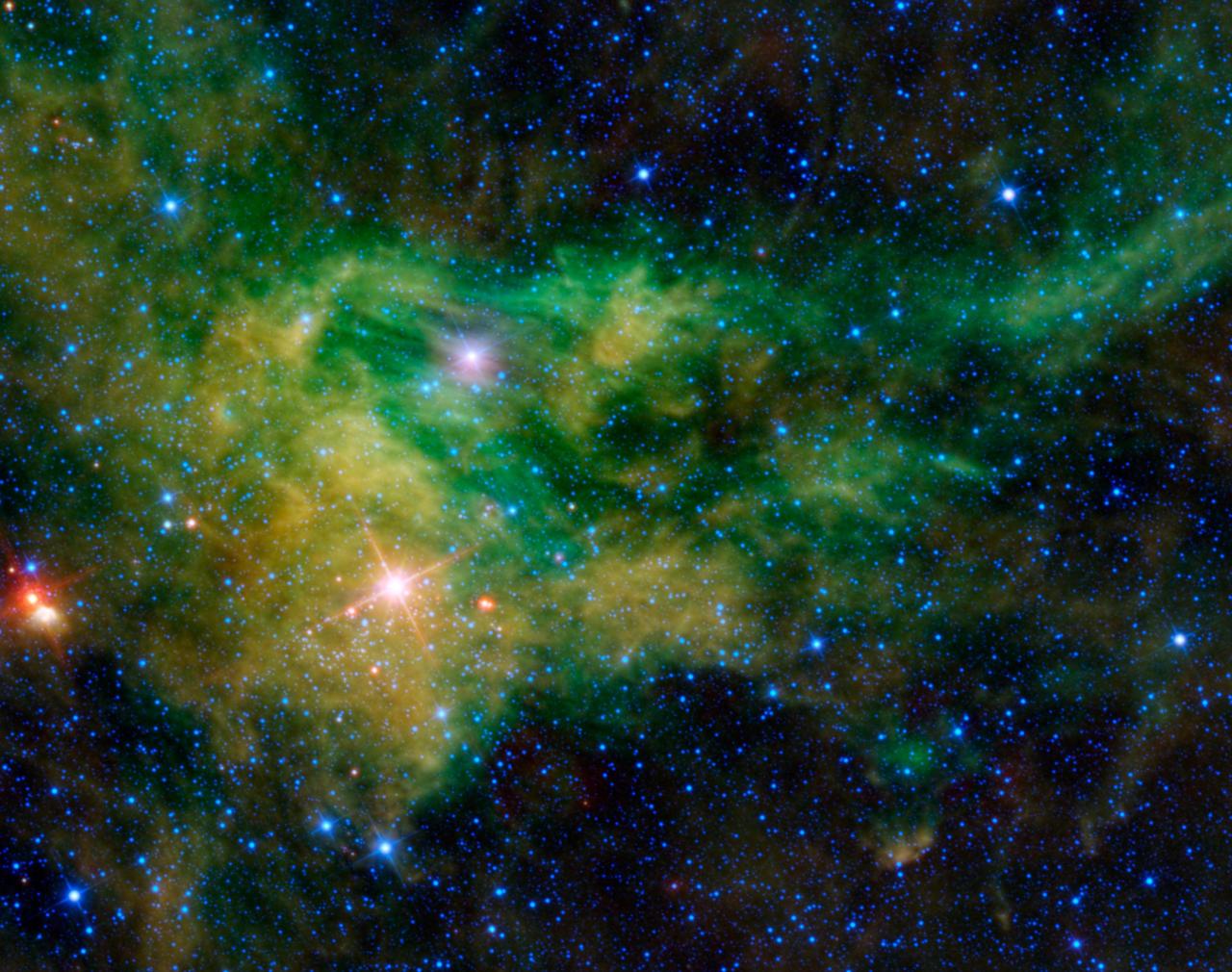
Night sky filled with stars — the real limit of telescope magnification is not what the box says, but what the aperture and atmosphere deliver

Telescope Education · Magnification

The 675× Magnification Lie: Why Telescope Box Claims Are Meaningless and How to Read Real Specs

A 60mm telescope that claims 675× magnification is mathematically impossible. Here is how to cut through the marketing, calculate real magnification, and understand what your telescope can actually deliver.

The lie"675×" on a box is marketing, not physics
The ruleUseful max = 50× per inch of aperture
Real formulaMagnification = focal length ÷ eyepiece
By Telescope Advisor Editorial Team Published: Updated: Editorial Standards

Quick Answer: Why Is "675× Magnification" a Lie?

Because a 60mm telescope cannot physically deliver 675× magnification under any real observing conditions. Here is the short version:

  • The "675×" number is calculated using a tiny 4mm eyepiece and a 2× Barlow lens, then multiplied together on paper. This ignores the laws of physics.
  • The real maximum useful magnification of a 60mm telescope is about 120× (50× per inch of aperture: 60mm = 2.36 inches; 2.36 × 50 = 118×). Beyond that, the image is too dim and blurry to be useful.
  • Magnification is calculated as: telescope focal length ÷ eyepiece focal length. That is it. No other factors. A 700mm focal length scope with a 10mm eyepiece = 70× magnification.
  • Exit pupil is the real limiting factor, not how many times the box multiplies numbers. Every telescope has a maximum exit pupil that limits usable magnification.

This guide explains exactly how magnification works, how to calculate it for your telescope, and what the numbers on the box actually mean — so you never fall for the 675× trap again.

Why 675× Is Impossible for Typical Beginner Scopes

Walk into any toy store, big-box retailer, or browse Amazon for "beginner telescope" and you will see the same scam repeated endlessly: "675× magnification!" "525× power!" "750× zoom!" These numbers are printed in giant bold type on the front of the box. They are almost entirely fabricated.

Here is how the math works — and why it is dishonest:

A typical "675×" telescope package includes a 60mm aperture, 700mm focal length refractor, plus a 4mm eyepiece and a 2× Barlow lens. The manufacturer calculates: 700mm ÷ 4mm = 175×, then 175× × 2 (Barlow) = 350×. Not 675× yet. So they also include a 2× "multiplier" or "image erector" — combining the Barlow multiplier and erector, they claim 4× multiplication: 175 × 4 = 700×. Close enough to 675× for the box printer.

The problem is not the arithmetic — it is the physics. A 60mm telescope has a maximum useful magnification of roughly 118× (2.36 inches × 50× per inch). At 350×, the image through a 60mm scope would be:

  • Impossibly dim: The exit pupil (the beam of light leaving the eyepiece) would be just 0.4mm — far smaller than your eye's pupil. The image would be so dark that you would struggle to see Jupiter's brightest moon, let alone detail on the planet.
  • Unfocused and blurry: At 350× through a 60mm achromatic refractor, chromatic aberration (color fringing) becomes severe. Planets turn into purple-tinged blobs.
  • Inherently distorted by atmosphere: Even professional observatories rarely use 300×+ on most nights because atmospheric turbulence (called "seeing") spreads and blurs the image. On a typical night, the atmosphere limits resolution to about 200–250× regardless of what telescope you have.

The 675× claim is not a spec. It is a sales pitch designed to trick someone who does not yet know how telescopes work. The good news: once you understand two simple formulas, you can never be fooled by box numbers again.

How to spot the magnification lie on any telescope box

If the box prominently displays a magnification number above ~200× for any telescope under 4 inches (100mm) of aperture, it is marketing — not truth. Check the aperture (the diameter of the main lens or mirror), not the magnification number. A 60mm telescope with "675×" on the box and a 70mm telescope with "525×" on the box are the same quality telescope; the magnification number is meaningless for comparison.

How to Calculate Real Magnification

Real telescope magnification comes from exactly one formula. Nothing else matters:

Magnification = Telescope Focal Length ÷ Eyepiece Focal Length

That is the complete formula. There is no "zoom factor." There is no "digital magnification." There is no "multiplier" other than a Barlow lens (which simply doubles or triples the effective focal length of the telescope). Let us work through a real example.

Real-World Magnification Examples

Celestron AstroMaster 70AZ700mm focal length ÷ 20mm eyepiece = 35×
AstroMaster 70AZ + 10mm eyepiece700mm ÷ 10mm = 70×
AstroMaster 70AZ + 10mm + 2× Barlow700mm ÷ 10mm × 2 = 140×
Sky-Watcher Classic 200P (1200mm FL)1200mm ÷ 25mm eyepiece = 48×
Sky-Watcher 200P + 10mm eyepiece1200mm ÷ 10mm = 120×
Sky-Watcher 200P + 5mm eyepiece1200mm ÷ 5mm = 240×
Celestron NexStar 8SE (2032mm FL)2032mm ÷ 40mm eyepiece = 51×
NexStar 8SE + 10mm eyepiece2032mm ÷ 10mm = 203×
NexStar 8SE + 5mm eyepiece2032mm ÷ 5mm = 406× (rarely usable due to atmosphere)

Notice a pattern? The eyepiece determines the magnification range of any telescope. A single telescope body can produce 35× or 203× simply by changing which eyepiece you put in the focuser. That is why the "magnification" printed on the telescope box is meaningless — it depends on which eyepiece you happen to be using at the moment.

A Barlow lens is a simple optical element that multiplies the telescope's focal length by 2× or 3× before the eyepiece sees it. If your 700mm telescope uses a 10mm eyepiece (70×) and adds a 2× Barlow, the effective focal length becomes 1400mm, and magnification becomes 1400mm ÷ 10mm = 140×. Barlows are legitimate tools for increasing magnification without buying a new eyepiece, but the same physical limits apply — a 60mm telescope with a Barlow still cannot deliver 300× because the aperture does not support it.

The "50× Per Inch" Rule for Useful Maximum Magnification

This is the single most important rule in practical telescope magnification. The maximum useful magnification of any telescope is approximately 50× per inch of aperture. Aperture is the diameter of the primary lens or mirror — the single most important specification on any telescope.

Max Useful Magnification = Aperture (in inches) × 50
Aperture Inches Max Useful Magnification Box Claim (typical)
60mm 2.36" 118× 675× (5.7× the real limit)
70mm 2.76" 138× 525× (3.8× the real limit)
80mm 3.15" 157× 400× (2.5× the real limit)
90mm 3.54" 177× Rare in kits
102mm (4") 4.02" 201× Often honest ~200×
130mm (5.1") 5.12" 256× Reasonable
150mm (6") 5.91" 295× Reasonable
203mm (8") 8.0" 400× Legitimate (atmosphere-limited)
254mm (10") 10.0" 500× Legitimate (atmosphere-limited)

Notice that for the 60mm telescope — the most common "beginner" and "department store" telescope — the real maximum useful magnification is 118×. The box says 675×. That is 5.7 times higher than what is physically possible.

This rule has two important caveats. First, "useful" does not mean "possible." You can attach a 4mm eyepiece and a 5× Barlow to a 60mm telescope and get 875× on paper — the image will simply be too dim and blurry to see anything. The telescope does not stop you from using that combination; physics just makes the result useless. Second, even with a large-aperture telescope (8 inches or more), the Earth's atmosphere typically limits useful magnification to around 250–350× on most nights. Only exceptional "seeing" conditions (very steady air) permit 400–500× even with premium telescopes.

The 50× rule is a guide, not a hard cutoff

Some observers push to 60–70× per inch under excellent conditions with high-quality optics. Others find that 30–40× per inch gives the most pleasing views on average nights. The 50× rule represents a reasonable compromise between what is technically achievable and what is practically useful. For a beginner, staying at or below 50× per inch will produce consistently satisfying views.

Exit Pupil Calculation and Why It Matters

The exit pupil is the diameter (in millimeters) of the beam of light that exits the eyepiece and enters your eye. It is the single best indicator of whether an image will be bright enough to be useful. The formula is simple:

Exit Pupil (mm) = Aperture (mm) ÷ Magnification

A more practical version uses the scope's focal ratio: Exit Pupil = Eyepiece Focal Length ÷ Telescope Focal Ratio (f-number). But the aperture/magnification version makes the limiting mechanism clearer.

Here is why exit pupil — not the box's "675×" — is the real limitation:

Situation Exit Pupil Result
7×50 binoculars (7mm exit pupil design) 7.1mm Bright, relaxed view. Matches your dark-adapted eye's pupil opening.
70mm telescope at 35× (20mm eyepiece) 2.0mm Bright, comfortable. Ideal for most observing.
70mm telescope at 118× (max useful) 0.6mm Dim but usable for lunar/planetary detail.
60mm telescope at 350× ("box spec") 0.17mm Nearly dark. Image too dim for any useful observation.
60mm telescope at 675× ("box spec") 0.09mm Essentially zero light. Image invisible.

The human eye's pupil opens to about 7mm in complete darkness (young observers) and 4–5mm for older observers. If the exit pupil of your telescope+eyepiece combination is smaller than ~0.5mm, the image becomes too dim to resolve detail. At 0.17mm exit pupil (the 60mm scope at 350×), the image is approximately 1/1600th as bright as the naked-eye view — far below the threshold for useful planetary observation.

The exit pupil should be between 0.5mm (for high-power planetary viewing) and 7mm (for low-power wide-field viewing). An exit pupil over 7mm wastes light because your eye cannot accept the full beam — this is called "over-afocal" viewing and only matters if you are observing from a dark site with a very fast telescope.

True Field of View Explained

True field of view (TFOV) is the actual angular width of sky you see through the eyepiece — measured in degrees. This is not the same as magnification, though the two are related. The formula:

TFOV (°) = Apparent Field of Eyepiece (°) ÷ Magnification

The apparent field of view (AFOV) of an eyepiece is a property of the eyepiece design. Common AFOV values: Plössl = 50–52°, wide-field = 68–70°, ultra-wide = 82°, extreme-wide = 100°+. The TFOV tells you how much of the sky you can actually see at a given magnification.

Why this matters for the magnification lie: When a telescope box claims 675×, the implied True Field of View with a typical 50° AFOV eyepiece would be 50° ÷ 675× = 0.074° — about 1/8th the diameter of the full Moon. You would be looking at an area of sky smaller than a postage stamp held at arm's length, and it would be virtually dark. Not useful for any real observing task.

By contrast, a sensible 50× magnification (with the same 50° AFOV eyepiece) gives a 1° TFOV — the Moon fits with margin, Jupiter and its moons fit comfortably, and there is enough sky context to orient yourself. The magnification lie is not just about the number being too high; it is about the number being incompatible with any practical observing experience.

Atmospheric Limits: Seeing, Transparency, and Turbulence

Even with a perfect telescope in perfect optical condition, the Earth's atmosphere places an upper limit on useful magnification. This is called "seeing" — a measure of atmospheric steadiness.

Seeing Condition Max Useful Magnification Frequency (typical mid-latitude site)
Poor (stars twinkle violently) 100–150× ~40% of nights
Average (moderate twinkling) 200–250× ~40% of nights
Good (steady stars, calm air) 300–350× ~15% of nights
Excellent (rare, high desert) 400–500× ~5% of nights

This is why even large-aperture telescopes (14-inch, 16-inch, 20-inch) rarely operate above 500×. The atmosphere, not the telescope, is the limiting factor. A 60mm telescope claiming 675× is not just wrong about its own capabilities — it is claiming something that would be impossible through even the largest amateur telescope on the best night of the year.

Practical advice for choosing magnification on any given night: start with the lowest-power eyepiece you have (20mm or 25mm) and observe for a few minutes. If the image is steady, try the next higher magnification. Keep increasing until the image begins to blur or shimmer noticeably — that is your "seeing limit" for the night. The magnification number printed on a box has nothing to do with any of this.

Real Magnifications With Common Telescopes

Here is what realistic magnification looks like across common telescope types — what a manufacturer should print on the box if they were being honest.

Telescope Aperture Focal Length Low Power ~20mm Medium ~10mm High ~5mm + 2× Barlow
70mm refractor (AstroMaster 70AZ) 70mm 700mm 35× 70× 140× (Barlow)
130mm reflector (AstroMaster 130EQ) 130mm 650mm 33× 65× 260× (Barlow)
8" Dobsonian (Sky-Watcher Classic 200P) 203mm 1200mm 48× (25mm) 120× (10mm) 240× (5mm
8" SCT (NexStar 8SE) 203mm 2032mm 51× (40mm) 203× (10mm) 406× (5mm, rarely usable)
127mm Mak (Sky-Watcher Skymax 127) 127mm 1500mm 60× (25mm) 150× (10mm) 300× (5mm, rarely usable)

This table shows what actual astronomers use. Notice that no telescope on this list — including the 8-inch SCT — has a "single magnification number." Every telescope supports a range of magnifications determined by the eyepiece you choose. Boxes that print a single huge number are either lying or using the most misleading possible combination of accessories to maximize the number.

Telescopes That Deliver Honest Specs

These telescopes do not exaggerate magnification on the box. They deliver honest aperture, focal length, and build quality — so you can calculate your real magnification from the actual optical specifications.

Editor's Pick — Best Beginner Scope With Honest Specs
Celestron AstroMaster 70AZ telescope — honest specs, no magnification lies

Celestron AstroMaster 70AZ

70mm aperture 700mm focal length Max useful: ~140× Honest beginner scope

The Celestron AstroMaster 70AZ is a perfect example of a telescope that does not need to lie about magnification. Its 70mm aperture delivers a maximum useful magnification of about 138× (50× per inch rule). Celestron straightforwardly lists its specs as 700mm focal length, f/10 focal ratio — and you calculate your own magnifications from there. The included 20mm eyepiece gives 35× (low power) and the 10mm gives 70× (medium power). With a 2× Barlow, you reach 140× — right at the useful maximum for this aperture. No 675× claims, no "space zoom," just honest optics.

This scope is the most recommended in its price class precisely because Celestron does not exaggerate. The AZ (alt-azimuth) mount is intuitive for beginners, the 70mm aperture shows lunar craters, Jupiter's moons, Saturn's rings, and dozens of deep-sky objects, and the total package stays under $150.

View AstroMaster 70AZ on Amazon →

Affiliate link — we may earn a small commission at no extra cost to you.

Sky-Watcher Classic 200P Dobsonian telescope

Sky-Watcher Classic 200P Dobsonian (8-inch) — Best power-to-value ratio

203mm aperture Max useful: ~400× (atmosphere-limited) 1200mm focal length 2" dual-speed focuser

For those who want serious aperture without the price premium of a computerized mount, the Sky-Watcher 200P is the ideal next step. With 8 inches of aperture, the maximum useful magnification is approximately 400× — but in practice, atmospheric seeing limits most sessions to 200–300×. The 1200mm focal length paired with a 10mm eyepiece gives 120×, perfect for Jupiter's belts, Saturn's rings, and the Orion Nebula. Swap to a 5mm eyepiece for 240× when the atmosphere is steady enough.

View on Amazon →

Affiliate link.

Celestron NexStar 8SE computerized telescope

Celestron NexStar 8SE — Computerized, high-magnification capable

203mm aperture 2032mm focal length Max useful: ~400× GoTo + SkyPortal WiFi

The NexStar 8SE is one of the most popular telescopes ever made, and its longevity is due to honest specifications. Celestron markets it as an 8-inch (203mm) f/10 Schmidt-Cassegrain — the buyer knows the aperture, focal length, and focal ratio, and can calculate their own magnifications. At 2032mm focal length, even a 40mm eyepiece gives 51× (wide-field lunar and planetary views), while a 10mm eyepiece gives 203× — near the practical maximum for most nights. The 8SE does not need to claim 675× because its real capabilities at reasonable magnifications are impressive enough.

View on Amazon →

Affiliate link.

Prices and availability subject to change. All product links are affiliate links — see our editorial standards for our review process.

Telescope Magnification — FAQ

What does "675×" mean on a telescope box?

It is a marketing number calculated by multiplying focal length divided by the smallest included eyepiece, then multiplied by any included Barlow lenses. It does not represent a magnification that produces a usable image. For a typical 60mm telescope, 675× is roughly 5–6 times higher than the maximum useful magnification that the telescope's aperture can support.

How do I calculate real telescope magnification?

Magnification = telescope focal length ÷ eyepiece focal length. For example, a 700mm focal length telescope with a 10mm eyepiece gives 700 ÷ 10 = 70×. If you add a 2× Barlow lens, it becomes 700 ÷ 10 × 2 = 140×. This is the complete formula — there are no other factors that change the magnification number.

What is the "50× per inch" rule?

The 50× per inch rule states that the maximum useful magnification of any telescope is approximately 50 times its aperture in inches. For a 60mm (2.36-inch) telescope that is about 118×. For an 8-inch (203mm) telescope that is about 400×. Going beyond this limit produces an image too dim and blurry to be useful, regardless of what the box claims.

Is higher magnification always better?

No. Higher magnification makes the image dimmer, narrower, and more affected by atmospheric turbulence. For most observing, the best magnification is the lowest one that still reveals the detail you want to see. Many experienced planetary observers prefer 150–200× for Jupiter and Saturn because the image is bright and steady enough to show fine detail. Pushing to 300×+ only works on rare nights with exceptionally steady air.

What is exit pupil and why does it matter?

Exit pupil is the diameter (in mm) of the light beam exiting the eyepiece. It is calculated as aperture ÷ magnification. If the exit pupil is smaller than about 0.5mm, the image becomes too dim to see detail. At the "675×" claimed on some boxes, the exit pupil of a 60mm telescope would be 0.09mm — far too small for any useful viewing.

Can I really see Jupiter's moons at 70×?

Yes. Jupiter's four Galilean moons are visible in any telescope at 30× or higher, and even in 10× binoculars. At 70× through a 70mm refractor, you will see all four moons as distinct pinpricks of light near Jupiter, and the planet's disk will show its two main equatorial belts on most nights. No 675× magnification is needed to enjoy Jupiter — it is one of the most rewarding targets at moderate power.

How do I know which eyepiece to buy for higher magnification?

First calculate your telescope's maximum useful magnification using the 50× per inch rule. Then choose an eyepiece whose focal length gives that magnification: eyepiece focal length = telescope focal length ÷ desired magnification. For example, if your 700mm scope has a max useful magnification of 140×, the shortest eyepiece you should consider is 700 ÷ 140 = 5mm. A 5mm eyepiece or a 10mm eyepiece with a 2× Barlow would work well.

Do expensive telescopes have higher magnification?

Not inherently. Magnification is determined by focal length and eyepiece, not by price. An expensive telescope may have larger aperture (which supports higher useful magnification) and better optics (which produce sharper images at high power), but the magnification number itself is calculated the same way on a $100 scope and a $10,000 scope. The difference is image quality, not the number.

What telescopes should I avoid that use the magnification lie?

Any telescope that prominently displays a single high magnification number (675×, 525×, 750×, etc.) on the front of the box should be treated with skepticism. These are almost always inexpensive refractors on wobbly mounts, sold at big-box retailers and toy stores. Brands to avoid include most department-store brands that do not clearly state aperture and focal length. Brands to trust include Celestron, Sky-Watcher, Apertura, Meade (pre-2024), and Orion (pre-2024) — all of which emphasize aperture and focal length over inflated magnification numbers.

What is the best beginner telescope that does not lie about magnification?

The Celestron AstroMaster 70AZ (ASIN B000MLHMAS) is our top recommendation. It has an honest 70mm aperture, 700mm focal length, and Celestron provides clear specifications without exaggeration. The included eyepieces give 35× and 70×, and a 2× Barlow reaches 140× — all within the telescope's useful range. For a bit more aperture, the Sky-Watcher Classic 200P Dobsonian (ASIN B00Z4G3PRK) is the best value in amateur astronomy.

Related Guides