Night Sky in July 2026: Planets, Constellations & Events | Telescope Advisor
Telescope Advisor Logo Telescope Advisor
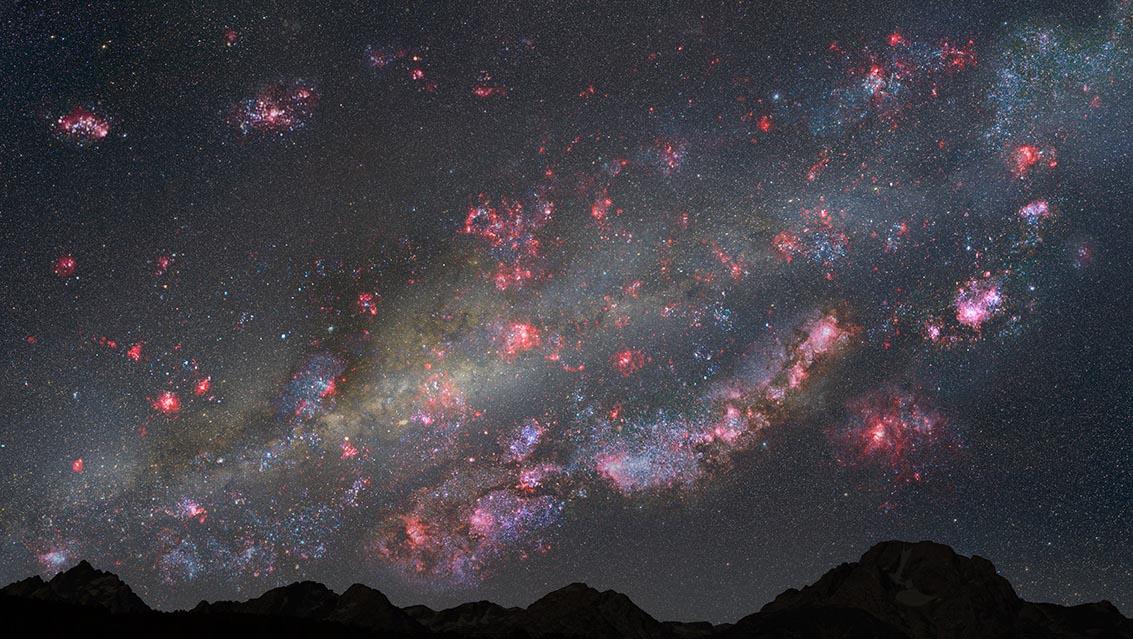
Milky Way arching over a dark landscape — July is prime Milky Way season

Night Sky Guide · July 2026 · No Telescope Needed

Night Sky in July 2026: What You Can See With Your Eyes

July 2026 offers some of the year's best skywatching — and you do not need a telescope to enjoy it. The Milky Way is at its most brilliant, Saturn shines all night at opposition, the Perseid meteor shower begins its annual show, and summer constellations like Cygnus, Lyra, and Scorpius dominate the night. This guide is written for anyone who wants to look up and know what they are seeing — with just your eyes, a pair of binoculars, or a simple star chart.

Planet highlightSaturn at opposition Jul 15
Meteor showerPerseids from Jul 17
Milky WayPrime season all month
Best binocularMilky Way star fields
By Telescope Advisor Editorial Team Published: Updated: Editorial Standards

No Telescope? No Problem.

This guide is designed for naked-eye and binocular observers. Every object mentioned here is visible without a telescope. If you have binoculars, they will enhance the view — 10x50s are ideal. For telescope users, see our companion guide: What to See With a Telescope in July 2026.

Saturn at Opposition — July 15

July 15 is the best night of the year to see Saturn with your own eyes. At opposition, Saturn rises at sunset, is visible all night, and shines at its brightest magnitude of the year (0.0 magnitude). To the naked eye, Saturn appears as a steady, golden-yellow "star" in the constellation Aquarius — noticeably brighter than the surrounding stars and with a distinctive warm colour that sets it apart from the twinkling background.

Through binoculars (even 7x35 or 8x42 models), Saturn's oval shape becomes apparent. You will not see the rings clearly — that requires a telescope — but you can tell that Saturn is not a point of light like a star. This subtle oval shape is one of the most rewarding binocular sights of the year. The best viewing time is around midnight, when Saturn is highest in the sky.

To find Saturn on July 15, look south-east after sunset. The planet rises in the constellation Aquarius, which is not particularly bright, so use a star chart app like Stellarium or Sky-Spot to locate it precisely. Saturn will be the brightest object in that region of the sky — you cannot miss it.

Other Planets Visible in July

Mars (Evening Sky)

Mars is visible in the western evening sky, setting around midnight. It appears as a reddish-orange "star" in Virgo, noticeably redder than the surrounding stars. To the naked eye, its distinctive colour is unmistakable. While Mars is not at its closest to Earth this month, it is still a brilliant object. Binoculars do not reveal much detail on Mars, but they help you pick it out in the twilight sky as it sets.

Jupiter (Morning Sky)

Jupiter rises in the early morning and is best viewed before dawn. By late July, it rises around 03:00 local time. Jupiter is the brightest object in the pre-dawn sky (after Venus), shining at magnitude -2.0. To the naked eye, it appears as a brilliant white beacon. Through binoculars, you can see up to four of its Galilean moons as tiny points of light lined up on either side of the planet — one of the most rewarding binocular sights, and something you can see with any pair of 10x50 binoculars on a steady mount.

Venus (Morning Sky)

Venus is a brilliant "morning star" in July, rising about 2-3 hours before the Sun. At magnitude -4.0, it is by far the brightest object in the sky (after the Moon). Venus is so bright that it is often visible even after sunrise. Through binoculars, Venus shows a crescent phase — similar to a half-lit Moon. This phase changes noticeably from week to week, making Venus a fascinating object to track through July.

Mercury (Elusive)

Mercury is poorly placed in July, staying low in the dawn twilight. Catching it requires a clear, unobstructed eastern horizon and binoculars. It reaches greatest western elongation on July 16, which is the best chance to spot it.

Perseid Meteor Shower

The Perseid meteor shower becomes active from July 17 onward, with rates increasing from 5-10 meteors per hour in late July toward the August 12 peak. The Perseids are one of the most reliable and beloved meteor showers of the year, known for producing bright, fast-moving meteors and occasional fireballs.

You do not need a telescope or binoculars to watch a meteor shower — in fact, they reduce your field of view. The best approach is to lie flat on a lounge chair, wrap up warm, and scan as much of the sky as possible. The radiant (the point from which the meteors appear to come) is in the constellation Perseus, which rises in the north-east after midnight, but meteors can appear anywhere in the sky.

The waxing crescent Moon in late July sets early, leaving dark skies for meteor watching. The best viewing window is from midnight to dawn. Find a location away from city lights — a local park or dark-sky site is ideal.

Milky Way Season

July is prime Milky Way season for northern hemisphere observers. The galactic centre in Sagittarius reaches its highest point around midnight, and the Milky Way arches dramatically across the sky from south-west to north-east. Under dark skies, the Milky Way is visible to the naked eye as a luminous band studded with dark dust lanes — our galaxy viewed from the inside.

The best time to view the Milky Way in July is between midnight and 03:00, when the galactic centre is highest. You need a dark sky location away from light pollution — check a light pollution map and drive to a Bortle class 4 or darker site if possible. The Milky Way is bright enough to be visible from suburban locations, but the darker the sky, the more detail you will see.

Through binoculars, the Milky Way resolves into countless individual stars, star clusters, and nebulae. Sweep slowly along the Milky Way band from Scutum through Sagittarius — every field of view reveals something new. For a dedicated Milky Way observing session, a pair of 10x50 binoculars on a tripod is perfect.

Star-Hopping Guide for July

Star-hopping is the skill of navigating the night sky by moving from bright, easily identified stars to fainter targets. Here are five star-hop routes for July, starting from the most prominent landmarks:

1. The Summer Triangle to the Milky Way

Find Vega (brightest star in the east after sunset), Deneb (north-east of Vega), and Altair (south of Vega). This giant triangle spans about 35 degrees of sky. The Milky Way flows right through the middle of the triangle, passing from Cygnus (Deneb) through Aquila (Altair). Under dark skies, trace the Milky Way southward from Deneb through the Summer Triangle — it gets brighter and more structured as you approach Sagittarius. Use a starchart app like Stellarium or Sky-Spot to identify the exact path.

2. Vega to M13 (Great Hercules Cluster)

From Vega, move your gaze or binoculars about 20 degrees south-east to find the constellation Hercules. Hercules' body is marked by a distinctive quadrilateral of stars called the "Keystone." Look along the right-hand side of the Keystone — about one-third of the way between the top and bottom stars. M13 appears as a fuzzy "star" to the naked eye under dark skies, and binoculars reveal it as a bright, round glow. This is the finest globular cluster in the northern sky, containing hundreds of thousands of stars.

3. Altair to the Wild Duck Cluster (M11)

From Altair, move about 15 degrees south-east to find the small constellation Scutum. M11 is located near Scutum's centre. To the naked eye under dark skies, it appears as a faint patch of light. Binoculars reveal a rich, triangular cluster of dozens of stars packed into a small area — one of the richest open clusters in the sky. The cluster's shape and density are visible in 10x50 binoculars, making it one of the highlights of the July night sky. See more beginner-friendly objects in our easy objects to see with a telescope guide, many of which are also visible in binoculars.

4. Antares to the Milky Way Core

Antares, the brilliant red supergiant marking the heart of Scorpius, is a gateway to the richest part of the Milky Way. From a dark site, trace the Milky Way from Antreas upward through Scorpius and into Sagittarius. The galactic centre lies just above the "teapot" asterism of Sagittarius — a dense, bright region studded with star clusters and nebulae. This area is so rich in binocular targets that you can spend an entire evening just slowly sweeping across it.
Mythology of the Summer Sky

The summer constellations carry rich mythological stories that connect us to ancient observers who traced the same stars thousands of years ago:

Cygnus — The Swan

Cygnus represents Zeus disguised as a swan in the story of Leda. The constellation's cross shape, known as the Northern Cross, makes it one of the most recognisable in the sky. Deneb, the tail of the swan, is one of the most luminous stars known — a blue supergiant over 200,000 times brighter than our Sun, located approximately 2,600 light-years away.

Lyra — The Lyre of Orpheus

Lyra represents the lyre of Orpheus, the legendary musician whose music could charm animals, trees, and even the gods of the underworld. Vega, its brightest star, is the fifth-brightest star in the night sky and only 25 light-years from Earth — making it one of the closest bright stars. In Japanese folklore, Vega represents the weaver princess Orihime, who meets her lover Hikoboshi (Altair) once a year on July 7, when the Milky Way is at its most prominent.

Scorpius — The Scorpion

In Greek myth, Scorpius is the scorpion sent by Gaia to kill the hunter Orion after he boasted he could kill every animal on Earth. Both were placed in the sky, but on opposite sides — Scorpius rises in summer as Orion sets in the west, ensuring they never share the sky at the same time. The bright red star Antares, marking the scorpion's heart, is one of the largest known stars — so large that if placed in our solar system, it would extend past the orbit of Mars.

Dark Sky Sites & Light Pollution Guide

The single biggest factor in what you can see in the night sky is light pollution. The Bortle scale, developed by John E. Bortle and published in Sky & Telescope in 2001, classifies sky brightness from Class 1 (excellent dark sky) to Class 9 (inner-city sky). Most of suburban London falls into Bortle Class 7–8, where only the Moon, brightest planets, and a handful of stars are visible. To see the Milky Way, you need Bortle Class 4 or darker.

The UK has several IDA-designated Dark Sky Reserves within reach of a weekend trip. The Bannau Brycheiniog (Brecon Beacons) National Park in Wales (Bortle 3–4) is approximately 3 hours from London and offers some of the darkest skies in southern Britain. The North York Moors National Park and Exmoor National Park are also Dark Sky Reserves with regular astronomy events. Use lightpollutionmap.info to find dark sites near you.

The Moon phase significantly affects what you can observe. During July 2026, the New Moon on July 3 provides the darkest skies for deep-sky observing. The First Quarter Moon on July 10 sets by midnight, leaving the second half of the night dark. The Full Moon on July 18 washes out faint objects all night, but bright planets, the Moon itself, and the Perseid meteor shower (which peaks on August 12) are still worth observing through moonlight. For the Perseid build-up in late July (Jul 25–31), the Moon rises late, leaving the pre-dawn hours dark — ideal for meteor watching.

For more on choosing the right equipment for your sky conditions, see our best binoculars for stargazing guide and our best telescopes for beginners guide.

Constellations of July

The July night sky is dominated by the summer constellations, many of which contain bright, easily identifiable stars:

  • Cygnus (the Swan) — High overhead, marked by the bright star Deneb at the top of the Northern Cross. Cygnus lies right in the Milky Way, making it rich in binocular targets.
  • Lyra (the Lyre) — Home to Vega, one of the brightest stars in the northern sky. Lyra is small but distinct, and Vega is unmistakable as a brilliant blue-white star high in the east after sunset.
  • Aquila (the Eagle) — Marked by Altair, another of the summer triangle stars. Altair is flanked by two fainter stars that form the eagle's wings.
  • Scorpius (the Scorpion) — Low in the south, marked by the brilliant red supergiant Antares. Scorpius is one of the few constellations that actually looks like its namesake, with a curved tail ending in a sting.
  • Sagittarius (the Archer) — Low in the south, shaped like a teapot. The Milky Way's galactic centre lies just above the teapot's spout — the richest part of the entire night sky.
  • Hercules (the Hero) — High overhead between Lyra and Corona Borealis. While Hercules itself is not particularly bright, it contains the famous Great Globular Cluster (M13), visible to the naked eye under dark skies and spectacular through binoculars.

Best Binocular Targets for July

If you have binoculars, July offers some of the finest wide-field sights of the year. Ten power (10x) binoculars are ideal; here is what to look for:

  • The Double Cluster — Two open clusters side by side in Perseus, visible as a double patch of light in binoculars. One of the finest binocular objects in the northern sky.
  • M31 (Andromeda Galaxy) — Rising in the late evening, visible in binoculars as an elongated fuzzy patch. The bright core is unmistakable.
  • M13 (Great Hercules Cluster) — A globular cluster visible in binoculars as a bright, fuzzy ball in the constellation Hercules.
  • M8 (Lagoon Nebula) — Visible in binoculars as a bright patch in Sagittarius, with a dark lane through the centre.
  • M6 and M7 (Butterfly and Ptolemy Clusters) — Two bright open clusters in Scorpius, visible together in the same binocular field of view.
  • Coathanger (Brocchi's Cluster) — A distinctive asterism in Vulpecula that looks exactly like a coat hanger through binoculars.
Editor's Pick — Best Binoculars for Skywatching
Celestron SkyMaster 15x70 binoculars

Celestron SkyMaster 15x70 Binoculars

15x magnification70mm apertureTripod adaptable

The Celestron SkyMaster 15x70 is our top recommendation for serious binocular skywatching. The 70mm objective lenses gather enough light to reveal the Milky Way's rich star fields, globular clusters, and even the Andromeda Galaxy. The 15x magnification provides a bright, detailed view while still offering a wide enough field for sweeping the Milky Way. A tripod adapter is included for steady viewing.

Check Price on Amazon

Affiliate link.

Celestron UpClose G2 10x50 binoculars

Celestron UpClose G2 10x50 Binoculars

On a budget? The UpClose G2 10x50 offers excellent value at under $50. The 10x50 configuration is the classic astronomy binocular format, delivering bright, wide-field views of the Milky Way, star clusters, and the Moon. Porro prisms and fully coated optics provide good light transmission. Lightweight enough for handheld use.

Check Price on Amazon

Affiliate link.

FAQ — Night Sky July 2026

What planets are visible in July 2026 without a telescope?

Saturn (all night at opposition on July 15), Mars (evening), Jupiter (morning), and Venus (morning). All are visible to the naked eye.

When is the best time to see the Milky Way in July?

Between midnight and 03:00 local time, when the galactic centre in Sagittarius is highest. Dark skies away from light pollution are essential.

Can I see Saturn's rings with binoculars?

You can see that Saturn is not a round point of light — it shows an oval shape through binoculars — but clear ring separation requires a telescope at 50x or higher.

What are the best constellations in July?

Cygnus, Lyra, Aquila (the Summer Triangle), Scorpius, and Sagittarius are the highlight constellations of July. All are easily identified.

When does the Perseid meteor shower start in 2026?

The Perseids become active from July 17, with peak on August 12-13. Rates in late July reach 5-15 meteors per hour under dark skies.

How do I find the Summer Triangle in July?

Look high overhead in the eastern sky after sunset. The three bright stars Vega (blue-white), Deneb (north-east), and Altair (south) form the Summer Triangle.

What is the Bortle scale and why does it matter?

The Bortle scale measures sky brightness from 1 (darkest) to 9 (brightest city). Darker skies reveal more stars, the Milky Way, and fainter deep-sky objects.

What is the myth behind the constellation Scorpius?

Scorpius represents the scorpion sent by Gaia to kill Orion. The scorpion's sting killed Orion, and both were placed in the sky on opposite sides.

Where can I find dark skies near me in the UK?

Bannau Brycheiniog (Brecon Beacons), Exmoor, and North York Moors are IDA dark-sky reserves. Use lightpollutionmap.info to find dark sites near you.