Roman Space Telescope First Year: 10 Discoveries Scientists Expect (2026-2027) | Telescope Advisor
Telescope Advisor Logo Telescope Advisor
NASA artist concept of the Nancy Grace Roman Space Telescope in orbit

Roman Mission Guide - 2026 to 2027

Roman Space Telescope First Year: 10 Discoveries Scientists Expect

Roman launches in late September 2026. In year one, it should map huge sky areas, discover thousands of new exoplanet candidates through microlensing, and deliver fresh clues about dark energy. This guide explains what is likely, what is uncertain, and why backyard observers should care.

Sep 28

Target launch date

100x

Wider sky view than Hubble

Year 1

Commissioning plus first surveys

By Telescope Advisor Editorial Team Published: Updated: Editorial Standards

Quick Answer: What Is Most Likely in Roman's First Year?

Roman's first year should focus on instrument checkout, calibration, and early survey science. The mission is built for wide-field infrared surveys, not single-target closeups. That means the first big wins are likely to be high-volume results: large galaxy catalogs, supernova-rich time-domain fields, and a strong start on microlensing exoplanet detections.

Roman will not instantly replace Webb or Hubble. Instead, it will feed them. Roman finds large samples and unusual targets quickly; Webb and Hubble follow up with deeper, narrower observations.

New to the bigger mission context? Start with our Roman launch guide and our Roman vs Hubble vs Webb comparison.

Roman Mission Visuals (NASA)

These official NASA graphics show how Roman's wide-field strategy differs from narrow-field flagship imaging missions.

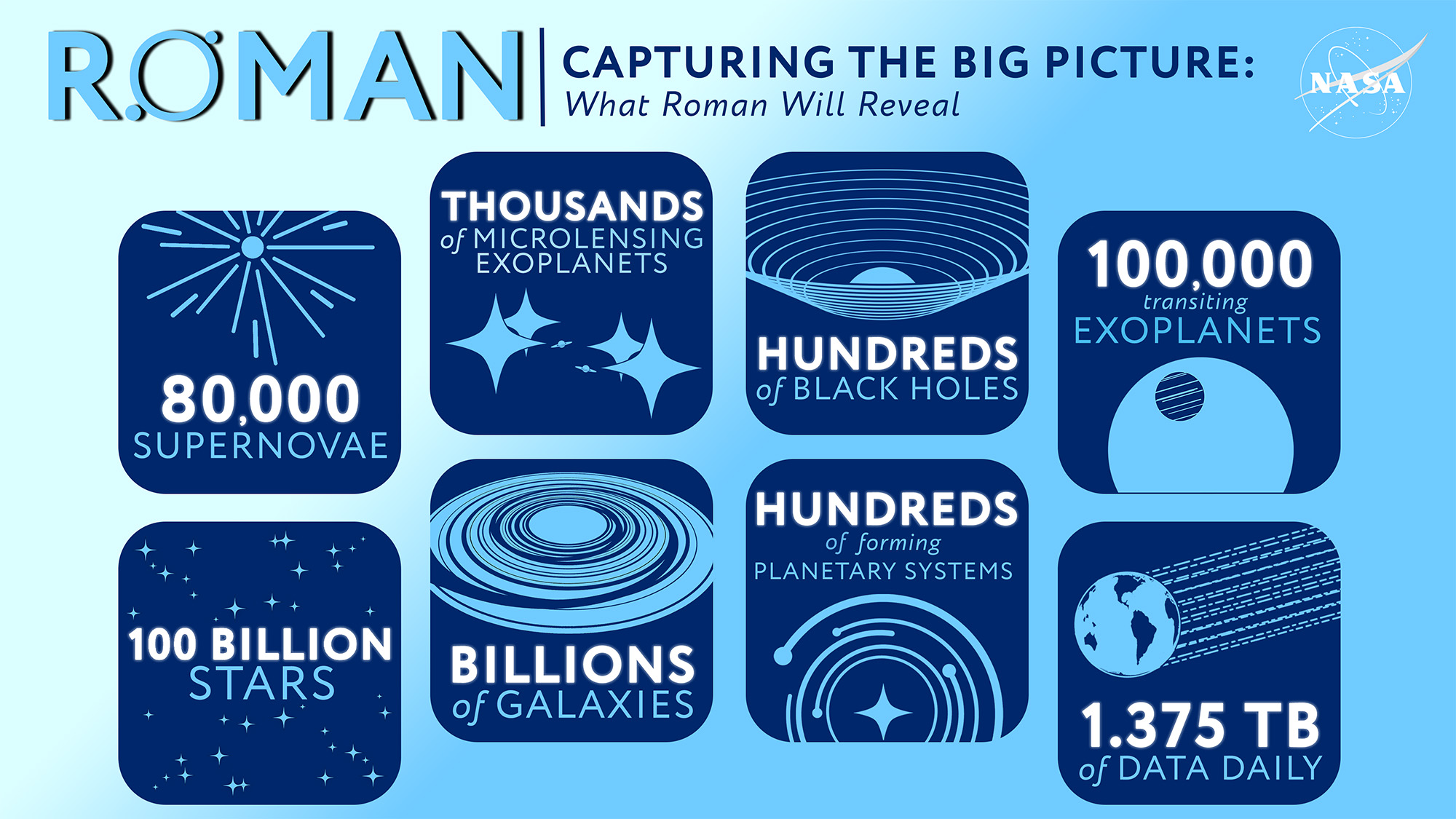
NASA Roman Space Telescope by-the-numbers mission infographic
Roman by the numbers: key mission scale indicators from NASA's official mission material.
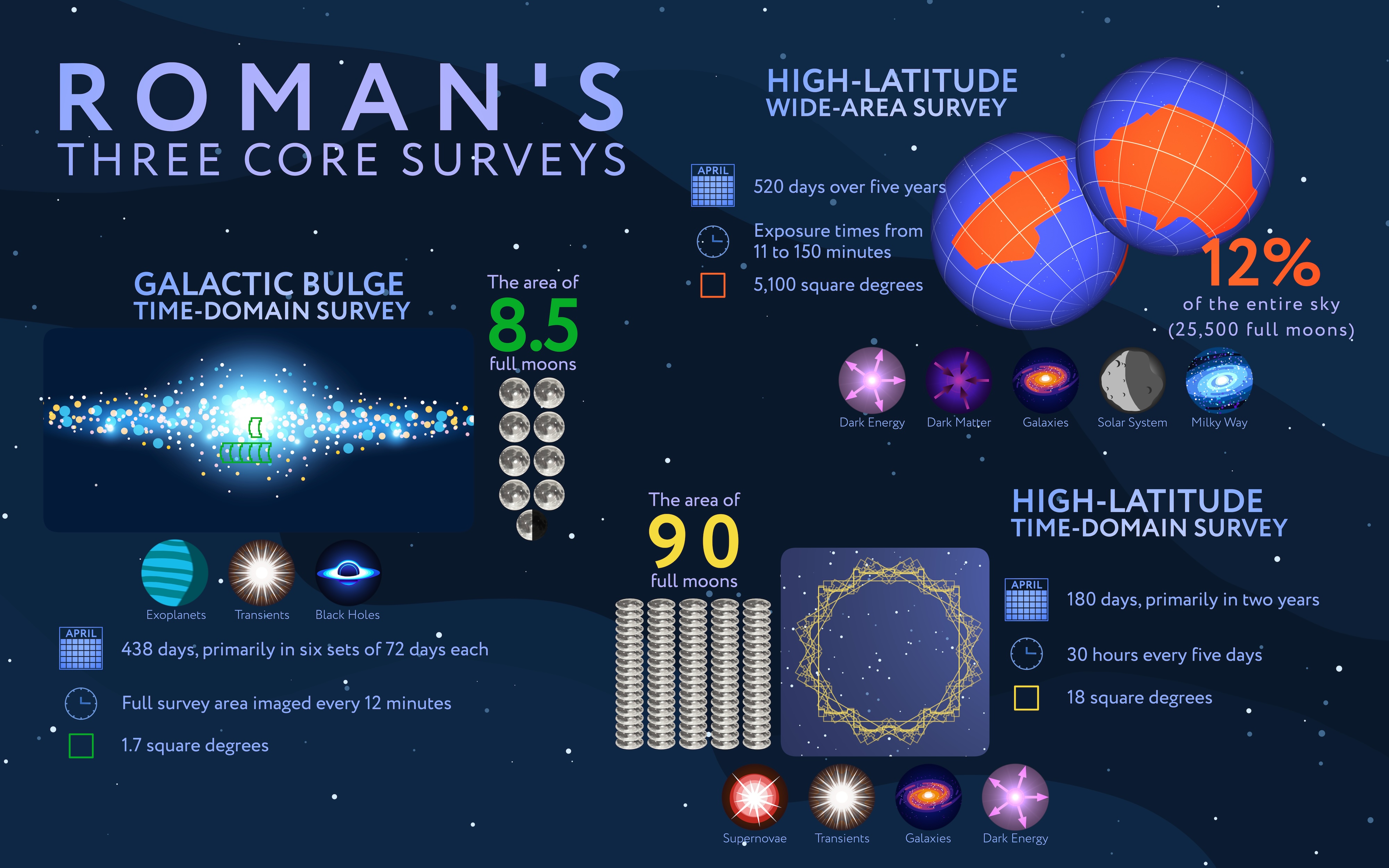
NASA Roman core surveys visual showing the mission's major science programs
Roman core surveys: the mission architecture behind first-year catalog and cosmology output.

10 First-Year Discovery Predictions

These are evidence-based expectations drawn from NASA mission goals and Roman's instrument design. They are predictions, not guarantees.

1. A massive new near-infrared sky map in record time

Roman's wide field should produce survey maps that would have taken many years with narrower telescopes.

2. Early dark-energy measurements from large galaxy samples

Year-one data can begin tightening constraints on cosmic expansion history through wide-field clustering and lensing statistics.

3. Strong start on Type Ia supernova discovery pipelines

Roman's time-domain strategy should quickly identify many supernova candidates for cosmology follow-up.

4. First wave of microlensing exoplanet candidates

By monitoring dense star fields, Roman should catch subtle brightening events tied to planets, including colder and lower-mass worlds that are hard to find by transit methods.

5. Candidate rogue-planet detections

Microlensing is one of the few practical ways to detect free-floating planets. Roman can push this census far beyond current sample sizes.

6. Better maps of dark matter distribution via weak lensing

Roman should begin building large-area weak-lensing maps that trace where matter sits, not just where stars are bright.

7. New high-value targets for Webb spectroscopy

Roman surveys are likely to produce catalogs of unusual galaxies and transients for detailed Webb follow-up.

8. Improved census of galaxy structure over cosmic time

Wide-field imaging can improve statistical studies of galaxy growth and morphology across large sky regions.

9. Public data releases that trigger fast community science

As early calibrated products appear, global teams are likely to produce rapid secondary analyses and discoveries.

10. A more realistic roadmap for years 2 to 5 priorities

First-year performance will reveal where Roman exceeds expectations and where survey strategy should be refined.

Why Roman's Wide Field Matters

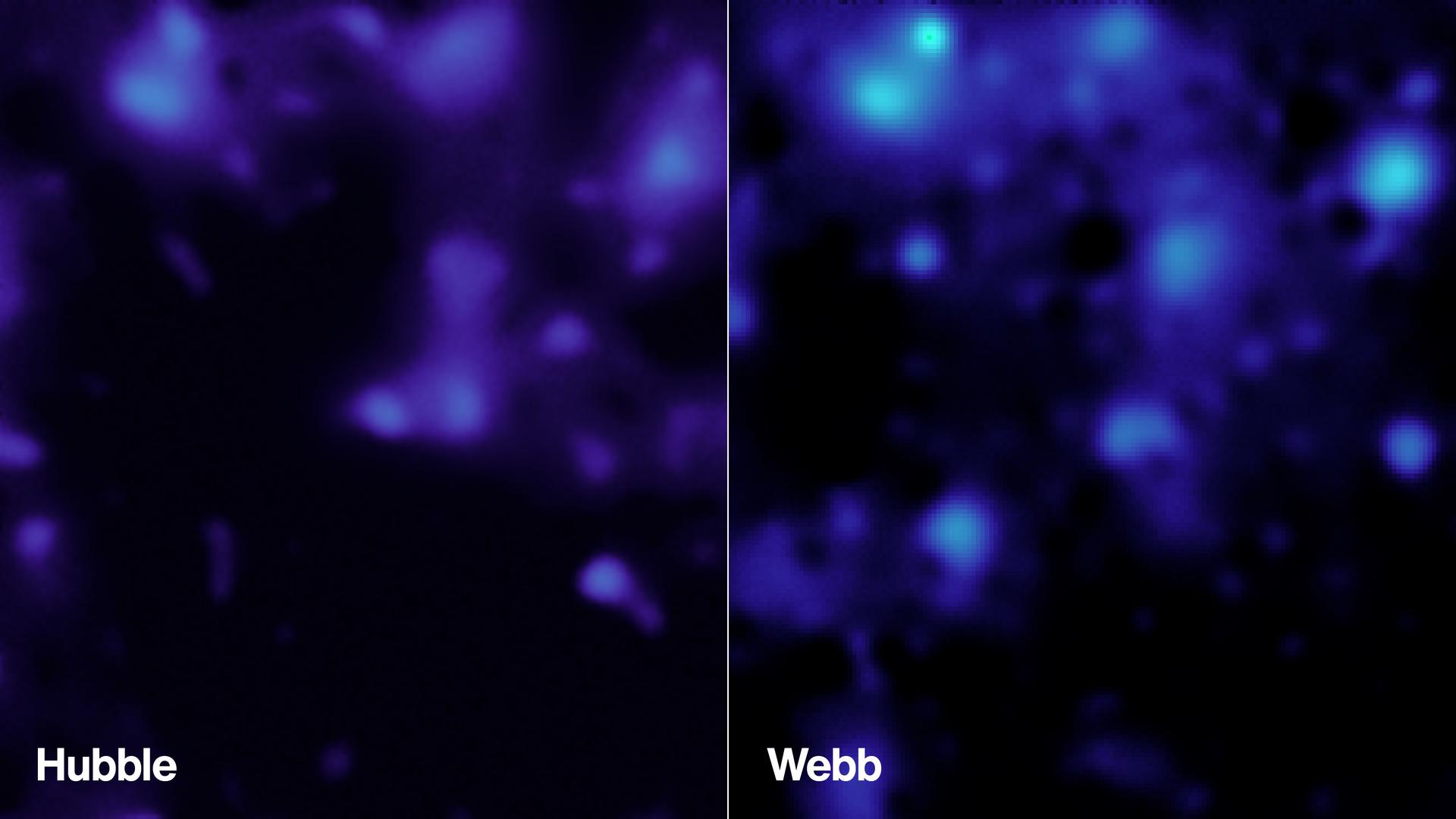
NASA comparison visual of Webb and Hubble observing approaches
NASA comparison context for flagship telescope roles. Roman adds a high-speed, wide-area survey layer to this ecosystem rather than replacing either mission.
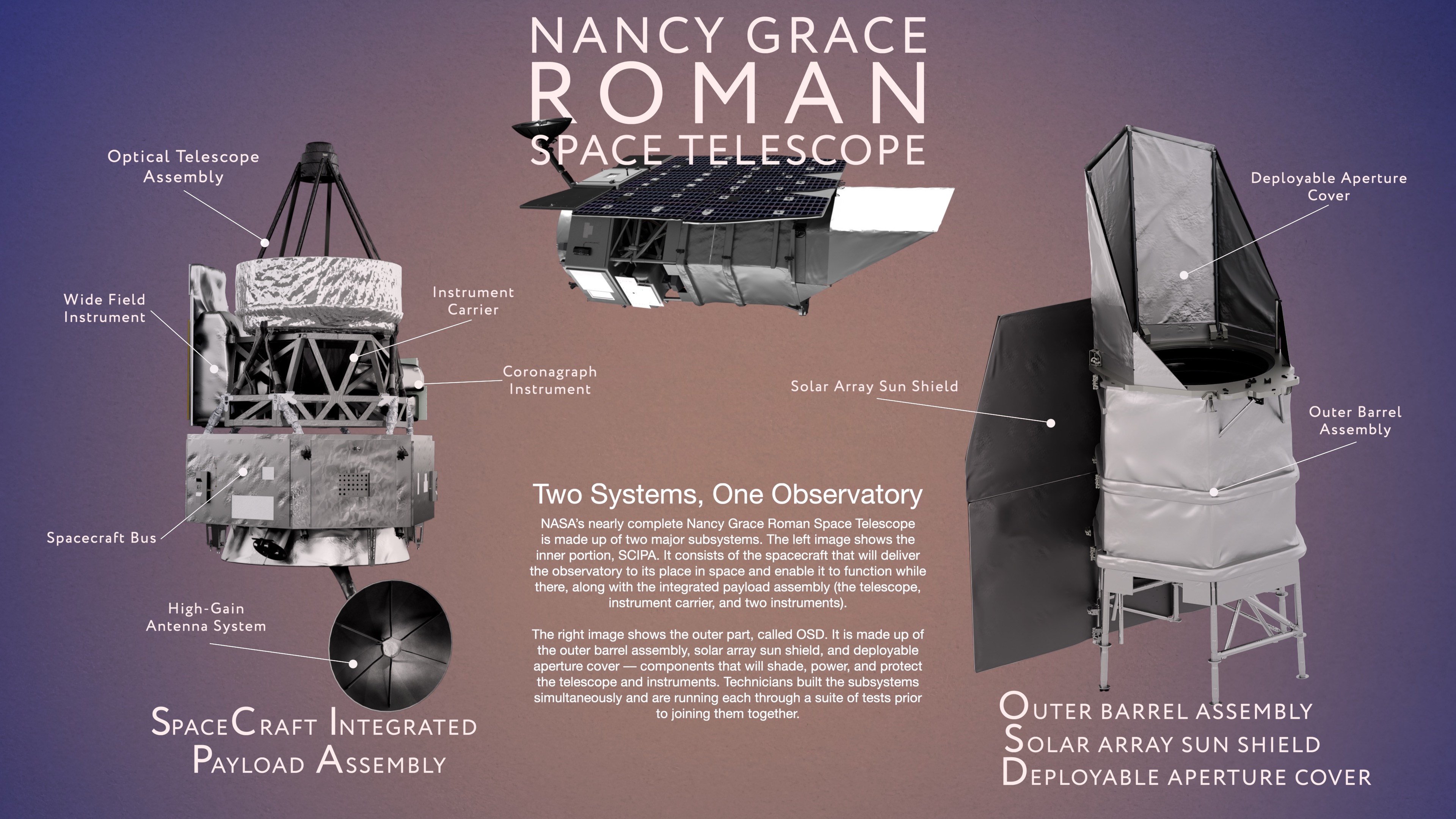
NASA infographic of Roman Space Telescope systems and instruments
Roman systems infographic: instrument-level context for why early-year calibration and commissioning are essential before full survey cadence.

What Roman's First-Year Science Means for Amateur Astronomers

Roman is not an eyepiece telescope, but it directly improves your observing life. Its discoveries will shape target lists, outreach nights, and astrophotography priorities.

  • Expect more high-quality target lists for galaxies, clusters, and transient follow-up.
  • Expect deeper context for objects you already observe, especially in wide-field deep-sky work.
  • Expect more beginner interest in backyard astronomy as Roman appears in mainstream news.

If Roman coverage inspires your next gear upgrade, use our astrophotography telescope guide and the 2026 astronomy events calendar to plan observing sessions around the biggest sky moments.

Likely Year-One Timeline (Working Projection)

Window Expected milestone Why it matters
Q4 2026 Launch, orbit insertion, and commissioning start Mission health and early instrument performance checks
Q1 2027 Calibration plus first engineering-quality fields Confirms survey readiness and data quality baseline
Q2 2027 Early survey products and first candidate catalogs Begins measurable science output
Q3 2027 Expansion of time-domain and microlensing results Sets direction for year-two optimization

FAQ

Will Roman immediately publish final dark-energy answers?

No. First-year data should improve constraints, but definitive conclusions depend on accumulating larger datasets over multiple survey cycles.

Can Roman discover Earth-like planets?

Roman's microlensing program is designed to find planets in parameter spaces that are hard for transit surveys, including colder and lower-mass planets at wider separations.

Will amateur astronomers directly observe Roman's targets?

Some targets are beyond amateur equipment, but many related galaxies, clusters, and nebula fields are accessible with modest backyard telescopes under dark skies.

Related Guides