
Starlink Satellites Tonight (2026): Best Viewing Times, Tracking Apps, and Telescope Setup
Telescope Advisor Logo Telescope Advisor
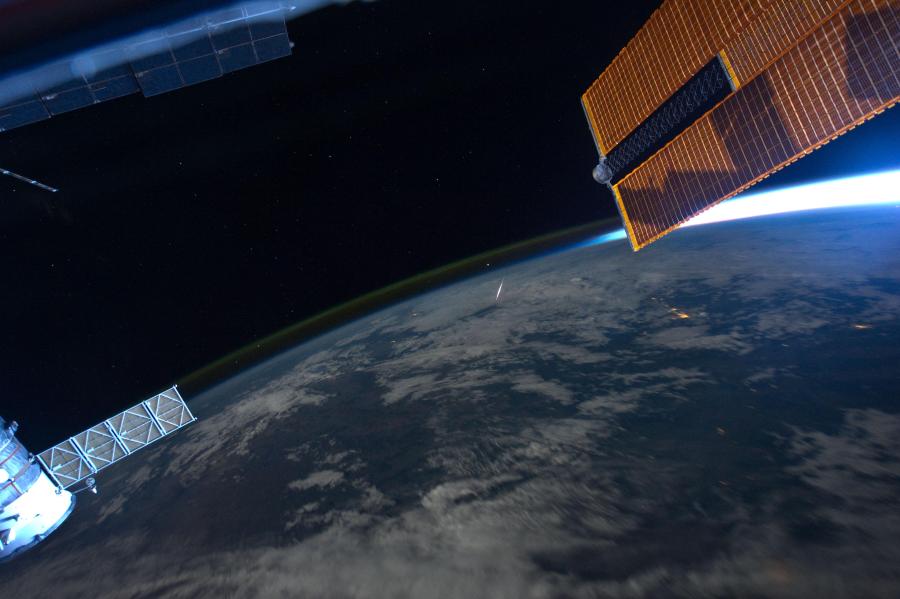
Bright meteor photographed from the International Space Station orbit

SATELLITE TRACKING GUIDE · 2026

Starlink Satellites Tonight: How to See Them Reliably

Starlink visibility is all about timing and geometry. This guide gives you a repeatable workflow: predict passes, choose the right magnification, and track confidently from your location.

20°–60°

Best Pass Elevation

30–90 min

After Sunset Window

By Telescope Advisor Editorial Team Published: Updated: Editorial Standards

Daily Tracking Snapshot

This block refreshes from local daily data generated by a scheduled PHP job. You do not need to republish this page for these values to update.

Data refresh delayed

Showing the most recent available dataset while the source is retried.

Dataset generated

Not available yet

Latest TLE epoch

Unavailable

Next listed launch

No upcoming Starlink launch currently listed

Source feeds: CelesTrak Starlink GP TLE and SpaceX public launches API. Visibility still depends on your location, local weather, and twilight timing.

Quick Answer: Can You See Starlink Tonight?

Usually yes, if your location has a pass in twilight. The best chances are in the 30 to 90 minutes after sunset or before sunrise when satellites are sunlit but your local sky is darker. A phone tracker app plus binoculars is enough to start; a telescope helps only after you lock onto the target path.

High-probability conditions

  • ✓ Pass peak elevation above 25°
  • ✓ Twilight sky with low haze
  • ✓ Multiple satellites in same pass window
  • ✓ Wide field at 10x to 40x first

Low-probability conditions

  • ✗ Very low horizon passes under 15°
  • ✗ Thick haze or moon-glare near horizon
  • ✗ Starting directly at high magnification
  • ✗ No pre-planned azimuth path

The 7-Minute Starlink Workflow

  1. 1) Check pass predictions: Use Heavens-Above, ISS Detector, or SkySafari to find tonight's best pass above 25°.
  2. 2) Note rise/peak/set directions: Write azimuth bearings and peak elevation before going outside.
  3. 3) Pre-position early: Aim your finder at the predicted rise direction 30 seconds before the listed time.
  4. 4) Start wide: Begin with binoculars or 25x-50x in a telescope to catch motion quickly.
  5. 5) Track smoothly: Pan with both eyes open; avoid sudden mount jerks that lose target lock.
  6. 6) Increase power only after lock: Once centered, move to 75x-120x for shape detail attempts.
  7. 7) Repeat on next pass: Your second and third attempts are usually far better than the first.

When Starlink Is Usually Visible (And Why)

Starlink satellites are easiest to see shortly after sunset or before sunrise, when they are still in sunlight while your local sky is darker. This is the same illumination geometry that makes ISS passes obvious.

Most reliable windows

  • - 30 to 90 minutes after sunset
  • - 30 to 90 minutes before sunrise
  • - Clear western or eastern horizon

Why people miss passes

  • - Looking too late at full darkness
  • - No location-specific pass check
  • - Starting at high telescope power

Best Telescopes for Starlink Tracking

For moving satellite targets, mount behavior matters as much as aperture. These three models are proven for smooth tracking practice.

Editor's Pick — Best Overall for Starlink
Celestron NexStar 6SE telescope

Celestron NexStar 6SE

The 6SE's GoTo mount plus manageable weight make it ideal for repeated satellite sessions. You can begin wide, then step up in magnification without constantly fighting mount wobble.

Celestron NexStar 5SE telescope

Celestron NexStar 5SE (Budget GoTo Pick)

A lower-cost way to get automated tracking behavior. It is easier to carry and quick to set up for weekday passes.

Celestron NexStar 8SE telescope

Celestron NexStar 8SE (Premium Detail Pick)

When seeing conditions cooperate, the 8SE gives the strongest image scale. It is best for experienced observers who can keep fast targets centered at higher power.

In-body recommendation: if you want the easiest balance between tracking, setup time, and detail, start with the NexStar 6SE →.

How This Snapshot Stays Current

The tracking snapshot on this page refreshes automatically throughout the day with updated orbital and launch information, so you can check timing without waiting for a page rewrite.

Update cadence

Data is refreshed multiple times per day. If a source feed is temporarily unavailable, the most recent successful dataset stays visible.

Frequently Asked Questions

Do I need a telescope to see Starlink satellites?

No. Most first sightings are easiest with the naked eye or binoculars. A telescope helps after you can reliably predict and track a pass path.

Why do I see a train sometimes and single dots other times?

Right after launches, satellites can appear in closely spaced groups. As they spread into operational orbits, they usually appear as individual satellites on separate passes.

What is the best magnification for Starlink?

Start at 25x to 60x for acquisition. Move to 75x to 120x only after target lock. Very high power often makes tracking much harder for brief passes.

What are those satellites in a line tonight?

Most line formations are recently launched Starlink satellites before they spread out. The tight chain effect usually fades over time as they move into operational spacing.

How often can you see Starlink satellites from one location?

It varies by latitude, season, and launch cadence, but many locations can get multiple opportunities per week. Use local pass tools daily because visibility windows shift constantly.

What time are Starlink satellites easiest to see tonight?

Usually in twilight: about 30 to 90 minutes after sunset or before sunrise. Check your city-specific pass table to get exact rise, peak, and set times.

Related Guides