
T Coronae Borealis Nova 2026: The Blaze Star Eruption — Live Status Page | Telescope Advisor
Telescope Advisor Logo Telescope Advisor
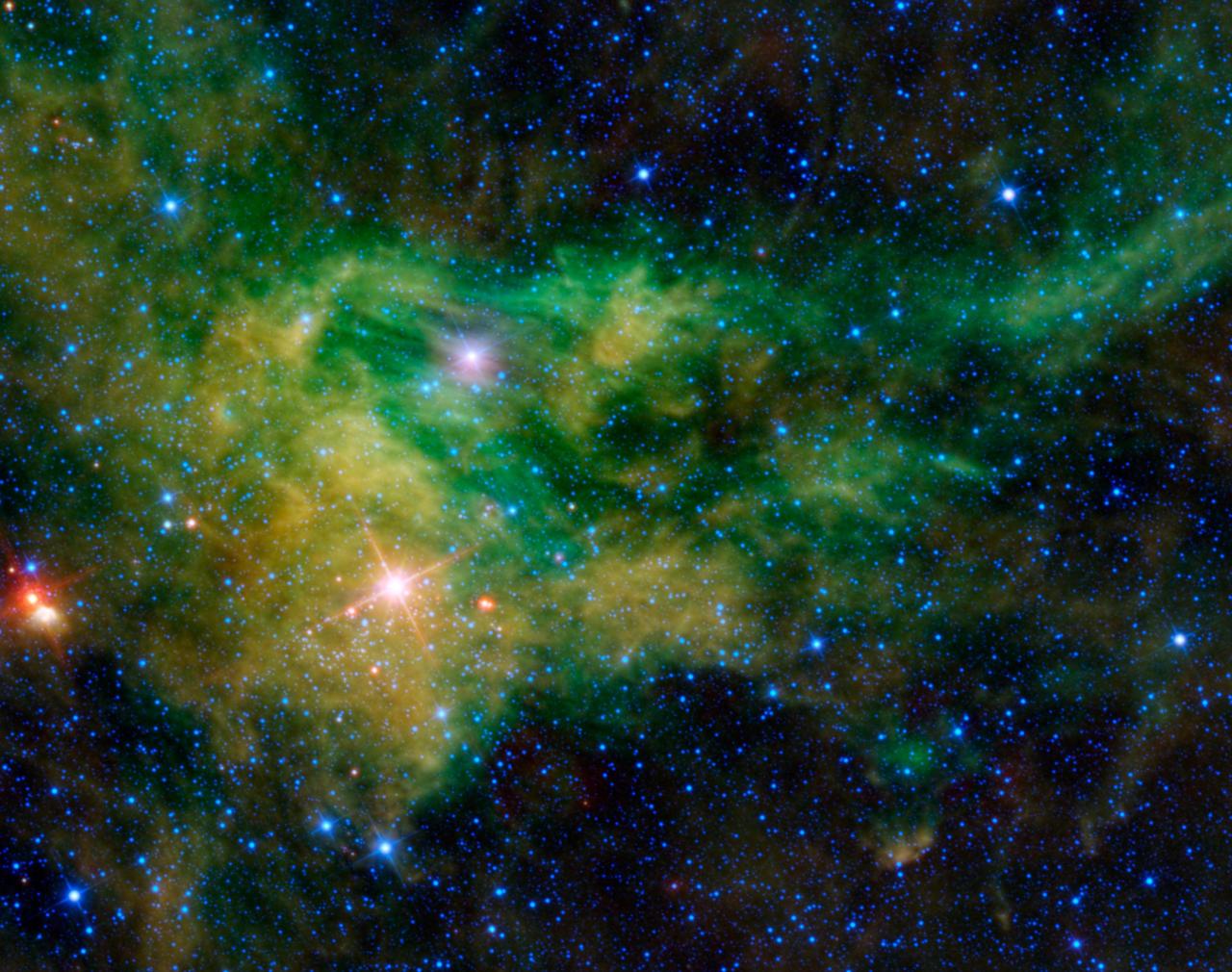
A star-filled night sky — representing the backdrop against which the T Coronae Borealis nova will erupt in 2026

Nova Event Guide · 2026

T Coronae Borealis Nova 2026: The Blaze Star Recurrent Eruption — Live Status & Observer Guide

T Coronae Borealis (T CrB) is a recurrent nova that erupts approximately every 80 years. Astronomers predict its next eruption in 2026, when it will brighten from magnitude +10 to magnitude +2 — becoming visible to the naked eye for the first time since 1946. This is your complete live-status page, updated on every news cycle.

StatusPending Eruption
Expected peak magnitude~+2 (naked-eye)
ConstellationCorona Borealis
Last eruption1946
By Telescope Advisor Editorial Team Published: Updated: Editorial Standards

Live Status: Pending — Not Yet Erupted

Last updated: June 10, 2026. T Coronae Borealis has not yet erupted. The star is being monitored continuously by the American Association of Variable Star Observers (AAVSO) and multiple professional observatories. Pre-eruption signs — a small brightening and a "pre-eruption dip" in brightness — have been observed in recent months, consistent with the pattern seen before the 1946 eruption. Astronomers expect the eruption could occur at any time between mid-2026 and late 2026.

+10.2

Current magnitude (quiescent)

~+2

Expected peak magnitude

1,500×

Brightness increase factor

~80 yr

Eruption cycle

How to get notified

Bookmark this page — we will update the status banner and add eruption details within 24 hours of the event. You can also sign up for AAVSO alerts at aavso.org for real-time notification when T CrB begins to brighten.

🔭

Not sure which telescope actually fits your goals?

Answer 5 quick questions about your budget, observing targets, and experience level — our Telescope Finder Tool recommends a specific model in under 2 minutes.

Find My Telescope →

What Is T Coronae Borealis?

T Coronae Borealis (T CrB) is a recurrent nova — a binary star system that undergoes dramatic, repeating outbursts. Located about 3,000 light-years away in the constellation Corona Borealis (the Northern Crown), T CrB consists of a white dwarf (the dense, Earth-size remnant of a Sun-like star) and a red giant companion star. The red giant is steadily transferring hydrogen-rich material onto the white dwarf via an accretion disk. When enough material accumulates on the white dwarf's surface, pressure and temperature reach a critical threshold, triggering a runaway thermonuclear explosion — a nova.

Unlike a supernova, which destroys its star, a nova leaves the white dwarf intact, and the cycle can repeat. T CrB is one of only about a dozen known recurrent novae in the Milky Way, and it is the brightest and most accessible one in the northern sky. Its eruptions occur roughly every 80 years, with recorded outbursts in 1866, 1946, and — predicted — 2026.

The star is sometimes called the "Blaze Star" because of how dramatically it blazes into visibility from obscurity. In quiescence, T CrB glows dimly at magnitude +10.2 — visible only in telescopes of 4-inch aperture or larger. At eruption peak, it leaps to magnitude +2 to +2.5, becoming as bright as Polaris (the North Star) and easily visible to the naked eye.

T CrB Quick Facts

System typeRecurrent nova (white dwarf + red giant)
Distance~3,000 light-years
ConstellationCorona Borealis
Quiescent magnitude+10.2
Peak magnitude (expected)~+2
Eruption cycle~80 years
Last eruptionFebruary 9, 1946
Next eruption predicted2026

The Science of Recurrent Novae

To understand what makes T CrB special, it helps to understand how novae work — and why "recurrent" novae are rarer and more scientifically valuable than ordinary novae.

How a Nova Works

A nova begins with a binary star system where one star is a white dwarf — an ultra-dense stellar remnant about the size of Earth but containing as much mass as the Sun. Its companion is a normal star that has expanded into a red giant. The red giant's outer atmosphere spills onto the white dwarf through the inner Lagrange point, forming an accretion disk and eventually landing on the white dwarf's surface.

Over decades, a layer of hydrogen accumulates on the white dwarf's surface, compressed and heated by the extreme gravity (about 100,000 times Earth's gravity). When the base of this hydrogen layer reaches a temperature of about 20 million Kelvin, the hydrogen ignites in a runaway thermonuclear reaction — essentially a giant hydrogen bomb. The white dwarf survives, but the accumulated hydrogen is blown off in a brilliant flash that can outshine an entire galaxy for a few days.

What Makes T CrB Recurrent

Most novae are "classical" novae that erupt once and are never seen to erupt again on human timescales. But in a few systems — about 10 known in the Milky Way — the white dwarf is massive enough and the mass transfer rate from the companion high enough that the critical layer builds up again in decades instead of millennia. T CrB is one of these rare systems. Its white dwarf is estimated to be close to the Chandrasekhar limit (the maximum mass a white dwarf can sustain), making it a prime candidate for eventually becoming a Type Ia supernova — though that will not happen for millions of years.

Why 2026 is the predicted year

T CrB showed a "pre-eruption dip" and brightening in 2015–2016, followed by a plateau in brightness — the exact same pattern seen in the years before the 1946 eruption. The interval between the 1866 and 1946 eruptions was 80 years. Based on both the timing pattern and the pre-eruption light curve behavior, astronomers at the AAVSO, NASA, and multiple universities have predicted the next eruption between 2024 and 2026, with 2026 being the most likely year.

Brightness History and Eruption Pattern

T CrB's eruptions have been observed and recorded for over 150 years. The pattern is remarkably consistent, which is what gives astronomers confidence in the 2026 prediction.

Eruption Date Peak Magnitude Duration at Peak Notes
First recorded May 12, 1866 +2.0 ~3 days Discovered by John Birmingham. Visible to naked eye for ~1 week.
Second recorded February 9, 1946 +2.5 ~2 days Peaked slightly fainter than 1866. Naked-eye for 5–7 days.
Predicted 2026 (timing uncertain) ~+2.0 (estimated) 1–3 days Watch this space — status will go live here.

Pre-eruption signs to watch for

  • Brightening: T CrB typically brightens by 0.5–1.0 magnitude in the months before eruption.
  • Pre-eruption dip: A characteristic dip of ~0.5 magnitude occurred 1–2 years before both the 1866 and 1946 eruptions. This dip has already been observed (2015–2023).
  • Rapid rise: The actual eruption onset is fast — T CrB can rise from magnitude +10 to +2 in less than 24 hours.

Post-eruption fade

  • After peak, T CrB fades rapidly — losing ~3 magnitudes in the first week.
  • A "flickering" phase follows for 1–2 months, with irregular brightness variations.
  • Within 3–6 months, the star returns to its quiescent magnitude of +10.
  • Observers with moderate telescopes (6-inch+) can track the fade for weeks.

Finder Chart: How to Locate T Coronae Borealis

Corona Borealis (the Northern Crown) is a distinctive U-shaped or crown-shaped constellation located between Hercules and Boötes. It is visible from the northern hemisphere from spring through fall, culminating at midnight in June. T CrB is located on the lower right (southwest) side of the crown pattern.

Step-by-Step Finder

  1. Find Corona Borealis. Look between the bright stars Arcturus (in Boötes) and Vega (in Lyra). Corona Borealis is a compact, semicircular arc of stars — it looks like a crown or a horseshoe. The brightest star, Alphecca (magnitude +2.2), marks the crown's central gem.
  2. Locate Alphecca. This is the brightest star in the constellation. Use it as your anchor point.
  3. Trace the crown. From Alphecca, the crown arcs eastward and then southward. T CrB sits on the southwestern edge of the crown, approximately 0.7° west-southwest of the star Epsilon Coronae Borealis (ε CrB, magnitude +4.1).
  4. Star-hop with binoculars. In binoculars (7×50 or 10×50), ε CrB is clearly visible. T CrB will appear as a very faint star near ε CrB in quiescence. During eruption, it will be the brightest object in the area after Alphecca.

Nearby Reference Stars

Alphecca (α CrB) — mag +2.2
Nusakan (β CrB) — mag +3.7
γ CrB — mag +4.1
ε CrB — mag +4.1
θ CrB — mag +4.1
T CrB (quiescent) — mag +10.2

Using Digital Planetarium Apps

The easiest way to locate T CrB is with a planetarium app such as Stellarium, SkySafari, or Starlight. Search for "T CrB" or "T Coronae Borealis" — the app will pinpoint the star's exact location. During eruption, any app that updates variable star data will show the nova at its current brightness.

Pro tip: Pre-load the field now

Before the eruption, spend an evening observing the Corona Borealis field with your binoculars or telescope. Learn the pattern of stars around ε CrB so you are familiar with the "normal" appearance of the region. When T CrB erupts, a new bright star in that familiar field will be instantly obvious.

How to Observe a Nova

Observing a nova is different from observing most astronomical events. There is no exact time to be ready — the eruption could happen at any moment, and you want to be prepared to observe within hours of the first alert.

What to Do When the Alert Comes

  1. Check the alert. AAVSO, The Astronomer's Telegram, and astronomy news sites will announce the eruption within hours.
  2. Go outside. If it is nighttime and clear, grab your binoculars or telescope and look at Corona Borealis immediately. The nova could be at peak brightness for only 1–3 days.
  3. Observe and record. Estimate the nova's brightness by comparing it to nearby stars of known magnitude (comparison stars). This is scientifically valuable data.
  4. Report your observation. Submit magnitude estimates to AAVSO (aavso.org) — even rough naked-eye or binocular estimates help professional astronomers track the eruption's evolution.
  5. Keep watching. The nova will fade over weeks. Contributing observations of the fading phase is just as valuable as catching the peak.

What Makes a Good Nova Observation

  • Accuracy: Use comparison stars with known magnitudes to estimate the nova's brightness. Avoid guessing.
  • Consistency: Observe every clear night during the eruption. A light curve with nightly data points is far more valuable than a single observation.
  • Instrument notes: Record what instrument you used (naked eye, binoculars, telescope), magnification, and sky conditions.
  • Color estimate: Novae often appear distinctly orange or red at peak due to the emission spectrum. Note the color.
  • Photography: Even simple DSLR images through a telescope can contribute to the scientific record if they are calibrated.

Best Telescopes and Binoculars for Nova Observing

When T CrB erupts, a wide range of instruments will provide rewarding views — from the naked eye (at peak) to small telescopes (for the weeks of fading). Here are our recommendations for two different observer profiles.

Editor's Pick — Best for Nova Observing
Celestron SkyMaster 15x70 binoculars — ideal for observing the T Coronae Borealis nova

Celestron SkyMaster 15×70 Binoculars

15× magnification 70mm objective ~4.4° FOV Tripod-ready

The SkyMaster 15×70 is the ideal binocular for nova observing. At 15× magnification and 70mm aperture, it will show T CrB at its naked-eye peak as a brilliantly colored star — distinctly orange or red compared to the white stars of Corona Borealis. The wide 4.4° field of view frames the entire crown pattern, making it easy to compare the nova's brightness against nearby reference stars for scientific estimation.

During the weeks-long fade, the 70mm objective will continue to show T CrB as it drops below naked-eye visibility, tracking it down to approximately magnitude +9.5 — covering almost the entire fade from peak back to quiescence. The tripod adapter port allows steady mounting for repeated nightly observations.

View on Amazon →

Affiliate link — we may earn a small commission at no extra cost to you.

Celestron AstroMaster 70AZ telescope — entry-level scope for observing T CrB nova

Celestron AstroMaster 70AZ — Best entry-level telescope for nova tracking

70mm aperture 900mm focal length Alt-azimuth mount Beginner-friendly

The AstroMaster 70AZ is a capable entry-level refractor that will show T CrB throughout its eruption and fade. At quiescent magnitude +10.2, T CrB is a challenging target for a 70mm scope — visible only under dark skies as a very faint point — but the real value is in tracking the eruption. At peak magnitude +2, the nova will be brilliantly visible even through the finder scope.

The 900mm focal length provides enough magnification (45× with the included 20mm eyepiece) to clearly separate T CrB from the surrounding field stars, making accurate brightness estimation easier. The alt-azimuth mount is simple enough for beginners to set up quickly when the eruption alert comes. For a more detailed recommendation, see our guide to best telescopes for beginners.

View on Amazon

Affiliate link.

Prices and availability subject to change. All product links are affiliate links — see our editorial standards for our review process.

What the Eruption Will Look Like

If you have never witnessed a nova eruption, here is what to expect — and what not to expect.

What you WILL see

  • A new "star" appearing where no star was visible before (to the naked eye)
  • A distinctly orange-red color, different from the white/blue stars around it
  • Steady brightness — novae do not twinkle significantly
  • Progressive fading over days to weeks
  • In binoculars: a bright point of light with a warm tint, easy to find

What you will NOT see

  • A dramatic fireball or explosion in the sky (it will look like a star, not a fireworks display)
  • Expanding gas shells — these require large telescopes and specialized filters
  • Daytime visibility — even at peak, T CrB will not be bright enough for daytime
  • Rapid flickering — the brightness changes are measurable over hours, not seconds
  • Any structure — the nova will appear as a point source in all amateur instruments
Historical description from 1946: Observers reported T CrB as "a brilliant orange star, obviously not part of the normal Corona Borealis pattern." One observer described it as "appearing like a fiery gem set into the crown." The star was visible to the naked eye for approximately 7 days and remained visible in binoculars for another 3–4 weeks.

How to Contribute Scientifically

Amateur astronomers play a crucial role in nova research. Professional observatories cannot monitor every variable star every night — but amateurs around the world can. Your observations of T CrB can directly contribute to published scientific research.

Visual magnitude estimates

The simplest and most valuable contribution. Compare T CrB's brightness to nearby comparison stars. Submit your estimates to AAVSO (aavso.org). Even a single rough estimate per night helps build the light curve.

DSLR photometry

A DSLR on a tracking mount through a telescope can produce photometric data accurate to ±0.05 magnitudes. This requires calibration frames (darks, flats, biases) but is achievable with modest equipment.

Spectroscopy (advanced)

If you have a diffraction grating or spectroscope attached to your telescope, you can capture the nova's emission spectrum. The hydrogen-alpha line and other features provide critical data on the explosion's physics.

Get started with AAVSO: Visit aavso.org and create a free observer account. Download their comparison star charts for T CrB. Practice making magnitude estimates on other variable stars before the eruption — your skills will be ready when T CrB erupts. The AAVSO also offers a mobile app, "Variable Star Observer," for submitting estimates from the field.

T Coronae Borealis Nova 2026 — FAQ

What is T Coronae Borealis?

T Coronae Borealis (T CrB) is a recurrent nova — a binary star system about 3,000 light-years away in the constellation Corona Borealis. It consists of a white dwarf and a red giant. The white dwarf accumulates hydrogen from the red giant until it triggers a thermonuclear explosion, brightening from magnitude +10 to magnitude +2 — a 1,500-fold increase in brightness.

When will T CrB erupt in 2026?

The exact date is unknown. Based on the 80-year interval and pre-eruption brightness patterns, astronomers predict the eruption will occur sometime in 2026. The star could erupt at any time — it could have already erupted by the time you read this, or it could still be months away. Bookmark this page for status updates.

Will T CrB be visible to the naked eye?

Yes. At peak magnitude +2, T CrB will be as bright as Polaris — easily visible to the naked eye from suburban and even moderately light-polluted urban skies. It will appear as a distinctly orange-red "star" in the constellation Corona Borealis.

How long will the eruption last?

The peak brightness (magnitude +2) lasts only 1–3 days. The nova remains visible to the naked eye for about a week, visible in binoculars for 3–4 weeks, and trackable in telescopes for 2–3 months as it fades back to quiescent magnitude +10.2.

Is T CrB dangerous to Earth?

Absolutely not. T CrB is 3,000 light-years away. Its eruption is a relatively small thermonuclear event on the surface of a white dwarf — it releases far less energy than a supernova and poses no threat to Earth. The only effect on Earth will be a beautiful new star in the night sky.

What equipment do I need to see T CrB?

At peak brightness, you need nothing but your eyes (and clear skies). For tracking the fade, binoculars (7×50 or larger) extend visibility for weeks. A 70mm+ telescope can track T CrB through its entire fade back to quiescence. Our recommended setup: Celestron SkyMaster 15×70 binoculars for the widest coverage, or a Celestron AstroMaster 70AZ for telescopic tracking.

Can I photograph T CrB during eruption?

Yes. At magnitude +2, the nova is an easy target for any DSLR on a tripod with a 50mm or longer lens. A 5–10 second exposure at ISO 800 will clearly show the nova and its orange color against the Corona Borealis stars. For higher-quality images, use a tracking mount and longer exposures. Smart telescopes like the Seestar S50 can also capture it.

What is the difference between a nova and a supernova?

A nova is a small thermonuclear explosion on the surface of a white dwarf caused by hydrogen accretion from a companion star. The white dwarf survives. A supernova is a catastrophic explosion that destroys the star entirely. Novae are about 1 million times less energetic than supernovae and can recur. T CrB is a recurrent nova — it has erupted multiple times.

Has T CrB already started erupting?

As of June 10, 2026, T CrB has not yet erupted. It remains at its quiescent magnitude of +10.2, visible only in telescopes. The status banner at the top of this page is updated whenever new information becomes available. Check back regularly, especially if there are reports of pre-eruption brightening.

Where can I find the latest news on T CrB?

For real-time updates, we recommend: the AAVSO website (light curves and alerts), The Astronomer's Telegram (professional alerts), and Spaceweather.com (nova news for the general public). This guide is updated regularly as the eruption status evolves.

Related Guides