Vivitar Telescope Review 2026: Honest Assessment
Telescope Advisor Logo Telescope Advisor
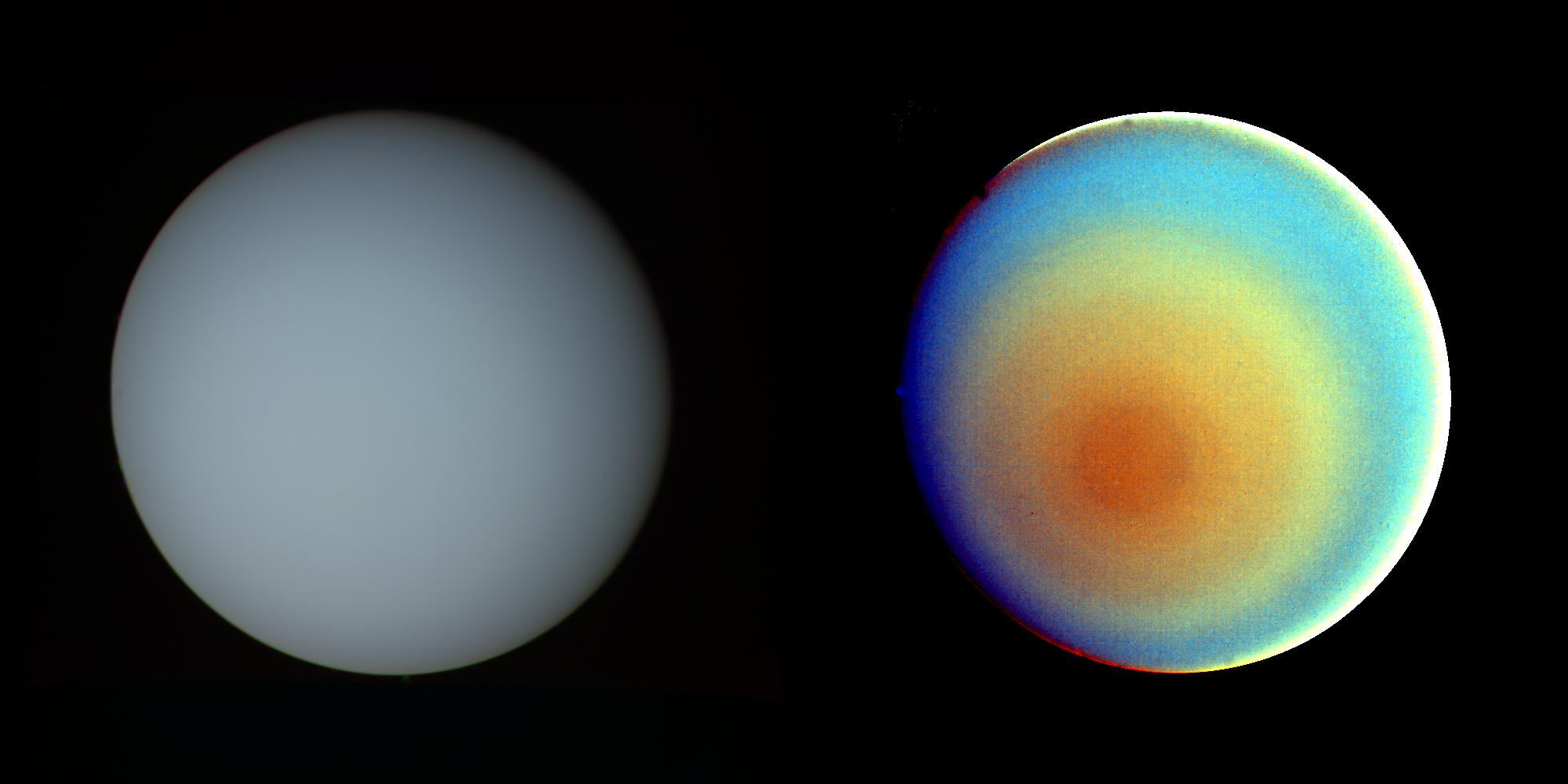
Planets visible through a telescope — what you can and cannot realistically expect from a budget department-store telescope like Vivitar

Telescope Review · Budget Scopes

Vivitar Telescope Review 2026: Honest Assessment and Better Alternatives

Vivitar telescopes appear on Amazon and in department stores at prices that look like bargains for a first scope. We tested the most popular models and give you the unfiltered truth: what they actually show, where they fall short, who they genuinely work for — and which telescopes we'd buy instead for the same money.

Brand typeConsumer electronics (not astronomy brand)
Top modelTEL76700 — 76mm reflector, 700mm FL
Eyepiece format0.965" — outdated, limits upgrades
Our rating2.5 / 5 — works for Moon, little else
By Telescope Advisor Editorial Team Published: Updated: Editorial Standards

Bottom Line

Vivitar TEL76700 (most popular model)

★★½★★ 2.5 / 5

Vivitar makes consumer electronics — cameras, headphones, action cams. Their telescopes are a side product built to a price point and sold through mass-market channels (Amazon, Walmart, Target) to impulse buyers seeking a low-cost entry into astronomy. They will show you the Moon and Saturn's rings. They will not deliver a satisfying long-term astronomy experience, and most buyers outgrow them — or abandon them — within months. If your budget genuinely limits you to the Vivitar price tier, we'll show you what works and what doesn't. If you can stretch slightly, we'll show you exactly which telescopes to buy instead.


What Is Vivitar? Understanding the Brand

Vivitar is a consumer electronics brand with roots in camera flash equipment from the 1960s. The original Vivitar Corporation, founded in 1938 as Ponder & Best, became well-known for camera accessories and lenses before being acquired and relaunched under new ownership multiple times. The current Vivitar brand (owned by Sakar International) sells a broad range of consumer electronics — digital cameras, action cameras, drones, headphones, and telescopes — primarily through mass-market retail channels.

Vivitar is not an astronomy brand. They do not employ optical engineers who specialise in telescope design, they do not manufacture their own optical components, and they do not have a dedicated astronomy division with quality control protocols tailored to the specific demands of visual astronomy. Their telescopes are generic instruments assembled from off-the-shelf components, packaged and branded for mass-market sales to gift-buyers and families who see a low price and a "telescope" label without understanding what distinguishes a good telescope from a poor one.

Why this matters: The telescope market has a well-understood divide between brands that exist to serve astronomy — Celestron, Sky-Watcher, Meade, Orion — and brands that produce telescopes as one of dozens of consumer electronics categories. The former invest in optical quality, mount stability, and user education. The latter optimise for low unit cost and shelf appeal. Vivitar is firmly in the second category. This doesn't mean their telescopes are useless — it means your expectations should be calibrated accordingly.

Vivitar TEL76700 Review — 76mm Reflector

The most popular Vivitar telescope model and the primary subject of this review.

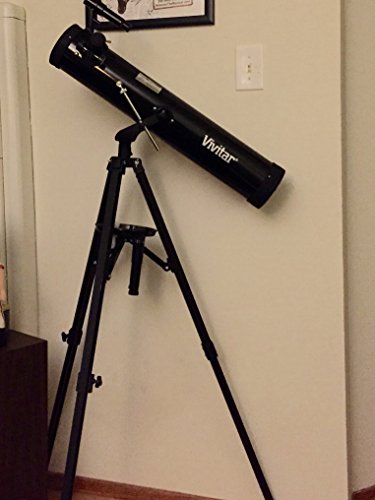
Vivitar TEL76700 76mm reflecting telescope with tripod
★★½★★

2.5 / 5

View on Amazon →

Specifications

Type: Newtonian reflector
Aperture: 76mm (3-inch)
Focal length: 700mm
Focal ratio: f/9.2
Eyepiece format: 0.965" (outdated standard)
Included eyepieces: Typically H20mm + H12.5mm
Claimed magnification: "263x / 525x" (marketing)
Useful magnification: 35–100× (realistic)
Mount type: Alt-azimuth (basic)
Finderscope: 5×24mm (adequate for Moon only)

Optics

The TEL76700 uses a spherical primary mirror — not the parabolic mirror used in better-quality Newtonians. A spherical mirror produces spherical aberration: stars at the centre of the field appear reasonably sharp, but objects at the field edges are blurred. At low power (35×), this is barely noticeable. At higher power, the image quality degrades. The aluminium mirror coating is adequate but not premium. For the Moon, which is viewed at low-to-moderate magnification, these optical limitations are relatively minor. For planets at high magnification or for deep-sky objects where field edge sharpness matters, the spherical mirror is a meaningful limitation.

Mount and tripod

The mount is the TEL76700's weakest point. The alt-azimuth head is plastic with simple friction clutches — under the weight of the tube at high magnification, vibration from the slightest touch takes 5–10 seconds to damp. Focusing the telescope (which requires turning a knob on the focuser) causes the image to shake noticeably, then gradually settle. At high magnification, this makes comfortable sustained viewing difficult. The tripod is lightweight aluminium — functional but not steady. Compared to the metal alt-azimuth mounts on dedicated astronomy telescopes, the Vivitar's mount is the single biggest factor limiting usable magnification.

The 0.965" eyepiece problem

The Vivitar uses 0.965" (24.5mm barrel) eyepieces — an older standard that is now obsolete. The astronomy industry standardised on 1.25" eyepieces decades ago, with many serious observers also using 2" eyepieces. This means that if you want to upgrade the Vivitar's included eyepieces (which are low quality Huygenian designs), you face a limited selection. The vast majority of aftermarket astronomy eyepieces use 1.25" barrels and will not fit the Vivitar's focuser without an adapter. Quality 0.965" eyepieces are rare and expensive — which largely defeats the purpose of upgrading a budget scope.

The magnification claims

"263x and 525x" appear in Vivitar's marketing. These numbers are produced by the included 3× Barlow lens used with the 12.5mm eyepiece: 700mm / 12.5mm × 3 = 168×, and a 2× Barlow with the 12.5mm eyepiece gives 112×. The "525x" figure likely comes from using both a 2× and 3× Barlow simultaneously — a technique called "stacking Barlows" that produces an image so dim and blurry it is essentially useless. The useful magnification ceiling for 76mm aperture is approximately 150× under ideal seeing, and the actual image quality from the TEL76700's optics and mount limits practical use to 60–100×. The marketing figures are not just misleading — they actively set buyers up for disappointment when they try to use them.

Vivitar TEL50600 Review — 50mm Refractor

Vivitar TEL50600 50mm refractor telescope on tripod
★★★★★

2 / 5

View on Amazon →
Type: Achromatic refractor
Aperture: 50mm (2-inch)
Focal length: 600mm
Focal ratio: f/12
Eyepiece format: 0.965"
Useful magnification ceiling: 50–70×

The TEL50600 is the more entry-level model — 50mm of aperture puts it below even good 60mm refractors. The achromatic lens design will produce some chromatic aberration (purple/blue fringing) on the Moon and bright planets. At 600mm focal length with the included 20mm eyepiece, you get 30× — which gives a clear, pleasant view of the full Moon. At 60×, the Moon still looks good; the craters are identifiable. The claimed 60×/120× figures are realistic, unlike the wildly inflated numbers on the TEL76700. However, 50mm is genuinely small — this is binocular-class aperture — and any 10×50 binoculars will show you the same lunar detail with far more comfort and no setup.

What You'll Actually See Through a Vivitar Telescope

Being concrete is the most useful thing we can do here. Forget the marketing — here is what a Vivitar TEL76700 will and will not show you on a typical clear night:

Target Magnification What You'll See Rating
Moon35–60×Clear craters, maria, bright rays — genuinely impressive and worth doingGood
Saturn50–80×Rings clearly separated from disk — recognisably Saturn, no ring detail (Cassini Division not visible)Fair
Jupiter50–80×2 equatorial cloud belts visible, 4 Galilean moons as dots — identifiable but not dramaticFair
Mars (near opposition)60–80×Orange disk visible, polar cap faintly, no surface features — a small orange ballMarginal
Venus40–60×Crescent phase clearly visible — actually impressive, one of Vivitar's stronger performancesGood
Double stars50–100×Wide doubles easily split (Albireo, Mizar); close doubles challenging due to mount vibrationFair
Orion Nebula (M42)25–40×Faint grey smudge with 4 Trapezium stars — identifiable but not impressivePoor
Andromeda Galaxy25×Faint elongated smudge — present but underwhelming; finderscope makes locating it frustratingPoor
Pleiades cluster25×Bright cluster of blue-white stars — better in binoculars than in the Vivitar's field at any magnificationFair
Claimed 263× / 525×UnusableDark, blurry, shaking — no astronomical valueUseless

The Real Problems With Vivitar Telescopes

1. The mount ruins high magnification

Mount stability is arguably more important than optics for a beginner's experience. A shaky mount at 100× means every touch of the telescope produces 5–10 seconds of vibration. Finding an object, focussing it, and then keeping it in the field while it judders makes for a frustrating experience that drives beginners away from astronomy. The Vivitar's plastic alt-azimuth head is the primary reason users give up.

2. Misleading magnification claims erode trust

When a buyer tries the advertised "525×" and gets a dark, blurry, uncontrollable image, they assume the telescope is broken or that they're doing something wrong. They aren't — the physics are simply not cooperative at that magnification for a 76mm aperture on a shaky mount. The disappointment is real and predictable, and it damages beginners' confidence in their own ability to use a telescope rather than correctly identifying the equipment as the problem.

3. The 0.965" eyepiece standard creates an upgrade dead end

When a serious astronomy beginner wants to improve their experience, the first upgrade is usually eyepieces — better optical designs in the 1.25" standard are inexpensive and widely available. For Vivitar owners, this upgrade path is largely closed off. Quality 0.965" eyepieces in modern designs (Plössl, wide-angle, etc.) are rare and expensive. The Vivitar buyer who wants to improve is better off buying a new telescope entirely rather than investing in eyepiece upgrades for a proprietary format.

4. Collimation issues in reflectors

The TEL76700 is a Newtonian reflector — a design that requires periodic collimation (alignment of the optical axis between primary and secondary mirrors). Quality Newtonians include proper collimation tools and the mirrors stay in alignment reasonably well. Cheap reflectors like the Vivitar are often shipped out of collimation, and the basic collimation adjustment screws on the secondary mirror cell make proper alignment difficult for beginners without guidance. An out-of-collimation Newtonian shows stars as elongated smudges rather than sharp points — and many Vivitar buyers don't know this is fixable.

Who Should Actually Buy a Vivitar Telescope

In the spirit of honest reviewing — there is a valid use case for a Vivitar telescope:

Vivitar makes sense if:

  • You want a disposable first look — a child aged 7–10 who might not stay interested, and you don't want to spend more money before knowing they're committed
  • Moon-only observing — if the Moon is your only genuine interest (lunar close-ups at 50–60×), the Vivitar delivers acceptable results for that specific use case
  • You found it extremely cheap second-hand — at a very low price, it's not a bad way to confirm interest before a bigger investment

Don't buy a Vivitar if:

  • → You expect a satisfying overall astronomy experience
  • → You want to see Saturn's ring detail (Cassini Division)
  • → You plan to upgrade eyepieces in the future
  • → You're buying for a teenager or adult who will use it seriously
  • → You have even a moderate budget — you can do significantly better for a small additional investment

🔭

Not sure which telescope actually fits your goals?

Answer 5 quick questions about your budget, observing targets, and experience level — our Telescope Finder Tool recommends a specific model in under 2 minutes.

Find My Telescope →

Better Alternatives to Vivitar Telescopes

These telescopes cost more than a Vivitar — but they're from dedicated astronomy brands with real optical and mount quality. In every case, the additional investment returns far more astronomy per dollar spent:

Top Pick — What We'd Buy Instead of a Vivitar
Sky-Watcher Heritage 130P tabletop Dobsonian — the best telescope alternative to Vivitar

Sky-Watcher Heritage 130P

130mm parabolic mirror 1.25" standard eyepieces Smooth manual Dobsonian mount

The Heritage 130P is the telescope we consistently recommend to anyone asking about budget astronomy options — including people who've been looking at Vivitar. It has nearly 3× the light-gathering area of the Vivitar TEL76700, a parabolic primary mirror (not spherical), a smooth manual Dobsonian alt-azimuth base that doesn't shake on touch, and uses the standard 1.25" eyepiece format. The Cassini Division in Saturn's rings is visible. Jupiter shows 4+ cloud belts. Globular clusters resolve into individual stars. The Moon is breathtaking. This is a real astronomy experience. Full review: Heritage 130P review.

Celestron AstroMaster 70AZ refractor telescope — good Vivitar alternative

Celestron AstroMaster 70AZ — Best refractor alternative

If you specifically want a refractor (no mirror to collimate, nice for daytime use too), the Celestron AstroMaster 70AZ is the right choice over any Vivitar. Its 70mm aperture is larger than the Vivitar TEL50600's 50mm, the optical quality from Celestron's established glass is superior, it uses standard 1.25" eyepieces, and its alt-azimuth mount — while basic — is more stable than Vivitar's. Saturn's rings are clearly visible, Jupiter's moons are easy, and the Moon is excellent. Celestron is a dedicated astronomy brand with genuine after-sales support and replacement parts available. See our beginner telescope guide.

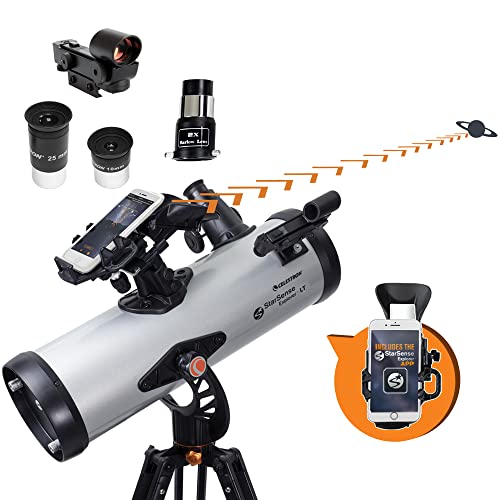
Celestron StarSense Explorer LT 114AZ — self-aligning smartphone telescope

Celestron StarSense Explorer LT 114AZ — Best tech upgrade from Vivitar

For buyers frustrated by not being able to find objects — the most common complaint about cheap telescopes including Vivitar — the StarSense Explorer series solves the problem entirely. It uses your smartphone's camera to calculate exactly where the telescope is pointing and shows you an on-screen arrow directing you to any object. 114mm aperture delivers genuinely impressive Saturn and Jupiter views. It's a step up in cost from a Vivitar but utterly transforms the beginner experience for people who don't want to spend hours learning star-hopping first. See our full beginner telescope picks.

Affiliate links. Editorial standards. Also see our best telescopes under £100/$100 guide.

Vivitar Telescope FAQ

Are Vivitar telescopes any good?

For a specific, narrow use case — yes. The Vivitar TEL76700 will show you the Moon in satisfying detail at 35–60× and will reveal Saturn's rings as clearly separated from the planet's disk at 50–80×. Those are genuine and worthwhile astronomical experiences. Beyond those targets, the optical quality, mount stability, and outdated 0.965" eyepiece format limit what you can do. Compared to dedicated astronomy telescopes of similar or slightly higher cost (Sky-Watcher Heritage 130P, Celestron AstroMaster 70AZ), Vivitar scopes deliver significantly less value per dollar for astronomy purposes.

What can you see with a Vivitar 76700 telescope?

At practical magnifications (35–80×): the Moon with craters and highlands clearly resolved; Saturn with rings visibly separated from the disk (but no Cassini Division detail); Jupiter with 2 cloud belts and 4 moons as points of light; Venus showing a clear crescent phase; bright double stars like Albireo and Mizar split cleanly; and the Pleiades and Beehive star clusters at low power. Faint deep-sky objects (nebulae, galaxies) produce underwhelming results due to the limited aperture and mount vibration at higher magnifications.

What is the best magnification for a Vivitar TEL76700?

35–80× is the practical sweet spot. At 35× (using the included 20mm eyepiece), you get a wide, bright view good for star clusters and the full Moon. At 56× (700mm / 12.5mm eyepiece), Saturn's rings look beautiful and Jupiter's moons are easy. At 80× with a Barlow, planetary detail is acceptable on steady nights. Above 100×, mount vibration and optical quality both degrade the experience noticeably. The claimed "525×" is a marketing fiction — ignore it entirely.

Why are Vivitar telescopes so cheap?

Vivitar telescopes are cheap because they are produced as consumer electronics products, not scientific instruments. They use spherical (not parabolic) primary mirrors, generic eyepieces in an outdated format, lightweight plastic mounts, and thin aluminium tripods — all of which reduce manufacturing cost. They are sold through mass-market channels (Amazon, department stores) where buyers compare price rather than optical specifications. Dedicated astronomy brands like Celestron and Sky-Watcher invest more in optical quality and mount engineering, which shows up in the price but also in the viewing experience.

Can I upgrade the eyepieces on a Vivitar telescope?

Technically yes, but practically difficult. Vivitar telescopes use 0.965" (24.5mm) eyepiece barrels — an obsolete standard. Most modern aftermarket eyepieces use the 1.25" standard, which is far wider and incompatible without an adapter. Quality 0.965" eyepieces in modern designs are rare and relatively expensive. For the cost of a meaningful eyepiece upgrade for a Vivitar, you could put that money toward a better telescope with a standard 1.25" focuser and achieve far superior results. Eyepiece upgrades for Vivitar scopes are generally not recommended.

What telescope should I buy instead of Vivitar?

For a beginner who wants a real astronomy experience, the Sky-Watcher Heritage 130P is the strongest recommendation — it has 130mm parabolic optics, a smooth Dobsonian mount, standard 1.25" eyepieces, and delivers Saturn views that genuinely impress adults and children alike. The Celestron AstroMaster 70AZ is a quality refractor alternative if you prefer that design. If finding objects is the concern, the Celestron StarSense Explorer LT 114AZ solves it with smartphone-guided pointing. All three are from dedicated astronomy brands with real customer support. See our full beginner telescope guide.


Related Guides