
What Can You See With a 70mm Telescope?
Telescope Advisor Logo Telescope Advisor
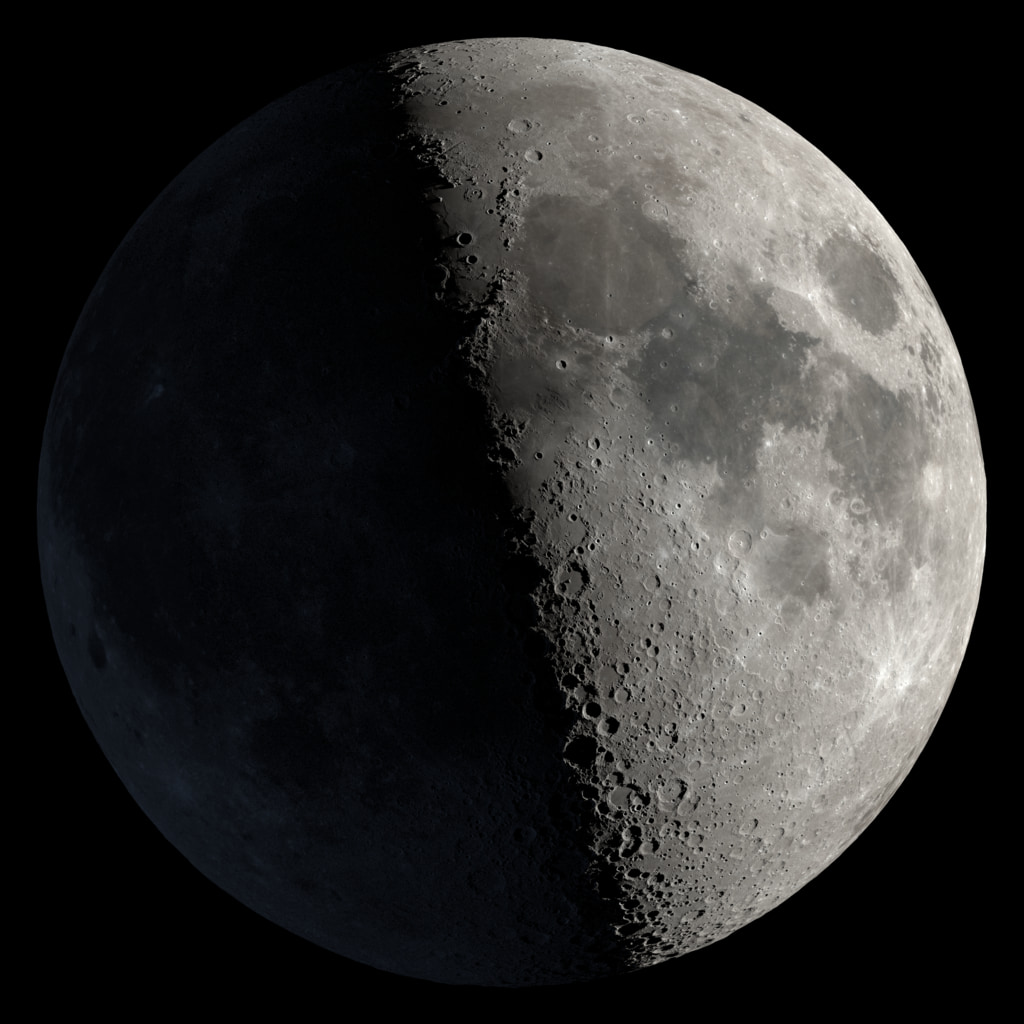
Moon's craters and surface detail photographed by NASA's Lunar Reconnaissance Orbiter

Telescope Q&A · 70mm Telescopes

What Can You See With a 70mm Telescope?

More than most beginners expect. A 70mm aperture shows Saturn’s rings, Jupiter’s cloud bands, hundreds of Moon craters, and bright deep-sky objects — all on your very first clear night. Here’s every target, object by object, with realistic magnifications and honest expectations.

70mm

Aperture

140×

Max useful magnification

50×

Saturn’s rings visible

1st night

Results with no experience

By Telescope Advisor Editorial Team Published: Updated: Editorial Standards

A 70mm telescope is an excellent beginner instrument

It reveals the Moon in stunning detail, resolves Saturn’s rings and the Cassini Division with patience, shows Jupiter’s equatorial bands and all four Galilean moons, and displays Venus going through phases just like our own Moon. It is not a toy — it is a real scientific instrument that professional astronomers used for centuries.

The key to a rewarding 70mm session is knowing which targets reward this aperture most, what magnifications to use, and which objects to save for a larger scope. This guide covers every major category with honest, experience-based descriptions of what you will actually see.

Solar System Objects

These are the showpiece targets for a 70mm telescope. All are visible from suburban back gardens.

🌙 The Moon — Best Object for Any 70mm Scope 30–100×

What you’ll see

  • Hundreds of individual named craters
  • Mountain ranges (Apennines, Alps)
  • Dark lava plains (maria) in stark contrast
  • Rays from Tycho crater spanning 1,500 km
  • Rilles (lava channels) and valley floors

Best magnification

Start at 30–50× for the full disc. Crank up to 75–100× along the terminator (the shadow line) to see crater walls casting long shadows. Avoid high magnification when the Moon is high and atmospheric shimmer increases.

Tip

Observe the terminator (day/night boundary) rather than the full Moon. The extreme shadows throw craters into dramatic 3D relief. The full Moon is actually blinding — a neutral-density Moon filter helps at full phase.

🕨 Saturn — The Showstopper 50–100×

What you’ll see

  • Ring system clearly separate from the disc at 50×
  • Cassini Division (dark gap in rings) at 75–100× on good nights
  • Creamy yellow disc colour
  • Titan (largest moon) as a pale dot nearby
  • ~ Subtle disc banding — needs steady air

Best magnification

Saturn is small in apparent size. Start at 50× to confirm the rings, then push to 75–100×. Above 100× the image begins to soften noticeably in a 70mm scope. Best when Saturn is near opposition (highest in the sky).

First-light moment

Saturn through even a 70mm is genuinely jaw-dropping. People who have never looked through a telescope before often say “it doesn’t look real.” This single object alone justifies owning any telescope.

🌍 Jupiter — Cloud Bands + Four Moons 50–120×

What you’ll see

  • Two dark equatorial cloud bands (NEB and SEB)
  • All four Galilean moons (Io, Europa, Ganymede, Callisto)
  • Disc clearly flattened at poles (oblate shape)
  • Moon shadow transits across disc
  • ~ Great Red Spot — visible on good nights at 100×+

Best magnification

Jupiter is the largest planet in apparent size — even 50× shows the disc clearly. Push to 75–120× to separate the cloud bands. The moons change position every few hours; watching them over a week is a rewarding project.

Quick tip

Jupiter is so bright it can glare in a 70mm. Try a light blue or neutral-density filter to reduce brightness and bring out the belt colours more clearly.

Venus — Phases 30–60×
  • Crescent, half, and gibbous phases clearly visible
  • Disc grows larger as Venus approaches crescent phase
  • No surface detail — thick cloud cover hides everything

Best viewed at dusk or dawn. Blindingly bright — a neutral-density filter helps. Never observe when near the Sun.

🔴 Mars — Oppositions Only 75–120×
  • Rust-orange disc visible at opposition
  • Polar ice cap (white dot) on good nights
  • ~ Dark surface markings — requires steady atmosphere

Mars is only rewarding near opposition (closest approach). Most of the time it is too small and distant; skip it and return every two years.

Deep-Sky Objects

70mm can reach beyond the solar system. Keep expectations in check — these objects will look like glowing smudges and sparkling collections of stars, not the full-colour Hubble images you may have seen. That said, they are genuinely beautiful.

Orion Nebula (M42)

20–40×

A soft glowing cloud with a bright core and four stars at its heart (the Trapezium). One of the most rewarding objects in any telescope. Visible to the naked eye — 70mm makes it unmistakeable.

Excellent

Pleiades (M45)

10–25×

Six or seven stars to the naked eye become dozens through a 70mm. Low magnification shows the whole cluster. A classic “wow” object for beginners.

Excellent
🌟

Beehive Cluster (M44)

15–30×

A loose open cluster in Cancer. 70mm resolves it into many dozens of stars. Best at low magnification to fit the whole cluster in the field of view.

Excellent
🌎

Andromeda Galaxy (M31)

15–30×

A large oval smudge of light at low magnification — you are seeing 2.5 million years of light travel. The core is bright; companion galaxy M32 visible nearby. No spiral arms through a 70mm.

Good

Double Stars

60–100×

Albireo (gold + blue), Mizar + Alcor, Epsilon Lyrae (double-double) — these are among the best objects for a 70mm. Colour contrast in pairs is stunning. A perfect high-magnification project.

Excellent
🔮

Globular Clusters (M13, M5)

50–100×

M13 in Hercules and M5 in Serpens appear as bright fuzzy balls. A 70mm shows the core clearly but won’t fully resolve individual stars at the edges — that needs 100mm+.

Fair

What a 70mm Telescope Cannot Show

Managing expectations is more important than managing a telescope. These objects are genuinely beyond what a 70mm aperture can reveal — not because the optics are bad, but because the physics of light collection requires more aperture.

  • Neptune’s and Uranus’ rings

    These rings require professional-grade equipment. Even seeing the planets as faint dots is a challenge at 70mm.

  • Spiral arms in galaxies

    Galaxies appear as fuzzy ovals. Spiral structure requires at minimum a 200mm+ aperture under dark skies.

  • Faint planetary nebulae

    The Ring Nebula (M57) is just barely visible as a tiny smoke ring — don’t expect colour or detail.

  • Pluto

    Pluto is magnitude 14.3 — well below the 11.5 limiting magnitude of a 70mm scope. Not visible.

  • Mars surface detail (most of the time)

    Mars is rewarding only at opposition. Most of the time it is a small orange dot. Skip it and return in 2028.

  • Fully resolved globular clusters

    The outer stars of M13 and M5 need 100mm+ to separate into points of light all the way to the edge.

  • Saturn’s moons (beyond Titan)

    Titan (mag 8.5) is easy. Rhea and Tethys (mag 9.6–10.2) are borderline. Smaller moons need more aperture.

  • Emission nebulae in colour

    Human eyes can’t detect colour in faint objects through any visual telescope — that’s only in long-exposure photographs.

Quick Magnification Reference for 70mm

The maximum useful magnification for a 70mm scope is around 140×. Beyond that, images become dim and soft with no gain in detail. Most targets are best at far lower magnifications than beginners expect.

Magnification Best For Typical Eyepiece (900mm scope) Exit Pupil
20–35× Milky Way sweeping, Pleiades, Andromeda, large clusters 25mm eyepiece (36×) ~2.9mm
50–75× Saturn rings, Jupiter disc, Moon quarter views, Orion Nebula 10mm eyepiece (90×) ~1.3mm
75–100× Cassini Division (Saturn), Jupiter bands, double stars, Moon detail 10mm + 2× Barlow ~0.8mm
100–140× Close double stars, lunar detail on steady nights only 6mm eyepiece (150×) ~0.5mm — pushing the limit

Example focal lengths based on a 900mm f/12.9 refractor (Celestron AstroMaster 70AZ). Adjust for your telescope’s actual focal length.

Best 70mm Telescopes

Both scopes below are genuine 70mm aperture instruments with proper optical coatings — not the toy-store plastic tubes labelled “70mm.”

Editor’s Pick — Best All-Round 70mm
Celestron AstroMaster 70AZ refractor telescope

Celestron AstroMaster 70AZ Refractor

The gold standard for 70mm beginners. A 900mm focal length gives sensible magnifications with the included 25mm and 10mm eyepieces. The no-tool alt-azimuth mount points naturally at any object — no polar alignment, no confusing axis locks. Comes fully assembled out of the box.

  • 70mm f/12.9 achromatic refractor — sharp, low-chromatic-aberration views
  • 900mm focal length — 36× and 90× with included eyepieces
  • Steel tripod with adjustable height — stable enough for 100×
  • Erect-image diagonal included — daytime and night use
Celestron Travel Scope 70 portable refractor

Celestron Travel Scope 70

Same 70mm aperture in a compact, backpack-ready package. The shorter 400mm focal length gives a wider field of view — ideal for Moon, star clusters, and sweeping. Lighter and more portable than the AstroMaster; slightly less planetary magnification headroom.

  • 70mm f/5.7 refractor — great low-power wide fields
  • Fits in a backpack — ideal for travel and camping
  • Lightweight aluminium tripod with carry bag

Frequently Asked Questions

Can a 70mm telescope see galaxies?

Yes, several. The Andromeda Galaxy (M31) is easily visible as a large oval smudge, especially under dark skies. The Triangulum Galaxy (M33) is possible under dark conditions. You won’t see spiral arms or structure — just the bright core and glow of each galaxy — but the experience of seeing something 2.5 million light-years away through a small telescope is genuinely moving.

Can a 70mm telescope see Saturn’s rings clearly?

Yes. Saturn’s rings are clearly separated from the disc at 50× in any 70mm scope with decent optics. On steady nights at 75–100×, the Cassini Division (the dark gap between the A and B rings) becomes visible. This is one of astronomy’s greatest sights at any aperture.

Is a 70mm telescope good enough for a beginner?

Absolutely. A 70mm scope shows all the classic beginner targets — Moon, Saturn, Jupiter, Venus, star clusters, and bright nebulae — and does so with zero maintenance, quick setup, and no collimation required. Many experienced astronomers keep a 70mm refractor as their grab-and-go scope for years after buying larger instruments.

What is the best magnification for the Moon through a 70mm telescope?

50× gives a full-disc view that fits in most eyepiece fields. Cranking to 75–100× along the terminator reveals the most dramatic crater detail. Above 100× you are zooming in on individual craters — still beautiful, but atmospheric turbulence becomes the limiting factor.

Can a 70mm telescope see the International Space Station?

Yes, on a pass overhead — but it is extremely challenging. The ISS moves across the sky in about 6 minutes and spans less than 1 arcminute in apparent size. Most observers see it as a bright, fast-moving star. Tracking it manually for any detail is very difficult. Use NASA’s Spot The Station tool to find pass times for your location.

When should I upgrade from a 70mm to a larger telescope?

When you have used the 70mm regularly for at least six months and consistently find yourself wanting more detail on faint galaxies, globular clusters, or planetary surfaces. At that point a 100–130mm reflector like the Sky-Watcher Heritage 130P delivers a significant step up in light-gathering and resolving power. Don’t upgrade based on frustration from a single cloudy month — the targets that reward larger aperture take time to learn.