
Why Can't I See Anything Through My Telescope? 12 Causes and How to Fix Each One
Telescope Advisor Logo Telescope Advisor
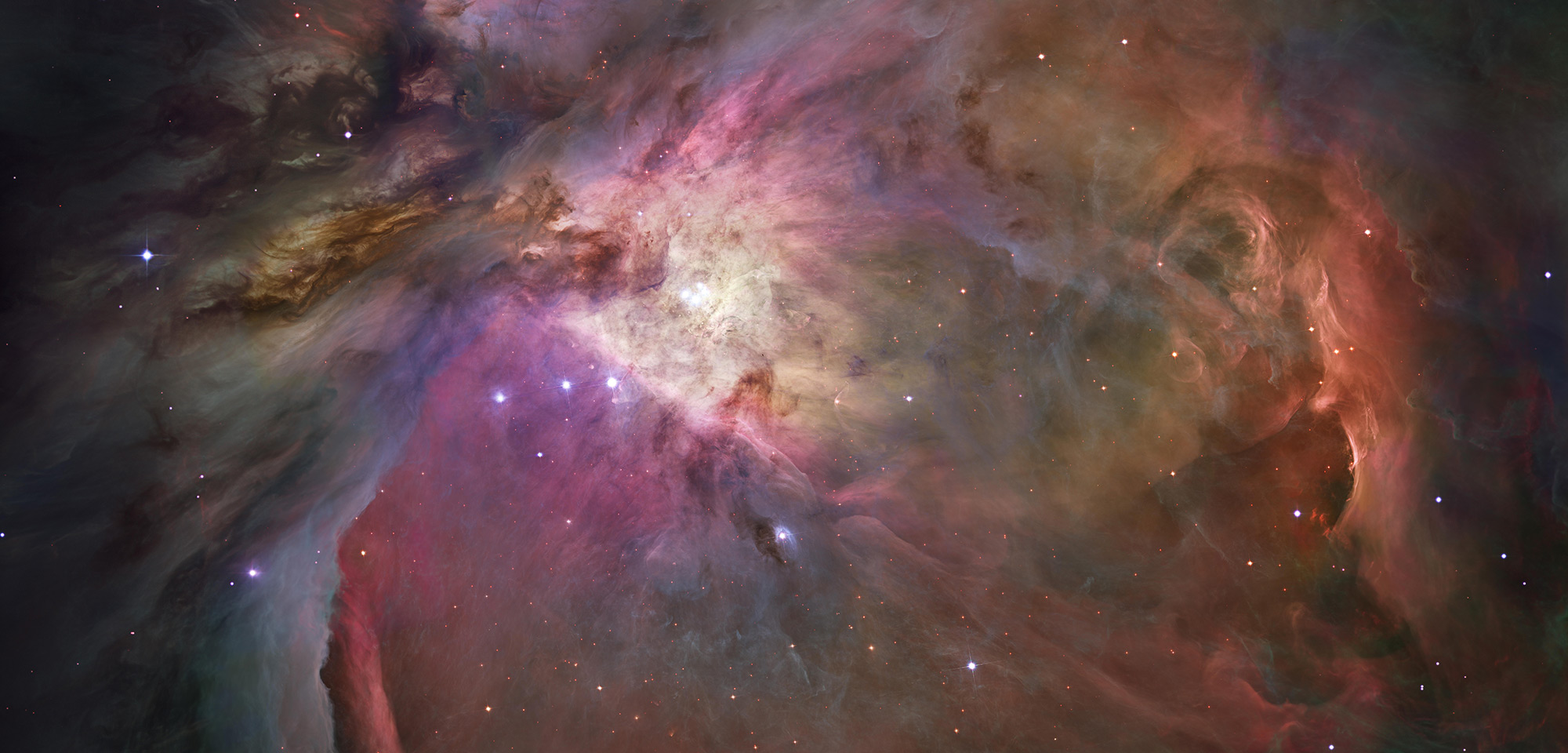
The Orion Nebula (M42) — what you could be seeing through a properly set-up telescope

TELESCOPE TROUBLESHOOTING GUIDE

Why Can't I See Anything Through My Telescope?

12 causes — from a stuck dust cap to misaligned mirrors — with a plain-English fix for every single one. Start with Cause 1; most people are done in 60 seconds.

12

Causes covered

90%

Fixed by causes 1–3

5 min

Average fix time

All types

Refractors & reflectors

By Telescope Advisor Editorial Team Published: Updated: Editorial Standards

The 3 Fastest Fixes — Try These First

These three causes account for 90% of all "my telescope doesn't work" complaints. Most people are done in under 2 minutes.

🔴 Check first — 30 sec

Remove ALL dust caps

Take off the large cap from the front objective lens. Also pull out any small cap inside the focuser draw tube. Both must be removed.

🟡 Switch eyepiece — 1 min

Use your lowest-power eyepiece

Insert the eyepiece with the largest millimeter number (e.g. 25mm or 20mm). High magnification = tiny dark view. Start low, zoom in later.

🟢 Adjust focus — 2 min

Turn the focus knob slowly

Point at the Moon. Turn the focuser knob in one direction — all the way. Then slowly reverse. The blurry glow shrinks to a sharp image.

Still not working? Read on.

If those 3 fixes didn't solve it, one of the remaining 9 causes below will. Each has a clear symptom description so you can jump straight to the relevant section.

In This Guide

!

Causes 1–4: Setup Problems

Always check these four before anything else. They are responsible for the vast majority of "my telescope is broken" reports — and every single one has a free, instant fix.

1

Dust Cap Still On the Objective Lens

Symptom: Completely black or very dark view, no matter where you point

This is the single most common reason people think their telescope is broken. Every telescope ships with a protective cap over the front (objective) lens. You must remove it before observing. Many telescopes also have a small secondary cap inside the focuser draw tube — remove that too.

Pro tip: Some refractor dust caps have a small central hole with its own cap — this is for the Sun filter (solar observing only). Never use the main scope without removing the full cap first.

The fix

  • Remove the large cap from the front opening of the telescope tube
  • Look inside the eyepiece holder — remove any small cap sitting in the draw tube
  • Confirm both are off, then point at the Moon and try again
Time: 30 seconds All telescope types
2

Starting With the Wrong Eyepiece (Too High Power)

Symptom: Very dark, tiny field of view — like looking through a keyhole

Eyepiece millimeter numbers work backwards to what you'd expect. A 4mm eyepiece = extreme magnification (tiny, dark, hard to focus). A 25mm eyepiece = low magnification (wide, bright, easy to use). Beginners instinctively reach for the smallest eyepiece thinking it's more powerful — technically true, but at high power the field of view is a pinhole and any wobble ruins the view.

Always start with the eyepiece that has the largest number printed on it. Locate your target, centre it, then switch to a shorter eyepiece for more detail.

The fix

  • Find the eyepiece with the highest mm number in your kit (often 20mm, 25mm, or 26mm)
  • Insert it into the focuser and lock it with the thumbscrew
  • Point at a bright target, focus, then switch to shorter eyepieces for more zoom
Time: 1 minute All telescope types
3

Focuser Not Adjusted (Out of Focus)

Symptom: Blurry blob of light, or a large unfocused smear — never a sharp image

Every telescope has a focuser — two knobs (coarse and fine, or just one combined knob) on the side or bottom of the eyepiece tube. When you receive a new telescope, the focuser is almost certainly not at the right position. You must turn it to bring the image into sharp focus for your particular eyepiece and your particular eyes.

Point at the Moon (it's the easiest target). Turn the focus knob slowly. The blurry blob will shrink. Keep turning until the lunar craters are sharp. If turning makes things worse, reverse direction. Some focusers have a long travel range — be patient.

The fix

  • Point at the Moon or a bright planet (not a faint star at first)
  • Turn the focus knob slowly in one direction all the way in, then reverse
  • Somewhere between the two extremes, the image will snap into sharp focus
  • If you use glasses, try observing without them first (adjust focus instead)
Time: 2 minutes All telescope types
4

Finderscope Not Aligned With the Main Telescope

Symptom: You can centre an object in the finderscope but it's not visible through the main eyepiece

The finderscope (the small sighting scope mounted on top) is your aiming device. If it's not aligned with the main telescope, you'll never find objects — you'll be pointing at empty sky. Finderscopes frequently come misaligned from the factory and shift after transport.

The fix (do this during the day)

  • Point the main telescope at a distant fixed object: a chimney, antenna, or far-away tree branch
  • Centre that target exactly in the main eyepiece and lock the mount
  • Look through the finderscope — the same object should be centred on the crosshairs
  • If it's not, adjust the finderscope's alignment screws (usually 2–3 thumb screws around the bracket) until the crosshairs align with the same point
  • Once aligned during the day, the finderscope will work correctly at night
Time: 5 minutes (once) All telescope types
!

Causes 5–8: Environmental Problems

These causes have nothing to do with your telescope being faulty. They're about where you're observing, when, and what your eyes can realistically see from that location.

5

Observing Through a Window

Symptom: Shimmering, soft, washed-out image — Moon looks like it's underwater

Window glass is not designed for precision optics. Even high-quality double-glazing creates distortion, internal reflections, and thermal gradients (cold air inside meets warm glass meets warm air outside — causing constant shimmer). The image through a window is significantly worse than with no glass at all.

The fix

Go outside. Even a slightly open window causes problems. If going outside isn't possible tonight, wait for a night when you can.

Time: Instant All telescope types
6

Eyes Not Dark-Adapted

Symptom: Can see bright objects (Moon, planets) fine — but faint stars and DSOs are invisible

After even 30 seconds of bright light exposure, your eyes' rod cells (the night-vision receptors) are fully bleached. Full dark adaptation takes 20–30 minutes in complete darkness. If you walked outside from a lit room 5 minutes ago, you simply cannot see faint objects yet — regardless of the quality of your telescope.

Phone screens are particularly damaging — even a brief glance resets your adaptation. Use "night mode" (red screen) on your astronomy apps, or cover your phone screen with a red film.

The fix

  • Set up your telescope during the last light of dusk and wait 20–30 minutes
  • Use a red torch only — red light doesn't reset dark adaptation
  • Avoid looking at any bright screen during your session
Time: Wait 20–30 min Critical for deep-sky objects
7

The Target Is Below the Horizon or Out of Season

Symptom: Pointing to where the object should be but seeing nothing — or only at very low altitude

Planets, star clusters, and constellations are visible from different latitudes at different times of year. Saturn might be perfectly placed in March but below the horizon entirely in November. Even when it's "in season," the planet may not rise until 2am. Many beginners give up on seeing an object that simply isn't visible that night from their location.

The fix

  • Use a free app (Stellarium, Sky Map, SkySafari) and search for your target
  • Confirm the object is above the horizon tonight from your location
  • Objects below 20° altitude are hard to see clearly even when "up" — aim for 30°+ for best views
Time: 2 minutes to check All objects
8

Light Pollution (For Deep-Sky Objects)

Symptom: Moon and planets look great — but galaxies, nebulae, and star clusters are invisible or very faint

This is not your telescope's fault. From a Bortle 8–9 city centre, you simply cannot see most deep-sky objects regardless of which telescope you use. Light pollution brightens the sky background, washing out the faint contrast of galaxies and diffuse nebulae. The Moon and planets are bright enough to punch through any level of light pollution and are completely unaffected.

The good news: a 30–45 minute drive to a rural location (Bortle 4 or 5) transforms the experience entirely. Apps like Light Pollution Map show you the nearest dark sky zones from your postcode.

The fix

  • From the city: stick to the Moon, planets, and bright double stars — all are spectacular
  • For galaxies and nebulae: drive to a dark site. Use Light Pollution Map to find the nearest Bortle 4–5 location
  • A single dark-sky trip will completely change your expectations of what the telescope can show
Does not affect planets/Moon Critical for deep-sky objects
!

Causes 9–12: Optical & Mechanical Problems

These causes produce subtler symptoms — you can see something, but the image is shaky, shimmering, or stubbornly soft. Most are still free to fix and take under 30 minutes.

9

Telescope Hasn't Cooled Down (Thermal Equalisation)

Symptom: Images shimmer or "boil" at high magnification — especially on still, clear nights

If you bring a warm telescope outside, the air inside the tube is warmer than the outside air. Convection currents form inside the tube, causing the image to shimmer as if you're looking through heat haze. This effect is worst in large Newtonians, Dobsonians, and especially SCTs (Schmidt-Cassegrains). A 130mm reflector straight from a warm room can take 45 minutes to settle.

The fix

  • Set up the telescope at dusk and let it cool outdoors for 30–60 minutes before observing
  • Small refractors (<80mm): 15 minutes is usually enough
  • Large Newtonians or SCTs (8"+): allow a full hour
  • Store the telescope in a cold garage or shed overnight so it's already at outdoor temperature
Wait 30–60 min Worst in SCTs & large Newtonians
10

Collimation Off — Mirrors Misaligned (Reflectors Only)

Symptom: Stars look like comets or triangles; a donut-shaped blob instead of a sharp point; soft focus no matter how you adjust

"Collimation" means the optical alignment of the mirrors. Newtonian reflectors and Dobsonians require the secondary mirror and primary mirror to be precisely aligned with the eyepiece axis. This alignment shifts during transport and needs periodic checking. Many telescopes arrive from the factory misaligned and need immediate collimation before first light.

A well-collimated 130mm reflector will outperform a misaligned 200mm reflector. It makes that much difference.

The fix

  • Obtain a collimation cap (costs $5 or make one from a film canister with a pinhole)
  • Step 1: Centre the secondary mirror so it appears circular and centred from the eyepiece position
  • Step 2: Adjust the primary mirror screws until the secondary mirror reflection is centred in the primary
  • Step 3: Confirm by star-testing — a defocused bright star should show perfectly concentric rings
  • Your telescope manual will have scope-specific instructions — follow them precisely
Time: 15–20 minutes Newtonian & Dobsonian only
11

Eyepiece Not Fully Seated or Dirty Optics

Symptom: Partially blocked view; image shifts as you move your head; smudges or halos visible

A loose eyepiece sits at the wrong distance from the objective and produces a blurry, shifting image. A dirty eyepiece (fingerprints, dust, or moisture) creates halos, flares, and general fuzziness. Never touch the glass surfaces of an eyepiece with your fingers.

The fix

  • Push the eyepiece barrel fully into the focuser draw tube until it stops, then tighten the thumbscrew firmly
  • For dirty glass: first blow off loose dust (use a rubber air blower, not canned air which can spray propellant)
  • For smudges: use a proper lens pen or optical tissue with a drop of isopropyl alcohol — wipe in concentric circles, never back and forth
  • Never use paper towels, clothing, or household cleaning sprays on optical glass
Time: 5 minutes All telescope types
12

Mount or Tripod Too Unstable (Vibration)

Symptom: Image bounces and shakes when you touch the telescope; takes many seconds to settle after slewing

An unstable mount is one of the biggest frustrations in beginner astronomy. At 100× magnification, even a tiny nudge from your hand causes the image to jump wildly across the field of view. Cheaper telescopes often come with inadequate tripods. The telescope itself is often fine; the tripod is the weak point.

The fix

  • Tighten all tripod leg thumb screws and the azimuth/altitude bearing nuts
  • Extend the tripod legs as little as possible — shorter legs = less vibration
  • Hang a heavy weight (rocks in a bag, a water bottle) from the centre column of the tripod
  • Set up on grass or a lawn rather than a rigid concrete patio (soft ground dampens vibrations)
  • After touching the telescope to repoint it, count 10 seconds before looking through the eyepiece
  • If none of this helps, consider a Dobsonian mount — the alt-az bearing design is inherently rock-solid
Time: 5 minutes All types — worst on alt-az tripods

Quick Reference: Which Causes Apply to Your Telescope Type?

Some causes are specific to reflectors or SCTs. Use this table to skip irrelevant checks.

Cause Refractor
(e.g. AstroMaster)
Newtonian/Dob
(e.g. Heritage 130P)
SCT/Cassegrain
(e.g. NexStar 8SE)
1. Dust cap on
2. Wrong eyepiece
3. Out of focus
4. Finderscope misaligned
5. Observing through window
6. Eyes not dark-adapted
7. Target below horizon
8. Light pollution
9. Thermal cool-downminor✓ major✓ major
10. Collimationnot needed✓ criticaloccasional
11. Eyepiece loose / dirty
12. Mount vibration✓ commonDobs: stable

Tried All 12 Fixes — Still Unsatisfied?

Sometimes the issue isn't a problem to fix — it's that the telescope has genuine optical limitations. Very cheap scopes (under $60) often have poor eyepieces, wobbly mounts, and substandard coatings that produce chronically disappointing views. If you've checked every cause above and you're still frustrated, the scope itself may be the bottleneck.

Two telescopes stand out for delivering genuinely good views at sensible prices — and both are beginner-proof to set up:

Editor's Pick — Best First Upgrade
Sky-Watcher Heritage 130P

Sky-Watcher Heritage 130P FlexTube

The best beginner reflector for the money. A 130mm Dobsonian with a collapsible tube — wide enough to show you Jupiter's cloud bands, Saturn's rings, and the Andromeda Galaxy from a dark site.

130mm aperture f/5 Newtonian Rock-solid Dobsonian mount ~5 kg portable
Celestron AstroMaster 70AZ

Celestron AstroMaster 70AZ

Celestron's most popular beginner refractor — no collimation ever needed, excellent on planets and the Moon, and includes a decent finderscope. Great for users who want truly zero-maintenance optics.

70mm aperture f/10 refractor Never needs collimating

Not sure which scope is right for you? → See our full beginner telescope guide

Frequently Asked Questions

Why does my telescope image show everything upside down?

This is completely normal — not a defect. Refractors and compound telescopes (SCTs) invert the image; Newtonian reflectors flip it 180°. Because astronomers observe sky objects (not terrestrial targets), an inverted or mirror-reversed image doesn't matter for navigation. If you want a correctly-oriented image for birdwatching or terrestrial use, you need an erecting eyepiece or a star diagonal with an image-correcting prism.

Why can I see the Moon clearly but not any planets or stars?

Stars and planets are much smaller apparent targets than the Moon. Stars are so far away they appear as points of light — they look like defocused blobs if the focuser isn't perfectly adjusted. Planets are small disks that require more careful focusing. After achieving focus on the Moon, note the exact focuser position. Then slew to a bright planet (Jupiter, Saturn, Venus) without changing the focuser, and make only tiny final adjustments. You'll find it's right at almost the same focuser position as the Moon.

Why does my telescope image shake when I touch it?

This is almost always the mount or tripod, not the telescope tube itself. Alt-azimuth tripod mounts on entry-level telescopes are often under-engineered. The solutions: tighten all joints, shorten the tripod legs, hang a weight from the centre column, and observe from soft ground. At higher magnifications you'll also notice atmospheric vibrations ("seeing") are always present — even large professional observatories experience this. Always wait 10–15 seconds for vibrations to die before observing.

My telescope came with a 3mm and a 20mm eyepiece. Which should I use first?

Always start with the 20mm. It gives the widest, brightest field of view with the lowest magnification — easiest to aim, easiest to focus, and the best for finding objects. Once you've found and centred the target, switch to the 3mm for a close-up view. A 3mm eyepiece on a 900mm focal length telescope gives 300× magnification — so any slight atmospheric turbulence, mount wobble, or thermal shimmer will be amplified 300 times. Build up from 20mm, not down from 3mm.

How do I know if my telescope needs collimating?

Collimation is only relevant to Newtonian and Dobsonian reflectors. Point at a bright star, get it roughly in the centre of the field, then slowly defocus. A well-collimated telescope will show concentric rings (like a bullseye). If the rings are offset to one side, or the out-of-focus star looks like a comet or has a bright flare to one side — the optics need collimating. This is a 15-minute job and makes a dramatic difference to image quality.

Can I observe through a window in an emergency?

You can try, but results will be poor. The Moon in particular shows obvious degradation through window glass — edges blur, fine crater detail disappears. For bright planets, the degradation is still significant but less dramatic. If the window opens fully and you can stick the telescope out or sit the objective right at the opening with as little glass in the light path as possible, results improve. But going outside is always the right answer if at all possible.

Related Guides