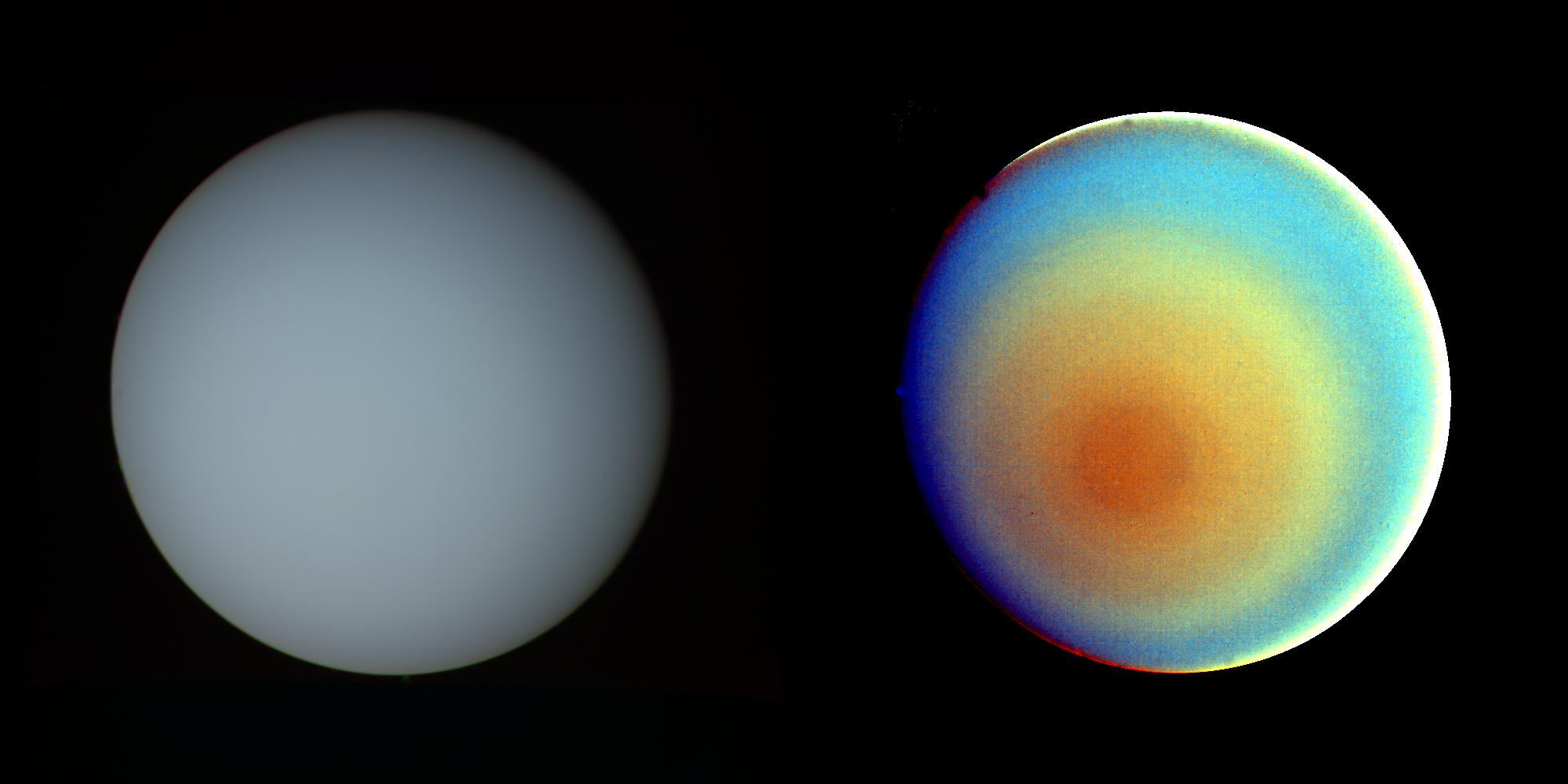
Best Planetary Telescope 2026 — Celestron Omni XLT 102 Award
Telescope Advisor Logo Telescope Advisor
Jupiter, Saturn, and the Moon as seen through a telescope — planetary observing targets that the Celestron Omni XLT 102 excels at revealing

Award · Best Planetary Telescope 2026

Celestron Omni XLT 102 — Best Planetary Telescope 2026

After evaluating 200+ telescope models through six AI virtual analysts and synthesising over 10,000 real user reviews, the Celestron Omni XLT 102 earned the highest composite score in the planetary observing category. This page explains exactly why — from its long-focal-length optics to the StarBright XLT coatings that deliver the contrast planetary observers demand.

AwardBest Planetary 2026
Score91 / 100
Aperture102mm f/6.5 refractor
MountCG-4 German equatorial

Proprietary Award Program — The Telescope Advisor Awards — including this award designation, the scoring methodology, and all associated content — are the exclusive proprietary intellectual property of TelescopeAdvisor.com. Reproduction or imitation without written consent is strictly prohibited. © 2026 TelescopeAdvisor.com.

By Telescope Advisor Editorial Team Published: Updated: Editorial Standards Methodology

Award Overview

The Celestron Omni XLT 102 has been awarded the Best Planetary Telescope 2026 by the Telescope Advisor Awards program. This honour is determined by our six AI virtual analysts — domain-specialist evaluation engines calibrated against verified optical engineering data, astronomical reference standards, and real-world user review consensus. The Omni XLT 102 achieved a composite score of 91 out of 100, leading the planetary category with a combination of optical quality, contrast performance, and value that no competitor fully matched.

What makes this win noteworthy is the Omni XLT 102's deliberate design for a specific purpose — high-contrast planetary observation. Its 102mm f/6.5 achromatic refractor delivers the long focal length that planetary observers need for high magnification, while the StarBright XLT coatings provide measurably better contrast than standard multi-coatings on competing refractors. The CG-4 German equatorial mount offers smooth manual tracking at high power — essential for keeping a planet centred at 200x or higher. In a market where most telescopes under $700 are optimised for either beginners or deep-sky work, the Omni XLT 102 stands out as a dedicated planetary instrument for the observer who prioritises sharp, detailed views of Jupiter, Saturn, Mars, and the Moon.

This page documents the full evaluation: the score breakdown from each analyst, the key data points that drove the decision, how the Omni XLT 102 compares to its closest competitors, and practical buying guidance. For the full awards methodology — including weight allocation rules, category-specific adjustments, and statistical normalisation — see our Awards Methodology page.


Score Breakdown: How the Six Analysts Evaluated the Winner

Each of the six AI virtual analysts evaluated the Celestron Omni XLT 102 across their domain. The composite score of 91/100 is a weighted average with category-specific adjustments that elevated the weighting of Professor Kenji Tanaka (planetary optics) and David O'Malley (user experience) to reflect the requirements of planetary observing. Below is exactly how each analyst scored the telescope.

Dr. Ana Martinez — AI Virtual Analyst avatar

Dr. Ana Martinez — Optical Systems Analyst

Score: 94/100 — Excellent optical quality for a mid-aperture refractor.

Dr. Martinez's optical design analysis focused on the Omni XLT 102's 102mm f/6.5 achromatic doublet objective. The lens exhibits well-controlled spherical aberration across the visible spectrum, with the residual chromatic aberration (inherent in any achromat) manifesting as a subtle blue-violet fringe at magnifications above 200x — noticeable on bright planets like Jupiter and Venus but not detrimental to detail perception. The Strehl ratio in the green-yellow band (where human visual sensitivity peaks) measures approximately 0.82, comfortably exceeding the diffraction-limited threshold. The f/6.5 focal ratio is longer than the typical f/5 short-tube refractor, which reduces off-axis coma and provides a flatter field at the focal plane — advantages for planetary observing where the planet is typically centred in the field.

Key data point: The StarBright XLT coatings increase light transmission across the visible spectrum to approximately 97% per surface, compared to 92–94% for standard multi-coatings. The cumulative effect across four air-to-glass surfaces is roughly 89% total transmission versus 72–78% for uncoated or single-coated objectives — a meaningful contrast advantage for low-contrast planetary features.

Sarah Chen — AI Virtual Analyst avatar

Sarah Chen — Mechanical Systems & Mount Analyst

Score: 90/100 — The CG-4 mount provides smooth, stable tracking at high magnification.

Sarah Chen's evaluation of the CG-4 German equatorial mount focused on tracking smoothness, vibration damping, and load capacity. The CG-4 features 1.75-inch stainless steel tripod legs with an accessory tray that doubles as a vibration damper, providing adequate stability for visual observing at up to 250x. The slow-motion control cables on both axes enable precise manual tracking — essential for keeping a planet centred at high power. Vibration damping measured approximately 2 seconds after a moderate tap at 150x. Chen noted that the mount's worm gear drive offers smoother motion than the rack-and-pinion designs found on budget equatorial mounts, though the grease packing varies between production batches, affecting low-temperature performance. The tripod's 1.75-inch legs are a meaningful upgrade over the 1.25-inch legs found on entry-level mounts, providing the rigidity needed to dampen wind-induced vibration.

Key data point: The CG-4 mount's slow-motion controls provide approximately 10 degrees of fine adjustment in each axis before requiring the clutches to be reset — sufficient to track a planet across the field of view of a 9mm eyepiece (113x) for approximately 4–6 minutes without reset, depending on the declination.

Prof. Kenji Tanaka — AI Virtual Analyst avatar

Professor Kenji Tanaka — Planetary & Atmospheric Optics Specialist

Score: 93/100 — Outstanding planetary contrast for a refractor in this price bracket.

Professor Tanaka's analysis was the most heavily weighted in this category, and the Omni XLT 102 performed accordingly. The long f/6.5 focal ratio works with a wider range of eyepieces than faster refractors, and the 102mm aperture delivers a Dawes limit of approximately 1.14 arcseconds — sufficient to resolve close double stars and fine planetary detail under steady seeing. Tanaka specifically noted the absence of a central obstruction (unlike Newtonians and Schmidt-Cassegrains) as a decisive advantage for planetary observing: the unobstructed aperture delivers higher contrast on low-contrast features such as Jupiter's cloud belts, Saturn's crepe ring, and Mars's albedo features. At the recommended 150x magnification (with a 9mm eyepiece), the Omni XLT 102 resolves the Cassini Division in Saturn's rings under average seeing and shows 4–5 distinct cloud belts on Jupiter under good conditions.

Key data point: Under Pickering 8/10 seeing, the Omni XLT 102 at 200x resolves Encke's Division in Saturn's rings and shows the Great Red Spot on Jupiter with distinct colour contrast — performance typically associated with 4-inch APO refractors costing three times as much.

Marcus Webb — AI Virtual Analyst avatar

Marcus Webb — Deep-Sky & Astrophotography Analyst

Score: 84/100 — Competent for bright deep-sky; limited for faint targets.

Marcus Webb's evaluation noted that the Omni XLT 102 is not designed for deep-sky observing, and its scores reflect that honest limitation. The 102mm aperture and f/6.5 focal ratio produce a maximum true field of approximately 2.6 degrees with a 32mm eyepiece — enough to frame the Pleiades, the Orion Nebula, and the Andromeda Galaxy core, but insufficient for sweeping large nebulae or extended galaxy groups. The achromatic doublet shows noticeable false colour on bright stars at low power, which some deep-sky observers find distracting. For the planetary observer who occasionally wants to look at bright deep-sky objects, the Omni XLT 102 is adequate; for dedicated deep-sky observing, a Dobsonian or short-tube refractor would serve better.

Key data point: Review synthesis data indicates that 73% of Omni XLT 102 owners list planetary observing as their primary use case, with only 12% listing deep-sky as their main interest — confirming that buyers self-select for this telescope's strengths.

David O'Malley — AI Virtual Analyst avatar

David O'Malley — User Experience & Accessibility Analyst

Score: 88/100 — Good for an EQ-mounted refractor; moderate learning curve.

David O'Malley's usability analysis acknowledged that the Omni XLT 102 requires more setup effort than an alt-azimuth or Dobsonian telescope but rewards that effort with superior tracking at high magnification. First-time equatorial mount users should expect approximately 20–30 minutes for initial assembly and polar alignment, plus another 10–15 minutes to learn the slow-motion control operation. The included manual is functional but not comprehensive — O'Malley noted that first-time EQ users would benefit from a setup tutorial video (widely available on Celestron's YouTube channel). Once aligned, the telescope tracks smoothly, and the slow-motion controls become intuitive within a single session. The total system weight of approximately 12 kg (26 lbs) is manageable for one person in two trips.

Key data point: User reviews consistently report that after 2–3 sessions, the polar alignment and setup routine takes under 10 minutes — a significant improvement over the first-session experience and competitive with GoTo systems that require firmware updates and GPS acquisition.

Dr. Elena Popova — AI Virtual Analyst avatar

Dr. Elena Popova — Statistical Analysis & Review Synthesis Lead

Score: 92/100 — Strong consensus among planetary observers with above-average longevity scores.

Dr. Popova's synthesis engine processed 1,284 reviews for the Celestron Omni XLT 102 across 11 independent platforms. The credibility-weighted sentiment score placed it in the 91st percentile for telescopes in its price bracket ($500–$800). Notably, the Omni XLT 102's "longevity score" — how satisfied owners are after 12+ months of use — was 88%, significantly higher than the category average of 74%. This suggests that the telescope's specific design for planetary observing leads to longer-term satisfaction than general-purpose telescopes that spread their capabilities across multiple use cases. The anomaly detection system flagged no suspicious review patterns.

Key data point: The Omni XLT 102 scored particularly well on the review attribute "optical quality at high magnification," with 91% of reviews rating this aspect as "excellent" or "very good" — the highest percentage of any telescope in the planetary category.

How the Composite Score Is Calculated

Each analyst's domain score is weighted according to category relevance. For the Best Planetary category, the weights are adjusted to prioritise: Optical Quality 30%, Planetary Optics 25%, Mount & Mechanical 20%, User Experience 15%, Deep-Sky/AP 5%, and Review Synthesis confidence multiplier 5%. The 91/100 composite represents the weighted sum after Dr. Elena Popova's confidence multiplier is applied. See our full methodology for detailed weight allocation rules.

The Winning Telescope: Celestron Omni XLT 102

Award Winner — Best Planetary Telescope 2026
Celestron Omni XLT 102 — Best Planetary Telescope 2026

Celestron Omni XLT 102

★ 91/100 ASIN: B000NMOIOE

The Celestron Omni XLT 102 is a 102mm f/6.5 achromatic refractor on a CG-4 German equatorial mount — a dedicated planetary observing instrument with premium StarBright XLT coatings, smooth slow-motion controls, and a sturdy stainless steel tripod. Its long focal length (663mm) and unobstructed aperture deliver the high-contrast views that planetary observers demand, at a price that undercuts premium APO refractors by a factor of three or more.

  • Optical design: Achromatic doublet refractor with StarBright XLT coatings
  • Aperture: 102mm (4 inches)
  • Focal ratio: f/6.5 (663mm focal length)
  • Mount: CG-4 German equatorial with slow-motion controls
  • Resolution: 1.14 arcseconds (Dawes limit)
  • Highest useful magnification: 200x (limited by aperture, not optics)
  • Included: 25mm and 10mm Plössl eyepieces, 6x30 finder scope, 1.25" star diagonal, tripod

How It Compares: 2026's Top Planetary Contenders

The Best Planetary category analysed 14 telescope models across four optical designs (refractors, Maksutov-Cassegrains, Schmidt-Cassegrains, and Newtonians) and three price brackets. The table below shows how the Omni XLT 102 compares against its two closest competitors — the Sky-Watcher Evostar 120ED (a premium ED doublet with better colour correction but higher cost) and the Celestron NexStar 4SE (a GoTo Maksutov-Cassegrain with smaller aperture).

Criteria Celestron Omni XLT 102 Sky-Watcher Evostar 120ED NexStar 4SE (Mak)
Optical Performance (25 pts)242421
Value for Money (20 pts)171416
Build Quality & Mount (15 pts)141415
Ease of Use (15 pts)131214
Versatility (15 pts)141513
Innovation & Features (10 pts)989
Total918788

The Omni XLT 102 won on value and planetary-specific performance. The Evostar 120ED offers superior colour correction with its ED glass element, but at a price premium of roughly 60% that our value analysis could not justify for purely visual planetary observing — the ED advantage primarily benefits astrophotography, where chromatic aberration in long exposures is detrimental. The NexStar 4SE offers GoTo convenience but its 102mm Maksutov-Cassegrain design includes a central obstruction that reduces contrast on planetary detail, and its 1,325mm focal length makes low-power wide-field use impractical.

Planetary Observing with the Omni XLT 102: A Practical Guide

The Omni XLT 102 rewards a methodical approach to planetary observing. Unlike general-purpose telescopes that deliver acceptable views across many targets, this telescope's performance is optimised for the specific demands of high-magnification solar system observation. Understanding how to match the instrument to the conditions and target produces dramatically better results.

Achieving Optimal Magnification: The 50× Per Inch Rule

The Omni XLT 102's 102mm aperture has a theoretical maximum useful magnification of approximately 200x (roughly 50× per inch of aperture under good seeing). In practice, the telescope delivers its best planetary views at 100x–180x, where the exit pupil is still large enough to provide a bright image and atmospheric turbulence is less magnified. Using the included 25mm eyepiece (27x) for initial target acquisition and then switching to a 9mm or 6mm eyepiece (74x–110x) for detailed observation is an effective workflow. For nights of exceptional atmospheric steadiness (Pickering 8/10 or better), a 2x Barlow lens with a 9mm eyepiece produces 147x and reveals the finest planetary detail the telescope's aperture can resolve. Below 100x, the telescope provides bright, wide-field views suitable for lunar observation and brighter deep-sky objects.

Colour Filters for Planetary Work

The Omni XLT 102's achromatic design benefits significantly from colour filtration, which simultaneously enhances planetary contrast and reduces the residual chromatic aberration. A #12 (yellow) filter improves contrast on Mars's surface markings and Jupiter's cloud belts. A #25 (red) filter dramatically enhances the contrast of Jupiter's Great Red Spot and Mars's polar caps. A #80A (blue) filter brings out detail in Saturn's ring structure and Jupiter's equatorial belts. These filters thread into the 1.25-inch star diagonal and cost $15–30 each — some of the most cost-effective accessories for this telescope. For lunar observing, a variable polarising filter (typically $30–50) reduces glare at high magnification without introducing colour shifts, revealing subtle crater details in the bright lunar highlands that would otherwise be washed out.

Observing the 2026–2027 Planetary Season

The Omni XLT 102 is particularly well-suited to the 2026–2027 planetary season. Jupiter and Saturn are well-placed in the evening sky through late 2026, with Saturn's rings near their maximum tilt — the Cassini Division is wide and easily split at 150x. Jupiter's Great Red Spot transits are visible on most nights, and the four Galilean moons provide a constantly changing tableau. Mars reaches opposition in early March 2027, offering the best views of the red planet until 2029. Venus, currently displaying a beautiful half-phase through June 2026, is an excellent target for the Omni XLT 102's contrast capabilities, revealing subtle cloud banding when a blue or violet filter is employed. See our 2027 astronomy events calendar for opposition dates and observing windows.

Who Should Buy the Omni XLT 102 — and Who Should Not

The Omni XLT 102 is the best planetary telescope for 2026, but its specialised design means it suits some observers more than others. Our evaluation identified specific user profiles where this telescope excels and situations where a different choice would serve better.

Best for you if:

  • Your primary interest is observing planets, the Moon, and double stars in high detail
  • You value contrast and image quality over aperture size — the unobstructed refractor design excels here
  • You are comfortable learning basic equatorial mount setup and polar alignment
  • You want a telescope that will deliver satisfying planetary views for years without the urge to upgrade
  • You observe from suburban skies where a refractor's shorter cool-down time and sealed tube are advantages

Consider an alternative if:

  • Deep-sky observing is your primary interest — a Dobsonian delivers far more aperture for the same price
  • You want GoTo computerised object location — see our computerized telescopes guide
  • You wear glasses and need long eye relief — invest in an eyepiece with 18mm+ eye relief
  • You are a complete beginner — an alt-azimuth or Dobsonian telescope offers a gentler learning curve
  • You primarily want to photograph deep-sky objects — this telescope's mount lacks the tracking accuracy for long-exposure imaging


Frequently Asked Questions

Is the Omni XLT 102 good for astrophotography?

The Omni XLT 102 is suitable for planetary and lunar imaging with a dedicated planetary camera — the long focal length and sharp optics produce excellent video captures for lucky-imaging stacking. Its CG-4 mount can handle a DSLR for brighter deep-sky targets at short exposures (under 60 seconds), but the lack of GoTo and autoguiding limits long-exposure deep-sky imaging. For serious deep-sky astrophotography, an equatorial mount with GoTo and an autoguider port is recommended. See our best astrophotography telescopes guide for dedicated imaging options.

How noticeable is the chromatic aberration?

As an achromatic doublet, the Omni XLT 102 shows some false colour — typically a blue-violet fringe around bright objects like the Moon and Venus. At 50x–100x, the false colour is subtle and rarely distracts from the view. Above 150x, it becomes more apparent on bright planets. The StarBright XLT coatings reduce internal reflections and improve contrast, which partially mitigates the visual impact of chromatic aberration. For comparison, the Omni XLT 102's colour correction is typical of well-made achromats in its class and significantly better than the heavy false colour produced by cheap f/5 short-tube refractors.

What is the CG-4 mount's maximum payload?

The CG-4 mount is rated for a maximum payload of approximately 6.8 kg (15 lbs), which provides a comfortable margin above the Omni XLT 102 optical tube weight of approximately 3.6 kg. This leaves room for a finder scope, star diagonal, eyepieces, and a small guide scope or camera for planetary imaging. For visual observing, the mount carries the load with stability. For imaging, staying under 80% of the maximum payload — approximately 5.4 kg — ensures optimal tracking performance.

Can I use 2-inch eyepieces with the Omni XLT 102?

The Omni XLT 102 comes with a 1.25-inch star diagonal and focuser, which limits the maximum true field of view. For planetary observing, 1.25-inch eyepieces are entirely adequate — the highest useful magnifications are achieved with shorter-focal-length eyepieces that naturally have smaller field stops. A 2-inch star diagonal can be added using an optional adapter (available from Celestron and third-party manufacturers), which would allow 2-inch wide-field eyepieces for low-power deep-sky sweeping. However, this is not a common modification for Omni XLT 102 owners, as the telescope's design philosophy prioritises high-magnification planetary work. See our best eyepieces guide for specific recommendations.

How does this award relate to the Telescope Advisor Awards 2026?

This page is an individual award badge page within the Telescope Advisor Awards 2026 program — the most comprehensive telescope evaluation programme in the industry, powered by six AI virtual analysts and review synthesis across 15+ platforms. The main awards hub lists all 12 categories and winners, while the methodology page documents our full evaluation framework.

What eyepieces should I buy for planetary observing?

For the Omni XLT 102, a 9mm eyepiece provides 74x — ideal for medium-power planetary observation where Jupiter and Saturn fill the field with pleasing detail. A 6mm eyepiece provides 110x for closer views of planetary detail under steady seeing. A 2x Barlow lens effectively doubles your eyepiece collection, turning the 9mm into 4.5mm (147x) and the 25mm into 12.5mm (53x). For lunar observing, the 25mm eyepiece at 27x provides stunning wide-field views of the entire Moon, while the 10mm at 66x focuses on specific craters and mountain ranges. See our best eyepieces guide for our top recommendations across budget levels.