Telescope Advisor Logo Telescope Advisor
The Milky Way over a volcanic landscape — Hawaii's Mauna Kea offers the best astronomical observing conditions on Earth

Stargazing Destination Guide · Hawaii

Best Stargazing in Hawaii: Mauna Kea, Island Sites & Complete Viewing Guide

Mauna Kea is the world's premier astronomical observing site — 13,800 feet above the Pacific, above 40% of Earth's atmosphere. The Visitor Center at 9,200 feet offers free nightly stargazing with telescopes provided. This guide covers every option for stargazing across the Hawaiian Islands.

Best siteMauna Kea Visitor Center
Elevation9,200 ft (Visitor Center)
Seeing qualityWorld-class (0.4–0.8 arcsec)
Best islandBig Island (Hawaii)
By Elena Reyes Published: Updated: Reviewed & approved by Juhi Sahni, Senior Editor Editorial Standards

Quick Answer: Where to Stargaze in Hawaii?

The Mauna Kea Visitor Center (9,200 ft) on the Big Island is the best stargazing experience in Hawaii — and arguably the world. The center runs a free nightly stargazing program with 11-inch and 14-inch telescopes staffed by knowledgeable guides. The view includes both northern and southern hemisphere constellations, with the Southern Cross visible just above the horizon from March through May. Saturn through a telescope at 9,200 feet is a life-changing experience — the image is so stable that the Cassini Division appears as a crisp black line.

If you can't make it to the Big Island, Haleakalā National Park on Maui (10,000 ft summit) offers excellent sunset-to-stargazing programs. The summit is accessible by car and the views of the Maui night sky are spectacular — though Mauna Kea remains superior due to its higher elevation and drier air.


Why Hawaii Is a World-Class Astronomy Destination

Hawaii is home to the world's largest collection of professional telescopes — 13 observatories on Mauna Kea alone, operated by 11 countries. These observatories are here for the same reasons amateur astronomers should visit: exceptional atmospheric stability (seeing as good as 0.4 arcseconds), extremely dark skies (Bortle 1–2 at elevation), low humidity, and a subtropical latitude that provides access to both northern and southern hemisphere celestial objects.

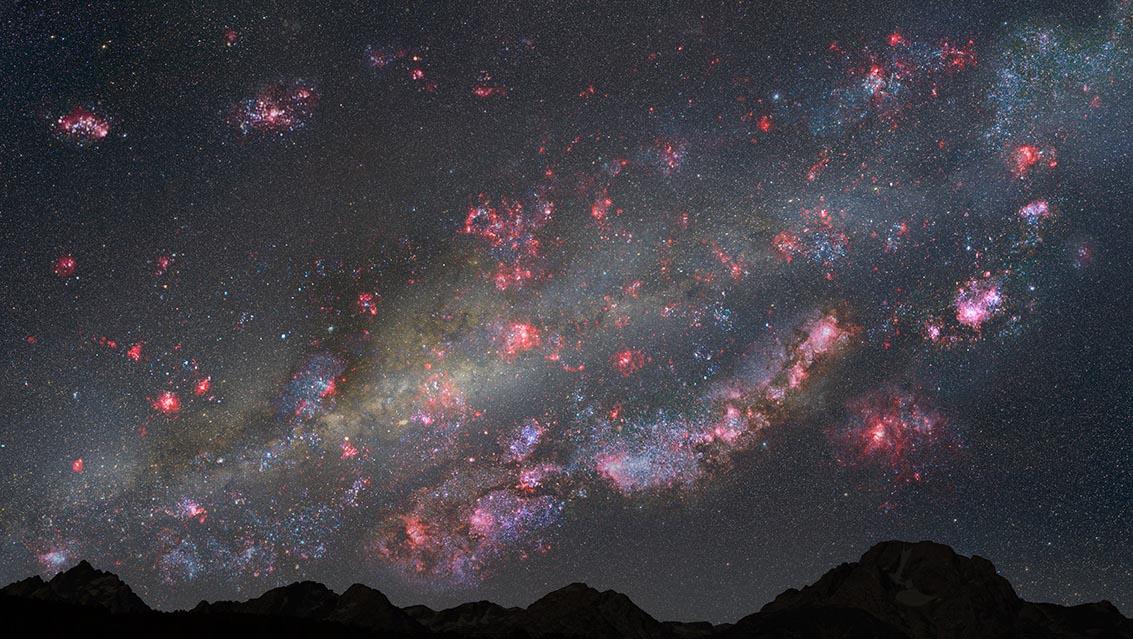
For amateur observers, the difference is immediately visible. At Mauna Kea's Visitor Center, the Milky Way is so bright that it casts shadows on the ground — one of the few places on Earth where this happens reliably. The zodiacal light is visible as a distinct pyramid of light in the western sky after dusk. The Large and Small Magellanic Clouds are clearly visible to the naked eye from March through November.

The Milky Way over Mauna Kea — the dark skies and high elevation make Hawaii the world's premier astronomical observing site

The Milky Way from Mauna Kea

At 9,200 feet above 40% of Earth's atmosphere, the Milky Way from Mauna Kea is so bright it casts shadows. The Visitor Center's free nightly program lets anyone experience this with professional-grade telescopes. Credit: NASA / International Space Station.

What Makes Mauna Kea Exceptional

Four factors combine to make Mauna Kea the world's best astronomical observing site. First, elevation: at 13,800 feet, the summit is above 40% of Earth's atmosphere and 90% of its water vapor — critical for infrared and submillimeter astronomy. Second, atmospheric stability: the trade wind inversion layer creates incredibly steady air, producing sub-arcsecond seeing that professional observatories rely on.

Third, darkness: Mauna Kea is far from any major city lights, and the state of Hawaii enforces strict light pollution controls. The Bortle Class 1 sky overhead is among the darkest accessible by paved road anywhere on Earth. Fourth, latitude: at 19.8°N, Mauna Kea offers views of both northern and southern hemisphere objects — from Polaris to the Southern Cross.

Mauna Kea Visitor Center — Complete Guide

The Onizuka Center for International Astronomy (Mauna Kea Visitor Center) at 9,200 feet is the only public access point for stargazing on Mauna Kea. The summit at 13,800 feet is closed to the public after sunset (4WD required during the day), but the Visitor Center offers an experience that rivals many professional observatories.

🔭

Free Stargazing Program (Nightly)

Runs 6 PM – 10 PM, weather permitting. Staff set up 11-inch and 14-inch Schmidt-Cassegrain telescopes and guide visitors through the night's highlights: planets, globular clusters, nebulae, and galaxies. The program is free, no reservations required. Arrive by 5:30 PM for sunset views above the cloud layer.

⚠️

Altitude Warning

The Visitor Center is at 9,200 feet — altitude sickness is a real risk. Spend 30 minutes acclimatizing before using telescopes. Children under 16 and people with respiratory or heart conditions should not go higher. The summit at 13,800 feet requires a 4WD vehicle and is not recommended for first-time visitors.

The star-filled night sky over Mauna Kea Visitor Center where free nightly stargazing programs offer views through 11-inch and 14-inch telescopes

Mauna Kea Visitor Center Stargazing

The Onizuka Center for International Astronomy at 9,200 feet hosts a free nightly stargazing program with professional-grade telescopes. The Milky Way core is so bright from this elevation that it casts shadows on the ground. Credit: NASA / ESA.

Hawaii Stargazing — Comparison by Island

IslandBest SiteElevationBortleFree Program?Rating
Big IslandMauna Kea Visitor Center9,200 ft1Yes (nightly)⭐⭐⭐⭐⭐
MauiHaleakalā Summit10,000 ft2Yes (nightly, reservation)⭐⭐⭐⭐
OahuKaena Point / North ShoreSea level4–5No⭐⭐
KauaiKokee State Park3,600 ft3No⭐⭐⭐

Frequently Asked Questions About Stargazing in Hawaii

Do you need a tour to stargaze on Mauna Kea?

No — the Visitor Center program is free and open to the public. Tours offer dinner, transportation from Kona/Waikoloa, and warmer clothing, but the stargazing experience at the Visitor Center is identical. Save $200 and drive yourself.

Can you see the Southern Cross from Hawaii?

Yes — barely. Hawaii at 19°N latitude can see Crux (the Southern Cross) just above the southern horizon from March through May. You need a clear southern horizon (Mauna Kea's south side is excellent). Through binoculars, the Jewel Box cluster near Crux is visible.

What telescope should I bring to Hawaii?

A pair of 10×50 binoculars is ideal for Hawaii — lightweight for travel and under Mauna Kea's dark skies, they'll show more than a 6-inch telescope at sea level. If you're driving, a tabletop Dobsonian (Sky-Watcher Heritage 150P) is excellent. But honestly, the telescopes at the Visitor Center program outperform anything you can bring.