Telescope Advisor Logo Telescope Advisor
The Milky Way arching over the red rock canyon landscape of southern Utah — one of the darkest stargazing destinations in the world

Stargazing Destination Guide · USA

Best Stargazing in Utah: Dark Sky Parks, Sites & Complete Guide

Utah has more International Dark-Sky Association certified dark sky places than anywhere else on Earth — over 26 certified locations in a state roughly the size of the UK. Its combination of arid desert climate (300+ clear nights per year in some areas), minimal population, high elevation, and dramatic canyon landscapes makes it the premier stargazing destination in the United States.

IDA-certified sites26+ (world's highest concentration)
Darkest siteNatural Bridges NM (Bortle 1–2)
Best seasonMarch–May & Aug–Oct
Hub cityMoab (IDA Dark Sky Community)
By Telescope Advisor Editorial Team Published: Updated: Editorial Standards

Why Utah is America's Dark Sky Capital

Utah's dominance of the global dark sky map is not accidental — it results from the convergence of four geographic and demographic factors that are nearly impossible to replicate elsewhere:

  • Sparse population: The Colorado Plateau region of southern Utah has population densities below 5 people per square mile across thousands of square miles. There are simply no cities generating light pollution in any direction for hundreds of kilometers.
  • Arid climate: The Great Basin and Colorado Plateau average 250–330 clear nights per year in many areas — double the US national average. Dry air also means minimal aerosols and excellent sky transparency, which dramatically improves deep-sky visibility.
  • High elevation: Most of southern Utah sits at 4,000–9,000 feet (1,200–2,700m) elevation. Higher altitude means less atmosphere to penetrate — stars scintillate less, colors are purer, and limiting magnitude improves.
  • Active dark sky preservation: Utah was an early adopter of dark sky ordinances. Moab became an International Dark Sky Community in 2021, joining Natural Bridges (the world's first dark sky park, certified in 2007) in a long tradition of active sky preservation at the state level.

Utah's IDA Dark Sky Certifications

Dark Sky Parks:11
Dark Sky Sanctuaries:1
Dark Sky Communities:3 (Moab, Torrey, Boulder)
Dark Sky Reserves:2
Working toward cert.:10+

Milky Way visibility in Utah

From Natural Bridges or the Canyonlands backcountry, the summer Milky Way is not just visible — it casts visible shadows on the canyon floor. The core of the galaxy rises from the south like a glowing river of light, and the band extends from horizon to horizon in a full arch. This is genuine Bortle 1–2 sky observing, rarely experienced outside the most remote locations on Earth.


Top 10 Stargazing Sites in Utah — Ranked by Sky Darkness

Ranked by Bortle scale (1 = absolute darkest, 9 = city center) and IDA certification status. All sites listed are publicly accessible.

# Site Bortle IDA Status Nearest Hub Highlight
1 Natural Bridges National Monument Bortle 1–2 World's First IDA Dark Sky Park (2007) Blanding (75 mi) Milky Way casts shadows on canyon floor; zero light dome in any direction
2 Canyonlands National Park (Needles/Maze) Bortle 1–2 IDA Dark Sky Park Moab (40 mi) Vast open canyon landscape; Milky Way core visible from May–September
3 Hovenweep National Monument Bortle 2 IDA Dark Sky Park Blanding (45 mi) Ancestral Puebloan towers silhouetted against Milky Way; remarkable foreground photography
4 Arches National Park (backcountry) Bortle 2–3 IDA Dark Sky Park Moab (5 mi) Delicate Arch + Milky Way — the iconic Utah astrolandscape shot
5 Bryce Canyon National Park Bortle 2–3 IDA Dark Sky Park Bryce Canyon City Annual Astronomy Festival (June); hoodoo rock formations for foreground; highest elevation (8,000 ft)
6 Capitol Reef National Park Bortle 2–3 IDA Dark Sky Park Torrey (11 mi) Fruita campground offers easy Milky Way viewing; Waterpocket Fold creates dramatic foreground
7 Dead Horse Point State Park Bortle 3 IDA Dark Sky Park Moab (30 mi) 2,000-foot mesa above Colorado River gorge; classic Milky Way + canyon photo location
8 Goblin Valley State Park Bortle 3 IDA Dark Sky Park Hanksville (12 mi) Otherworldly sandstone goblin formations; one of Utah's most photographed astro locations
9 Zion National Park (east entrance) Bortle 3–4 IDA Dark Sky Park Springdale East side (Checkerboard Mesa area) is significantly darker than canyon bottom; popular year-round
10 Bonneville Salt Flats Bortle 3–4 No certification Wendover (10 mi) Perfectly flat white expanse creates mirror reflections of Milky Way; unique 360° flat horizon

Moab — Utah's Dark Sky Hub for Astronomers

Moab, Utah (population ~5,200) was designated an International Dark Sky Community in 2021 — one of only 24 in the world. This designation requires the town to meet strict lighting ordinances, use shielded fixtures, and actively protect the night sky. The result: Moab's downtown is genuinely dark for a small city, and the surrounding public lands provide Bortle 1–2 skies within 30–60 minutes of downtown in virtually every direction.

Why Moab is the Best Base for Utah Stargazing

  • Four IDA parks within 45 miles: Arches NP (5 mi), Dead Horse Point SP (30 mi), Canyonlands NP - Needles (40 mi), and Canyon Rims Recreation Area. No other location in Utah puts you this close to this many dark sky parks simultaneously.
  • Infrastructure for night sky tourists: Several hotels and glamping operations have eliminated outdoor lighting or switched to red/amber lighting to preserve dark skies. Ask when booking — some properties actively promote their dark sky access.
  • Year-round access: Southern Utah's mild winters (compared to northern Utah) mean Moab-area sites are accessible even in December and January, unlike some higher-elevation sites that snow in.
  • Best foreground photography in the USA: The combination of red rock canyon landscapes — natural arches, mesa cliffs, river canyons — with Milky Way skies produces images that are literally unique on Earth. No other location combines Bortle 2 skies with such dramatic geology.

Best Stargazing Spots Near Moab

Delicate Arch Viewpoint — Arches NP

5 miles from Moab · Bortle 2–3

The iconic red sandstone arch with Milky Way is the most photographed astronomy composition in Utah. The 3-mile roundtrip hike to the arch is done in the dark — bring a red headlamp and allow 2 hours. Photography crowds peak in late June–July; shoulder seasons (April–May, Sept–Oct) offer solitude.

Mesa Arch — Canyonlands NP

35 miles from Moab · Bortle 1–2

A 0.5-mile flat trail leads to Mesa Arch on the Island in the Sky mesa. At night, the Colorado River canyon visible through the arch reflects subtle light; the Milky Way rises directly beyond the arch in summer. One of the most spectacular casual night sky hikes anywhere.

Dead Horse Point — Gooseneck Overlook

32 miles from Moab · Bortle 3

The 2,000-foot-deep Colorado River gorge visible from the overlook creates an extraordinary sense of scale under the Milky Way. The campground has electricity hookups but the far end of the promontory is completely dark. The park runs ranger-led astronomy nights in summer.

Bryce Canyon National Park — Utah's Astronomy Program Leader

Bryce Canyon is arguably the most visitor-friendly dark sky park in the United States for organized astronomy programs. Since 1999, the park has hosted the annual Bryce Canyon Astronomy Festival (usually held in late June), bringing professional astronomers, telescope-makers, and dark sky advocates from across the country. The festival includes ranger-led star talks, telescope viewing stations, solar viewing, astrophotography workshops, and keynote presentations — all free to visitors with a valid park pass.

What Makes Bryce Canyon Special for Stargazing

  • Highest elevation of any Utah IDA park: The rim sits at 8,000–9,100 feet (2,400–2,800m), well above most atmospheric moisture and particulates. Sky transparency here is outstanding — faint objects look brighter per unit of aperture than at lower elevations.
  • Hoodoo foreground elements: The limestone spires (hoodoos) of Bryce Canyon's amphitheaters provide bizarre, otherworldly foreground elements for astrophotography that don't exist anywhere else. The hoodoos glow slightly under moonlight or dim headlamp, creating natural-lit foreground.
  • Dark sky ranger programs year-round: Unlike most parks that offer seasonal night sky programming, Bryce Canyon has dedicated "Astronomy Rangers" who run programs even in the off-season months when visitor numbers are low and skies are dark and cold — often the very best conditions.

Bryce Canyon Stargazing Fast Facts

Bortle class2–3 (rim area)
Elevation8,000–9,100 ft (2,440–2,774m)
IDA StatusDark Sky Park (certified 2014)
Annual astronomy eventBryce Canyon Astronomy Festival (June)
Best observation pointsSunset Point, Inspiration Point, Paria View
Nearest townBryce Canyon City (1 mi)
Night sky programsYear-round ranger astronomy nights
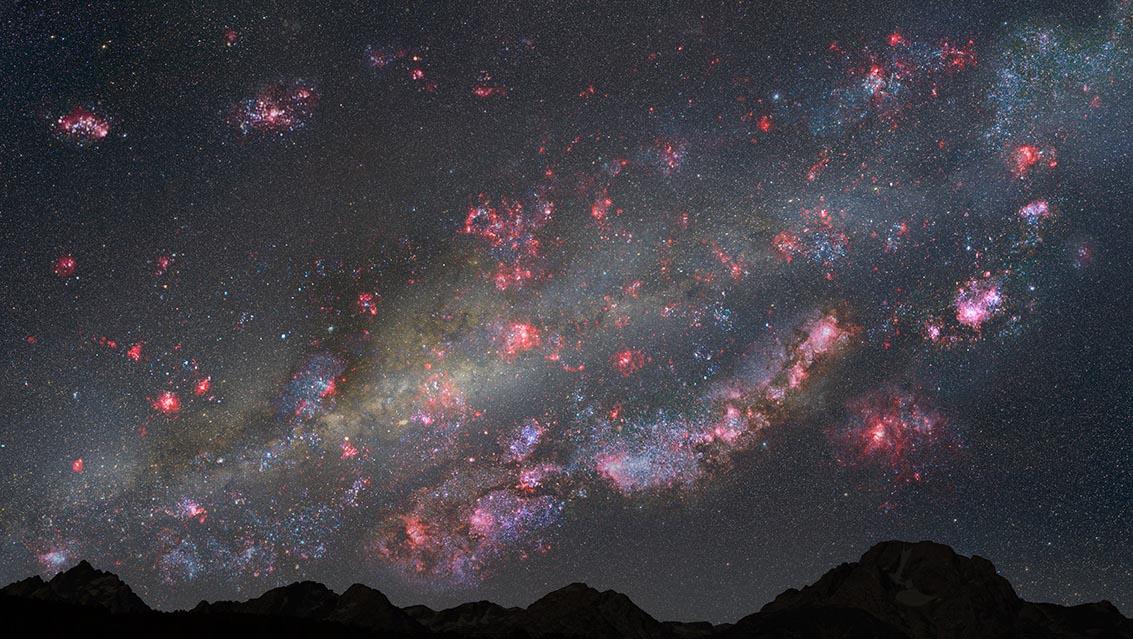
Milky Way galaxy visible from a Bortle 2-3 dark sky site similar to Bryce Canyon National Park — thousands of stars visible

Bortle 2–3 Night Sky — The View from Southern Utah's Dark Sky Parks

From Bryce Canyon, Canyonlands, or Natural Bridges, the Milky Way is not a faint smudge — it is a distinct, layered band of light with visible structure, color gradient from blue-white to golden-yellow toward the galactic core, and dark dust lanes. Credit: NASA / Public Domain.

Natural Bridges National Monument — The World's First Dark Sky Park

In 2007, the International Dark-Sky Association certified Natural Bridges National Monument as the world's first International Dark Sky Park. The certification launched a global movement that has since designated over 200 parks worldwide — but Natural Bridges remains one of the darkest among them.

Located in the white canyon country of southeastern Utah, Natural Bridges sits in one of the most isolated regions of the continental US. The nearest city with significant light pollution (Cortez, Colorado) is 80 miles away. The horizon is dark in every direction. On moonless nights, the Milky Way is bright enough to read by — not metaphorically, but literally, as multiple visitors have documented over the years.

Owachomo Bridge Viewpoint

The oldest and most eroded of the three natural bridges, Owachomo is the easiest to reach (short trail from the trailhead) and offers a dark, open horizon ideal for Milky Way photography through the bridge opening. A 5-minute walk from the parking area.

Sipapu Bridge Viewpoint

The tallest natural bridge in the monument (220 ft high, 268 ft span). Visible from an overlook at the canyon rim, Sipapu's massive scale against the night sky creates an impressive foreground for wide-angle astrophotography. The canyon below reflects starlight subtly on still, dry nights.

The Campground (Bortle 1)

The 13-site campground at Natural Bridges has no hookups and deliberately uses minimal lighting. It is one of only a handful of public campgrounds in the US where you can observe from your campsite in genuine Bortle 1 skies without hiking. The dark sky is not just good — it is extraordinary.

Getting to Natural Bridges

Natural Bridges is genuinely remote. The nearest significant town is Blanding, Utah (75 miles, 1.5–2 hours on UT-95). The road is paved but narrow and winding through canyon country. Cell service is effectively zero. Bring: a full tank of gas (fill up in Blanding or Moab), water (the monument has no potable water at the campground year-round), food, and a paper map as backup. The remoteness is exactly what makes the sky so dark.

Season-by-Season Stargazing Guide for Utah

Spring (March–May) ★★★★★ Best Overall

Spring is the ideal time to visit Utah for stargazing. Temperatures at southern Utah parks are comfortable (40–70°F / 4–21°C at night), crowds are building but not at summer peak levels, and the Milky Way core begins rising in the southeast by late April/May, providing dramatic rising galaxy shots from canyon locations. Winter stars (Orion, Gemini, Auriga) are still present in the evening western sky; spring galaxies (Leo, Virgo) are rising. Snow is possible at higher elevations (Bryce Canyon) but southern Utah (Moab, Natural Bridges) is reliably passable. March–April especially: equinox dark sky bonus — geomagnetic storm frequency increases (good for any aurora activity that far south during solar maximum).

Summer (June–August) ★★★★ Great with Heat Caution

The Milky Way is at its most spectacular in summer — the galactic core (Sagittarius, Scorpius) rises high in the south during prime observing hours. However, summer brings challenges: monsoon season begins mid-July, producing afternoon/evening thunderstorms that can clear by midnight or persist all night. Day temperatures in the low Utah desert regularly exceed 100°F (38°C) — pre-hike all trails during daylight hours. Night temperatures drop to 60–75°F (15–24°C) in the canyon areas, pleasant for observing. June's Bryce Canyon Astronomy Festival is the single most organized stargazing event in Utah.

Autumn (September–November) ★★★★★ Best for Photography

Autumn rivals spring as Utah's best stargazing season. Monsoon storms end in September; the air becomes exceptionally dry and clear — transparency is often better than any other time of year. Temperatures return to comfortable ranges (30–65°F / −1–18°C). The Milky Way core is still visible in September and early October, setting in the southwest around midnight. By October, the galactic center has set but the summer Milky Way band above (Cygnus, Aquila) remains visible. Andromeda Galaxy is at peak height in autumn, making the Utah skies ideal for deep-sky galaxy observing.

Winter (December–February) ★★★ Serious Dark Sky Observing

Winter offers the longest nights of the year (up to 14–15 hours of astronomical darkness at Utah latitudes), the driest air, and the fewest crowds. Bryce Canyon can receive significant snowfall (the hoodoos under snow with stars is extraordinary), but Natural Bridges and Moab-area parks are usually passable. Temperature at night drops to 10–30°F (−12 to −1°C) — cold but manageable with proper gear. Winter skies feature Orion, the Pleiades, Taurus, and the Milky Way's winter section (Perseus, Gemini), which is thinner than the summer core section but rich in open clusters and nebulae.

What to Observe from Utah's Dark Skies

Bortle 1–2 skies change what is visible to the naked eye and through any instrument. Here is what becomes accessible in Utah's darkest parks that you simply cannot see from a typical suburban backyard:

The Zodiacal Light

A faint triangular glow rising along the ecliptic after twilight (winter/spring) or before dawn (summer/autumn). This sunlight reflected off interplanetary dust particles is invisible from Bortle 5+ skies but unmistakable from Bortle 2. From Natural Bridges on a spring evening, the zodiacal light is so bright it can be mistaken for Milky Way glow or distant city light.

The Gegenschein

A faint circular glow directly opposite the Sun in the sky — the backscatter of sunlight from interplanetary dust. It's the zodiacal light's counterpart on the far side of the sky. Only visible from Bortle 1–2 skies and rarely seen even by experienced astronomers. Utah's darkest parks are among the most accessible places to observe it in the continental US.

Andromeda Galaxy Naked Eye

From Bortle 2 skies, M31 doesn't just appear as a faint smudge — its outer halo is large enough to be traced by eye over several degrees. The companion galaxies M32 and M110 can be detected with averted vision under excellent conditions. See our M31 observing guide for full details.

Milky Way Core Structure

From dark Utah skies in summer, the galactic core shows visible color: the nucleus appears golden-yellow (older stars), with blue-white outer regions (younger stars and OB associations). Dark lane structures — the Rift — divides the Milky Way band in two distinct lanes visible to the naked eye. This color and structure is virtually invisible from any suburban sky.

Globular Clusters Naked Eye

From Bortle 1–2 skies, multiple globular clusters become visible as soft "fuzzy stars" to the naked eye: Omega Centauri (just above Utah's southern horizon), M13 in Hercules, and M22 in Sagittarius. These are objects that many amateur astronomers have only ever seen through a telescope.

Large Nebulae

The Great Orion Nebula (M42) is always obvious — but from Utah's dark skies, the giant Barnard's Loop (an emission nebula arc 10° in diameter surrounding Orion) becomes visible to the naked eye. The Cygnus Rift (dark dust clouds blocking the Milky Way in Cygnus) shows striking detail. These are features invisible anywhere with meaningful light pollution.

Planning Your Utah Stargazing Trip

Moon Phase is Everything

Utah's dark sky parks are exceptional under moonless conditions and merely "very good" under a bright Moon. Even a half Moon (50% illuminated) washes out the zodiacal light, reduces Milky Way color to a faint stripe, and eliminates all hope of seeing the gegenschein. Plan your trip 5–7 days before new Moon through 2 days after new Moon for the darkest conditions. The new Moon dates for prime Utah seasons in 2026 are:

  • March 29, 2026 (spring session)
  • April 28, 2026 (spring session)
  • September 23, 2026 (autumn session — equinox bonus)
  • October 22, 2026 (ideal autumn session)
  • November 20, 2026 (late autumn)

Campsite Booking Strategy

The most popular Utah dark sky campgrounds (Natural Bridges, Bryce Canyon, Arches) fill quickly on weekends, especially during summer. Strategies:

  • Recreation.gov: National Park campgrounds open for reservations 6 months in advance. Book the moment your preferred dates open.
  • Weeknight strategy: Sunday–Thursday nights are dramatically less crowded than Friday–Saturday. For a 3-night trip, fly in Thursday night, observe Thursday–Saturday, leave Sunday AM.
  • BLM land dispersed camping: Utah has vast Bureau of Land Management land with free dispersed camping. Canyon Rims Recreation Area (near Moab) and the Bears Ears area offer Bortle 1–2 skies with no reservation required.

Safety considerations for remote Utah stargazing

Utah's darkest sites are genuinely remote. Cell service ranges from poor to nonexistent at Natural Bridges, Canyonlands Needles, and most BLM dispersed camping areas. Before heading out: download offline maps (Gaia GPS or AllTrails offline layers for the specific areas); file a trip plan with the ranger station if going off-trail; carry at minimum 1 gallon of water per person per day (summer and early autumn can reach 100°F / 38°C in the afternoon); check road conditions — gravel roads to some sites (Bears Ears, Natural Bridges FR) may be impassable after monsoon rains.

Best Telescopes for Utah Stargazing

Utah's dark skies reward portable, versatile instruments. The ideal telescope for a Utah stargazing trip can be packed into a car, set up at a remote campsite in 10 minutes, and deliver stunning views of the summer Milky Way, deep-sky clusters, and galaxies that urban observers can only dream about.

Editor's Pick — Best Telescope for Utah Stargazing
Sky-Watcher Heritage 130P collapsible tabletop Dobsonian — ideal for Utah dark sky park stargazing

Sky-Watcher Heritage 130P Tabletop Dobsonian

130mm aperture Collapsible tube — compact Fits on campsite table f/5 — wide field

The Heritage 130P was practically designed for Utah dark sky camping. The collapsible tube fits in the back seat of any car; the tabletop base sits on your campsite picnic table in seconds without any assembly. Under Bortle 2 Utah skies, the 5.1-inch mirror reveals deep-sky objects that suburban astronomers simply cannot see: the Veil Nebula supernova remnant in Cygnus, faint galaxy pairs in Virgo, globular clusters in Ophiuchus with individual stars resolved across their faces, and dust clouds within M42 that add dramatic texture to the familiar nebula shape. In a genuinely dark sky, every Messier object in the sky is accessible in this scope — 110 objects in one night is a realistic goal.

The f/5 focal ratio works well with a wide range of eyepieces, from the widest 2-inch field pieces down to 5mm high-power planetary eyepieces. Setup time from car to first light: under 5 minutes. See our full Sky-Watcher Heritage 130P review.

Celestron SkyMaster 15x70 binoculars — perfect for Utah dark sky Milky Way sweeping

Celestron SkyMaster 15×70 Binoculars — For Milky Way sweeping & deep-sky hunting

Under Utah's Bortle 1–2 skies, binoculars become extraordinary instruments. The SkyMaster 15×70's 70mm objectives gather enough light to show obvious structure within the Milky Way, reveal globular clusters as distinct non-stellar objects, and show spiral structure in M33 (Triangulum Galaxy) — something virtually impossible from typical suburban skies. A pair of 15×70s on a tripod, pointed at the Milky Way in Cygnus, delivers one of the most breathtaking visual experiences in amateur astronomy. Pairs perfectly with the Heritage 130P for a complete Utah dark sky kit.

Amazon Basics 60-inch tripod for binoculars and astrophotography at Utah dark sky sites

Amazon Basics 60-Inch Tripod — For binoculars and astrophotography

A critical companion for the SkyMaster 15×70 binoculars — holding 15× power binoculars by hand for 30+ minutes of Milky Way sweeping is impractical. The Amazon Basics tripod also serves double duty for astrophotography: at Utah's Bortle 1–2 dark sites, even a kit-lens DSLR on a fixed tripod can capture dramatic 20-second Milky Way exposures that look like professional astronomy images. Lightweight enough to carry on moderate hikes to viewpoints.

Essential non-optical items for Utah stargazing:

  • Red headlamp: Essential for navigating to viewpoints and checking charts without ruining dark adaptation. White lights destroy the experience for everyone around you.
  • Star atlas or app: Sky Safari Pro or Stellarium on your phone (in night/red mode) gives object location. A physical Pocket Sky Atlas is more reliable with no battery concern.
  • Collimation eyepiece: If using a Dobsonian like the Heritage 130P, collimation can shift in the car. A simple Cheshire collimator (5-minute task) ensures perfect optics.
  • Dew shield or chemical dew heater: Utah's desert nights have relatively low humidity, but temperature drops 30–40°F between afternoon and midnight can still cause dew on lower-elevation or lake-adjacent sites.

Utah Stargazing FAQ

What is the darkest stargazing location in Utah?

Natural Bridges National Monument is consistently cited as Utah's darkest publicly accessible site, rating Bortle 1–2 (Class 1 on the Falchi light pollution atlas). It was the world's first IDA-certified Dark Sky Park (2007) and maintains those extreme dark sky conditions today. The campground offers one of the few opportunities in the continental US to observe from a Bortle 1 sky from a drive-in campsite. Alternatives that approach this darkness include the remote Canyonlands Maze District, the Bears Ears National Monument backcountry, and the Canyon Rims Recreation Area west of Moab.

When is the best time to stargaze in Utah?

Spring (March–May) and Autumn (September–November) are the best overall seasons. Spring offers comfortable temperatures, the return of the Milky Way core in the pre-dawn sky, and the equinox dark-sky bonus. Autumn brings extremely clear, dry air after the monsoon season ends, comfortable temperatures, and the best evening visibility of Andromeda and autumn deep-sky targets. Summer (June–August) is spectacular for Milky Way core viewing but requires heat planning; winter offers the longest nights but cold temperatures at higher elevations. Plan all visits around the new Moon phase — the difference between new Moon and full Moon observing in Utah is the difference between a revelation and a disappointment.

Do I need a telescope to stargaze in Utah?

No — naked-eye stargazing in Utah's dark sky parks is itself a transformative experience that requires zero equipment. From a Bortle 2 site, you can see thousands more stars than from a suburban sky, trace the full Milky Way band from horizon to horizon, detect the Andromeda Galaxy and Large Magellanic Clouds, observe the zodiacal light and gegenschein, and follow satellite passes across an impossibly star-dense background. Binoculars add significant depth without requiring any telescope skills. A telescope dramatically expands the objects accessible but is not necessary for a meaningful, awe-inspiring experience.

Which Utah national park is best for stargazing?

For organized astronomy programs and accessibility: Bryce Canyon NP — ranger-led astronomy programs year-round, annual Astronomy Festival, high elevation, IDA certified. For absolute darkest skies and solitude: Canyonlands NP (Needles or Maze districts) or a drive to Natural Bridges NM nearby. For photography and foreground: Arches NP (Delicate Arch + Milky Way) or Dead Horse Point SP (canyon reflection). For year-round warm-weather access: Arches NP or Canyon Rims near Moab. See our guide to stargazing in US national parks for a broader comparison.