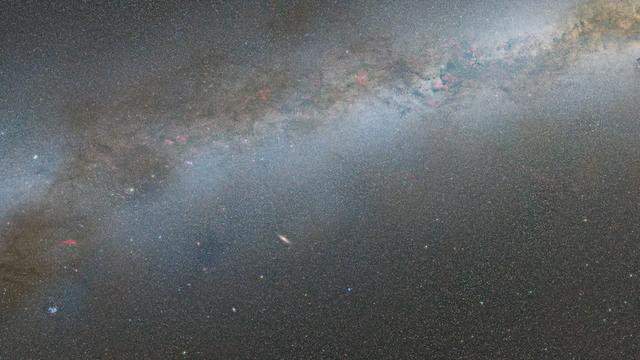
How to Validate You Really Found Andromeda (Not a False Target)
False positives are common in city sky because background gradients, haze patches, and optical reflections can mimic faint objects. Validation prevents wasted sessions and builds confidence quickly. The first validation step is positional repeatability. Move away from the target field, then return and reacquire using the same star-hop path. If the glow reappears in the same location repeatedly, confidence rises sharply.
The second validation step is magnification behavior. Real M31 city detections usually become less extensive at higher power while the core region remains. If the object vanishes completely with tiny framing shifts, you may be dealing with glare or reflection instead of target light. Toggle between two nearby magnifications and observe whether the brightness behavior is consistent with a diffuse object rather than a point source artifact.
The third validation step is temporal persistence. Keep the field centered and observe over several minutes. Atmospheric artifacts shift unpredictably, but real sky objects remain fixed relative to stars. If the brightened patch stays anchored while local shimmer changes, that is strong evidence of true detection. This technique is particularly useful when transparency is mediocre.
A fourth optional step is companion testing. Under favorable suburban-edge conditions, you may occasionally detect M32 as a compact nearby glow. This is not required for city confirmation, but when present it strongly validates field placement. If companions are absent, core-only M31 is still a valid success in bright sky.
Record each validation attempt in simple notes: time, moon phase, sky clarity, magnification used, and whether reacquisition succeeded. Over a month, this log becomes more valuable than any single session memory. You will identify your local success windows and turn Andromeda from a rare lucky hit into a repeatable urban target.