Celestron NexStar 4SE Review (2026): Is This GoTo Mak Worth It?
Telescope Advisor Logo Telescope Advisor
Lunar surface map background for NexStar 4SE review

GoTo Maksutov Review • 2026

Celestron NexStar 4SE Review

The NexStar 4SE remains one of the easiest ways to get compact GoTo plus sharp lunar and planetary views. The main tradeoff is narrow field and limited deep-sky punch compared to larger apertures.

102mm

Aperture

Mak-Cass

Optical Design

GoTo

Mount System

7.8/10

Overall Score

By Telescope Advisor Editorial Team Published: Updated: Editorial Standards

Quick Verdict

Celestron NexStar 4SE telescope

Reviewed product image: Celestron NexStar 4SE

NexStar 4SE is a strong choice for urban moon-and-planet observers who want compact GoTo convenience. It is light, quick to deploy, and easier to live with than larger SCT rigs for short weeknight sessions.

Its limitations are aperture and speed: faint deep-sky objects look modest, and the narrow field can make target framing less forgiving. If your budget allows, 6SE is a meaningful performance step up.
Celestron NexStar 4SE: Full Specifications

SpecValue
Optical DesignMaksutov-Cassegrain (Mak)
Aperture102mm (4 inches)
Focal Length1,325mm
Focal Ratiof/13
Mount TypeSingle-arm alt-azimuth GoTo
Hand ControllerNexStar+ (40,000+ objects)
FinderscopeStarPointer red dot
Eyepieces Included23mm (1.25"), 57× magnification
Optical Tube Weight~2.3 kg (5 lbs)
Total System Weight~6 kg (13 lbs) with tripod
Power8×AA batteries or 12V DC
Tube Length~330mm (13 inches)

Limiting Stellar Magnitude: ~11.5 — shows objects down to mag 11.5 under good dark skies. All Messier objects detectable, but many are faint smudges at 4 inches.

Resolution (Dawes limit): ~1.14 arc-seconds — sufficient for splitting many double stars and resolving fine planetary detail.

Highest Useful Magnification: ~200× — the long f/13 ratio is inherently high-contrast, making planetary detail stand out sharply.

Unique Advantage: The 4SE uses a Maksutov-Cassegrain design (not SCT). This means no collimation required — the optics stay permanently aligned, a major advantage over Schmidt-Cassegrain and Newtonian telescopes.

Accessories included: 23mm eyepiece (57×), 1.25" star diagonal, NexStar+ hand controller, StarPointer red dot finder, steel tripod with accessory tray.

What You'll See Through the NexStar 4SE

The 4SE's 102mm Maksutov-Cassegrain optics deliver exceptionally sharp, high-contrast views of the Moon and planets. The NASA/ESA reference images below show the objects you'll be pointing at — the captions describe what is actually visible at the eyepiece with a 4-inch Mak under good conditions.

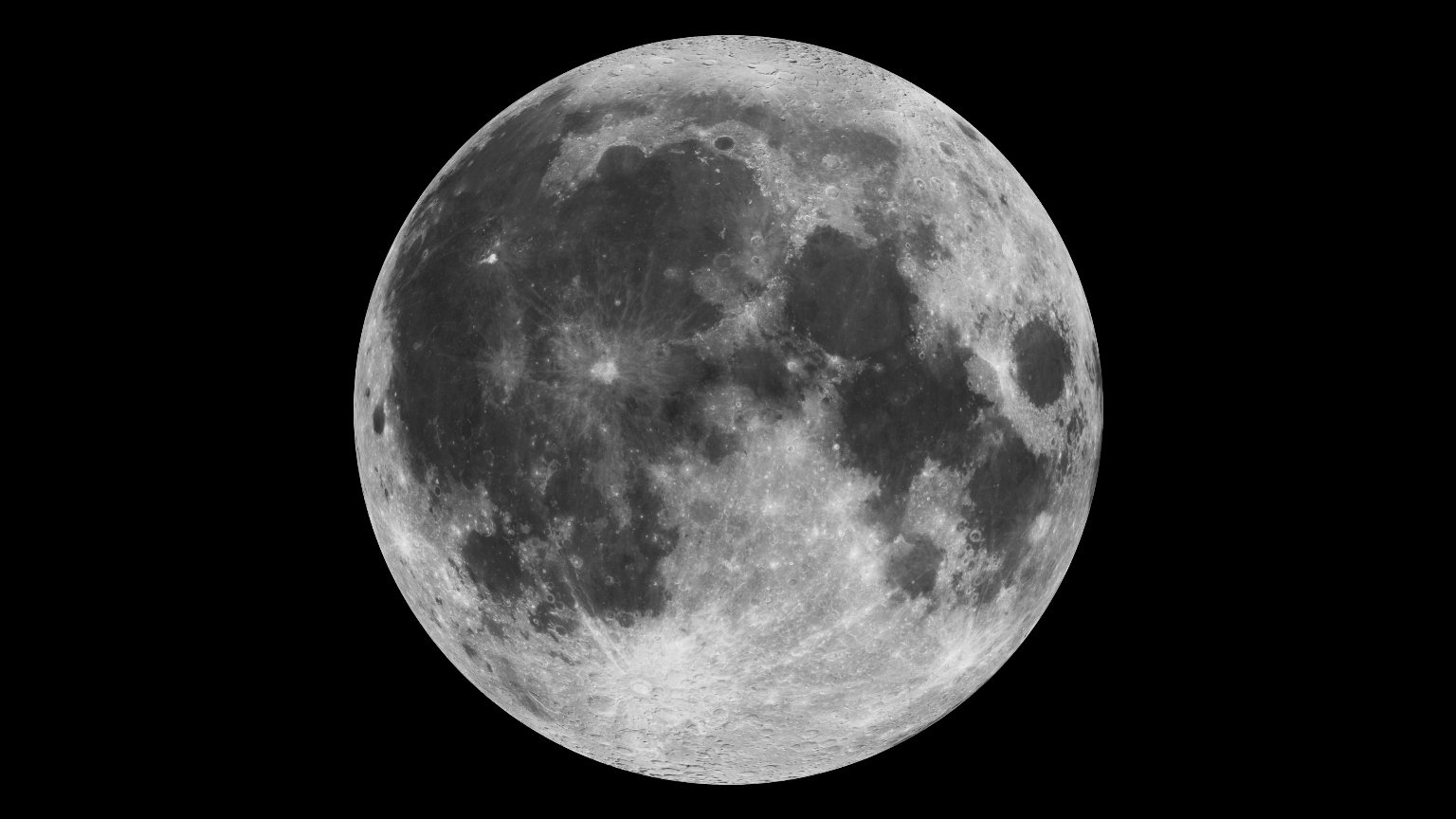
The Moon — NASA Clementine reference image showing craters and maria

The Moon — NASA/Clementine Reference

At 57–114×: exceptionally crisp crater detail, mountain ranges, and the terminator in high contrast. The f/13 Mak design delivers outstanding lunar views — the 4SE's strongest performance. Credit: NASA/Clementine.

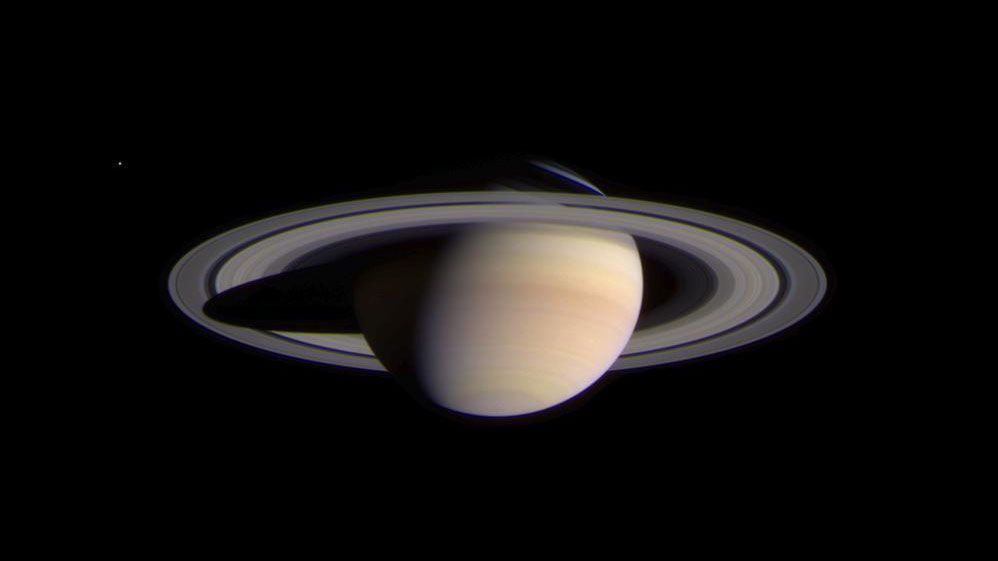
Saturn — NASA reference image showing rings and moons the 4SE can resolve

Saturn — NASA Reference Image

At 114×: rings clearly separated, ring shadow visible on globe, Titan visible. The Cassini Division may be glimpsed in steady seeing. Credit: NASA/Hubble.

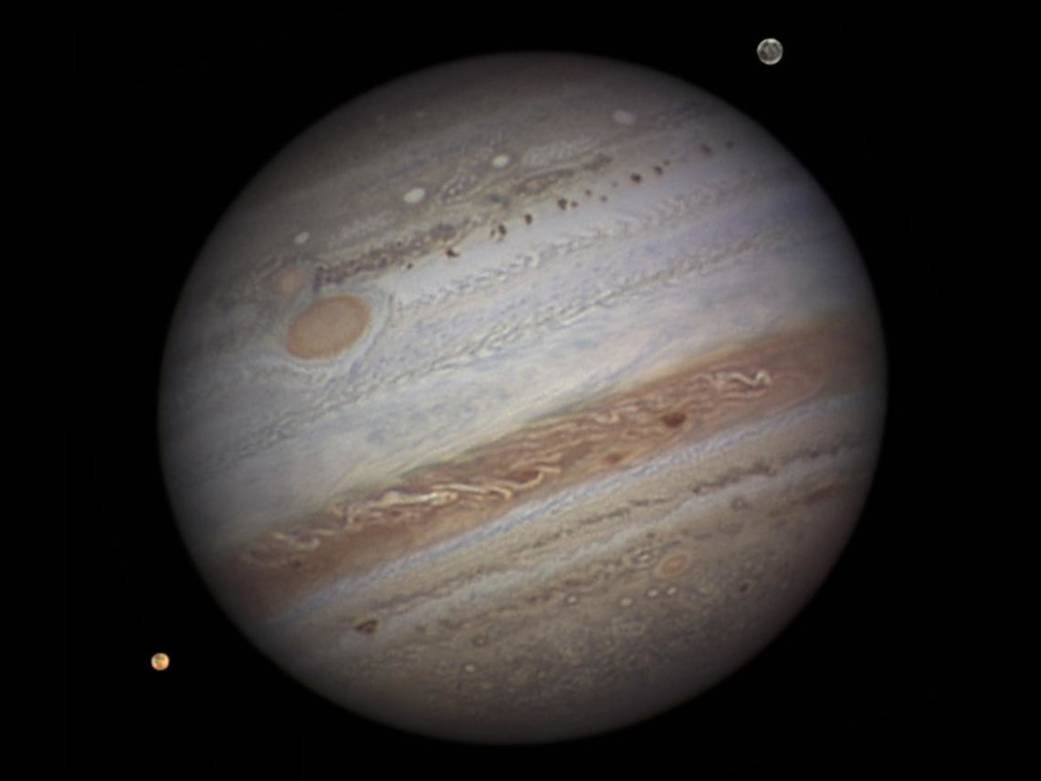
Jupiter — ground-based reference image showing cloud belts and Galilean moons

Jupiter — Ground-Based Reference

At 57–114×: two main equatorial belts and all four Galilean moons clearly visible. Great Red Spot hints in good seeing. Image credit: Damian Peach/NASA.

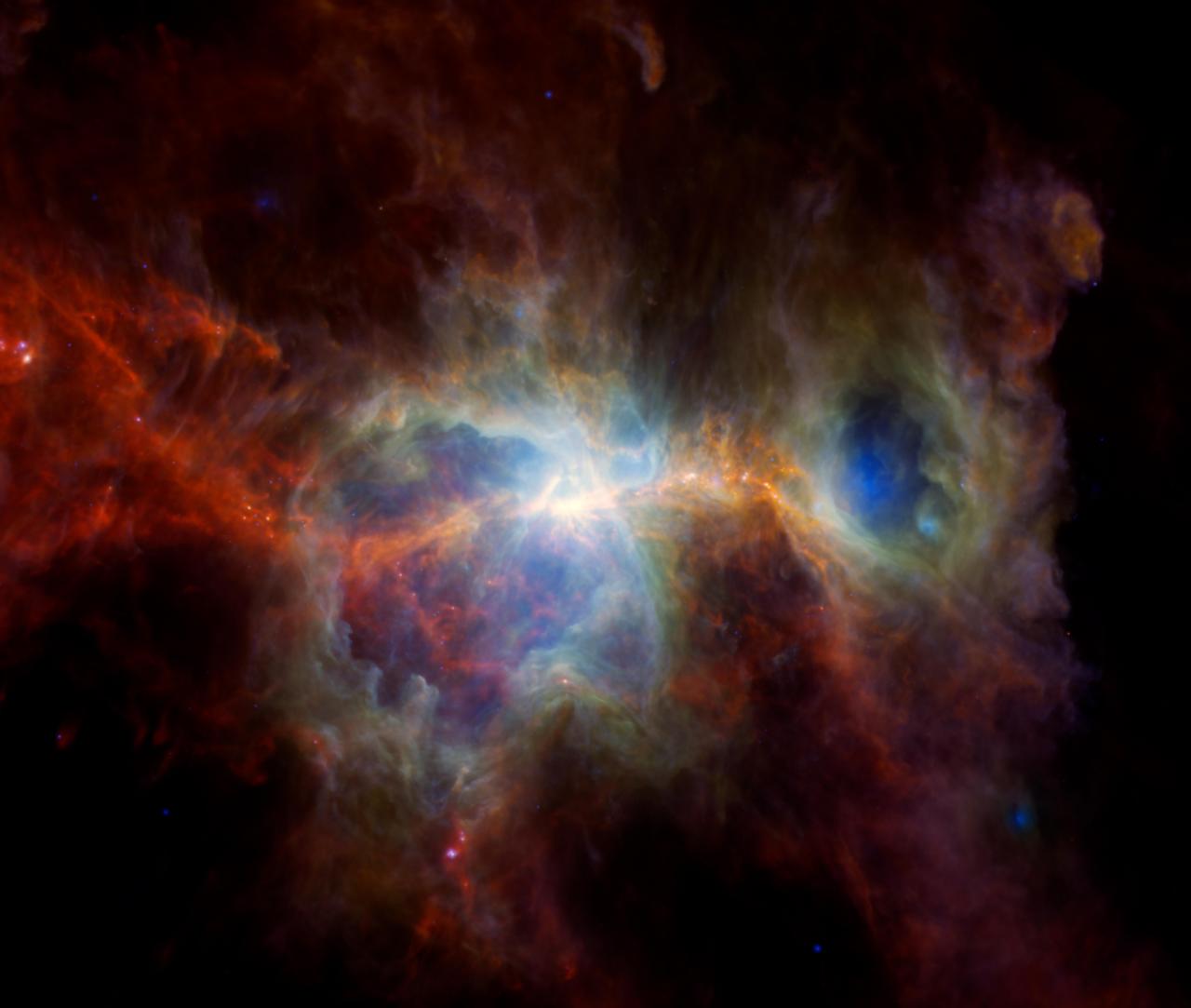
Orion Nebula M42 — Hubble Space Telescope reference image

Orion Nebula (M42) — NASA/Hubble Reference

At 57×: visible as a faint glowing patch. The f/13 focal ratio makes deep-sky objects dimmer than through faster scopes. The Trapezium stars are visible at high power. Credit: NASA/ESA/Hubble.

About these images: The photos above are NASA/ESA reference images — they are not eyepiece photographs taken through the 4SE. Visual views differ significantly. The captions describe what is actually visible with a 102mm aperture under good conditions.

GoTo Mount & NexStar+ Hand Controller

How GoTo Alignment Works

The NexStar 4SE uses Celestron's SkyAlign system — align on any three bright objects without knowing star names. First alignment takes about 10 minutes. With practice, 5–7 minutes. The hand controller database contains 40,000+ objects. After alignment, the GoTo pointing accuracy is typically within 0.5° of the target field.

Key Controller Features

  • ✓ 40,000+ object database (NGC, IC, Messier, planets, double stars)
  • ✓ SkyAlign — align on any 3 bright objects
  • ✓ Tour mode — auto-cycles through best visible objects
  • ✓ Variable slewing speed (1×–9×)
  • ✓ Backlash compensation
  • ✓ Optional WiFi adapter for wireless smartphone control
Mak vs SCT Note: The 4SE uses a Maksutov-Cassegrain design. Unlike the 5SE/6SE/8SE (which are Schmidt-Cassegrains), the Mak has a permanently collimated optical system — no collimation ever needed. The trade-off is a slower f/13 focal ratio and narrower field of view.

Setup & Ease of Use

Assembly Time

10–15 minutes on first use; 5–8 minutes with practice. The 4SE is the lightest NexStar GoTo SCT model at ~13 lbs total — truly one-person setup.

Portability

At 13 lbs total weight, the 4SE is the most portable NexStar. The OTA weighs only 5 lbs. Fits easily in a small bag for travel to dark-sky sites.

Cool-Down Time

The closed Mak tube retains heat. Allow 15–20 minutes for cool-down. The corrector plate can dew up in humid conditions — a dew heater is recommended for coastal or damp climates.

Is it beginner-friendly? The 4SE is one of the most beginner-friendly GoTo telescopes available. Its 13 lb weight makes it easy to handle. The SkyAlign system requires no star knowledge. And because the Mak design never needs collimation, there's one less skill to learn. Beginners can be observing within 20 minutes of opening the box.

Pros & Cons

Pros

  • Exceptional lunar and planetary contrast from the long f/13 Maksutov design
  • No collimation ever needed — permanently aligned optics
  • Lightest NexStar GoTo model at ~13 lbs — truly portable
  • GoTo with 40,000+ objects and SkyAlign — easiest alignment in the NexStar family
  • Compact 13-inch tube — stores on a closet shelf
  • Excellent upgrade path for planetary imaging with a camera

Cons

  • 102mm aperture limits deep-sky views — faint galaxies are dim smudges
  • f/13 focal ratio means narrow field of view — hard to frame large objects
  • 15–20 minute cool-down required (closed tube design)
  • Correcter plate prone to dew in humid conditions
  • Not suitable for wide-field deep-sky or long-exposure astrophotography
  • The 6SE provides significantly more light gathering (+55%) for the price difference

Alternatives to Consider

Editor's Pick — Best Upgrade Path
Celestron NexStar 6SE telescope

Celestron NexStar 6SE

If you can stretch the budget, 6SE brings noticeably brighter deep-sky views and stronger all-around headroom.

View on Amazon →
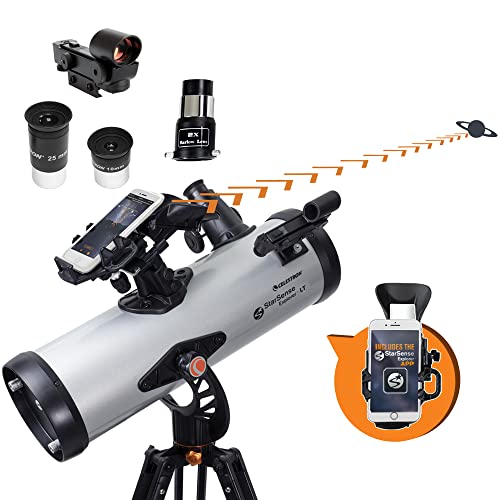
Celestron StarSense Explorer LT 114AZ

Celestron StarSense Explorer LT 114AZ

Lower-cost option with smartphone-assisted pointing if you care more about target finding than compact Mak optics.

View Alternative →

Buy or Skip?

  • Buy it if compact size and GoTo convenience are your top priorities.
  • Buy it if your observing is mostly Moon, planets, and bright showcase objects.
  • Skip it if you want stronger deep-sky brightness for the money.

Ready to Buy the NexStar 4SE?

Celestron NexStar 4SE telescope

$588.39

Live price from Amazon

Affiliate link — we may earn a small commission at no extra cost to you.

Frequently Asked Questions

Is NexStar 4SE good for planets?

Yes — this is the 4SE's strongest capability. The long f/13 Maksutov-Cassegrain design delivers naturally high contrast, making lunar craters, Saturn's rings, and Jupiter's belts exceptionally sharp. The 4SE is one of the best compact telescopes for pure planetary and lunar observing under $800.

Is NexStar 4SE better than 6SE?

The 4SE is better for portability (13 lbs vs 27 lbs), price, and ease of use (no collimation needed). The 6SE is significantly better for deep-sky brightness and overall optical performance (150mm gathers 55% more light than 102mm). Choose the 4SE for grab-and-go Moon and planet observing. Choose the 6SE if you want to explore deep-sky objects seriously.

Can beginners align NexStar 4SE easily?

Yes. SkyAlign requires only three bright objects centered as prompted — no star names needed. Most beginners complete their first alignment in under 15 minutes. The 4SE is arguably the most beginner-friendly GoTo telescope in the NexStar lineup due to its light weight and permanently aligned optics.

What can I see with the NexStar 4SE?

Solar system: The Moon is stunning — craters, mountain ranges, and rilles in sharp detail. Saturn's rings with Titan visible. Jupiter with two cloud belts and all four Galilean moons. Mars shows polar cap and dark markings near opposition.

Deep sky: Bright star clusters like M45 Pleiades and M13 Hercules. M42 Orion Nebula as a faint glowing patch. M31 Andromeda Galaxy as a dim oval. Fainter deep-sky objects become increasingly challenging due to the 102mm aperture and f/13 focal ratio.

Does the NexStar 4SE need collimation?

No — this is one of the 4SE's key advantages. The Maksutov-Cassegrain design uses a permanently aligned optical system with a fixed secondary mirror. Unlike the 5SE, 6SE, and 8SE (which are Schmidt-Cassegrains requiring periodic collimation), the 4SE never needs collimation. The optics stay aligned from the factory for the life of the telescope.

What accessories should I buy with the NexStar 4SE?

Priority accessories: (1) A 6–8mm eyepiece for 166–221× planetary viewing — the included 23mm gives only 57×. (2) A 2× Barlow lens to double eyepiece options. (3) A dew heater for humid nights. (4) A 12V DC power supply — 8×AA batteries drain in 3–4 hours. (5) A moon filter to reduce glare.

How much does the Celestron NexStar 4SE cost in 2026?

The NexStar 4SE typically retails for $500–$600 in 2026. Budget additionally for: a planetary eyepiece ($40–$80), a 2× Barlow ($30–$50), and a 12V DC power supply ($20–$30). Total well-equipped setup: $600–$800.

Related Guides